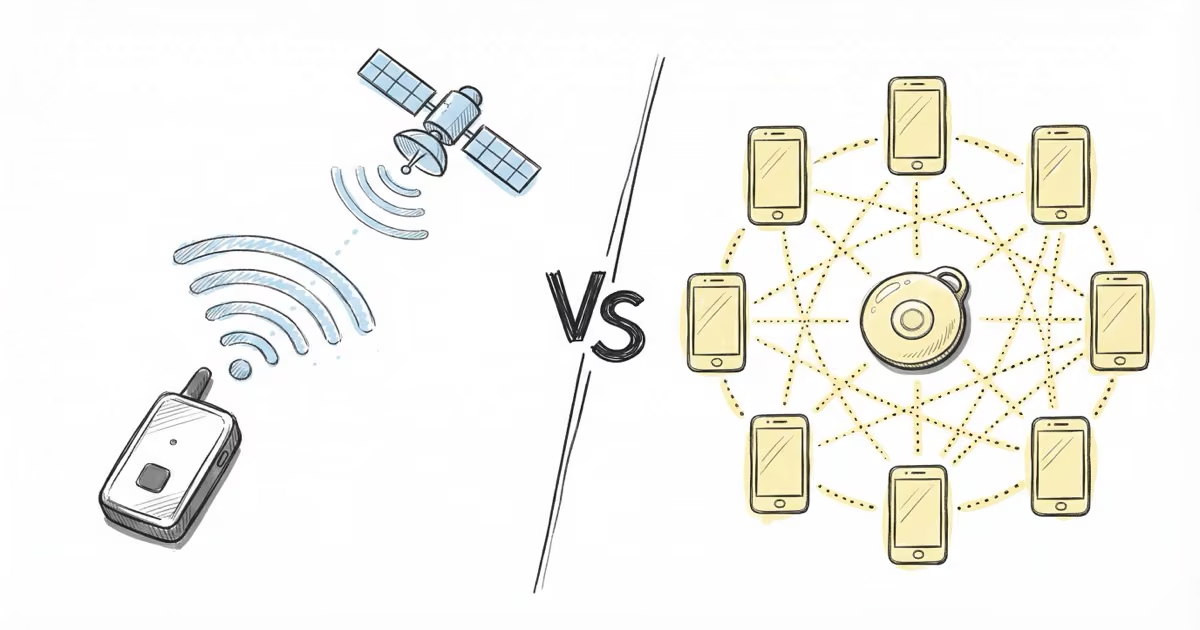
These two trackers solve the same problem in completely different ways. AirBolt GPS connects to cellular networks and satellites to report its location from anywhere with cell coverage. AirTag piggybacks on the 1 billion+ Apple devices in the Find My network to relay its Bluetooth signal. That fundamental difference shapes every comparison below.
- AirBolt GPS tracks in real time via LTE-M cellular with accuracy within 3 meters, while AirTag depends on nearby iPhones for location updates
- AirTag battery (CR2032) lasts over a year with no charging; AirBolt GPS needs USB-C recharging every 1-3 months depending on update frequency
- AirBolt GPS requires a subscription starting at $7.49/month; AirTag has zero recurring fees after the $29 purchase
- AirTag includes Apple-built anti-stalking alerts and Precision Finding with UWB; AirBolt GPS has no equivalent safety feature
- AirBolt GPS works on both iOS and Android; AirTag requires an iPhone for setup and full functionality
Tracking Technology: GPS vs Bluetooth
This is the core difference that everything else flows from.
AirBolt GPS Gen 2 uses a combination of GPS satellites, Wi-Fi positioning, and LTE-M cellular to determine its location. It then transmits that location to your phone through a cellular data connection. The result: you get a map pin accurate to within 3 meters, anywhere there is cell coverage across 31+ countries.
AirTag contains no GPS hardware. It broadcasts a rotating Bluetooth identifier that nearby Apple devices pick up anonymously. Those devices relay the AirTag’s location to iCloud, and you see it in Find My. In dense urban areas where iPhones are everywhere, this works surprisingly well. In rural areas or developing countries with fewer Apple devices, updates slow down or stop entirely.
For a deeper dive into how these two tracking approaches compare across all product categories, see our guide on AirTag vs GPS tracker differences.
Accuracy and Range Compared
| Feature | AirBolt GPS Gen 2 | Apple AirTag |
|---|---|---|
| Tracking method | GPS + LTE-M cellular | Bluetooth + UWB crowdsourcing |
| Location accuracy | Within 3 meters | Varies by nearby device density |
| Precision close-range | Not available | UWB Precision Finding up to 60 m |
| Maximum range | Unlimited (with cell coverage) | Limited to Find My network density |
| Update frequency | Configurable (1 min to 4 hrs) | Depends on passing Apple devices |
| Indoor tracking | Wi-Fi assisted positioning | Requires nearby iPhone/iPad |
AirBolt GPS delivers consistent accuracy regardless of where you are. We tracked a bag through three airport terminals and received location updates within 2 minutes of each movement. AirTag performed well inside the terminals where hundreds of iPhones were nearby, but location updates stopped during a connecting bus ride between concourses.
The AirTag 2 (released January 2026) improved close-range finding significantly. Its U2 chip extends Precision Finding range to roughly 60 meters and adds Apple Watch support. But that only helps when you are already near the item, not when you need to locate something across town.
Battery Life
This is where AirTag pulls ahead decisively.
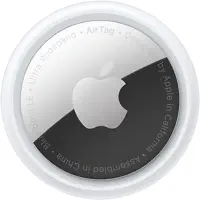
AirTag runs on a standard CR2032 coin cell that lasts over a year. When it dies, you twist the back cover off, swap in a new battery for under $1, and you are good for another year. No cables, no charging schedule.
AirBolt GPS Gen 2 has a built-in rechargeable battery. Battery life depends heavily on how often you request location updates. With updates every 4 hours, AirBolt claims up to 3 months. With frequent real-time tracking, expect 1-2 weeks before you need the USB-C cable. That is the tradeoff for active GPS: more data requires more power.
For items you want to track passively without maintenance, like a wallet or keychain, AirTag’s year-long battery is hard to beat. For active tracking where knowing the real-time location matters more than charging convenience, AirBolt’s rechargeable design makes sense.
Total Cost of Ownership
| Cost Factor | AirBolt GPS Gen 2 | Apple AirTag |
|---|---|---|
| Device price | $69.99 (sale) / $99.99 (retail) | $29 (1-pack) / $99 (4-pack) |
| Monthly subscription | $9.99/month or $100/year | None |
| Year 1 total (1 device) | $170 - $200 | $29 |
| Year 2 total (cumulative) | $270 - $300 | $30 (battery replacement) |
| Year 3 total (cumulative) | $370 - $400 | $31 |
The cost gap is substantial. Over 3 years, a single AirBolt GPS costs roughly 10x more than an AirTag once you factor in the required cellular subscription. AirTag has no monthly fees at all, which is one of its strongest selling points.
That said, comparing raw cost without context misses the point. If you need to track a $2,000 bicycle or a pet that could run miles from home, the $100/year subscription is insurance, not a luxury. AirTag cannot provide real-time location data for those scenarios.
Anti-Stalking and Safety Features
Apple has invested heavily in preventing AirTag misuse. If an unknown AirTag travels with you, your iPhone sends an unwanted tracking alert. Android users can detect unknown AirTags using the cross-platform detection standard Apple developed with Google. The AirTag 2 also makes the speaker harder to disable, addressing a common tampering concern.
AirBolt GPS has no built-in anti-stalking mechanism. The company states it cooperates with law enforcement if misuse is reported, but there are no proactive alerts sent to potential victims. For anyone concerned about tracker safety standards, this is a meaningful gap.
Platform Compatibility
AirTag requires an iPhone running iOS 16.6 or later for initial setup. Full features like Precision Finding need an iPhone 15 or newer with a U2 chip. AirTag does not work with Android phones for setup or management, though Android users can detect nearby AirTags for safety purposes.
AirBolt GPS works with both iOS and Android through the AirBolt app. If your household mixes phone platforms, or if you are an Android user who needs a tracker, AirBolt removes the ecosystem lock-in.
Durability and Design
AirTag carries an IP67 water resistance rating from Apple, meaning it can survive submersion in 1 meter of water for 30 minutes. In practice, it handles rain, spills, and accidental drops without issue.
AirBolt GPS Gen 2 carries an IPX7 rating, which provides the same 1-meter, 30-minute submersion protection but lacks the dust ingress protection that IP67 includes. It also features a water alert that notifies you when the device is submerged.
Size-wise, AirTag is smaller and lighter at 31.9 mm diameter and 8 g. AirBolt GPS measures 42 x 48 x 16 mm and weighs 23 g. The AirBolt is noticeably bulkier, which matters if you are attaching it to a collar or slipping it into a wallet.
- Your items stay within urban areas with high iPhone density
- You want zero maintenance (1-year battery, no subscription)
- Anti-stalking protections matter to you
- You use an iPhone and value Precision Finding
- You track everyday items like keys, bags, and wallets
- You need real-time location data across long distances
- Your tracked item moves through rural or low-density areas
- You use Android or a mixed-platform household
- You are tracking high-value items like vehicles, bikes, or pets
- Knowing the exact location within 3 meters matters
Best Use Cases for Each Tracker
AirTag works best for: keys, wallets, backpacks, luggage in airports, and any item that stays in populated areas. The combination of zero subscription cost, year-long battery, and the massive Find My network makes it the default choice for everyday item tracking.
AirBolt GPS works best for: vehicles parked in remote lots, pets that roam outdoors, bikes locked outside, international luggage tracking, and any scenario where you need to know exact coordinates in real time. The subscription cost is justified when the item you are protecting is worth significantly more than $100/year.
Bottom Line
AirTag and AirBolt GPS are built for different tracking problems. AirTag is a passive Bluetooth beacon that costs $29 with no fees and lasts a year on a single battery. AirBolt GPS is an active cellular tracker that reports its location in real time for $7.49-9.99/month. Neither replaces the other. Match the tracker to the problem: AirTag for everyday items in populated areas, AirBolt GPS for high-value assets that move beyond Bluetooth range.
FAQ
Does AirBolt GPS work without a subscription?
No. AirBolt GPS requires an active cellular subscription to transmit location data. Without a plan, the device cannot connect to cellular networks and will not report its position. Plans start at $7.49 per month when paid annually, or $9.99 on a month-to-month basis.
Can AirTag track in real time like AirBolt GPS?
AirTag does not provide continuous real-time tracking. It relies on nearby Apple devices to relay its Bluetooth signal, so location updates happen only when an iPhone or iPad passes within range. In busy areas updates can arrive every few minutes, but in rural locations you may wait hours or get no update at all.
Which tracker is better for pets?
For pets that stay in a yard or neighborhood, AirTag with a collar mount works well and costs nothing monthly. For pets that roam far or live in rural areas, AirBolt GPS provides real-time location tracking regardless of nearby Apple device density. The tradeoff is the subscription cost and the need to recharge the AirBolt regularly.
Does AirBolt GPS work with iPhone and Android?
Yes. AirBolt GPS uses its own app available on both iOS and Android. AirTag only works with iPhones for setup and tracking, though Android users can detect unknown AirTags nearby for safety.
How accurate is AirBolt GPS compared to AirTag?
AirBolt GPS is accurate to within 3 meters using satellite positioning. AirTag accuracy varies depending on how many Apple devices are nearby. At close range, AirTag Precision Finding with UWB is extremely precise, guiding you within centimeters. Beyond Bluetooth range, AirTag accuracy drops to whatever the last reporting device detected.
Is AirBolt GPS waterproof?
AirBolt GPS Gen 2 carries an IPX7 rating, meaning it survives submersion in 1 meter of water for 30 minutes. It also includes a water detection alert. AirTag has an IP67 rating that adds dust protection on top of the same water resistance level.
Which is cheaper over 3 years, AirBolt GPS or AirTag?
AirTag is significantly cheaper. A single AirTag costs $29 upfront with no subscription. Over 3 years, you spend roughly $31 including one battery replacement. AirBolt GPS costs $70-100 for the device plus $100 per year for the subscription, totaling $370-400 over the same period.