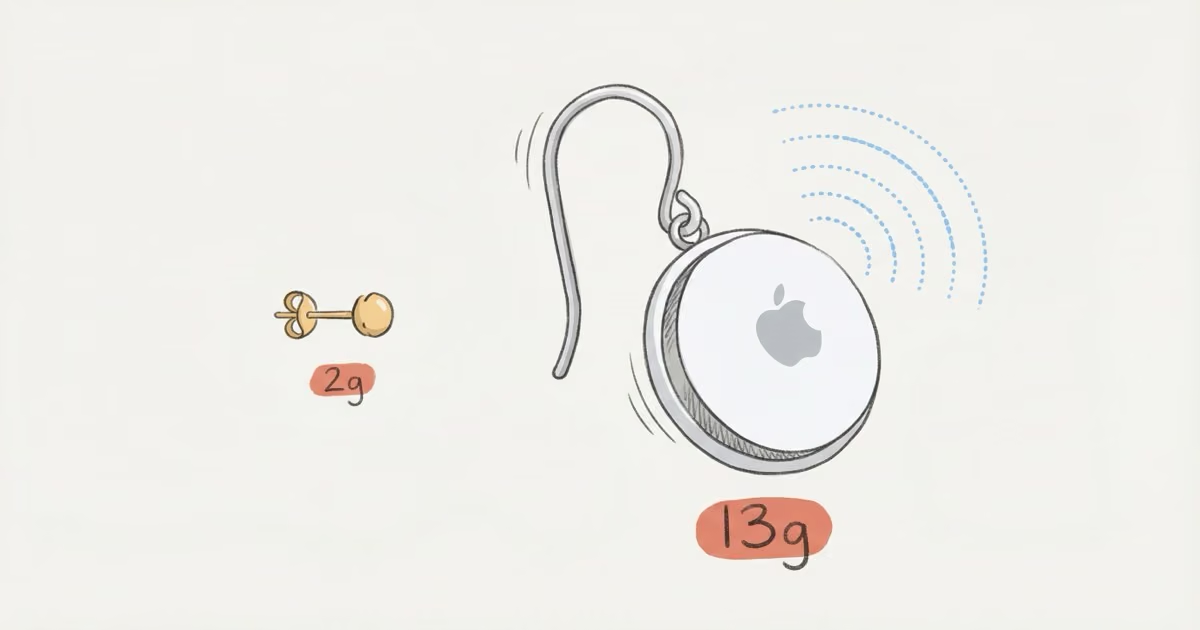
If you've searched "AirTag earrings," you've probably noticed something odd. Half the results are fashion earrings shaped like an AirTag. The other half are holders that claim to turn a real AirTag into wearable jewelry. The problem is that an AirTag weighs 11g, roughly 3-4x heavier than a typical earring. That's not a minor detail. Here's what exists in this category, why most of it doesn't work well, and what does.
- Novelty AirTag earrings ($8-20) are fashion-only with zero tracking capability.
- Functional AirTag earring holders exist on Etsy but weigh 13-15g, 2-3x above the safe daily earring weight of 2-5g.
- Tracking works the same as any AirTag placement, but the weight causes earlobe stretching within weeks of daily wear.
- AirTag necklaces and bracelets are more practical wearable alternatives with the same Find My tracking.
- The Tile Sticker (27mm, 5-6g) is the smallest mainstream tracker for earring-scale use, though its network is far smaller than Apple's.
Two Products, Same Name, Completely Different
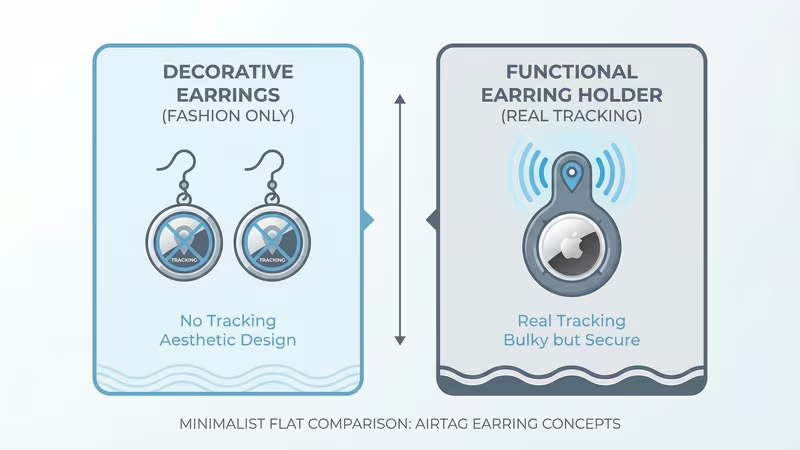
"AirTag earrings" refers to two entirely different products: novelty earrings shaped like AirTags that contain no electronics, and functional holders that carry a real AirTag as a wearable earring. Search "AirTag earrings" on Amazon or Etsy and you get two categories mixed together. Knowing which is which before you buy saves a return.
Novelty earrings look like miniature AirTags. White disc, silver Apple logo aesthetic, sometimes with the stainless steel back texture. They cost $8-20 and contain zero electronics. No Bluetooth, no battery, no tracking. They're fashion accessories for Apple fans, and some look pretty good. If you're buying these expecting them to show up in Find My, that's not what they are.
Functional AirTag holders with earring hooks are rarer. These are small silicone or resin cases that hold a real AirTag 2 disc, with an attached earring wire, hoop, or ear cuff clip. They work. The AirTag inside broadcasts to the Find My network like any other AirTag. But they exist mostly on Etsy from small-batch makers, not from major accessory brands. That's a clue about the market reality.
How do you tell the difference when shopping? If a listing doesn't show the AirTag being inserted into the holder, or doesn't say "holds AirTag" in the description, it's almost certainly novelty. Most are. Price is another signal: novelty pairs run $8-20, while functional holders typically start at $15 for the case alone, AirTag not included.
The Weight Problem Nobody Talks About
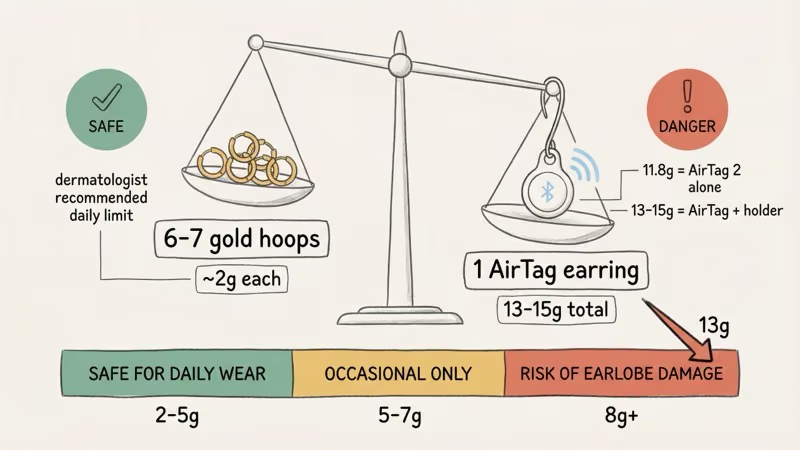
An AirTag earring weighs 13-15g with its holder, which is 2-3x above the 2-5g safe weight range for daily earring wear recommended by dermatologists. This is where the idea falls apart. Jewelry industry guidelines and dermatologists put comfortable all-day earring weight at 2-5g. Statement earrings for occasional wear top out around 7g. Go above 8g and you risk earlobe stretching, thinning, and eventually tearing.
An AirTag 2 weighs 11.8g by itself. Add any holder, even a minimal silicone sleeve with an earring hook, and you're at 13-15g. That's double the weight threshold where dermatologists start warning about tissue damage. For comparison, a standard gold hoop earring weighs about 2g. You'd need to hang six or seven of those from one ear to match the weight of a single AirTag earring.
I'm not being dramatic. Heavy earrings worn daily are one of the most common reasons people need earlobe repair. A 13g earring worn 8 hours a day will stretch a piercing noticeably within weeks. For a clip-on or ear cuff style (not through a piercing), the weight distributes differently and is more tolerable for short periods. But "tolerable for a few hours" is different from "comfortable enough to forget you're wearing."
| Earring Type | Typical Weight | Comfort for Daily Wear |
|---|---|---|
| Stud earrings | 1-2g | All day, no issues |
| Small hoops | 2-4g | All day, comfortable |
| Statement drops | 5-7g | A few hours, occasional wear |
| AirTag in holder | 13-15g | Uncomfortable within an hour |
Do Functional AirTag Earrings Actually Track?
Yes, functional AirTag earrings track exactly like any other AirTag placement, using Bluetooth pings relayed through Apple's Find My network of over 2 billion devices. Tracking works the same regardless of where you put the AirTag. Bluetooth pings reach nearby iPhones, which relay its position through the Find My network. Pocket, carabiner, dangling from your ear. Doesn't matter. The AirTag accuracy guide covers how often location updates come through in real conditions.
The earring-specific issues are all physical, not technical:
- Size: The AirTag is 31.9mm in diameter, about the size of a half-dollar coin. Even the slimmest holder makes it a very large earring. Ear cuffs that wrap around the upper ear hide the size better than drop styles.
- Battery access: The CR2032 battery door twists off the back. A holder that fully encloses the AirTag needs to come apart for the annual battery swap. Check before buying that you can open the holder without destroying it.
- Sound alert: AirTag 2's speaker is 50% louder than the original. If it gets separated from your phone and starts chirping, that's happening right next to your ear.
The Anti-Stalking Alert Problem
AirTag earrings trigger Apple's unwanted tracking alerts on nearby iPhones, typically within 30 minutes to 9 hours depending on conditions. Wear an AirTag earring on your daily commute and you'll run into Apple's unwanted tracking detection. Walk near the same iPhone user for several hours and their phone may flag your AirTag as "found moving with you." The system is working as designed. It can't be turned off.
How quickly do alerts fire? A 2023 Northeastern University study found the timing varies between 30 minutes and 9 hours depending on conditions. Alerts come faster at night and when the AirTag owner's phone is nearby. In crowded settings like public transit, gyms, or offices, false alerts are common enough that Apple Community forums have threads from frustrated commuters getting daily notifications about strangers' AirTags on the same train.
For the person wearing the AirTag, this is mostly their problem to explain. If someone confronts you about a tracking alert they received, saying "it's my earring" is a harder sell than pointing to a necklace pendant or a carabiner. For wearable tracking in crowded areas, it's a real usability issue that the "found moving with you" guide covers in more detail.
Better Wearable Alternatives

AirTag necklaces and bracelets are more practical wearable tracking options than earrings because they distribute the 11g weight across the neck or wrist instead of a single earlobe. If the goal is wearing an AirTag somewhere on your body, these work better than an earring:
- Pendant necklace holder: By far the most common way people wear AirTags. The AirTag necklace guide covers the best options. Weight spreads across a chain instead of pulling on one point, so 11g feels like nothing. Easy battery access, lots of design choices.
- Silicone bracelet: Wrist placement handles 11g without discomfort. Your wrist is built to carry watch-weight loads all day, and an AirTag bracelet weighs less than most smartwatches. Several vendors sell AirTag bracelet bands in silicone or TPU for $8-15. Good for kids at amusement parks or travelers in pickpocket-heavy areas.
- Clothing clip: A small clip-on holder that attaches to a collar, pocket edge, or waistband. Nearly invisible, no jewelry commitment, easy to move between outfits. Works especially well for younger children who fidget with jewelry.
If personal safety is your reason and you want tracking that stays on your body even if your bag gets snatched, a necklace or bracelet does the job without making your ears hurt. The best uses for AirTag guide goes into more wearable scenarios.
What About Smaller Trackers?
The Tile Sticker is the smallest mainstream Bluetooth tracker at 27mm diameter and 5-6g, making it the only current option that falls within heavy-statement-earring weight range. If earring-size tracking is what you're after, the Tile Sticker is worth a look. At 27mm diameter and 5-6g, it's noticeably smaller and lighter than an AirTag. That puts it in "heavy statement earring" territory rather than "this will damage your ear" territory.
You pay for that smaller size with worse tracking. Tile uses its own crowd-sourced network (via Life360), which is much smaller than Apple's Find My. No UWB precision finding. No Apple ecosystem integration. The battery lasts 3 years but isn't replaceable, so after three years you throw it away and buy another one. The AirTag alternatives guide breaks down Tile vs. AirTag in detail.
The bigger question is whether earring-mounted tracking solves a real problem. If your concern is personal safety while traveling, a necklace tracker that works internationally covers you better. If it's about keeping tabs on a child, a bracelet they can't easily remove beats an earring they'll take off before lunch.
Frequently Asked Questions
Can you actually track someone wearing an AirTag earring?
Yes, if it holds a real AirTag (not the novelty kind). Tracking works the same as any other AirTag placement. Location updates arrive each time an iPhone passes within Bluetooth range. But Apple's anti-stalking system means someone wearing an AirTag they didn't register will eventually get an alert on their phone. Using it on someone without consent is illegal.
Are novelty AirTag earrings worth buying as a gift?
For an Apple fan who likes themed accessories, sure. They cost $8-20 and the designs are often clever. Just be clear that they don't track anything. If the listing doesn't mention "holds AirTag" or show the disc being inserted, it's decorative only.
What weight earring can most people wear comfortably all day?
Dermatologists and jewelers put it at 2-5g for daily wear, up to 7g for occasional statement pieces. Above 8g, you risk earlobe stretching with regular use. An AirTag at 11.8g plus a holder (13-15g total) blows past that limit. Clip-on ear cuffs handle weight better than pierced earrings, but even then 13g gets uncomfortable within an hour or two.
Do AirTag earrings trigger anti-stalking alerts on other iPhones?
Yes. If your AirTag travels near another iPhone user for several hours, their phone may alert them to an unknown AirTag. This happens regularly on public transit and in offices. Apple's system checks for AirTags separated from their owner, and it cannot be turned off. Family Sharing can suppress alerts for shared AirTags within the same household.
Is there a smaller tracker that works better as jewelry?
The Tile Sticker (27mm, 5-6g) is the smallest mainstream option. It fits earring-scale holders better than AirTag, though it's still on the heavy side. The tracking network is much smaller than Apple's Find My. No current tracker is truly earring-weight (under 3g) with reliable crowd-sourced tracking.
Are custom AirTag earring holders available?
Yes, mostly on Etsy. Small-batch makers sell 3D-printed, resin-cast, or hand-crafted holders with earring hooks in various styles. Prices range from $15-35 for the holder alone (AirTag not included). Quality varies. Check reviews and confirm you can access the battery door without destroying the holder.
What's the most practical way to wear an AirTag?
A pendant necklace. The weight spreads across a chain so you don't feel it, battery swaps are easy, and there are way more design options than earring holders. Bracelets are second-best, especially for kids. Earrings are last on the list — the weight just makes them impractical for daily use.
The Bottom Line
AirTag earrings are a fun concept that runs into a basic physics problem. At 11-15g, they're too heavy for comfortable wear and too large to look subtle. The novelty versions are fine as Apple fan gifts. The functional versions work technically but fail practically for anything beyond brief wear at an event. If you want wearable AirTag tracking you'll use every day, start with a necklace. It does everything an earring would do, without the sore ears.
Last updated March 2026. Prices and product availability may have changed since publication.