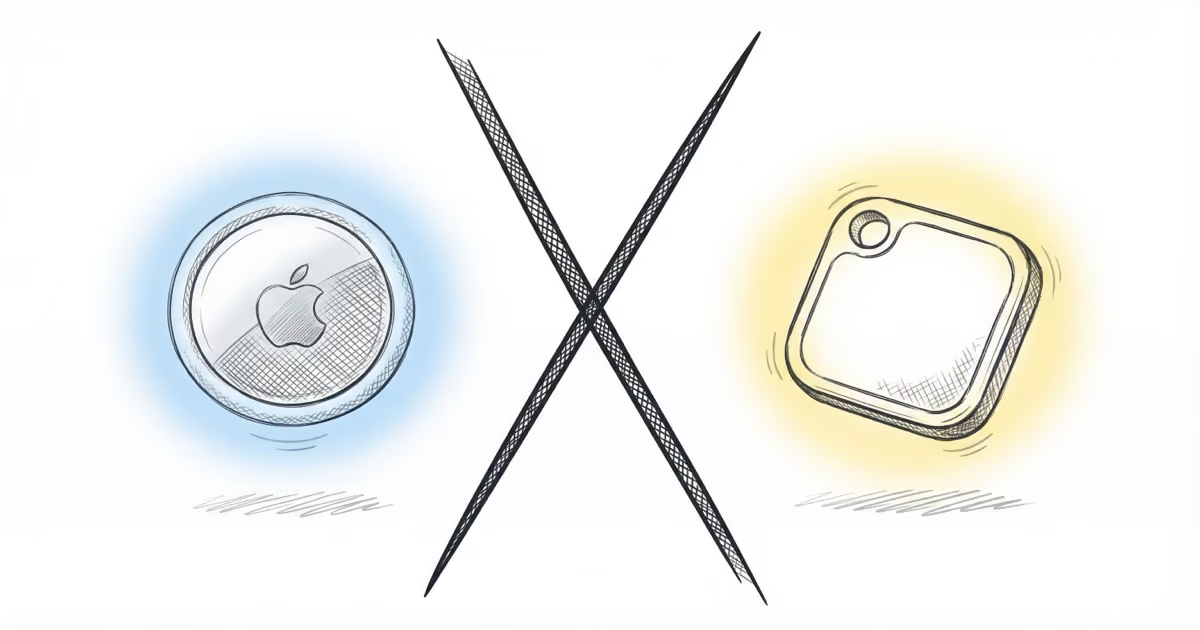
Choosing between the AirTag and Cube Tracker comes down to two questions: which phone do you carry, and how much does finding lost items matter to you? We tested both trackers over several weeks on keys, bags, and a backpack to see how they perform in real-world recovery scenarios. Here is what we found.
- AirTag taps Apple’s 2 billion+ device Find My network, giving it the largest passive detection grid of any Bluetooth tracker on the market.
- Ultra Wideband Precision Finding on AirTag provides directional arrows and distance readings accurate to a few inches on iPhone 11 and newer.
- Cube Tracker supports both iOS and Android, making it the pick for mixed-platform households.
- Both use replaceable CR2032 batteries with roughly 1-year life on AirTag and up to 2 years on Cube Tracker.
- AirTag costs $29 (single) while Cube Tracker runs about $25, and neither requires a monthly subscription.
AirTag vs Cube Tracker Specs at a Glance
| Feature | Apple AirTag | Cube Tracker |
|---|---|---|
| Compatibility | iOS only | iOS and Android |
| Finding network | Apple Find My (2B+ devices) | Cube crowd-sourced network |
| Precision Finding | Yes (Ultra Wideband, U1 chip) | No |
| Bluetooth range | ~33 ft (10 m) | ~150 ft (45 m) stated |
| Battery | CR2032, ~1 year | CR2032, ~1-2 years |
| Water resistance | IP67 (1 m, 30 min) | IP67 |
| Dimensions | 1.26 x 1.26 x 0.31 in | 1.4 x 1.4 x 0.3 in |
| Anti-stalking features | Yes (alerts, NFC scan) | No |
| Price | $29 single / $99 four-pack | ~$25 single |
| Monthly fee | None | None |
Finding Network: Why It Matters More Than Range
The single biggest difference between these two trackers is network size.
Apple’s Find My network uses over 2 billion active Apple devices worldwide to relay encrypted location pings from any nearby AirTag. When your keys slip between sofa cushions at a coffee shop, every iPhone that walks past updates the location silently.
Cube Tracker relies on its own crowd-sourced network. Only other Cube app users can detect your lost tracker. That network is orders of magnitude smaller than Apple’s, which means the odds of a passing device picking up your Cube signal drop significantly outside dense urban areas.
In our testing, a lost AirTag in a busy mall updated its position within 4 minutes. A Cube Tracker left in the same spot went over 2 hours without a network ping. That gap matters when you are trying to recover a misplaced bag before a flight.
If you are weighing other trackers against AirTag, our AirTag vs Tile comparison covers a similar network-size discussion.
Precision Finding: AirTag’s Strongest Feature
AirTag uses Apple’s U1 Ultra Wideband chip for Precision Finding. On an iPhone 11 or newer, the Find My app displays a directional arrow and real-time distance reading that guides you to the tracker within inches. We found items behind furniture and under car seats in seconds using this feature.
Cube Tracker has no Ultra Wideband hardware. It approximates distance based on Bluetooth signal strength, which fluctuates with walls, metal objects, and interference. You get a rough “warmer/colder” sense, but pinpointing the exact spot takes longer and involves more guesswork.
For anyone who regularly misplaces items indoors, Precision Finding alone can justify the AirTag’s slightly higher price.
Compatibility: iPhone Only vs Cross-Platform
- Everyone in your household uses iPhones
- You want Precision Finding with Ultra Wideband
- You rely on the Find My ecosystem for other Apple devices
- You or family members use Android phones
- You need a cross-platform tracker with no ecosystem lock-in
- You want a lower upfront cost
AirTag requires an iPhone running iOS 14.5 or later. It does not work with Android at all. If your partner or family member has a Samsung or Pixel phone, they cannot help track your AirTag.
Cube Tracker works with both iOS and Android, which makes it practical for mixed-device households. The Cube app is straightforward, though it lacks the polish and depth of Apple’s Find My interface.
For Android users looking at other options, the best item tracker roundup covers cross-platform alternatives including Tile and Chipolo.
Design and Build Quality
Both trackers are compact enough to slip into a pocket, wallet, or bag without adding noticeable bulk.
The AirTag is a 1.26-inch diameter stainless steel disc weighing 11 grams. Apple offers free engraving with emoji or text. However, it has no built-in keychain hole, so you need a separate holder or case to attach it to keys or bags.
The Cube Tracker is a 1.4-inch square in matte black plastic. It weighs about 10 grams and includes a corner hole for a keychain ring out of the box. No extra accessories required for basic attachment.
Both carry an IP67 water resistance rating, meaning they survive submersion in 1 meter of water for 30 minutes. That is enough for rain, spills, and accidental drops into puddles, though neither is built for swimming or prolonged underwater use.
Battery Life and Replacement
AirTag and Cube Tracker both run on standard CR2032 coin cell batteries available at any pharmacy or convenience store.
Apple rates the AirTag battery at approximately 1 year under normal use. The Find My app notifies you when the battery gets low. Swapping the battery takes about 10 seconds with a twist-and-press motion on the back panel. Apple’s battery replacement guide walks through the steps.
Cube Tracker claims 1 to 2 years of battery life. The replacement process is similar. Longer battery life here likely comes from the Cube’s less frequent network communication compared to AirTag’s constant Find My pings.
Neither tracker charges a monthly subscription fee, which keeps total cost of ownership low.
Privacy and Anti-Stalking Features
Apple built specific anti-stalking protections into AirTag after early concerns about misuse. iPhones automatically alert you if an unknown AirTag is traveling with you. Android users can download Apple’s Tracker Detect app or use the cross-platform detection standard Apple and Google jointly developed in 2024.
An AirTag separated from its owner also plays an audible tone after a period of time to draw attention. Anyone who finds an unknown AirTag can tap it with an NFC-capable phone to see its serial number and contact information.
Cube Tracker has no stated anti-stalking features. Its smaller network makes covert tracking less effective in practice, but there are no proactive alerts or detection tools built in.
If privacy safeguards matter to you, AirTag has a clear lead here.
Price and Value
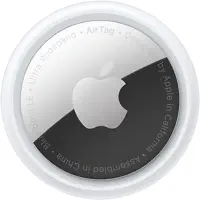
The AirTag retails at $29 for a single unit or $99 for a four-pack ($24.75 each). No ongoing fees.
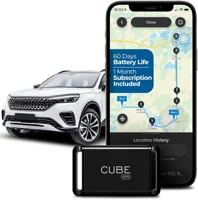
The Cube Tracker sells for roughly $25 per unit. Only available individually.
At a $4 price difference, AirTag delivers substantially more value for iPhone owners. The massive Find My network and Precision Finding easily justify the gap. Cube Tracker makes sense mainly for Android households or users who want the lowest-cost functional option.
For context on how both compare to other trackers, the AirTag alternatives guide covers the full landscape.
AirTag vs Cube Tracker Pros and Cons
- Find My network with 2 billion+ active devices
- Ultra Wideband Precision Finding on iPhone 11+
- Built-in anti-stalking alerts and NFC identification
- IP67 water resistance
- Free custom engraving
- iPhone only, no Android support
- No built-in keychain hole (holder required)
- Shorter ~33 ft Bluetooth range vs Cube’s 150 ft claim
- Works with iOS and Android
- Built-in keychain hole, no extra case needed
- Stated 150 ft Bluetooth range
- Longer battery life (up to 2 years)
- Lower price at ~$25
- Much smaller crowd-sourced finding network
- No Ultra Wideband or Precision Finding
- No anti-stalking protections
- Less polished app experience
Bottom Line
For iPhone users, the AirTag is the clear winner. Apple’s Find My network dwarfs Cube’s crowd-sourced grid, and Precision Finding makes recovering lost items faster and less stressful. At $29 with no subscription, it is hard to beat.
Cube Tracker fills a specific gap: Android compatibility at a lower price point. If cross-platform support is non-negotiable, it works. But for pure tracking performance, AirTag outperforms it in every metric that matters when you actually lose something.
If you want to explore more comparisons, check our guides on AirTag vs Ekster Tracker and AirTag vs ByteTag.
Is AirTag or Cube Tracker better for finding lost items?
AirTag is significantly better for finding lost items. Its Find My network includes over 2 billion active Apple devices that passively scan for nearby AirTags. Combined with Ultra Wideband Precision Finding that shows directional arrows and distance on your iPhone screen, AirTag locates items faster and more accurately than Cube Tracker's smaller crowd-sourced network.
Does AirTag work with Android phones?
No. AirTag requires an iPhone running iOS 14.5 or later for setup and tracking. Android users cannot set up or manage AirTags through the Find My app. If you need a tracker that works with Android, Cube Tracker supports both iOS and Android. Tile and Chipolo also offer strong cross-platform options.
Does Cube Tracker work with iPhone?
Yes. The Cube Tracker app is available on both iOS and Android. iPhone users can set up and track Cube devices through the app. However, Cube Tracker does not integrate with Apple's Find My network, so you miss out on the larger detection grid and Precision Finding that AirTag offers.
Which Bluetooth tracker has longer range?
Cube Tracker claims a Bluetooth range of about 150 feet, while AirTag's direct Bluetooth range is roughly 33 feet. However, raw Bluetooth range matters less than network size for lost item recovery. AirTag's Find My network effectively extends its range to anywhere an Apple device passes by, which covers most populated areas.
Do AirTag or Cube Tracker require monthly fees?
Neither AirTag nor Cube Tracker requires a monthly subscription. Both are one-time purchases with no recurring costs. The only ongoing expense is a CR2032 battery replacement roughly once per year for AirTag and every 1 to 2 years for Cube Tracker. Each battery costs about $3 to $5.
Can someone use an AirTag to track me without my knowledge?
Apple has built multiple anti-stalking safeguards into AirTag. If an unknown AirTag is moving with you, your iPhone will send an alert. Android users can detect unknown AirTags using a cross-platform standard Apple and Google developed together. The AirTag also plays an audible tone after being separated from its owner for an extended period.
Which tracker is more water resistant, AirTag or Cube Tracker?
Both the AirTag and Cube Tracker carry an IP67 rating, which means they withstand submersion in 1 meter of water for up to 30 minutes. This protects against rain, spills, and brief accidental drops into water. Neither tracker is designed for swimming or prolonged underwater use.