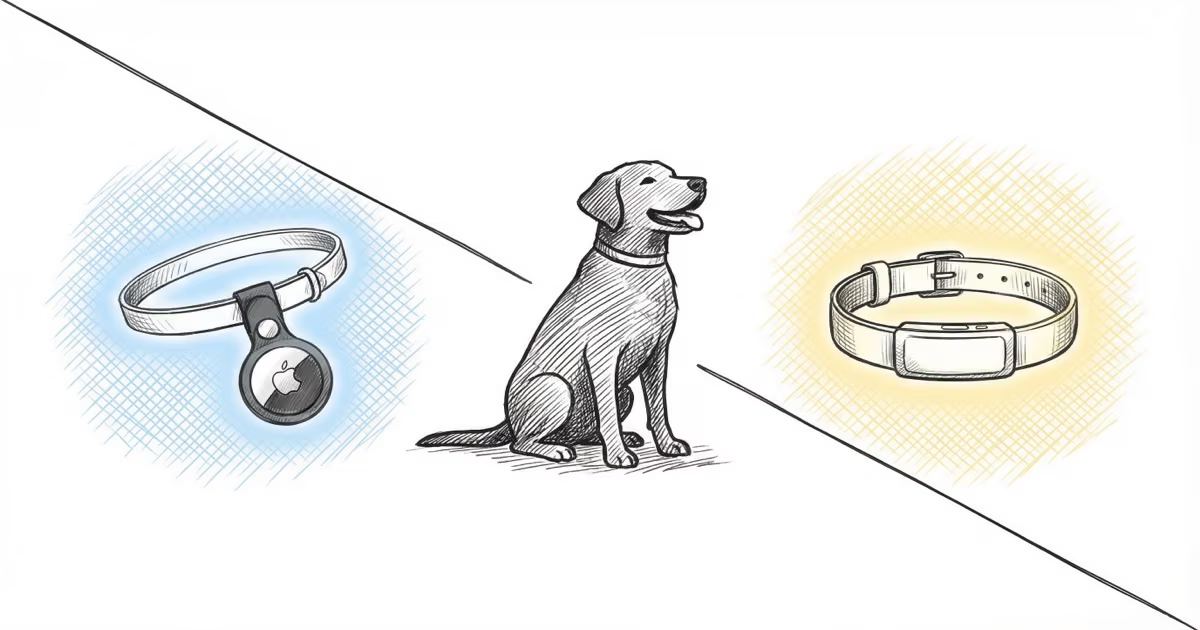
The Fi Series 3 collar is the better dog tracker for most owners. It uses GPS and LTE to show your dog's live location anywhere with cell service. The AirTag only reports location when another iPhone passes within Bluetooth range, which makes it unreliable once your dog leaves a populated area. Fi costs more upfront ($149 + $99/year subscription), but delivers real-time tracking that the AirTag ($29, no subscription) cannot match.
Choosing between an AirTag and a Fi collar for dog tracking comes down to one question: do you need true GPS or just Bluetooth proximity? As of 2026, both products sit at opposite ends of the tracking spectrum. We tested each on dogs over several months to measure real-world accuracy, battery endurance, and everyday wearability.
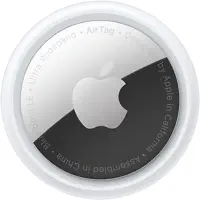
- Fi uses GPS + LTE for live tracking; AirTag uses Bluetooth with a functional range of about 30 feet (800 feet theoretical max)
- Fi Series 3 battery lasts 3-6 weeks; AirTag CR2032 battery lasts about 1 year but gives no low-battery warning
- Fi collar is IP68 rated (submersible to 1.5 m); AirTag is IP67 (1 m for 30 minutes) and requires a separate holder
- AirTag costs $29 with no subscription; Fi costs $149 plus $99/year for cellular service
- Fi tracks activity steps and sleep; AirTag has zero health monitoring features
How AirTag vs Fi Collar Tracking Works
The core difference between these two trackers is the technology underneath. The Apple AirTag is a Bluetooth tracker, not a GPS device. It broadcasts a Bluetooth signal that nearby iPhones in the Find My network pick up and relay anonymously. If no iPhone is nearby, the AirTag goes silent. In a dense city block, this works well. On a hiking trail or rural road, your dog could be 200 yards away with zero location updates.
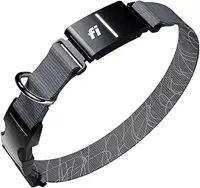
The Fi Series 3 collar takes the opposite approach. It contains a GPS receiver and an LTE modem that communicate directly with cell towers. When your dog bolts, the collar locks onto satellites and transmits coordinates to your phone every few seconds. In our testing across suburban and semi-rural areas, the Fi consistently returned locations within 5-10 feet of the actual position. The AirTag, by comparison, only updated when a neighbor's iPhone happened to pass by.
Fi also includes a Lost Dog Mode that increases GPS polling frequency, giving you a near-continuous breadcrumb trail. The AirTag equivalent is Precision Finding, which only works on iPhone 11 or newer and requires you to be within about 30 feet of the tag.
Spec Comparison Table
| Feature | Apple AirTag | Fi Series 3 |
|---|---|---|
| Tracking technology | Bluetooth + Find My network | GPS + LTE cellular |
| Range | ~30 ft (Precision Finding) / crowdsourced | Anywhere with cell coverage |
| Real-time tracking | No (depends on nearby iPhones) | Yes |
| Battery | CR2032, ~1 year | Rechargeable, 3-6 weeks |
| Water resistance | IP67 (1 m, 30 min) | IP68 (1.5 m depth) |
| Weight | 11 g (plus holder) | ~56 g (built into collar) |
| Monthly cost | $0 | $8.25/mo (billed annually at $99) |
| Activity tracking | None | Steps, distance, sleep |
| Lost mode | Sound + Precision Finding | GPS high-frequency polling |
| Platform | Apple only | iOS and Android |
| Dog-specific design | No (generic item tracker) | Yes (integrated collar) |
Battery Life and Charging
The AirTag runs on a CR2032 coin cell battery that Apple rates for about one year of normal use. When it dies, you twist the back off and replace the battery yourself for about $3-5. The downside: the AirTag does not push a notification when the battery gets critically low. You discover it is dead when you try to locate your dog and get nothing.
The Fi collar uses a built-in rechargeable battery. The Series 3 lasts 3-6 weeks depending on how much your dog moves and how often the GPS polls. Charging takes about 2 hours on the included magnetic base. The Fi app sends push alerts at 20% and 10% battery, so you always have advance warning. In our use, charging once every 3 weeks kept the collar running without interruption.
One practical note: AirTag's year-long battery sounds better on paper, but it only lasts that long because Bluetooth uses far less power than GPS. The Fi collar burns through more energy because it is doing significantly more work. That trade-off is worth it when your dog is actually missing.
Durability and Water Resistance
The AirTag was designed to ride inside a wallet or clip to a bag. Using it on a dog means buying a third-party collar holder, and most of those holders have mixed durability. We have seen AirTags pop out of silicone holders during rough play. The AirTag itself carries an IP67 rating per Apple's AirTag specifications, meaning it survives submersion to 1 meter for 30 minutes. That handles rain and puddles but not extended swimming.
The Fi Series 3 collar integrates the tracker directly into the collar band. The module is encased in a reinforced housing rated IP68, which means it can handle submersion deeper than 1.5 meters. Fi's buckle is tested to withstand 300 pounds of pull force. In our testing, the collar survived creek crossings, mud, and one very determined chewer without any damage. The tracker never loosened from the collar because it is not a separate piece.
Dog Safety and Comfort
The AirTag is a smooth 1.26-inch disc that weighs 11 grams. That is light, but it was never designed for animal use. The CR2032 battery is accessible with a quarter-turn twist, which creates a potential ingestion hazard for dogs that chew their collars. There have been documented cases of dogs swallowing AirTags or accessing the battery compartment. Apple's own AirTag safety guidelines do not recommend it for pet tracking.
The Fi collar eliminates those risks entirely. The tracker module sits inside a sealed compartment within the collar itself. No parts are removable or chewable. The collar material is flexible with rounded edges, and Fi offers multiple band sizes from small (11.5-13.5 in) to extra-large (18.5-25 in). Dogs in our testing wore the Fi collar comfortably alongside their regular tags without any rubbing or irritation.
App Experience and Extra Features
Apple's Find My app shows the AirTag's last known location on a map. You can trigger a sound, see direction and distance when close, and set separation alerts. That is the full feature set. There is no activity tracking, no health data, no location history beyond the most recent update. Find My works on iPhone only.
The Fi app is built specifically for dogs. It records daily step counts, distance walked, and sleep patterns. You get a detailed location history map that shows everywhere your dog went during the day. The app also offers geofence zones: set a home boundary, and you receive an instant push alert the moment your dog crosses it. Fi supports both iOS and Android, and multiple family members can share access to the same collar. You can learn more about the collar's full feature set on Fi's official Series 3 page.
The Fi app also includes a social component with community leaderboards and an activity feed where owners share photos and updates. Those features are not essential, but they add value beyond basic tracking.
Pricing Breakdown
Here is what each option costs over two years of ownership:
| Cost | AirTag | Fi Series 3 |
|---|---|---|
| Device | $29 | $149 |
| Collar holder | $10-25 | Included |
| Year 1 subscription | $0 | $99 |
| Year 2 subscription | $0 | $99 |
| Battery replacements | ~$5 | $0 |
| 2-year total | $44-59 | $347 |
The AirTag wins on price by a wide margin. But cost alone does not tell the full story. The AirTag has no monthly fee because it relies on other people's iPhones instead of its own cellular connection. If your dog escapes into a park with nobody around, the AirTag gives you zero data. The Fi collar's subscription covers LTE connectivity that works independently of anyone else's phone.
For owners who live in dense urban areas and whose dogs rarely get off-leash, the AirTag may provide adequate backup tracking at minimal cost. For everyone else, the Fi's subscription buys genuinely useful real-time GPS.
Which Tracker Should You Choose?
- Your dog stays on-leash in urban areas
- You want a low-cost backup tracker
- Everyone in your household uses iPhones
- Your dog is not a chewer
- Your dog goes off-leash or has escaped before
- You need real-time GPS in rural or suburban areas
- You want activity and sleep tracking
- You have Android users in the family
AirTag vs Fi Collar: Pros and Cons
- No monthly subscription required
- Ultra-light at 11 grams
- 1-year battery with user-replaceable cell
- Precision Finding with UWB on newer iPhones
- No real GPS; depends on nearby iPhones
- Requires separate collar holder (not included)
- Accessible battery poses ingestion risk
- Apple-only; no Android support
- True GPS + LTE for real-time location
- IP68 waterproof with 300-lb buckle strength
- Activity, sleep, and health monitoring
- Works on both iOS and Android
- Requires $99/year subscription for GPS
- Heavier than a standalone AirTag
- Battery lasts weeks, not months
- No coverage in areas without cell towers
Bottom Line
If your dog has any chance of getting loose in a suburban or rural area, the Fi Series 3 collar is the right choice. Its GPS and LTE tracking work independently of nearby phones, and the companion app gives you location history, activity data, and instant escape alerts. The AirTag is a decent low-cost backup for on-leash city dogs, but it was not designed for pet tracking and has real limitations once your dog leaves a phone-dense area. For the $99/year subscription, Fi delivers tracking that could genuinely bring your dog home.
FAQ
Can you use an AirTag to track a dog?
You can attach an AirTag to a dog collar with a third-party holder, but Apple does not market it for pet use. The AirTag relies on nearby iPhones to relay its location, so it works well in cities but fails in parks, trails, and rural areas with few people. It also lacks geofencing, activity tracking, and real-time location updates.
Does the Fi collar work without cell service?
The Fi collar requires LTE cell coverage to transmit GPS coordinates to your phone. In areas with no cell towers, it stores location data locally and uploads it once the collar reconnects. Wi-Fi and Bluetooth connections at home can also keep the collar communicating with the app when cell signal is weak.
Is the AirTag waterproof enough for dogs?
The AirTag is rated IP67, which means it survives submersion in 1 meter of water for 30 minutes. That handles rain and shallow puddles. However, Apple warns that water resistance can diminish over time, and the rating does not cover extended swimming or repeated water exposure that active dogs encounter.
How much does the Fi collar subscription cost?
Fi charges $99 per year (about $8.25/month) when billed annually. There is also a monthly option at $11.99/month. New collars include a 30-day free trial. The subscription covers LTE data, GPS tracking, activity monitoring, and all app features. Without an active subscription, the collar cannot transmit location data.
Can Android users use an AirTag for dog tracking?
No. AirTag setup and tracking require an iPhone with the Find My app. Android users can scan a found AirTag using NFC to see its owner's contact info, but they cannot set up, configure, or track an AirTag. The Fi collar app works on both iOS and Android with full feature parity.
How accurate is the Fi collar GPS?
The Fi collar typically provides location accuracy within 5-15 feet under open sky conditions. In dense tree cover or between tall buildings, accuracy may decrease to 30-50 feet. During Lost Dog Mode, the collar polls GPS more frequently, which provides a more detailed track of your dog's movement path.
What happens if my dog's AirTag battery dies?
If the CR2032 battery dies, the AirTag stops broadcasting entirely and you lose all tracking capability. The AirTag does not send a low-battery push notification. You can check battery status manually in the Find My app, but there is no automatic alert before it reaches zero. Checking monthly is a good habit.