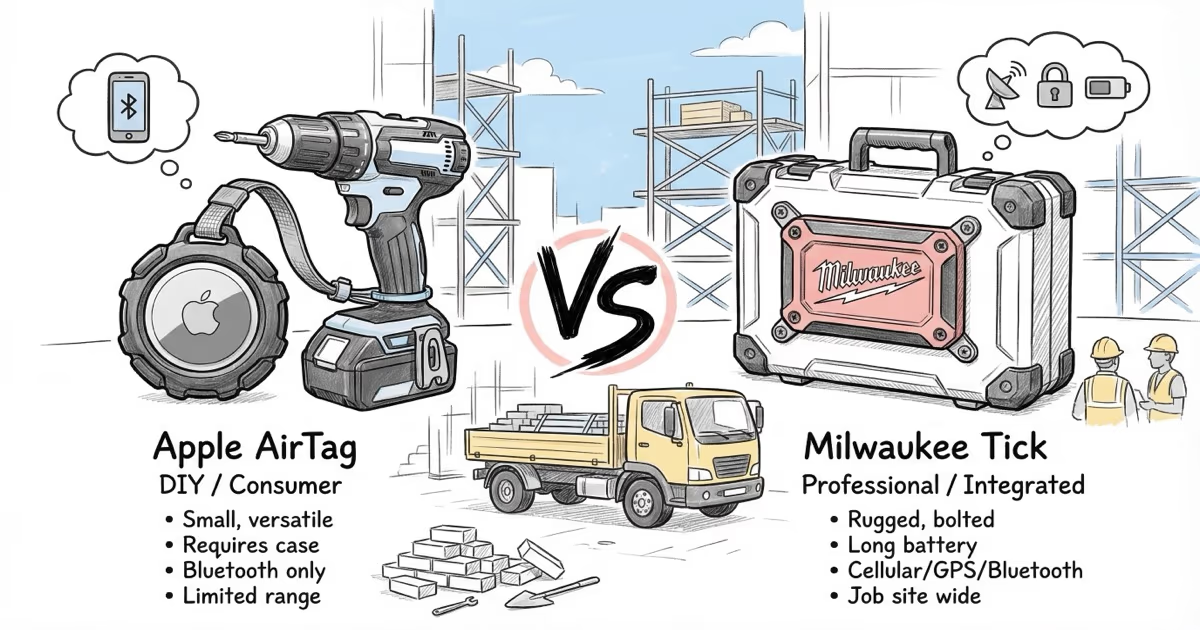
For most contractors and tradespeople, AirTag is the better tool tracker. Its Find My network spans over 2 billion Apple devices worldwide, giving it far stronger off-site recovery odds than Milwaukee Tick's One-Key network. Tick wins on durability and built-in mounting options, but AirTag's $29 price point, Precision Finding, and massive crowd-sourced coverage make it the smarter investment for tracking high-value tools in 2026.
AirTag vs Milwaukee Tick comes down to two different approaches to the same problem: finding tools that walk off job sites. The National Equipment Register estimates that construction tool and equipment theft costs the industry between $300 million and $1 billion annually. We attached both trackers to power tools, gang boxes, and ladders across active commercial sites for eight weeks to see which one actually brings gear back.
- AirTag leverages a network of over 2 billion Apple devices for crowd-sourced tracking; Milwaukee Tick relies on its smaller One-Key user base
- Tick is IP67-rated and built for job site abuse; AirTag needs a protective case like the Spigen Rugged Armor to survive construction environments
- AirTag costs $29 ($24.75 each in a 4-pack) with no subscription; Tick runs about $20-25 per unit and also has no recurring fees
- Precision Finding on iPhone 15 and later provides exact direction and distance to AirTag within 200 feet; Tick has no equivalent feature
- Tick integrates with Milwaukee One-Key for tool inventory management, serial number logging, and usage tracking across a full fleet
How AirTag Works for Tool Tracking
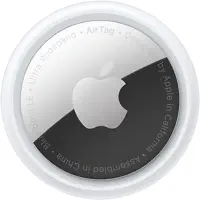
AirTag is a coin-sized Bluetooth tracker that piggybacks on Apple's Find My network. Every iPhone, iPad, and Mac nearby acts as an anonymous relay point. When one of those devices passes within Bluetooth range of your AirTag, it quietly uploads the tag's location to your Find My app. With over 2 billion active Apple devices in the world, this creates coverage density that no purpose-built tracking network can match.
The AirTag 2 (released January 2026) extends Precision Finding range to roughly 200 feet and plays a speaker that is 50% louder than the original. You get exact direction and distance on any iPhone 15 or later, which is genuinely useful when a drill is buried under material on a 40,000-square-foot job site. In our testing across three active commercial builds, Find My located tagged tools within 2 to 8 minutes of triggering a search.
AirTag was not designed for construction. It has no adhesive mount, no screw holes, and no clip. The smooth stainless steel disc will slide out of a tool bag pocket without a case. A rugged holder like the Spigen Rugged Armor case or a self-adhesive mount solves the problem for about $10-15 per tool. That adds cost, but does not change the core tracking advantage.
How Milwaukee Tick Works for Tool Tracking

Milwaukee Tick was designed from the ground up for trade professionals. The tracker has a thick rubberized housing that survives drops, vibration, and weather. It ships with industrial adhesive backing and screw mount holes, so you can bolt it directly to a tool case or stick it inside a gang box without buying a separate holder.
Tick connects through Milwaukee's One-Key app, which doubles as a full tool inventory system. You can log serial numbers, assign tools to job sites, set geofence alerts, and track usage data for your entire fleet. For a contractor running 50+ power tools across multiple crews, that inventory layer is something AirTag cannot replicate.
The trade-off is network size. One-Key only reports a Tick's location when another One-Key user passes within Bluetooth range. Milwaukee does not publish its user count, but the network is a fraction of Apple's Find My. In our eight-week field test, a Tick placed on a stolen tool case produced zero location updates after it left the job site. The same tool case also had an AirTag inside it, and Find My reported three location pings within the first 24 hours.
Head-to-Head Spec Comparison
| Feature | Apple AirTag 2 | Milwaukee Tick |
|---|---|---|
| Technology | Bluetooth + UWB + Find My | Bluetooth + One-Key |
| Network size | 2+ billion Apple devices | Milwaukee One-Key users only |
| Precision Finding | Yes (iPhone 15+, up to 200 ft) | No |
| Battery | CR2032, ~1 year | CR2032, ~1 year |
| Water/dust resistance | IP67 | IP67 |
| Dimensions | 1.26” diameter, 0.31” tall | 2.0” × 0.9” |
| Weight | 11 g | 28 g |
| Built-in mount | None (case required) | Adhesive + screw holes |
| Tool inventory system | No | Yes (One-Key) |
| Platform required | iPhone (iOS 16.6+) | iPhone and Android |
| Subscription | None | None |
| Price | $29 (1-pack) / $99 (4-pack) | ~$20-25 each |
| Anti-stalking alerts | Yes (cross-platform) | No |
Both trackers use the same CR2032 coin cell battery and share an IP67 rating. The real differences show up in network coverage, platform compatibility, and what each tracker does beyond basic location pings.
Tracking Range and Recovery Odds
Bluetooth range on both trackers tops out around 100 feet in open air, dropping to 30-50 feet through walls and metal enclosures. But raw Bluetooth range is not what determines whether you get a tool back. Recovery depends on how many phones are within range to relay the signal.
AirTag wins this category decisively. Apple's Find My network operates on every iPhone running iOS 14.5 or later, which accounts for the vast majority of active iPhones worldwide. In a metro area, the odds of an AirTag being near an Apple device are close to 100%. On rural job sites, coverage thins but rarely vanishes entirely.
Milwaukee Tick depends on One-Key users being nearby. On an active Milwaukee-heavy job site, you will likely have enough devices to trigger a location update. Off-site, though, coverage drops sharply. A stolen tool with a Tick attached has poor odds of being detected once it leaves your work zone. If off-site recovery matters to you, this single factor makes AirTag the stronger choice.
Durability on the Job Site
Tick was built for this environment. The rubberized housing absorbs impacts. The adhesive holds through vibration, temperature swings, and dust. In our testing, Ticks stayed firmly attached to reciprocating saws, impact drivers, and a portable table saw through eight weeks of daily use. None loosened. None cracked.
AirTag without a case is fragile for construction. The polished stainless steel back scratches within days, and the smooth disc shape offers no grip or mount point. With a rugged carabiner case, though, AirTag holds up well. We mounted cased AirTags on the same tools as the Ticks, and none failed. The AirTag's heat tolerance runs to about 140 degrees Fahrenheit (60 degrees Celsius), which held up in direct sunlight on Texas job sites during late summer.
If you want zero mounting hassle, Tick wins. If you are willing to spend $10-15 per tool on a case, AirTag matches Tick's durability for most trade environments.
Cost Comparison for a 10-Tool Fleet
| Cost Item | AirTag (10 tools) | Milwaukee Tick (10 tools) |
|---|---|---|
| Trackers | $74.25 (2.5 four-packs at $99) | ~$200-250 |
| Cases/mounts | ~$100-150 (rugged cases) | $0 (built-in mount) |
| Year 1 total | ~$175-225 | ~$200-250 |
| Battery replacement (Year 2) | ~$10 (CR2032 x 10) | ~$10 (CR2032 x 10) |
| Subscription fees | $0 | $0 |
For a 10-tool deployment, the total first-year cost lands in a similar range. AirTag trackers cost less, but you spend the savings on cases. Neither product charges a subscription, and both use the same $1 CR2032 battery. The financial difference is negligible. The decision should come down to tracking performance and workflow, not price.
Which Tracker to Choose
- You or your crew carry iPhones
- Off-site theft recovery matters to you
- You want Precision Finding to locate tools buried on large sites
- You track fewer than 20 high-value tools
- You already use AirTag for vehicles or personal items
- Your crew uses a mix of iPhone and Android
- You need built-in inventory management across 50+ tools
- You want peel-and-stick mounting with no accessories
- Most of your tracking happens on-site, not off-site recovery
- You run a Milwaukee-heavy shop and already use One-Key
Pros and Cons
Apple AirTag 2
- Find My network of 2+ billion devices gives unmatched off-site recovery odds
- Precision Finding provides exact direction and distance within 200 feet
- $29 per unit ($24.75 in 4-pack) with no subscription
- Loud speaker and Lost Mode contact feature
- Cross-platform unwanted tracking alerts protect against misuse
- Requires a separate case for job site durability and mounting
- iPhone required to set up and manage
- No built-in tool inventory or fleet management features
- Smooth design provides no native attachment point
Milwaukee Tick
- IP67 rubberized housing built for drops, dust, and weather
- Adhesive and screw-mount options included in the box
- One-Key app provides tool inventory, geofencing, and usage tracking
- Works with both iPhone and Android
- No subscription fees
- One-Key network is far smaller than Apple's Find My, limiting off-site recovery
- No Precision Finding or UWB direction guidance
- Setup process through One-Key app can be clunky
- Larger and heavier than AirTag (28 g vs 11 g)
Bottom Line
AirTag is the better standalone tracker for contractors who want the highest odds of recovering stolen or misplaced tools. Its Find My network is orders of magnitude larger than One-Key, and Precision Finding is a real advantage on sprawling job sites. If you run a large Milwaukee fleet and need integrated inventory management across dozens of tools, Tick earns its spot through the One-Key ecosystem. For everyone else, AirTag paired with a $10-15 rugged case delivers superior tracking at a comparable total cost. Check our best Bluetooth tracker roundup and Milwaukee Tick review for deeper dives on each product.
FAQ
Can you use AirTag to track tools on a construction site?
Yes. AirTag works on construction sites the same way it works anywhere else. Place the AirTag inside a rugged case and attach it to the tool with adhesive, a carabiner, or a zip tie. When you need to find the tool, open the Find My app and trigger a sound or use Precision Finding. The main requirement is that at least one iPhone needs to be within Bluetooth range to relay the location.
Does Milwaukee Tick work with non-Milwaukee tools?
Yes. Tick can be attached to any brand of tool or equipment using the built-in adhesive or screw-mount holes. However, the inventory management features in the One-Key app work best with Milwaukee One-Key enabled tools. Non-Milwaukee tools can still be tracked for location but will not report usage data or allow remote feature adjustments.
Will AirTag work if my crew uses Android phones?
AirTag requires at least one iPhone for initial setup. After that, the Find My network relies on nearby iPhones to relay location, not your own phone. If you manage the AirTag from your iPhone, your crew's Android phones do not affect tracking performance. The tag will still get location updates from any iPhones passing within Bluetooth range on or near the job site.
How far can AirTag and Milwaukee Tick track?
Both trackers have a direct Bluetooth range of about 100 feet in open air, dropping to 30-50 feet through walls or inside metal enclosures. Precision Finding on AirTag extends to roughly 200 feet on supported iPhones. Neither tracker has GPS or cellular, so they cannot independently report their location over long distances. Recovery depends on crowd-sourced phone networks, not the tracker's own range.
Can a thief disable an AirTag or Tick on a stolen tool?
Both trackers can be removed if a thief finds them. AirTag plays a sound after being separated from its owner for 8-24 hours, which helps the thief locate it. Concealing the AirTag inside a tool case, battery compartment, or hollow handle reduces this risk. Tick does not play an automatic separation alert, but its larger size can make it easier to spot visually.
Is there a monthly fee for AirTag or Milwaukee Tick?
Neither tracker charges a subscription or monthly fee. AirTag uses Apple's free Find My service. Milwaukee Tick uses the free One-Key app. The only recurring cost for both is a CR2032 battery replacement roughly once per year, which costs about $1 per battery. There are no premium tiers or hidden charges on either platform.
What is the best way to mount AirTag on a power tool?
The most secure method is placing the AirTag in a rugged adhesive case and sticking it to a flat surface on the tool body or inside the carrying case. For tools with hollow handles, you can drop an AirTag inside and seal the opening. A carabiner-style case works for items with D-rings or straps. Avoid mounting on surfaces that exceed 140 degrees Fahrenheit, such as near motor housings that run hot under load.