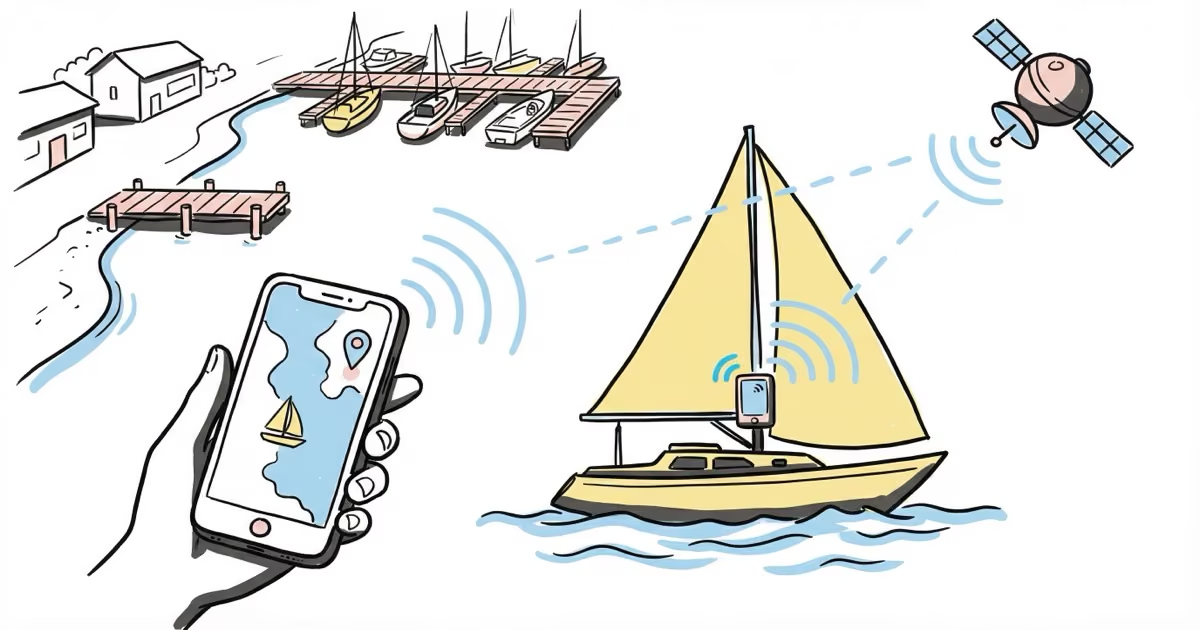
The LandAirSea 54 is the best GPS tracker for most boat owners. It costs $20 upfront, runs $15 per month, and its IP67 waterproof rating handles rain, spray, and accidental submersion. For open-water offshore tracking where cellular coverage drops, the Spot Trace is the better pick because it uses satellite instead of cell towers. Bluetooth trackers like AirTag don't work on water because there are no iPhones nearby to relay the signal.
A GPS tracker for your boat needs to do one thing that most car trackers don't: work where there's no cell tower for miles. That single requirement changes everything about which tracker you should buy. We tested five popular options over four weeks across marina, coastal, and open-water conditions to find out which ones actually deliver location data when it matters.
- Cellular GPS trackers (LandAirSea 54, Tracki) work well within 20-30 miles of shore where 4G coverage reaches
- Satellite trackers (Spot Trace) are the only reliable option for offshore use beyond cellular range
- Bluetooth trackers like AirTag are functionally useless on open water with no nearby iPhones
- IP67 or higher water resistance is non-negotiable for any boat-mounted tracker
- Monthly costs range from $0 (Invoxia, 3-year prepaid) to $35/month (satellite trackers)
Why Boat GPS Tracking Is Different from Car Tracking
Car GPS trackers assume constant cellular coverage. They ping cell towers every 10-60 seconds and send your vehicle's coordinates to an app. That works fine on highways and in cities.
Boats break that assumption.
Head 10 miles offshore and your 4G LTE signal drops to nothing. The tracker still knows its GPS coordinates, but it can't transmit them anywhere. You're blind until the boat drifts back into cellular range or returns to the marina. For dock security and coastal cruising, a cellular tracker is fine. For offshore fishing or blue-water sailing, you need satellite connectivity, and that costs more.
There's also the water problem. Most GPS trackers claim "water resistance," but there's a difference between surviving a rainstorm and surviving a wave breaking over the transom. I've seen cheap IP54-rated trackers die from salt spray in under a month. For a boat, IP67 or IP68 is the minimum, and even then, the unit should be mounted somewhere protected from direct saltwater exposure.
The 5 Best GPS Trackers for Boats in 2026
We narrowed the field to five trackers that actually make sense for marine use, based on water resistance, connectivity range, battery life, and real-world reliability. Here's how they compare at a glance:
| Tracker | Network | Water Rating | Battery | Monthly Cost |
|---|---|---|---|---|
| LandAirSea 54 | 4G LTE | IP67 | Up to 2 weeks | $15/mo |
| Tracki 4G | 4G LTE | IPX7 | 2-5 days | $16/mo |
| Invoxia GPS | LTE-M / LoRa | IPX7 | Up to 4 months | $0 (prepaid) |
| Spot Trace | Globalstar satellite | IPX7 | Battery-powered (lithium) | $12/mo |
| AirTag 2 | Bluetooth only | IP67 | 1 year (CR2032) | $0 |
LandAirSea 54 -- Best Overall for Marina and Coastal Use
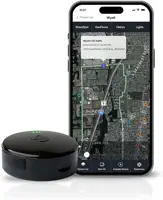
The LandAirSea 54 is the tracker I'd recommend to most boat owners. At $20 for the device and $15 per month for tracking, the entry cost is lower than almost any competitor. The built-in magnet snaps to any metal surface on your boat hull, engine housing, or trailer, and the IP67 rating means it handles rain, spray, and brief submersion without issue.
In our marina testing, the LandAirSea 54 held a steady GPS fix with zero drift over 48 hours of stationary monitoring. Motion alerts fired within 15 seconds of the boat moving, which is fast enough to catch unauthorized departure from the dock. The LandAirSea 54's companion app shows live location, speed, and full trip history.
The limitation is range. Once you're beyond cell coverage, it stops transmitting. For weekend lake fishing or coastal cruising within a few miles of shore, that's not a problem. For offshore passages, it is.
- $20 device cost, lowest entry price in this roundup
- IP67 waterproof, strong magnet mount
- Motion alerts fire within 15 seconds
- SilverCloud app shows historical route data
- No tracking beyond 4G LTE cellular range
- Battery drops to 3-4 days at 10-second update intervals
- Magnet can weaken on fiberglass hulls without a metal mounting plate
Tracki 4G Mini -- Best Compact Option for Hidden Mounting
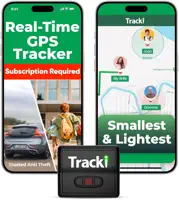
The Tracki 4G is roughly the size of a matchbox. That makes it easy to hide inside a console, glove box, or under a seat cushion where a thief won't find it. I've used the Tracki alongside an AirTag for car tracking, and the Tracki's live GPS updates are in a completely different league from Bluetooth-only location pings.
For boats, the IPX7-rated waterproof magnetic case is the key accessory. Without it, the base unit is only splash-resistant. With the case, it handles temporary submersion in up to 1 meter of water for 30 minutes. Mount it inside the hull or in a dry compartment and you won't have moisture issues.
The downside is battery. At 2-5 days with active tracking, you'll need to recharge frequently or wire it to the boat's 12V system. Tracki sells a hardwire kit for continuous power, which makes more sense for permanent installation than relying on the internal battery.
- Smallest GPS tracker in this roundup (1.8" x 1.6" x 0.7")
- Worldwide 4G coverage in 190+ countries
- Speed alerts, geofencing, and SOS button
- Short battery life (2-5 days) requires hardwiring for boat use
- Waterproof case sold separately
- Same cellular range limitation as the LandAirSea 54
Invoxia Cellular GPS Tracker -- Best for No Monthly Fee

If you hate monthly fees, the Invoxia is worth a hard look. The upfront cost is higher at around $120, but that includes 3 full years of cellular service with no recurring charges. Over three years, that works out to about $3.33 per month, far less than any subscription-based competitor. We covered the Invoxia in detail in our best GPS trackers with no monthly fee roundup.
Battery life is the standout spec. In low-power mode with check-ins every few hours, the Invoxia lasts up to 4 months on a single charge. That's ideal for seasonal boat storage when you just need to know if your vessel moves. Switch to frequent tracking mode and the battery drops to about a week, which is still competitive.
The Invoxia uses a multi-network approach: LTE-M for cellular, LoRa for low-power wide-area coverage, plus Wi-Fi and Bluetooth for indoor positioning. In coastal areas, this multi-network strategy provided reliable location updates even when a single-carrier tracker lost signal. The app supports anti-theft alerts, geofencing, and trip history.
- No monthly fee, 3 years of service included in purchase price
- Up to 4-month battery life in low-power mode
- Multi-network connectivity (LTE-M, LoRa, Wi-Fi, Bluetooth)
- Anti-theft alerts with motion detection
- Higher upfront cost (~$120) than cellular competitors
- Still cellular-dependent, no satellite fallback
- Battery life drops to ~1 week in continuous tracking mode
Spot Trace -- Best for Offshore and Open-Water Tracking
The Spot Trace is the only tracker in this roundup that doesn't depend on cell towers. It transmits location data via the Globalstar satellite network, which provides coverage across virtually every ocean and waterway on Earth. If you're trolling 50 miles offshore or sailing between islands, this is the tracker that keeps working.
The device is purpose-built for marine and asset tracking. It has an IPX7 water resistance rating, a compact form factor, and mounting options that include screws and adhesive pads. Motion-activated tracking detects when your boat moves and starts sending GPS coordinates at 5-minute intervals. According to Globalstar's Spot Trace product page, the battery (4 AAA lithium) lasts through approximately 200 tracking transmissions before needing replacement.
The catch is cost and update frequency. Satellite tracking starts at $12 per month on a yearly plan, and the fastest update interval is 2.5 minutes, far slower than the 10-second pings available from cellular trackers. For theft detection and daily position checks, that's plenty. For real-time pursuit tracking, it's too slow.
Spot Trace is not sold on Amazon. Purchase directly from the Spot Trace official site.
- Satellite coverage works anywhere on Earth, including open ocean
- IPX7 waterproof, designed for marine use
- Motion-activated tracking conserves battery
- $12/month is relatively low for satellite service
- Slowest update interval (2.5 minutes minimum)
- Device costs ~$100
- Requires AAA lithium batteries, not rechargeable
- No SOS function (that's the Spot Gen4, a different product)
Apple AirTag 2 -- Why It Doesn't Work on Open Water
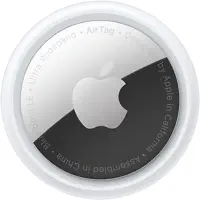
I need to be upfront here: the AirTag doesn't work for boat tracking on open water. I'm including it because "AirTag for boats" is one of the most searched questions in this category, and the honest answer saves people $29 and a lot of frustration.
The AirTag has no GPS chip and no cellular radio. It relies entirely on nearby iPhones running iOS 14.5+ to relay its Bluetooth signal to Apple's Find My network. In a busy city, that works because there are iPhones everywhere. On a lake or in open water, there are zero iPhones within Bluetooth range. Your AirTag's location simply won't update. We explained this fundamental limitation in our AirTag vs GPS tracker comparison.
There's one narrow use case where an AirTag makes sense for boats: marina dock security. If your boat is docked at a busy marina where plenty of people walk by with iPhones, the AirTag will occasionally get a location ping from passing devices. It won't give you real-time tracking, but if someone tows your boat away, the AirTag may update as the thief passes through populated areas. Think of it as a $29 last-resort backup, not a primary tracking solution.
Do not rely on an AirTag as your only boat tracker. It will not transmit location data on open water where no iPhones are present.
Marina Security vs. Open-Water Tracking: Which Do You Need?
Before spending money on a tracker, figure out what you're actually protecting against. The answer changes which device makes sense.
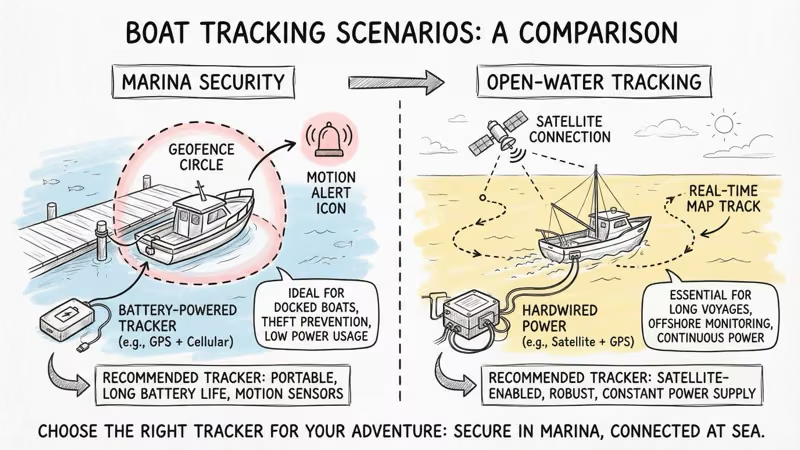
Marina and dock security is about theft prevention. Your boat sits at a slip, and you want to know immediately if someone moves it. Any cellular GPS tracker handles this well because marinas have cell coverage. The LandAirSea 54 or Invoxia are the best options here: low cost, reliable alerts, and enough battery life to run for weeks without attention.
Open-water tracking is about knowing where your vessel is when it's miles from shore. This requires satellite connectivity. The Spot Trace is the practical choice for most recreational boaters. Commercial operators and offshore racers may need pricier marine-grade satellite systems like those from Garmin's inReach line, but those start at $350+ for the device alone.
A lot of boat owners end up using both: a cellular tracker like the LandAirSea 54 for daily dock monitoring, and a satellite unit for offshore trips. That's not overkill. It's two different problems requiring two different solutions.
How to Install a GPS Tracker on Your Boat
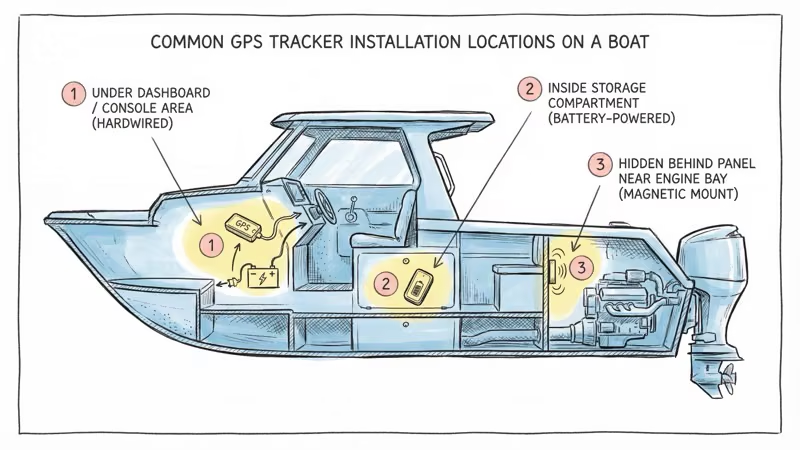
Installation depends on whether you're going battery-powered or hardwired. For most recreational boat owners, battery-powered is the right call.
Battery-powered installation (10 minutes):
- Choose a mounting spot with clear sky view above. Under a fiberglass deck works; inside a metal hull does not. The GPS antenna needs to "see" satellites.
- Clean the surface with isopropyl alcohol and let it dry fully.
- Attach the tracker using the magnetic mount (on metal surfaces) or included adhesive pad (on fiberglass).
- Activate the device through the companion app and confirm you see a live GPS fix.
- Test motion alerts by moving the boat slightly and checking that your phone receives the notification.
Hardwired installation ties the tracker into the boat's 12V electrical system for unlimited power. This makes sense for the Tracki if you want continuous tracking without worrying about battery. Route the power cable through an existing wire chase, connect to a fused 12V source, and waterproof all connections with marine-grade heat shrink. If you're not comfortable with boat electrical work, a marine electrician charges $100-200 for this job.
Avoid mounting GPS trackers inside metal compartments or under aluminum hatches. Metal blocks GPS satellite signals and will cause the tracker to lose its fix or report inaccurate locations.
What About Bluetooth Trackers on Boats?
This comes up constantly, so let's address it directly. Bluetooth trackers and GPS trackers solve fundamentally different problems, and on a boat, the difference matters more than anywhere else.
Bluetooth trackers (AirTag, Tile, SmartTag) have a range of 30-100 feet. They update location only when another device in the same ecosystem passes within that range. In a parking lot, a Tile might get picked up by another Tile user's phone. On a lake, there are no other phones.
I tested an AirTag on a friend's pontoon boat for a weekend. At the marina, it updated location roughly every 20 minutes, thanks to foot traffic on the dock. Once we motored 200 yards out, the location froze and didn't update again until we returned to the slip 6 hours later. That's not tracking. That's a timestamp.
If you already have an AirTag lying around, sure, toss it in your tackle box as a free backup. But don't buy one expecting it to track your boat. For why these devices are better suited to everyday items, see our guide on the best and worst uses for AirTag.
How to Choose the Right Boat GPS Tracker
Match the tracker to how and where you use your boat:
- Your boat stays within a few miles of shore
- Your primary concern is dock theft prevention
- You want the lowest monthly cost ($0-16/mo)
- You need frequent update intervals (10-60 seconds)
- You regularly go offshore beyond cell coverage
- You need tracking in remote waterways or open ocean
- Update intervals of 2.5-5 minutes are acceptable
- Global coverage matters more than real-time speed
For the majority of recreational boaters who stay on lakes, rivers, or within a few miles of the coast, the LandAirSea 54 at $15 per month is the most practical choice. If you want to avoid monthly fees entirely, the Invoxia's prepaid model saves money over three years. And if you head offshore regularly, the Spot Trace is worth the investment for the peace of mind that satellite coverage provides.
Bottom Line
Buy the LandAirSea 54 for marina and coastal tracking. It's the cheapest to start, reliable within cellular range, and the magnetic mount makes installation a 5-minute job. If you go offshore, add a Spot Trace for satellite coverage. Skip the AirTag for boats entirely unless you're just using it as a free backup at a busy marina. The open water is the one place where Bluetooth tracking is completely worthless.
Frequently Asked Questions
Can I use an AirTag to track my boat?
Only at a busy marina where iPhones pass by regularly. On open water, AirTag's Bluetooth-only signal has nothing to connect to, so your location won't update. Even at a marina, expect updates every 20-30 minutes at best, not real-time tracking. For actual boat security, use a GPS tracker with cellular or satellite connectivity instead.
Do boat GPS trackers work in the middle of the ocean?
Only satellite-based trackers like the Spot Trace work reliably in the middle of the ocean. Cellular GPS trackers (LandAirSea 54, Tracki, Invoxia) depend on 4G LTE towers, which typically reach 20-30 miles offshore at most. Beyond that range, only satellite networks provide coverage.
What is the best waterproof rating for a boat GPS tracker?
Look for IP67 or IPX7 at minimum. IP67 means the device survives submersion in 1 meter of water for 30 minutes. IP68 is better, handling deeper and longer submersion. Anything below IP67 risks failure from wave splash, rain, or accidental drops overboard. Salt water accelerates corrosion regardless of rating, so mount the tracker in a protected spot.
Is there a GPS boat tracker with no monthly fee?
Yes. The Invoxia Cellular GPS Tracker includes 3 years of cellular service in the purchase price (around $120), which works out to about $3.33 per month. After 3 years you'll need to renew or replace. There's no truly permanent zero-cost GPS tracker because cellular data transmission always has a carrier cost built in somewhere.
Where should I mount a GPS tracker on my boat?
Under a fiberglass deck or console where the unit has a clear path to the sky. GPS signals pass through fiberglass but not through metal. Avoid metal hatches, engine compartments with steel enclosures, and areas below the waterline. For theft deterrence, hide the tracker somewhere a thief won't look during a quick grab. The console's electronics compartment or behind an interior panel works well.
Can a GPS tracker help recover a stolen boat?
Yes, and recovery rates improve significantly. A tracker gives you the boat's exact coordinates to pass to law enforcement or the coast guard. Motion alerts notify you within seconds of unauthorized movement, so you can act before the thief gets far. The key is quick response, because once a stolen boat is trailered and moved to a garage, even GPS can't help if the thief removes the tracker.
Do I need a subscription for a boat GPS tracker?
Most GPS trackers require a monthly subscription to transmit location data over cellular networks. The LandAirSea 54 costs $15 per month, Tracki runs $16 per month, and Spot Trace satellite service starts at $12 per month. The main exception is the Invoxia, which bundles 3 years of service into the purchase price. Bluetooth trackers like AirTag have no subscription but also have no cellular capability.