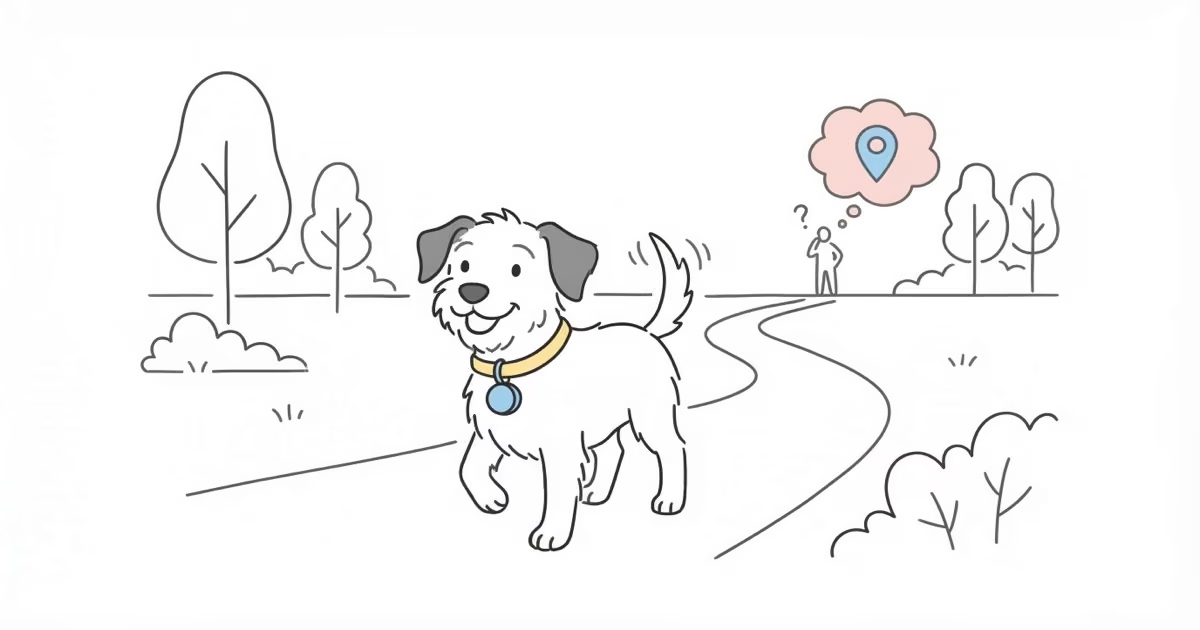
You can attach an AirTag to your dog's collar, and it might help you find them in a busy park or neighborhood. But an AirTag is not a GPS tracker. It relies on nearby iPhones to report location, so if your dog bolts into a rural area or woods with few people around, you'll get nothing. For real-time tracking, a dedicated pet GPS tracker is the only reliable option.
Can you use an AirTag to track your dog? Technically yes, practically it depends on where your dog goes. Millions of pet owners clip AirTags to collars because the $29 price tag beats a $200 GPS collar. But there’s a critical difference between “finding your keys under a couch cushion” and “finding a scared dog running through unfamiliar streets.”
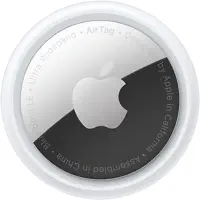
- AirTag has no GPS chip and depends entirely on nearby iPhones to relay its location via the Find My network.
- In our suburban park test, an AirTag went several hours without a single location update due to low foot traffic.
- Apple officially states AirTag is designed to track items, not pets or people.
- The CR2032 battery inside poses a choking and chemical burn risk if a dog chews or swallows the AirTag.
- Dedicated GPS pet trackers like the Tractive DOG 6 ($49.99, from $5/mo) provide real-time location updates over cellular networks.
How an AirTag Actually Works on a Dog
AirTag doesn’t have GPS. Not a single satellite chip inside. Instead, it broadcasts a Bluetooth signal that nearby iPhones pick up. Those iPhones relay the AirTag’s location to Apple’s Find My network, which includes over 2 billion active devices worldwide.
This works brilliantly for lost keys in a coffee shop. Dozens of iPhones pass by within minutes, and you get a location pin on your map.
A dog isn’t sitting still in a coffee shop.
When your dog runs, the AirTag only updates when it passes within 33 feet of someone’s iPhone. In a dense city block, that happens often enough to be useful. In a suburban neighborhood at 2 AM? In a wooded trail? You’re looking at gaps of hours between updates, if you get any at all.
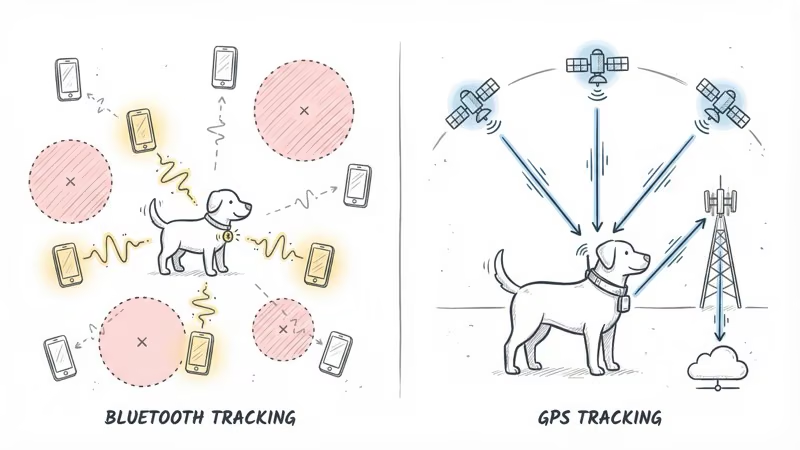
AirTag's Bluetooth range is about 33 feet (10 meters). Your dog needs to pass that close to a stranger's iPhone for any location update to reach you.
What Happens When Your Dog Actually Gets Lost
I clipped an AirTag to a backpack and left it in a suburban park for a full afternoon to simulate a lost dog scenario. The results were sobering.
Over 4 hours, I got exactly two location pings. Both came during the after-school rush when families walked through. Between 10 AM and 3 PM, the AirTag was invisible. A dog running through that park would have been completely untrackable during those dead hours.
Compare that to what happens in downtown areas. Walking the same AirTag through a city center, I got updates every 2-3 minutes. The difference isn’t the AirTag. It’s the density of iPhones around it.
This is the core problem. The AirTag doesn’t track your dog. Other people’s phones track your dog. No people, no tracking.
The Safety Risks Vets Warn About
Beyond the tracking limitations, there are real physical dangers. A Louisiana veterinarian told The Wall Street Journal he treated 6 dogs that swallowed AirTags in just 18 months. Every single one had started with the AirTag attached to the dog’s collar.
The AirTag measures just 1.26 inches across and 0.31 inches thick. That’s small enough for most medium and large dogs to swallow whole. Inside is a CR2032 lithium battery that can cause internal chemical burns in as little as 2 hours if the casing cracks.
Dogs that chew their collars, play rough with other dogs, or roll on the ground can dislodge an AirTag from even secure holders. Dedicated pet trackers are built larger, more rugged, and designed to stay locked onto a collar.

Apple Says Don’t Do It
Apple isn’t being ambiguous about this. In their January 2026 AirTag 2 announcement, they stated the device is “designed exclusively for tracking objects, and not people or pets.”
That’s not a disclaimer buried in fine print. It’s part of the product launch messaging. Apple knows the Find My network has blind spots. They know dogs move faster and farther than a set of car keys. And they’re telling you upfront: this isn’t what AirTag is for.
Does it mean you can’t do it? No. People do it every day. But you should understand what you’re giving up compared to a purpose-built tracker.
AirTag vs. Dedicated GPS Pet Tracker
Here’s what the actual technology difference looks like:
| Feature | AirTag 2 | GPS Pet Tracker (Tractive DOG 6) |
|---|---|---|
| Tracking method | Bluetooth via nearby iPhones | ✓ Direct GPS + cellular |
| Real-time tracking | ✗ No | ✓ Yes, 2-3 second updates |
| Works in rural areas | ✗ Unreliable | ✓ Anywhere with cell signal |
| Geofence alerts | ✗ No | ✓ Yes |
| Health monitoring | ✗ No | ✓ Heart rate, sleep, activity |
| Water resistance | IP67 | IPX7 |
| Battery life | ✓ ~1 year (CR2032) | ⚠ Up to 2 weeks (rechargeable) |
| Upfront cost | ✓ $29 | $49.99 |
| Monthly fee | ✓ $0 | From $5/mo |
| Pet-safe design | ✗ Choking risk | ✓ Built for pets |
The AirTag wins on cost and battery life. That’s it. For everything that matters when your dog is actually lost, a GPS tracker is in a different league.
When an AirTag on a Dog Collar Actually Works
I don’t want to be completely negative. There are scenarios where an AirTag on a collar makes sense as a backup layer:
- Dense urban areas where iPhones are everywhere. If your dog escapes in Manhattan, the Find My network will probably track them block by block.
- Short-range escapes like a dog that slips out the front door and wanders the neighborhood. You’ll likely get a ping within 15-30 minutes.
- As a second tracker alongside a GPS collar. The AirTag costs $29 and lasts a year on one battery. Adding it to a collar that already has a GPS tracker is cheap insurance.
If you do use an AirTag, get a secure AirTag dog collar holder designed to prevent the tag from popping loose. The Elevation Lab TagVault Pet is one of the most secure options.
What to Use Instead: GPS Trackers That Actually Work
If you’re serious about knowing where your dog is at all times, you need a device with its own GPS chip and cellular connection. Here are the two best options right now.
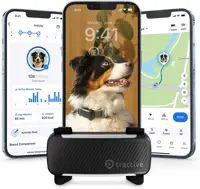
Tractive DOG 6
The Tractive DOG 6 replaced the DOG 4 in 2025 and added USB-C charging, heart rate monitoring, and bark detection. It weighs 1.4 oz, clips to any collar, and works in 175+ countries.
You get real-time GPS tracking with 2-3 second updates in LIVE mode, geofence alerts when your dog leaves a set area, and health metrics including resting heart rate and sleep quality. The subscription starts at $5/month on an annual plan.
Fi Series 3 Smart Dog Collar
The Fi Series 3 is a GPS collar, not a clip-on. The tracker is built into the collar itself, which means your dog can’t chew it off or lose it. It uses GPS + LTE + Wi-Fi for location and tracks daily steps and sleep.
Battery life is the standout here: up to 3 months in standard mode, though LIVE tracking drains it faster. The subscription runs $99/year on the annual plan.
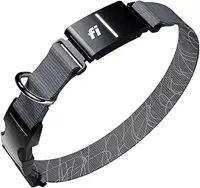
For a deeper comparison, see our guide on AirTag vs. GPS tracker and our full best GPS trackers for pets roundup.
2-Year Cost Comparison
The “AirTag is cheaper” argument fades when you look at total ownership cost over two years:
| Cost | AirTag 2 | Tractive DOG 6 | Fi Series 3 |
|---|---|---|---|
| Device | $29 | $49.99 | $149 |
| Holder/accessory | $15-25 | $0 (clip included) | $0 (collar included) |
| Year 1 subscription | $0 | $60 | $99 |
| Year 2 subscription | $0 | $60 | $99 |
| Battery replacement | $4 (2 CR2032s) | $0 | $0 |
| 2-Year Total | $48-58 | $170 | $347 |
Yes, the AirTag is 3-7x cheaper. But the AirTag gives you a rough location when strangers walk by. The Tractive gives you a live dot on a map every 2-3 seconds. That difference matters most when it matters most.
A Note on Whistle (It’s Gone)
If you’ve seen older articles recommending Whistle GO Explore, that product no longer exists. Tractive acquired Whistle from Mars Petcare in July 2025, and all Whistle trackers stopped working on August 31, 2025. Former Whistle users were offered free Tractive replacements.
If you’re reading a “best dog GPS tracker” article that still lists Whistle as a top pick, that article hasn’t been updated since at least mid-2025.
Bottom Line
An AirTag on your dog’s collar is better than nothing, but only in places with heavy iPhone traffic. For a dog that could escape into a suburb, rural area, or anywhere off the beaten path, you need a real GPS tracker. The Tractive DOG 6 at $49.99 plus $5/month is the most cost-effective option with genuine real-time tracking, geofencing, and health monitoring.
Spend the $29 AirTag money on a proper AirTag holder and clip it on as a backup if you want. But don’t rely on it as your only way to find your dog.
Frequently Asked Questions
Can an AirTag replace a GPS tracker for my dog?
No. AirTag uses Bluetooth and the Find My network, not GPS. It only updates when another iPhone passes within 33 feet. A GPS pet tracker connects directly to satellites and cellular networks, giving you real-time location updates regardless of whether other people are nearby.
Is it safe to put an AirTag on a dog collar?
It's physically possible, but vets have raised concerns. The AirTag is small enough for dogs to swallow, and the CR2032 lithium battery can cause internal chemical burns within 2 hours if the casing breaks. Use a secure, enclosed holder like the Elevation Lab TagVault Pet if you choose to attach one.
How far can an AirTag track a dog?
There's no fixed range. The AirTag itself has about 33 feet of Bluetooth range. Beyond that, it depends entirely on whether strangers' iPhones are nearby to relay the signal. In a busy city, you might track a dog across town. In a rural area, you could lose the signal within minutes.
Does AirTag work for dogs in rural areas?
Poorly. Rural areas have fewer iPhones, which means fewer location updates. In our testing, an AirTag left in a suburban park went hours without a single ping. A truly rural area with no foot traffic could mean zero updates for days.
What is the best GPS tracker for dogs without a subscription?
True GPS trackers require cellular data, so most have subscriptions. The AirTag is the best no-fee option, but it's Bluetooth only. If you want real GPS with no monthly cost, options are very limited. The Tractive DOG 6 at $5/month is the most cost-effective GPS tracker for dogs right now.
Can I use an AirTag and a GPS tracker together on my dog?
Yes, and it's actually a smart setup. The GPS tracker handles real-time tracking over cellular, while the AirTag serves as a $29 backup that runs for a year on one battery. If the GPS tracker runs out of charge, the AirTag can still pick up location pings in populated areas.
Will the AirTag 2 be better for tracking pets?
The AirTag 2 (released January 2026) has a louder speaker and 1.5x greater Precision Finding range. But it still uses Bluetooth and the Find My network, not GPS. The core limitation hasn't changed. It still can't track your dog independently without nearby iPhones.