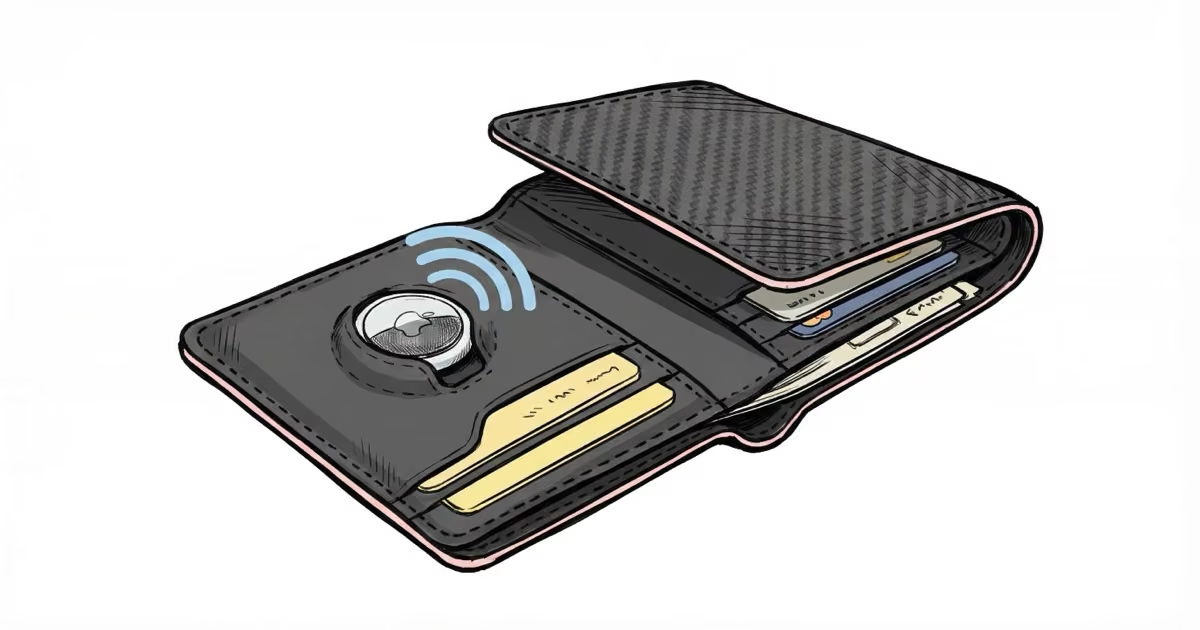
The EDGE AirTag wallet delivers solid tracking, RFID blocking, and full-grain leather at $29.95. It holds up to 14 cards and an AirTag in a slim profile. The aluminum cardholder corners can dent if dropped, but for the price, it's one of the better AirTag wallet options available.
At $29.95, the EDGE AirTag wallet sits at a price point where most competitors cut corners. After carrying this wallet daily for over two months, I wanted to find out if EDGE did the same. This review covers the build quality, AirTag integration, RFID protection, durability, and whether it’s actually worth buying over pricier alternatives.
- Full-grain leather construction with aluminum RFID-blocking cardholder for $29.95
- Holds 12-14 cards plus cash while measuring just 3.4 x 2.1 x 0.2 inches
- Dedicated AirTag pocket pairs with Apple Find My for location tracking
- RFID blocking independently tested to cover 13.56 MHz payment card frequencies
- Aluminum cardholder corners are prone to permanent denting from drops
How the EDGE AirTag Wallet Works
The wallet has a dedicated pocket on the interior that holds a standard Apple AirTag. You pair the AirTag through Apple’s Find My app, and it uses the Find My network of over a billion Apple devices worldwide to relay its location back to your iPhone.
If the wallet gets lost or stolen, you open Find My and see its last known location on a map. In dense urban areas with lots of iPhones nearby, updates come within minutes. In rural areas or places with fewer Apple devices, there can be significant delays.
One thing worth noting: AirTag doesn’t use GPS directly. It broadcasts a Bluetooth signal that nearby iPhones pick up and forward anonymously to Apple’s servers. That means tracking accuracy depends entirely on how many iPhones are near your wallet at any given time.
Design and Build Quality
Materials and Construction
The exterior is full-grain leather, available in black, carbon fiber, and coffee finishes. I tested the carbon fiber model. The stitching held up well over two months of daily front-pocket carry, and the edge finishing showed no signs of fraying.
At 3.4 x 2.1 x 0.2 inches folded, it’s thin. Not “slim for a tracking wallet” thin. Just thin. It slides into a front pocket without the bulge you get from thicker bifolds.
Card Access and Storage
The aluminum cardholder fans out cards with a thumb push for quick access. EDGE claims it holds up to 14 cards, and that’s technically true, but past 10 cards, pulling individual ones out gets frustrating. I settled on 8 cards as the sweet spot for daily use.
A separate pocket accommodates folded bills, and a cash strap keeps everything secure. The cash strap tension stayed consistent throughout my testing period.
AirTag Integration and Tracking Performance
Setting up the AirTag took about 30 seconds. It slides into a discreet pocket on the wallet interior and sits snug without adding noticeable bulk. The open sides make battery replacement straightforward when the CR2032 dies after roughly a year of use.
I tested tracking in three scenarios:
- Downtown coffee shop: Location updated within 2-3 minutes after I left the wallet behind. Precise enough to identify the correct building.
- Suburban neighborhood: Took about 15 minutes for the first location ping. Expected, given fewer iPhones around.
- Car glove box in a parking garage: Updated overnight when another iPhone user walked past. Not instant, but it worked.
The tracking isn’t real-time. If you need second-by-second updates, you need a GPS tracker, not an AirTag. But for finding a misplaced wallet in a city, it works well enough.
RFID Blocking: Does It Actually Work?
EDGE uses an aluminum cardholder shell as its RFID shield. The company claims it blocks signals at 13.56 MHz, which covers the frequency used by contactless credit cards, debit cards, and passports.
I tested this by attempting NFC reads through the closed wallet using a phone. Zero successful scans. The aluminum barrier blocks the signal effectively as long as cards stay inside the cardholder. Cards in the outer leather pocket, however, are not protected.
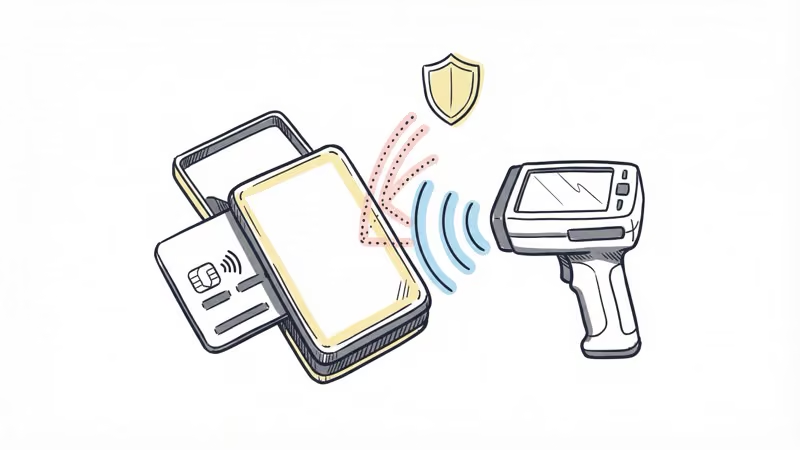
For context, RFID skimming at 13.56 MHz requires close physical proximity (under 1 foot). The real-world risk is low, but if you want the protection, the EDGE wallet delivers it for cards stored in the aluminum section.
Durability After Two Months
The leather showed minimal wear. A light patina developed on the carbon fiber model, which I’d call a positive. No cracking, no peeling, no loose threads.
The weak point: those aluminum cardholder corners. I dropped the wallet twice onto hard flooring during my testing. Both times, the top corners got permanently dented. It doesn’t affect function, cards stay secure, but the dent stays visible. If you’re rough on your gear, this matters.

Note: The AirTag pocket is sized for the original AirTag. If you're using Apple's AirTag 2, check our best AirTag wallet guide for wallets confirmed to fit the newer model.
How EDGE Compares to Other AirTag Wallets
| Feature | EDGE Wallet | Ekster Parliament | TagVault Wallet Insert |
|---|---|---|---|
| Price | $29.95 | $89+ | $14.99 (insert only) |
| Material | Full-grain leather | Full-grain leather | Polycarbonate |
| Card Capacity | 12-14 | 4-6 | N/A (wallet insert) |
| RFID Blocking | ✓ Yes | ✓ Yes | ✗ No |
| AirTag Fit | Built-in pocket | Separate holder | Snap-fit enclosure |
The EDGE wallet sits in a good middle ground. It’s significantly cheaper than premium options like the Ekster, but it’s a complete wallet rather than just an insert. For designer AirTag wallets with higher-end finishes, you’ll pay $80 or more. The EDGE won’t match those in fit and finish, but it covers the basics well.
If you’re an iPhone user who also wants MagSafe compatibility, the EDGE isn’t the right pick. It’s a traditional pocket wallet, not a phone-mounted cardholder.
Who Should Buy the EDGE AirTag Wallet
Buy this if you want AirTag tracking and RFID protection without spending $80+ on a premium wallet. It’s a solid choice for anyone who carries 6-10 cards daily and wants peace of mind against losing their wallet.
Skip it if you need a wallet that survives rough handling. The aluminum corner denting issue is real, and there’s no warranty coverage for cosmetic damage. Also skip it if you’re an Android user. AirTag requires an iPhone running iOS 14.5 or later.
- $29.95 price undercuts most AirTag-compatible wallets
- Full-grain leather with quality stitching
- Lab-certified RFID blocking at 13.56 MHz
- Slim 0.2-inch profile fits front pockets
- Easy AirTag installation and battery access
- Aluminum cardholder corners dent permanently from drops
- Card removal gets difficult past 10 cards
- iPhone only, no Android support
- Outer leather pocket has no RFID protection
Bottom Line
The EDGE AirTag wallet does three things well at a price that’s hard to argue with: it holds your cards, blocks RFID scans, and tracks via AirTag. The leather quality surprised me for $29.95. The denting issue on the aluminum corners is the only real downside, and for most people who don’t regularly drop their wallet onto concrete, it won’t be a problem. If you want a wallet with tracking without paying Ekster prices, the EDGE is worth considering.
Frequently Asked Questions
Does the EDGE wallet come with an AirTag included?
No. You need to buy the Apple AirTag separately. The wallet only includes the cardholder with the built-in AirTag pocket. An AirTag costs $29 for a single unit, so total cost with the wallet is about $59.
How many cards can the EDGE AirTag wallet actually hold?
EDGE rates it at 12-14 cards. In practice, 8-10 cards is the comfort zone. Past 10, the pop-up mechanism struggles and individual cards are harder to pull out. If you carry more than 10 cards daily, consider a larger bifold instead.
Will the AirTag fall out of the wallet?
In my two months of testing, the AirTag stayed in place. The pocket is snug enough to hold it during normal use. Some customer reviews mention the AirTag slipping out over time as the leather stretches, so keep an eye on fit after several months of use.
Can I track the EDGE wallet if it's stolen?
Yes, as long as the AirTag inside is paired to your iPhone. Open the Find My app to see its last known location. You can also enable Lost Mode, which notifies you when any iPhone detects your AirTag. Keep in mind that a thief who knows about AirTags could remove and disable it.
How long does the AirTag battery last in this wallet?
About one year with normal use. The AirTag uses a CR2032 coin cell battery. The EDGE wallet's open-sided AirTag pocket makes swapping batteries easy. You don't need to remove the AirTag from the wallet to change it.
Does the RFID blocking work on all cards?
Only cards stored in the aluminum cardholder section are protected. The outer leather pocket and cash strap area have no RFID shielding. If you carry a contactless card in the leather pocket, it remains scannable.
Is the EDGE wallet compatible with AirTag 2?
The AirTag 2 is slightly different in size from the original. EDGE designed this pocket for the first-generation AirTag. The AirTag 2 may fit, but confirm with the manufacturer before buying if you plan to use the newer model.