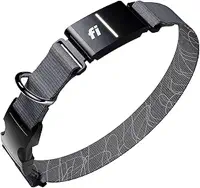
For most dog owners, the Fi Series 3 is the better buy. It costs $149 versus the Halo Collar 4’s $599, lasts up to 3 months on a single charge, and handles GPS tracking and activity monitoring well. Choose Halo only if you specifically need GPS-based virtual fence training with boundary corrections.
Fi and Halo take completely different approaches to the “smart dog collar” concept. Fi is a GPS tracker that tells you where your dog is (see our full Fi smart dog collar review for a deep dive). Halo is a GPS fence system that trains your dog to stay where you want them. That distinction matters more than any spec comparison, and it should drive your decision.
- Fi Series 3 costs $149 + $19/month, while Halo Collar 4 costs $599 + $9.99-$19.99/month.
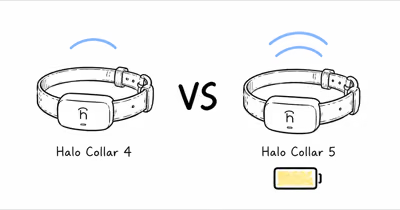
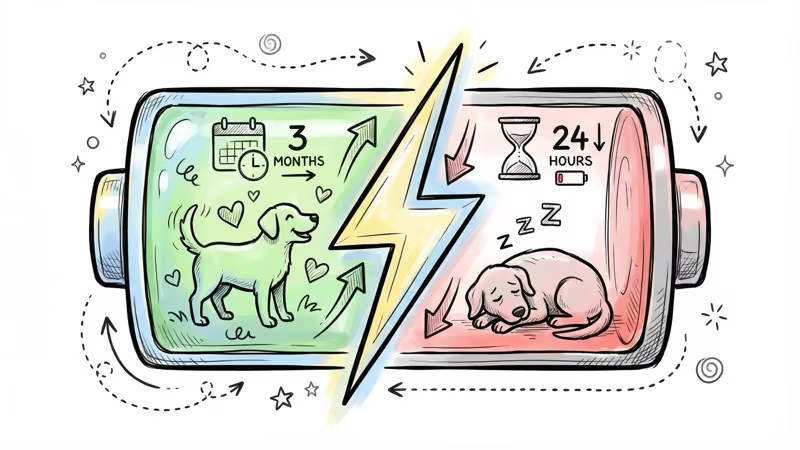
- Fi battery lasts up to 3 months on a single charge versus Halo’s 24-48 hours.
- Halo includes GPS virtual fencing with sound and vibration corrections that Fi doesn’t offer.
- Over 2 years, Fi totals roughly $605 while Halo runs $839-$1,079 depending on the subscription tier.
- Both require active subscriptions for GPS tracking, neither collar works without one.
Fi Series 3 vs Halo Collar 4 at a Glance
⇄ Head-to-head
Fi Series 3 vs Halo Collar 4

- +3-month battery life on a single charge
- +$149 device price, lowest in GPS collar category
- +IP68 waterproof for swimming and heavy rain
- +AI-powered health monitoring detects behavioral changes
- +Lost Dog Mode with rapid location updates and LED
- +GPS virtual fencing with 15 adjustable correction levels
- +Cesar Millan 21-day training program included
- +Dual-frequency GPS with 50+ satellite connections
- +Subscription as low as $9.99/month (Bronze tier)
- +Prevents escapes, not just reports them
- −No virtual fence training or corrections
- −$19/mo monthly is higher than Halo's base tier
- −Geofence alerts only notify owner; dog gets no feedback
- −$599 device price is steep for most budgets
- −24-48 hour battery requires daily charging
- −Minimum 20 lbs, not suitable for small dogs
- −Correction-based training not appropriate for all dogs
You want to know where your dog is, travel or hike often, and value 3-month battery plus health monitoring.
You need a wireless invisible fence that actively trains your dog to respect boundaries and can charge daily.
The numbers tell one story. The use cases tell another. Let me break down what actually matters for each collar. Wirecutter’s best Bluetooth tracker guide found that GPS collars with LTE-M connectivity deliver location updates 10 times faster than Bluetooth-only trackers.
GPS Tracking: Different Goals, Different Methods
Both collars use GPS to locate your dog, but they do it for different reasons. If you’re weighing GPS trackers more broadly, our best GPS trackers for pets roundup covers the full landscape.
Fi Series 3 GPS
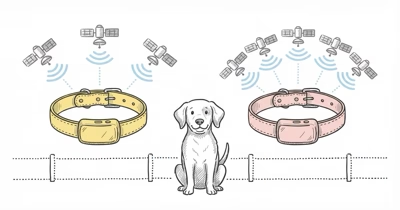
Fi uses GPS, GLONASS, and Galileo satellite systems combined with LTE-M cellular connectivity.
According to Fi’s official specs, it claims accuracy within about a 6-foot radius. When your dog leaves a designated Safe Zone, Fi kicks into Lost Dog Mode, which rapidly updates location data and triggers an LED light on the collar.
The system works well for what it does: telling you exactly where your dog is, right now. On the rare day it doesn’t, our fixes for a Fi collar location not updating get the map live again.
Halo Collar 4 GPS
Halo takes a fundamentally different approach. According to Halo’s product page, its dual-frequency GPS connects to 50+ satellites and is designed not just to track your dog but to actively prevent escapes (our Halo Collar review covers this in depth). The boundaries are stored directly on the collar and enforced locally. When your dog approaches a fence boundary, the collar delivers progressive feedback through sound, vibration, and optional static correction.
With the Halo Collar 4, the boundary feedback is designed to trigger as a dog approaches the virtual fence line rather than after a crossing. This is the core difference. Fi says “your dog escaped, here’s where they’re at.” Halo says “your dog is approaching the boundary, let’s redirect them now.”
How Does Battery Life Compare?
This is where Fi dominates. Completely.
Fi Series 3 lasts up to 3 months on a single charge.
Fi rates the Series 3 at up to three months on a charge for a larger dog. Fi uses smart power management that switches dynamically between Bluetooth, Wi-Fi, and LTE-M based on context. When your dog is home and connected to Wi-Fi, the collar uses lower-power radios and saves cellular GPS for tracking events.
Halo Collar 4 lasts 24-48 hours. That’s because it’s running GPS continuously to enforce those virtual fences in real time. More processing, more radio time, more power draw.
For weekend camping trips, multi-day hikes, or simply not wanting to think about charging, Fi wins. If you’re using Halo primarily as a home boundary system where you can charge nightly, the short battery life is manageable but still annoying.
How Do Virtual Fencing and Boundary Training Differ?
Fi Safe Zones
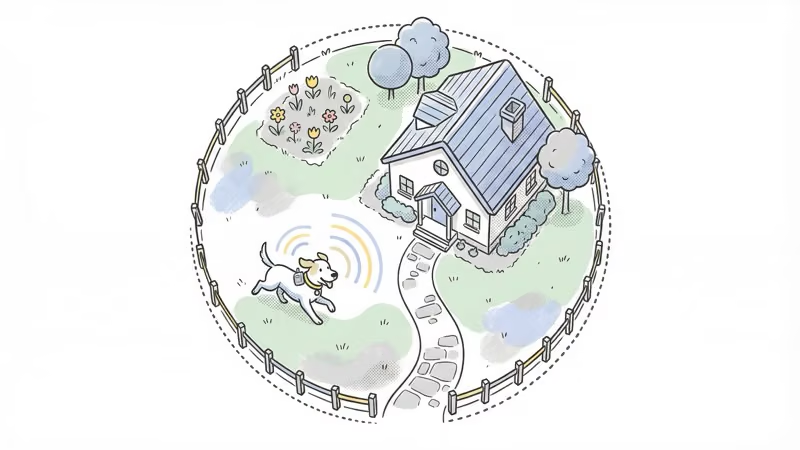
Fi lets you draw unlimited geofences on a map through the app.
Cross the line, and you get a notification. That’s it. No correction, no feedback to the dog. It’s a tracking alert system, not a containment system.
For dog owners who just want to know if their dog left the yard, this works fine.
Halo Virtual Fences
Halo’s GPS fencing is its main selling point and where that $599 price starts making sense. You can create up to 20 custom-shaped fences of any size. The collar provides 15 adjustable levels of feedback as your dog approaches boundaries.
Halo partnered with Cesar Millan to build a 21-day training program that acclimates dogs to the collar’s feedback system gradually. The idea is that over three weeks, your dog learns to respect the boundaries through sound and vibration cues alone.
If you need an invisible fence without burying wire, Halo is one of the few GPS-based options that actually works.
Activity Monitoring and Health Tracking
Fi has the edge here. The Series 3 tracks steps, distance, playtime, rest periods, and sleep quality.
Fi’s AI-powered health monitoring can detect patterns in barking, licking, scratching, eating, and drinking. A run of restless nights, for example, can show up in the sleep tracker before an owner notices anything is off, which can be a useful prompt to check for discomfort or illness. The AKC’s pet microchip guide states that 1 in 3 pets go missing at some point in their lives, making active tracking collars a practical safeguard.
Halo tracks basic activity metrics: walks, active time, distance covered, and rest. It also logs your dog’s responses to boundary feedback, which is useful for training but less detailed for health monitoring.
Both apps work on iOS and Android. Fi adds a community feed and multi-user access. Halo adds the training academy and live support.
2-Year Total Cost of Ownership
This is the comparison that matters most. Device price alone is misleading.
| Cost Component | Fi Series 3 | Halo Collar 4 (Bronze) | Halo Collar 4 (Gold) |
|---|---|---|---|
| Device | $149 | $599 | $599 |
| Activation Fee | $20 | $0 | $0 |
| Year 1 Subscription | $192 (annual) | $120 ($9.99/mo) | $240 ($19.99/mo) |
| Year 2 Subscription | $192 | $120 | $240 |
| 2-Year Total | $553 | $839 | $1,079 |
Fi costs $286-$526 less than Halo over two years. That gap is entirely driven by the device price.
Halo’s monthly subscriptions are actually cheaper than Fi’s. But the upfront cost is hard to justify unless you specifically need the training and fencing features. If recurring fees bother you, check our guide to GPS trackers with no monthly fee for alternatives.
Choosing the Right Collar
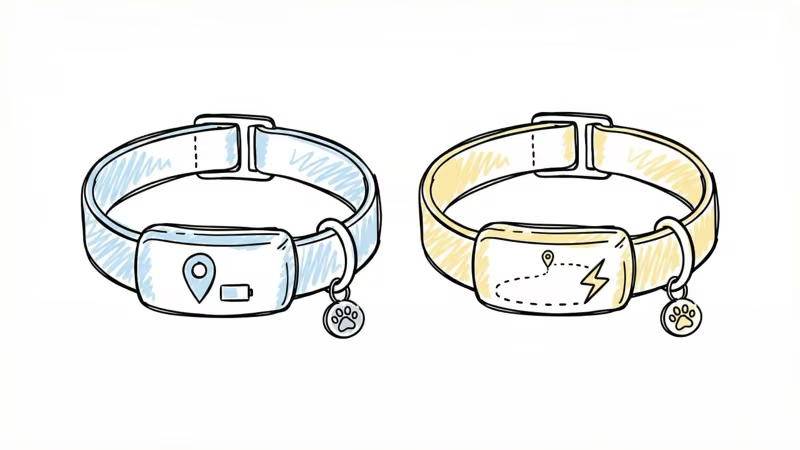
For most dog owners who just need reliable GPS tracking, Fi delivers what you need at a fraction of the cost. The 3-month battery alone is worth the price difference. If you’re already considering an AirTag vs a GPS tracker for your dog, Fi is the purpose-built answer.
Halo makes sense for a specific situation: you have a yard, no physical fence, and you want a containment system that trains your dog to respect boundaries.
That’s a real product category, and Halo does it better than most. But it’s a $839+ commitment over two years, and the daily charging is a genuine inconvenience.
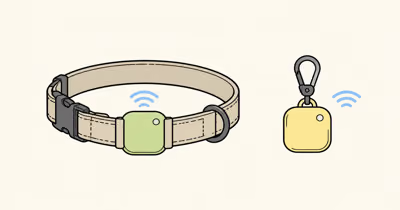
If you’re tracking a dog that already stays close to home and you want peace of mind, an AirTag dog collar holder at $29 one-time might be all you need. For dogs that roam or escape, Fi’s GPS tracking with Lost Dog Mode is the practical middle ground.
Bottom Line
Buy the Fi Series 3 unless you specifically need virtual fence training. It costs less, lasts months between charges, and tracks your dog’s location and health reliably. Halo Collar 4 is a specialized tool for boundary training. It’s well-built and the Cesar Millan program adds real value, but most owners don’t need a $599 collar when a $149 one handles GPS tracking better.
FAQ
Do Fi and Halo collars work without a subscription?
No. Both require an active subscription for GPS tracking, geofencing, and activity monitoring. Without a plan, Fi becomes a basic collar with no smart features. Halo won’t activate at all without a Pack Membership. Fi’s cheapest annual plan works out to $16/month, while Halo’s Bronze tier is $9.99/month.
Can Halo Collar replace a traditional invisible fence?
For many dogs, yes. Halo uses GPS to create virtual boundaries anywhere without burying wire, and the collar delivers sound, vibration, and optional static feedback when your dog approaches the line. The key limitation is GPS accuracy, which can drift 3-10 feet depending on satellite conditions. Traditional wired fences are more precise at the boundary line, but Halo works in any location and can be reshaped instantly through the app.
Is Halo Collar safe for all dogs?
Halo requires a minimum weight of 20 lbs and a 21-day training program before using boundary corrections. The Halo support center recommends starting with sound-only feedback and gradually introducing vibration. Dogs with anxiety, aggression issues, or trauma histories may not respond well to correction-based training. Consult your vet before using any correction collar.
How accurate is Fi’s GPS tracking?
Fi claims 6-foot accuracy in open sky conditions using GPS, GLONASS, and Galileo satellites. Like any GPS device, urban areas with tall buildings can degrade accuracy to roughly 15-20 feet. Indoors, the collar switches to Wi-Fi and Bluetooth positioning, which is less precise but still shows the correct building or room area. For finding a lost dog, the accuracy is more than sufficient.
What happens if the collar loses cellular signal?
Fi switches to Bluetooth or Wi-Fi when available and caches location data until the cellular connection returns. Halo stores fence boundaries locally on the collar itself, so boundary enforcement continues even without a signal. GPS tracking in the app pauses for both collars until connectivity resumes.
Can you use an AirTag instead of Fi or Halo?
An AirTag tracks location through Apple’s Find My network, but it’s not designed for dogs. There’s no activity monitoring, no escape alerts, no geofencing, and no guaranteed update frequency. Our AirTag dog-tracking guide explains why updates can stall when no iPhones pass nearby. For dogs that stay in dense urban areas, an AirTag in a secure collar holder works as a basic backup, but it’s not a replacement for a GPS collar.
Which collar is better for dogs that escape frequently?
It depends on what you mean by “better.” Fi alerts you faster when an escape happens and provides real-time tracking to help you find your dog. Halo tries to prevent the escape in the first place through boundary training and corrections. If your dog is a determined escape artist, Halo’s proactive approach may be more effective long-term. But during the 21-day training period, you still need a backup plan.