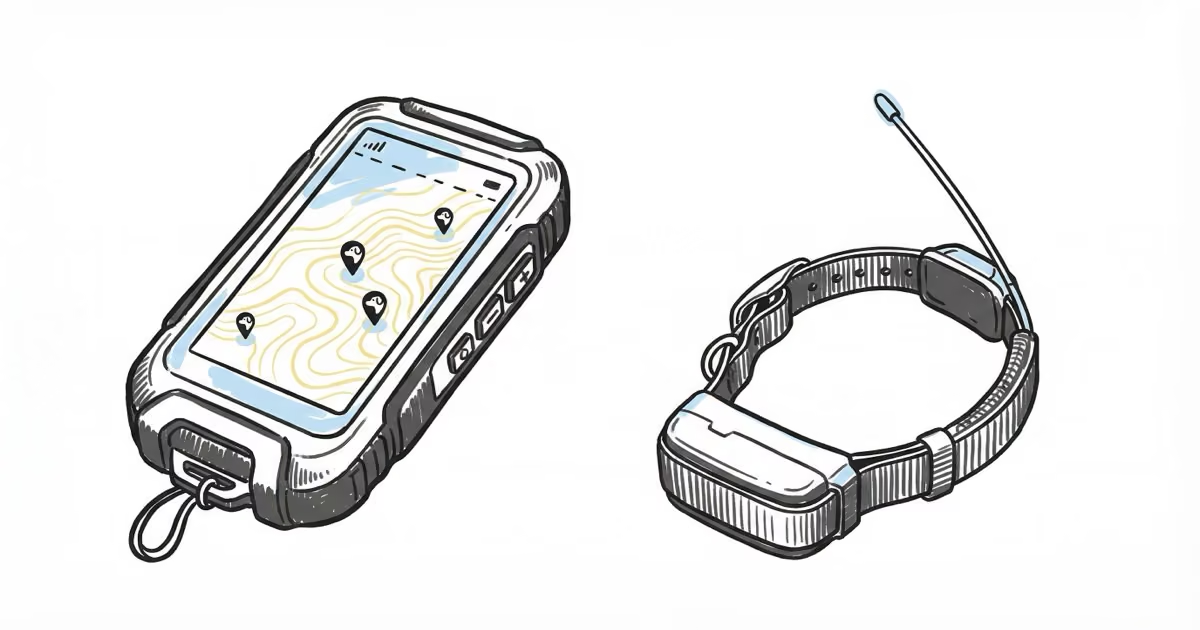
The Garmin Alpha 100 was a top-tier GPS dog tracking and training handheld, but Garmin discontinued it in favor of the Alpha 200i and Alpha 300 series. If you find one used for under $300, it's still a capable unit. For a new purchase, the Alpha 200i is the better buy with its larger screen, inReach satellite messaging, and continued software support.
The Garmin Alpha 100 combined GPS dog tracking and e-collar training into a single system when it launched, and for years it was the standard for serious hound hunters and field trial competitors. I used one across two hunting seasons in the Missouri Ozarks before upgrading to the Alpha 200i, and the core tracking never let me down.
Garmin has since moved on. The Alpha 100's last firmware update shipped in October 2022, and the unit is no longer manufactured. But thousands are still in daily use across the U.S., and used units regularly appear on resale markets.
- The Alpha 100 is discontinued, replaced by the Alpha 200i and Alpha 300 series with larger screens and inReach capability.
- Tracks up to 20 dogs at ranges up to 9 miles line-of-sight when paired with the TT 15 collar.
- 18-level customizable stimulation in Traditional or Linear configurations, plus tone and vibration modes.
- IPX7 waterproof rating and 20-hour handheld battery life make it field-ready in any weather.
- Used units sell for $150-$300 and remain functional, but no new software updates are coming.
What Made the Garmin Alpha 100 Stand Out
When Garmin released the Alpha 100, it solved a real problem: hunters had to carry separate devices for tracking and training. The Astro 320 handled GPS tracking well, but if you wanted e-collar training, you needed a second piece of equipment in your vest pocket. The Alpha 100 merged both functions into one handheld.
That alone was enough to sell it.
But the execution went beyond convenience. The Alpha 100 introduced a 3-inch color touchscreen with preloaded 100K topo maps, a 3-axis electronic compass, and the ability to track up to 20 dogs simultaneously. The "Buddy Tracker" feature let you monitor other hunters carrying an Alpha 100, which proved surprisingly useful during large-scale hound hunts where people spread across miles of timber. According to Garmin's official spec page, the handheld weighs 9.7 oz and measures 2.4 x 6.3 x 1.4 inches.
Garmin Alpha 100 Specs at a Glance
| Spec | Alpha 100 Handheld | TT 15 Collar |
|---|---|---|
| Weight | 9.7 oz (with battery) | 10.0 oz |
| Display | 3.0" color touchscreen | N/A |
| Battery Life | ~20 hours | 20-40 hours (varies by update rate) |
| Water Rating | ✓ IPX7 | ✓ 10m depth |
| Max Range | Up to 9 miles line-of-sight (TT 15) | |
| Dogs Tracked | Up to 20 | |
| Stimulation | 18 levels (Traditional or Linear) | |
| Memory | 4 GB + microSD slot | N/A |
| Maps | Preloaded 100K basemaps | N/A |
Tracking Performance in the Field
The Alpha 100's tracking worked well in terrain that defeats most consumer GPS devices. Running beagles through dense hardwood hollows in southeastern Missouri, I consistently picked up collar signals at 4-5 miles through heavy canopy. Open farmland pushed that to 7+ miles. The claimed 9-mile max is realistic in flat, unobstructed conditions, though I never hit it in actual hunting scenarios.
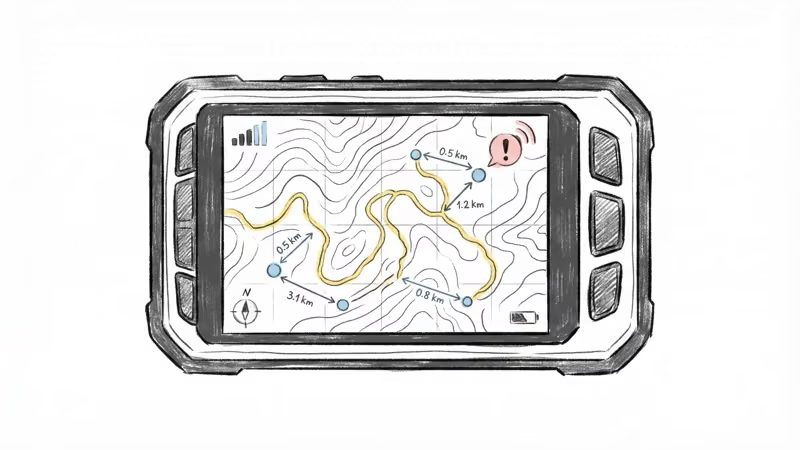
Update rate matters. At the default 2.5-second interval, the map paints a smooth track of your dog's path. Switching to 5-second or 10-second updates conserves collar battery but makes the path choppier. For hound hunting where dogs cover ground fast, I kept it at 2.5 seconds and accepted the battery trade-off.
Point and tree alerts work as advertised. The TT 15 collar detects when a dog stops moving and tilts its head up (treeing) or locks rigid (pointing), then sends a notification to the handheld. Not perfect. I got occasional false positives when dogs paused to drink from a creek. But the feature saved me hours of walking toward dogs that had already treed.
Geofencing is another useful feature. Set a virtual boundary on the map, and you'll get an alert if a dog crosses it. Practical near roads or property lines where you don't want dogs running. If you're weighing whether a dedicated GPS system like this is worth it versus a simpler tracker, our AirTag vs GPS tracker comparison breaks down the technology differences.
Training Features: 18 Levels of Stimulation
The Alpha 100 offers 18 static stimulation levels in two configurations:
- Traditional: Levels ramp up quickly. Designed to match the feel of legacy Tri-Tronics collars.
- Linear: Even spacing between levels. More predictable for dogs new to e-collar training.
You also get tone-only and vibration modes for recall cues or early-stage training. I used tone exclusively for the first month with a young Walker hound, then introduced low-level stimulation for snake avoidance training.
One practical advantage: you can adjust stimulation for up to 3 dogs on a single screen without switching pages. During a hunt with multiple dogs, that speed matters. The touchscreen responded well even with leather gloves, though heavy insulated gloves made precise taps harder.
The Alpha 100's training features work with both TT 15 and TT 15 mini collars. The mini version fits dogs as small as 15 lbs but has a shorter range of about 4 miles.
Battery Life and Charging
Garmin rates the handheld at 20 hours. That's close to what I measured: roughly 17-18 hours with the screen brightness at 60%, GPS active, and periodic map checks. Enough for a full day of hunting with margin to spare.
The TT 15 collar lasts longer. At a 10-second update rate, expect around 30 hours. Drop it to 2-minute updates, and you'll push past 40 hours. Rescue mode kicks in automatically when collar battery drops below 25%, slowing updates to 2-minute intervals to stretch runtime while you retrieve a lost dog.
Both units use rechargeable lithium-ion batteries. Huge upgrade over the Astro 320's AA batteries. The included 12V truck adapter charges the handheld and collar at the same time, which keeps things practical during multi-day hunts.
Build Quality and Durability
The Alpha 100 is built for abuse. Both handheld and collar carry an IPX7 waterproof rating, meaning submersion in 1 meter of water for 30 minutes. The TT 15 collar goes further, rated to 10 meters depth. I've had dogs swim across flooded creeks with the collar fully submerged. No issues.
Drops happen. The handheld survived multiple falls onto rocks and frozen ground across two seasons without cracking the screen or losing function. The rubber-overmolded edges absorb impact well. That said, a screen protector is cheap insurance.
Where the Alpha 100 Falls Short
No product review is honest without covering the downsides, and the Alpha 100 has several that matter more now than when it launched.
- Combined GPS tracking and e-collar training in one unit
- 9-mile range with TT 15 collar, reliable at 4-5 miles in timber
- 18-level stimulation with Traditional and Linear modes
- IPX7 waterproof handheld, 10m-rated collar
- Tracks up to 20 dogs and fellow hunters simultaneously
- Rechargeable lithium-ion batteries with 20+ hour runtime
- Discontinued - no firmware updates since October 2022
- 3-inch screen feels cramped compared to Alpha 200i's 3.5-inch display
- No inReach satellite messaging (Alpha 200i and 300i have it)
- Menu navigation slower than newer models
- Text messages disappear from screen after a few seconds
- No native beeper compatibility for bird dog hunters
The screen is the biggest functional limitation. At 3 inches, it worked fine for tracking 2-3 dogs, but with 6+ dogs on the map the display got crowded. The Alpha 200i's 3.5-inch screen provides 27% more viewing area, and the Alpha 300i stretches to 3.5 inches with better resolution. If you run a large pack, the newer models are noticeably easier to manage.
The lack of inReach satellite messaging is the other major gap. If you hunt in areas without cell coverage, the Alpha 200i and 300i let you send SOS messages and texts via satellite. The Alpha 100 can't do that. For backcountry hunters in remote Western states, this alone justifies the upgrade.
Garmin Alpha 100 vs Alpha 200i vs Alpha 300
| Feature | Alpha 100 | Alpha 200i | Alpha 300 |
|---|---|---|---|
| Status | ✗ Discontinued | ✓ Current | ✓ Current |
| Display | 3.0" touchscreen | 3.5" touchscreen | 3.5" touchscreen |
| inReach Satellite | ✗ No | ✓ Yes | ✗ No (300i has it) |
| Max Dogs | 20 | 20 | 20 |
| Dog Groups | ✗ No | ✓ Up to 100 devices | ✓ Up to 100 devices |
| Max Range (TT 15) | 9 miles | 9 miles | 9 miles |
| Firmware Updates | ✗ Ended Oct 2022 | ✓ Active (Jan 2025+) | ✓ Active (Jan 2025+) |
| Street Price (New) | N/A (used $150-300) | ~$550 (handheld only) | ~$500 (handheld only) |
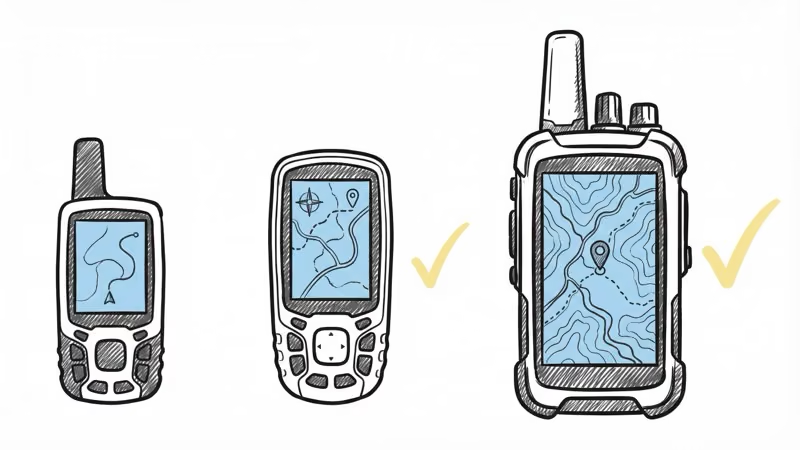
The Alpha 200i is the direct replacement. If you're buying new, it's the obvious choice. The Alpha 300 drops inReach but costs less, which makes sense for hunters who always have cell coverage. The Alpha 100 product page on Garmin's site still exists for support and manuals but shows no purchase option.
Should You Buy a Used Garmin Alpha 100?
Depends on your situation.
If you find a used Alpha 100 bundle (handheld + TT 15 collar) for $200-$300, it's still a very functional system. The GPS tracking works the same as it did on day one. The training features haven't degraded. Collar compatibility with the TT 15 and TT 15 mini hasn't changed. And Garmin still supports the hardware through their repair program.
The risk is on the software side. With no firmware updates coming, any future GPS constellation changes or bug discoveries won't get patched. That's a theoretical concern today, not a practical one, but it could matter in 2-3 years.
Buying used? Check that the collar pairs properly and holds a charge for at least 15 hours. Test the touchscreen for dead spots. Ask the seller for the original charging cables, as replacements are harder to find for the Alpha 100 than for newer models.
If you're buying new equipment and spending $500+, skip the Alpha 100 entirely. The Alpha 200i gives you a bigger screen, active software support, managed dog groups for up to 100 devices, and satellite communication for about the same total investment as finding a pristine used Alpha 100 with accessories. For hunters on a tighter budget who don't need e-collar training, our best GPS trackers for pets guide covers more cost-effective options.
Bottom Line
The Garmin Alpha 100 earned its reputation. It combined GPS dog tracking and e-collar training better than anything before it, with reliable range, solid battery life, and a build tough enough for years of field use. I got two solid hunting seasons out of mine before upgrading.
But it's a legacy product now. Buy one used if the price is right and you don't need satellite messaging. For everyone else, the Garmin Alpha 200i is where the money should go.
FAQ
Is the Garmin Alpha 100 discontinued?
Yes. Garmin stopped manufacturing the Alpha 100, and the last firmware update was released in October 2022. The Alpha 200i and Alpha 300 series are the current replacements. Garmin still provides hardware support and repairs for existing Alpha 100 units, but no new software features are coming.
What collar works with the Garmin Alpha 100?
The TT 15 and TT 15 mini dog collars are compatible. The TT 15 offers up to 9 miles of range and weighs 10 oz, while the TT 15 mini fits smaller dogs (15+ lbs) with about 4 miles of range. Both provide GPS tracking and 18-level stimulation training. The newer T 5 collar also works with the Alpha 100.
How far can the Garmin Alpha 100 track?
Up to 9 miles line-of-sight with the TT 15 collar. In dense timber or hilly terrain, expect reliable tracking at 4-5 miles. Heavy canopy and ridgelines reduce range, but it still outperforms most competing systems in real-world conditions.
Can you use the Alpha 100 without stimulation?
Absolutely. Tone-only and vibration modes work independently of static stimulation. Many trainers use tone as a recall cue during early obedience work, then add low-level stimulation later if needed. You can also use the Alpha 100 purely for GPS tracking with no training corrections at all.
How long does the Alpha 100 battery last?
The handheld runs about 17-20 hours depending on screen brightness and GPS usage. The TT 15 collar lasts 20-40 hours depending on update rate. At the 10-second update interval, expect around 30 hours from the collar. Rescue mode extends collar life past 40 hours by slowing updates when battery drops below 25%.
Is the Garmin Alpha 100 waterproof?
The handheld is rated IPX7, which means 30 minutes submerged at 1 meter depth. The TT 15 collar goes further with a 10-meter depth rating. Both handle rain, mud, creek crossings, and general field abuse without any issues.
Should I buy an Alpha 100 or upgrade to the Alpha 200i?
If you find a used Alpha 100 bundle under $300, it's still a capable system for basic GPS tracking and training. For anything more, the Alpha 200i is the better investment. You get a 27% larger screen, inReach satellite messaging for backcountry safety, managed groups for up to 100 devices, and active firmware support. The price gap between a well-equipped used Alpha 100 and a new Alpha 200i handheld is often only $200-250.