The Garmin Alpha 300 and Alpha 200 share the same DNA: track up to 20 dogs across 9 miles, overlay positions on topo maps, and deliver 18 levels of stimulation training from one handheld. I have used both models across multiple hunting seasons and field trials. The differences between them come down to convenience, not capability.
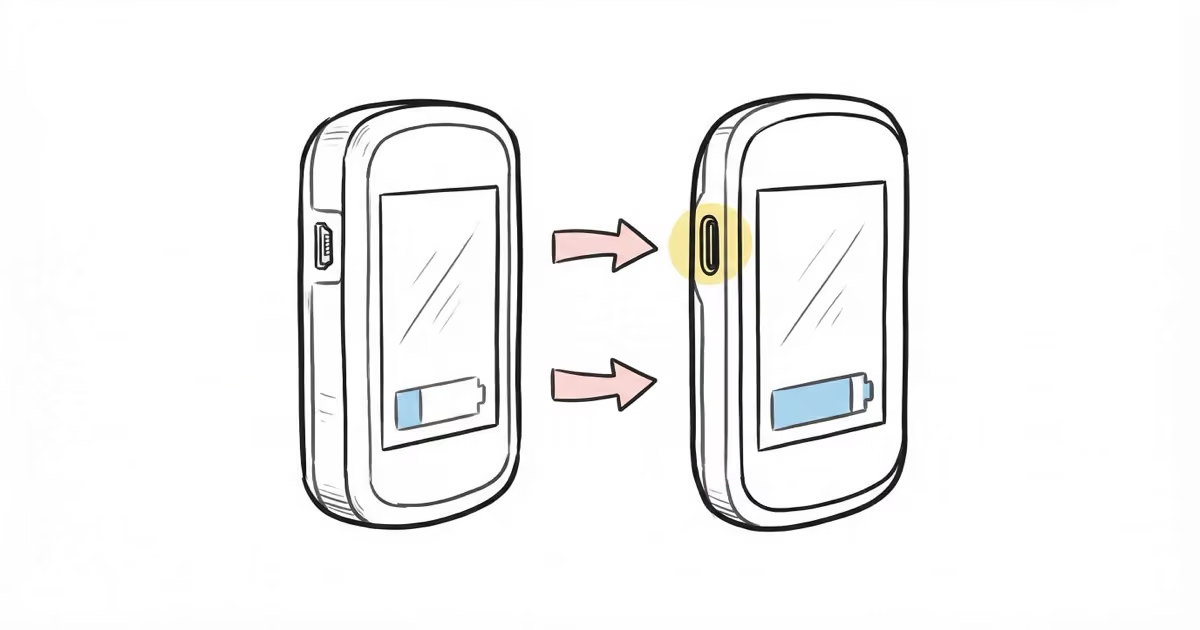
- The Alpha 300 delivers 55 hours of battery life vs 20 hours on the Alpha 200, enough for 3 full hunting days without charging.
- USB-C replaces micro USB on the Alpha 300, matching modern phones and accessories.
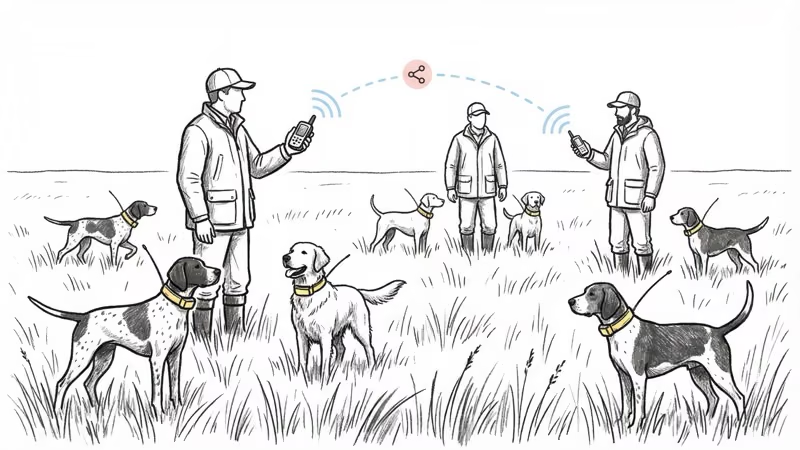
- Group sharing lets you transfer an entire pack of dogs to a partner's handheld in one step instead of one by one.
- Channel scanning identifies interference from nearby e-collars, critical at field trials and group hunts.
- The Alpha 200 sells for around $700 vs $850 for the Alpha 300, with both going on sale regularly.
Garmin Alpha 300 vs 200: Spec Comparison Table
Before getting into the details, here is a side-by-side look at every difference between the two handhelds.
| Feature | Alpha 200 | Alpha 300 |
|---|---|---|
| Battery Life | ~20 hours | Up to 55 hours |
| Charging Port | Micro USB | USB-C |
| Dog Tracking Range | 9 miles | 9 miles |
| Max Dogs Tracked | 20 (10 active on map) | 20 (10 active on map) |
| Screen Size | 1.8” x 3.0” TFT | 1.8” x 3.0” TFT |
| Resolution | 280 x 400 px | 280 x 400 px |
| Group Dog Sharing | Individual dogs only | Full group sharing |
| Channel Scanning | No | Yes |
| LED Collar Control | No | Yes (TT 25 collars) |
| Favorites Bar | No | Yes |
| Water Rating | IPX7 | IPX7 |
| Stimulation Levels | 18 | 18 |
| Street Price | ~$700 | ~$850 |
Both handhelds support bark detection alerts, temperature monitoring, pre-loaded 100-acre geofences, and the oversized removable antenna. The core tracking and training functionality is identical. If you are coming from the original Alpha 100, our Garmin Alpha 100 vs 200 comparison covers that upgrade path in detail.
Battery Life: The Biggest Upgrade
The Alpha 200 runs about 20 hours per charge. That is enough for a single long day of hunting, but you will be charging it in the truck every night.
The Alpha 300 runs for up to 55 hours. During a 3-day prairie chicken hunt in Kansas, I still had 40% charge on the evening of day two. With the Alpha 200, I would have been charging midday.
For hunters taking weekend or multi-day trips, this single upgrade might justify the price difference on its own. No more hunting with one eye on the battery indicator.
Display and Interface Improvements
On paper, the screens are identical: 1.8” x 3.0” color TFT transflective touchscreen at 280 x 400 pixels.
In the field, the Alpha 300’s display looks noticeably brighter and more vivid. Colors pop more and the screen stays readable even in direct midday sunlight. Garmin likely tuned the backlight intensity without hurting battery life.
The Alpha 300 also adds a favorites bar for pinning frequently used apps and a large icon view mode. These small UI changes reduce the time you spend navigating menus when your dogs are running.
USB-C Charging
The Alpha 200 uses micro USB. The Alpha 300 moves to USB-C, which is sturdier, reversible, and compatible with most modern phones and chargers.
This matters in the field. One less cable to pack, and no fumbling with orientation in cold gloves. According to Garmin’s Alpha 300 product page, the USB-C port also supports faster data transfer for maps and waypoints.
Group Dog Sharing
Both Alpha models let you wirelessly share dog tracking between handhelds. The Alpha 200 introduced Dog Groups for organizing multiple dogs.
The Alpha 300 takes this further by letting you share entire groups at once. Instead of transferring each dog individually (which can take 15-20 minutes with a large pack), you transfer the whole group in one step.
During a hunt with a dozen dogs split across four hunters, this saved us a significant amount of setup time each morning. If you hunt solo, this feature will not matter. For groups, it is a major quality-of-life upgrade.
Channel Scanning for Interference
New to the Alpha 300 is a channel scanning tool that detects interference from other e-collars in the area. You can view results on a graph and switch channels to avoid crosstalk.
At field trial events with dozens of handlers, signal interference can cause missed commands or false stimulations. The scanning tool fixes this by showing you exactly which frequencies are busy. For hunters in areas with other Garmin Astro and Alpha users, this feature removes a real frustration.

LED Light Customization on TT 25 Collars
Garmin released the improved TT 25 collars alongside the Alpha 300. These collars have color LED beacon lights for locating dogs at night.
The Alpha 300 lets you change LED colors and toggle lights on/off directly from the handheld. No need to touch the collar itself. When running different packs of dogs, you can assign each group a different color for instant identification in low light.
This feature requires TT 25 collars. Older TT 15 and T5 collars still pair with the Alpha 300 for tracking and training, but you will not get LED control. For a closer look at collar compatibility, see our Garmin Alpha 300 review.
Price and Value
The Alpha 200 sells for around $700. The Alpha 300 runs about $850. Both models go on sale periodically, and Garmin offers trade-in discounts when upgrading.
You can also find refurbished or lightly used Alpha 200 units for under $500. For hunters who already own the Alpha 200 and do single-day hunts, the $150 gap may not feel worth it. But if you are coming from the Alpha 100, either model is a substantial upgrade.
If you are considering the inReach-equipped version, our Alpha 200 vs 200i comparison covers the satellite messaging add-on in detail.
Who Should Upgrade to the Alpha 300
- You take multi-day hunting trips and need 55-hour battery
- You hunt in groups and share dogs across handhelds regularly
- You attend field trials where channel interference is common
- You want TT 25 LED collar control from the handheld
- You hunt single-day trips where 20-hour battery is sufficient
- You hunt solo or with one partner
- Your current TT 15 / T5 collars work well and you have no need for LED control
- Budget is a primary concern
Putting the Alpha 300 to the Test
To give the Alpha 300 a proper field test, I took it on a 3-day prairie chicken hunt in Kansas with over a dozen dogs across our hunting party.
Right away, the extended battery life stood out. Despite heavy use from dawn to dusk, I still had 40% charge remaining on the evening of day two. With the Alpha 200, I would have been recharging in the truck midday.
The brighter screen made a noticeable difference in direct sunlight. Dog icons and terrain details were easier to read at a glance while walking.
Sharing all the dogs to other hunters each morning took under a minute instead of 15-20 minutes of individual transfers. And during drives with dozens of dogs working the field, channel scanning let me adjust frequencies to prevent crosstalk with other handlers.
By the end of the trip, the verdict was clear: for serious hunters who take frequent multi-day trips, the Alpha 300’s quality-of-life improvements add up fast. For a deeper look at real-world performance, check out our full Garmin Alpha 300 review.
How the Alpha Series Compares to Garmin Astro
The Garmin Alpha line combines tracking and training in one device. The Astro 900 and Astro 430 are tracking-only handhelds with no stimulation or training features.
If you only need GPS tracking without training controls, the Astro line costs less and works well. But most hunting dog owners want both capabilities in one unit, which is why the Alpha series dominates.
For a full breakdown of both product lines, see our Garmin Astro vs Alpha comparison.
Bottom Line
The Garmin Alpha 300 and 200 share the same core: 9-mile range, 20-dog tracking, 18 stimulation levels, IPX7 water resistance, and topo map overlays. The Alpha 300 adds 55-hour battery life, USB-C, group dog sharing, channel scanning, and LED collar control. For multi-day hunters and group hunting, those extras are worth the $150 premium. For weekend solo hunters, the Alpha 200 remains a capable handheld at a lower price.
FAQ
Is the Garmin Alpha 300 waterproof?
Both the Alpha 300 and Alpha 200 are rated IPX7, which means they can withstand immersion in 1 meter of water for up to 30 minutes. They handle rain, mud, and creek crossings without issue. IPX7 is splash and brief submersion protection, not continuous underwater use.
Can the Alpha 300 pair with older Garmin collars?
Yes. The Alpha 300 is backward compatible with T5, TT 15, and TT 15 Mini collars, as well as older Astro collar accessories. You will not get LED light control with legacy collars, but tracking and training work the same. Only the newer TT 25 collars support the LED customization feature.
Does the Alpha 300 work without cell service?
Yes. The Alpha series uses direct GPS satellite signals and MURS radio frequencies for handheld-to-collar communication. It does not require Wi-Fi, cellular service, or internet connectivity. You can track and train dogs in remote wilderness with no cell coverage at all.
How many dogs can the Alpha 300 track at once?
The Alpha 300 supports up to 20 dogs on one handheld, same as the Alpha 200. However, only 10 dogs can be displayed on the map at the same time. You can switch which 10 are active as needed during a hunt.
What is the difference between the Alpha 300 and 300i?
The Alpha 300i includes built-in inReach satellite messaging, which lets you send and receive text messages via satellite in areas with no cell coverage. This requires a separate Garmin inReach subscription. The standard Alpha 300 does not have satellite messaging capability.
Can I transfer waypoints from an Alpha 200 to a 300?
Yes. Through Garmin BaseCamp or Garmin Explore, you can export waypoints, tracks, and geofences from the Alpha 200 and import them to the Alpha 300. Your saved locations carry over when upgrading.
Does the Alpha 300 come with pre-loaded maps?
The base Alpha 300 includes a basemap but not detailed topographic maps. You can add topo maps via microSD card or use Garmin Outdoor Maps+, a subscription service that provides satellite imagery and topo overlays. BirdsEye satellite imagery is also available as an optional add-on.