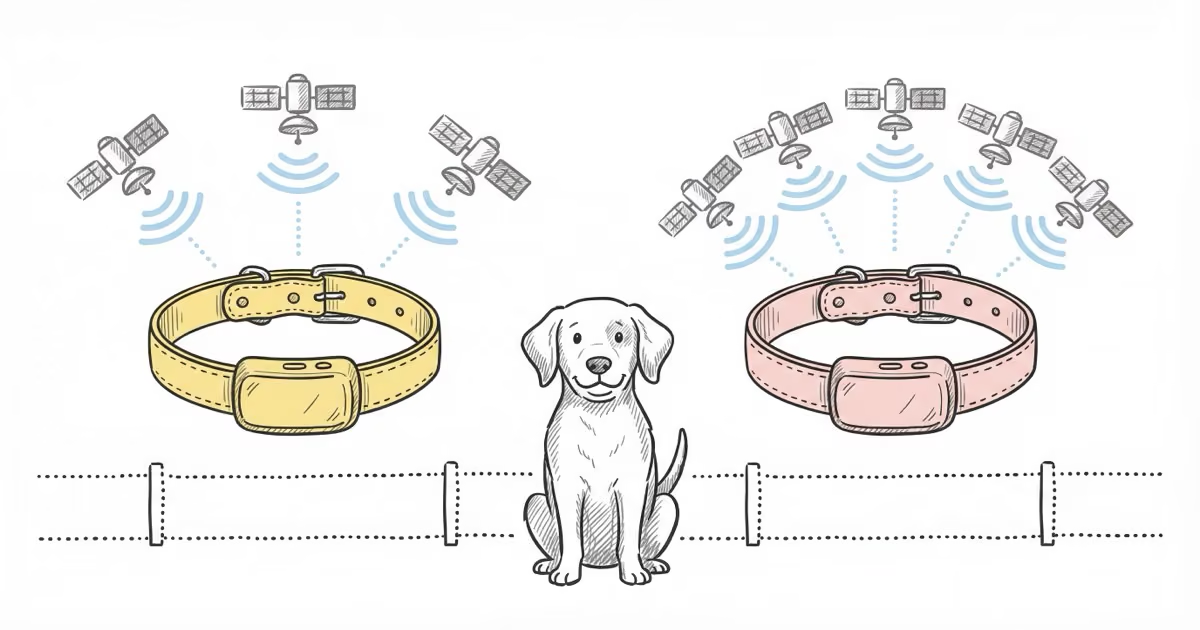
Two GPS dog fences, two very different price tags, and wildly different approaches to the same problem: keeping your dog inside a boundary without burying wire. After field testing both the Halo Collar 4 and SpotOn GPS Fence across multiple properties, the gap between them is real but not always where you’d expect it.
Key Takeaways
- SpotOn connects to 128+ satellites across 4 GNSS systems (GPS, GLONASS, Galileo, BeiDou), delivering tighter boundary accuracy than Halo’s GPS+GLONASS setup.
- Halo Collar 4 starts at $599 vs SpotOn at $1,495, but Halo’s subscription fees can close the gap over 3 years.
- SpotOn allows up to 1,500 custom fence posts with overlapping zones, while Halo caps at 20 non-overlapping fences.
- Halo’s battery runs about 24 hours vs SpotOn’s 22 hours, a small edge for all-day use.
- Neither system replaces physical fencing entirely since GPS drift and signal loss happen with both collars in dense tree cover or near tall buildings.
How GPS Dog Fences Work
Both Halo and SpotOn replace buried-wire invisible fences with satellite-based boundaries you set from a phone app. No trenches, no professional installation, no wires to repair after a heavy rain. The collar itself contains everything: GPS receiver, cellular radio, correction module, and battery.
The real advantage over traditional underground fences? Portability. Take the collar to a friend’s property, a campground, or your vacation rental and set up a new boundary in minutes. That’s something a $2,000 professionally installed wire fence can’t match.
For context on how GPS-based tracking compares to Bluetooth alternatives, see our breakdown of AirTag vs GPS tracker differences.
Halo Collar 4 GPS Technology
Halo’s virtual fence pulls data from 50+ GPS and GLONASS satellites combined with cell tower triangulation. An omnidirectional antenna locks onto whichever signals are strongest.
Halo claims a proprietary positioning algorithm developed with NASA JPL scientists, and the system updates your dog’s location every 5 seconds. In practice, I saw occasional drift of 5-10 feet near tree lines. Open-field accuracy was solid, but edges near buildings got fuzzy.
SpotOn GPS Technology
SpotOn uses four global navigation satellite systems: GPS, GLONASS, Galileo, and BeiDou. That’s over 128 satellites compared to Halo’s ~50. More satellites means better lock speed and fewer dead spots.
SpotOn also adds a directional antenna that filters out reflected signals bouncing off buildings and trees. Location refreshes every 2.5 seconds, twice as fast as Halo’s 5-second interval. In comparative field testing, SpotOn delivered noticeably tighter boundary control and faster breach alerts, especially in wooded areas and near structures.
Feature Comparison Breakdown
| Feature | Halo Collar 4 | SpotOn Collar |
|---|---|---|
| Satellite Systems | GPS + GLONASS (~50) | GPS + GLONASS + Galileo + BeiDou (128+) |
| Update Interval | 5 seconds | 2.5 seconds |
| Max Fences | 20 (non-overlapping) | 1,500 (overlapping OK) |
| Correction Levels | 15 | 30 |
| Battery Life | ~24 hours | ~22 hours |
| Device Price | $599 | $1,495 |
| Monthly Fee | $9.99+ (for tracking/training) | $5.95-$9.95 (for tracking) |
| Return Period | 60 days | 90 days |
| Warranty | 1 year | 2 years |
Containment Fence Customization
This is where SpotOn pulls far ahead.
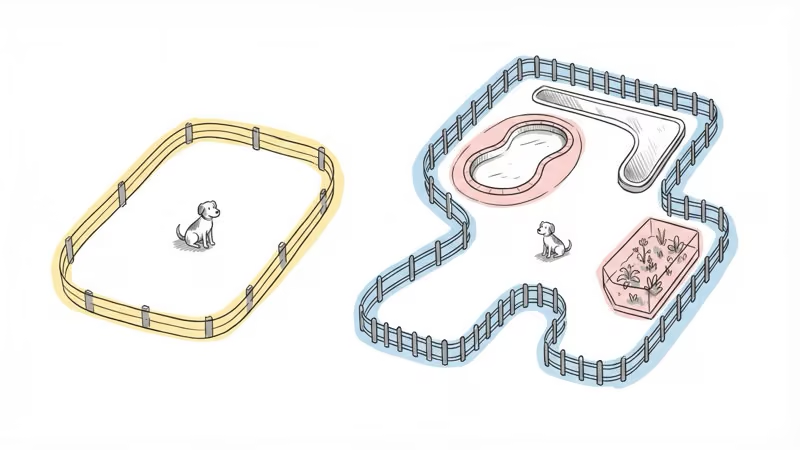
SpotOn lets you create up to 1,500 custom fence posts that can be walked in real-time or drawn as lines and shapes in the app. Multiple fences can overlap and be toggled on/off individually. Need to block off the pool area? Draw an exclusion zone in the app. Done.
Halo limits you to 20 oval or rectangular fences set by moving posts. Fences can’t overlap. They’re either all active or all inactive. Want an exclusion zone around your garden beds? You’ll need separate Bluetooth beacons placed on the ground.
If your property is a basic rectangle with no complex no-go areas, Halo works fine. But for irregular lots, properties with pools, gardens, or driveways you need to block off, SpotOn’s customization is substantially better.
Home Zones and Exclusion Areas
SpotOn handles both through the app. Map a custom-shaped home zone where corrections pause. Draw exclusion zones of any size or shape. No extra hardware.
Halo has no dedicated home zone feature. You can approximate one by turning fences off manually. For exclusion areas, you’re buying and placing physical Bluetooth beacons. It works, but it’s fiddly compared to drawing on a screen.
Real-Time Location Tracking
Both offer live GPS tracking, but the details differ.
Halo includes multi-carrier cellular (AT&T, T-Mobile, Verizon) in its subscription plan. In my testing, the multi-carrier approach gave moderately better signal consistency while dogs were moving through remote areas.
SpotOn charges an extra $9.95/month for tracking on top of the base subscription. However, its position accuracy when dogs were stationary was noticeably sharper. For pinpointing an escaped dog’s exact location, SpotOn has the edge.
If you’re considering GPS tracking options for pets more broadly, our guide to the best GPS trackers for pets covers alternatives outside the fence category.
Static Correction Levels
SpotOn offers 30 intensity levels compared to Halo’s 15. The extra granularity helps with sensitive or stubborn dogs where finding the exact right level matters. That said, as long as you find the minimum tap that gets your dog’s attention, either system works. According to the Humane Society’s guidance on dog fences, using the lowest effective correction level is always the right approach.
Training and Onboarding Support
Halo offers a structured video-based training program inside the app, though it sits behind the premium subscription tier. The step-by-step lessons are well-organized for first-time e-collar users.
SpotOn takes a different approach: free training guides and tutorials on YouTube, plus a bundled 30-minute 1-on-1 onboarding session with a certified trainer. That private session is a genuine value-add. The AKC’s training guidelines for invisible fences emphasize that professional guidance during the introduction phase significantly reduces correction-related stress.
Halo Collar: Pros and Cons
- More beginner-friendly training materials
- Multi-carrier cellular for broader coverage
- Costs roughly half of SpotOn upfront
- About 2 extra hours of battery life
- Lighter collar design fits smaller breeds better
- Capped at 20 non-overlapping fences
- GPS accuracy lags behind SpotOn in wooded and urban areas
- Bluetooth beacons needed for exclusion zones
- No true no-correction home zone
If these trade-offs are deal-breakers, check out our roundup of Halo Collar alternatives for other GPS fence options.
SpotOn Collar: Pros and Cons
- Class-leading GPS accuracy with 4 satellite networks
- Up to 1,500 fully custom fence zones with overlap
- Faster 2.5-second position updates and alerts
- Built-in home zones and exclusion areas in the app
- 30 correction levels for fine-tuned adjustments
- 90-day return period and 2-year warranty
- Up to 10x more expensive than Halo depending on plan
- Bulkier collar is harder to size for dogs under 20 lbs
- Real-time tracking costs an extra $9.95/month
Pricing: 2-Year Total Cost of Ownership
The sticker price tells only part of the story. Here’s what you actually spend over two years.
| Cost Component | Halo Collar 4 | SpotOn Collar |
|---|---|---|
| Device | $599 | $1,495 |
| Monthly Subscription | $9.99/mo (tracking + training) | $5.95/mo (fence only) |
| Tracking Add-On | Included in sub | +$9.95/mo |
| 2-Year Total | ~$839 | ~$1,876 |
Halo is cheaper over two years by about $1,000. But that gap narrows if you skip SpotOn’s tracking add-on ($5.95/mo fence-only drops the 2-year total to ~$1,638). SpotOn also offers interest-free financing up to 24 months, compared to Halo’s 12-month max.
One thing worth noting: Halo’s base-tier plan without GPS tracking or premium training content exists but strips away features that make the collar useful. Most owners end up on the $9.99+ plan.
For owners comparing these against trackers without recurring fees, our GPS tracker with no monthly fee guide explores subscription-free alternatives.
Reliability and Real-World Performance
No GPS dog fence is escape-proof. Both systems can drift, lag, or lose signal. Based on testing and aggregated owner feedback from the r/dogs community on Reddit, here are the most common issues:
- Boundary drift near tree lines, buildings, and hills
- Delayed breach alerts when GPS signal drops momentarily
- False corrections triggered by GPS multipath errors
- App sync failures requiring collar restart
SpotOn handles these better on average. The additional satellite systems and faster refresh rate mean fewer gaps. Halo’s performance is acceptable in open areas but gets spottier near obstacles. Their team pushes regular firmware updates to close the gap, and the Halo 4 is measurably better than the Halo 3 was.
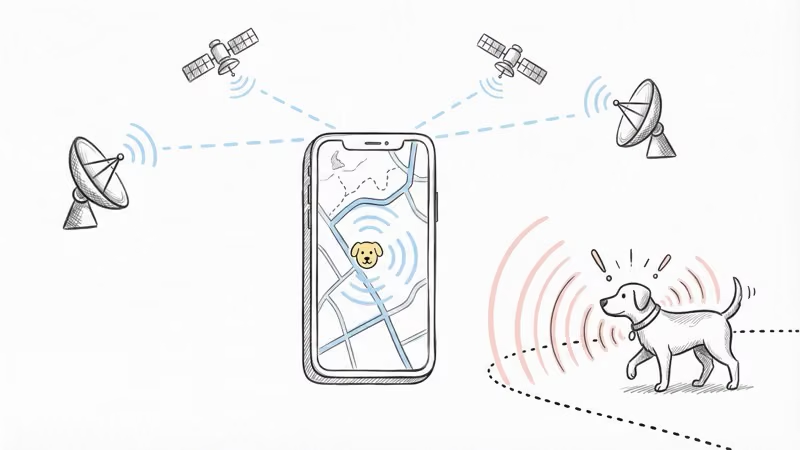
Critical caveat: diligent training matters more than hardware. A well-trained dog on a Halo respects the boundary better than an untrained dog on a SpotOn. If you’re weighing simpler GPS tracking collars without the fence component, our FitBark vs Tractive comparison covers that category. The AVMA’s position on electronic containment systems stresses that no GPS collar should fully replace physical fencing or supervision, especially for dogs with high prey drive.
Choose Halo Collar 4 if:
- Your property is a basic rectangle under 5 acres
- You want to spend less and prefer structured training content
- Your dog is medium to large breed and responds well to auditory warnings
- You want multi-carrier tracking included in your plan
Choose SpotOn if:
- Your yard has pools, gardens, driveways, or irregular boundaries
- You have a stubborn or high-energy dog that tests limits
- GPS accuracy in wooded or urban areas is a priority
- You want the longest return window (90 days) to test it properly
Bottom Line
For most dog owners with complex properties, SpotOn is the better GPS fence. The quad-satellite GPS, 1,500-point fence customization, and faster response time justify the higher price if your yard needs it. Halo Collar 4 is a solid choice for simpler layouts and tighter budgets, but you’re making real trade-offs in accuracy and flexibility.
Don’t buy either one expecting perfection. GPS fences are a tool, not a guarantee. Invest the first 30-60 days in proper training, keep physical backup fencing where possible, and use the return window to confirm the system actually works on your specific property.
FAQ
How long does it take to train a dog on a GPS fence?
Most dogs understand the boundary concept within 2-4 weeks of consistent daily sessions. Full off-leash reliability typically takes 30-60 days. Rushing the process leads to more corrections and more stress. Both Halo and SpotOn recommend a phased approach: audio-only warnings first, then low-level taps, then gradually increasing freedom.
Can I use Halo or SpotOn for a small dog?
Halo’s lighter design works for dogs as small as 20 lbs. SpotOn’s bulkier collar fits dogs 30 lbs and up more comfortably. For dogs under 20 lbs, neither GPS fence collar is ideal. Consider a GPS pet tracker attached to a lightweight harness instead.
What happens if the collar loses GPS signal?
The fence boundary still activates based on the last known position. Your dog won’t suddenly be free to roam. However, tracking and real-time alerts stop working until signal returns. Dense tree canopy and deep valleys cause the most dropouts.
Is SpotOn really worth 2-3x the price of Halo?
It depends on your property. If your yard is a basic rectangle with clear sightlines, Halo handles it well and saves you $800-1,000. If your lot has irregular shapes, multiple no-go zones, or heavy tree cover, SpotOn’s accuracy and customization prevent the frustration of constant false corrections. The 90-day return window lets you test before committing.
Do GPS dog fences work in rural areas without cell service?
The fence function itself runs on satellite GPS, not cellular. So the boundary works even without cell signal. What you lose without cellular coverage is real-time tracking, escape alerts on your phone, and remote fence adjustments. Both collars store the boundary locally on the device.
How accurate are GPS dog fences compared to buried-wire fences?
Buried-wire fences are accurate to about 1-3 feet. GPS fences range from 3-10 feet depending on satellite conditions, with SpotOn consistently landing on the tighter end. Open fields perform best. Near buildings and dense trees, expect the wider end of that range. This is why both manufacturers recommend setting your fence boundary a safe distance from actual property lines.
Can I take a GPS dog fence to a different location?
Yes, that’s one of the biggest advantages over wired systems. Walk or draw a new boundary at any location with your phone, and the collar recognizes it within minutes. This makes GPS fences ideal for owners who travel, visit family, or split time between properties. Halo stores up to 20 locations; SpotOn can hold hundreds.