The Nomad Tracking Card Pro is a Find My wallet card with a 16-month rechargeable battery, one of the longest-running wallet cards available. It’s 2.5mm thick, charges on Qi or MagSafe, and costs $40.
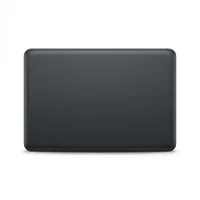
How long can a wallet tracker run before you touch it again? Nomad rates the Tracking Card Pro at 16 months, and according to Apple, the Find My network it rides spans over 1 billion devices. The black version keeps a card-shaped footprint for standard wallet slots.
- 16-month battery — among the longest-running rechargeable wallet cards available, roughly 3x the original Nomad card
- 2.5mm thick, 15g — about 30% thicker than the 1.7mm Air model, the trade-off you accept for battery
- Qi and MagSafe charging — contains no magnets, so it never demagnetizes the cards stored beside it
- Find My only — iPhone users get Lost Mode and separation alerts; Android users get nothing, so check your phone first
- $40, no subscription — IPX7 waterproof aluminum-and-polycarbonate build, sold direct from Nomad in black or white
What Makes This Card Different From a Regular Tracker
Endurance is the whole pitch. Nomad’s official product page states that the battery runs 16 months on a single charge.
Nomad positions 16 months as the Pro’s main advantage over thinner rechargeable cards. The design choice behind it matters more than the number itself.
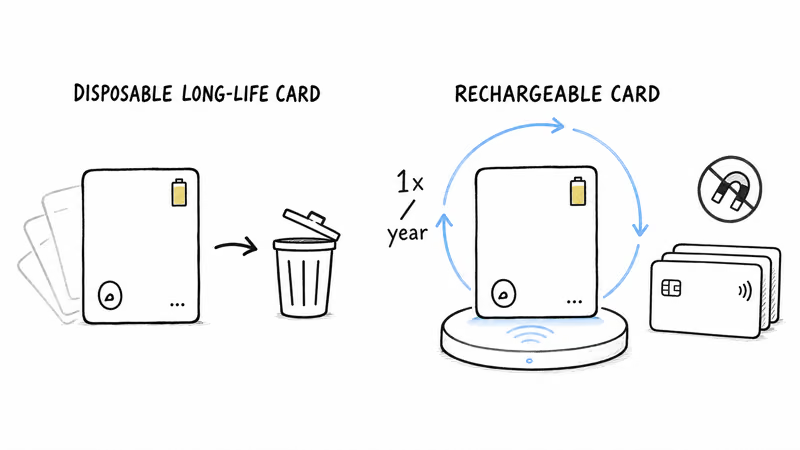
Disposable long-life cards force you to recycle the whole device once the cell dies. The Pro recharges over and over, so you top it up maybe once a year instead of buying a replacement. Across three years of ownership, that’s two recharges versus a small pile of thrown-away cards. The card also holds no magnets of its own, so it won’t demagnetize the credit cards stacked against it.
Battery Life Is the Whole Reason to Buy It
Nomad’s 16-month figure assumes typical Find My check-in intervals, and that background load is light enough that wallet habits barely move the curve.
Early in a 16-month rating the charge indicator should stay effectively full for a long stretch before it moves at all, since the slow Find My check-in load draws very little power day to day. When the level finally does drop low after many months, you simply set the card on a wireless pad and recharge it rather than buying a replacement.
A card you recharge roughly once a year changes the ownership math. You stop treating the tracker as a consumable and start treating it like the wallet itself.
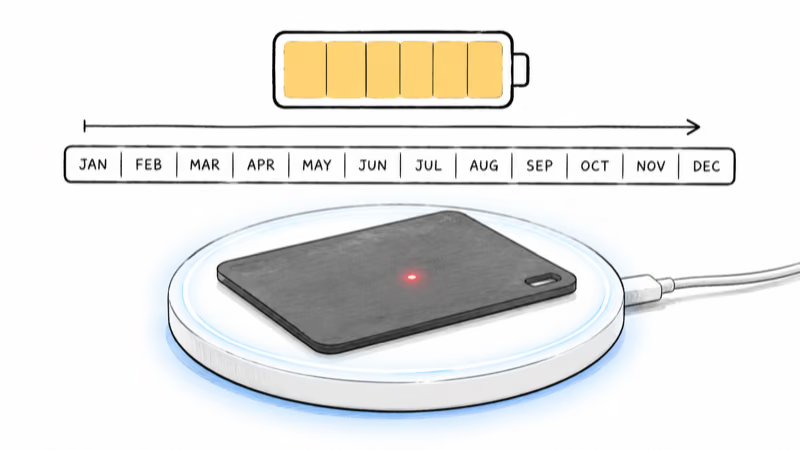
It tops up on any Qi or MagSafe pad — the same puck you already use for a phone or earbuds. There are no coin batteries to hunt down and no tiny doors to pry open, which is where cheaper cards fail first. For context on how far this has come, Tom’s Guide found that the original Nomad card lasted only about 5 months per charge.
Setup and Daily Carry
Setup is the standard Find My flow: hold the card near an unlocked iPhone, wait for the pairing sheet, then name it and assign it to your wallet. There’s no separate app and no account beyond the Apple ID you already use.
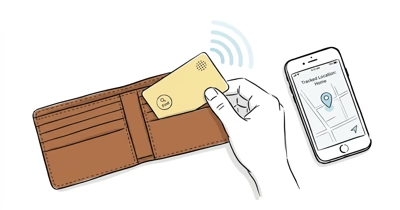
Separation alerts are the feature you feel day to day. A paired iPhone buzzes within a short distance of leaving the wallet behind — the moment a tracker earns its place.
Lost Mode covers the worse case. Tap the card with any NFC phone, iPhone or Android, and a finder sees a contact screen you control, reaching you without ever seeing your home address. That NFC hand-back works cross-platform even though live tracking does not, which softens the Find My-only limit in the one scenario where a stranger is actually involved.
The daily-carry verdict is set-and-forget. After the first pairing there is no app to reopen; the card simply sits in the Items tab beside any AirTags, which for a low-maintenance device is exactly the point.
Is the Nomad Tracking Card Pro Worth $40?
At $40 the Pro sits $10 above the thinner Air, and the entire value question reduces to one trade: battery life or slimness.
Here is the product, with the official direct-purchase link, since Nomad sells the Pro on its own site rather than through Amazon.
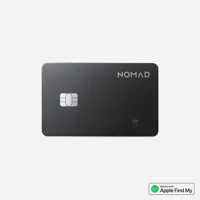
Competition complicates the math. Cross-platform cards exist at similar prices that add Android support, and the Air undercuts the Pro by $10 if you don’t need the long battery. The Pro earns its premium only when 16 months of runtime and a recharge-forever design outweigh saving ten dollars or shaving a millimeter. For an iPhone-locked buyer who hates managing batteries, that math tilts toward the Pro fast.
Put plainly, buy the Pro if you carry an iPhone, want a card you charge about as often as a smoke detector, and don’t mind the extra millimeter. Skip it if your wallet is already maxed on thickness, you might switch to Android, or you want ultra-wideband Precision Finding — none of those survive the Pro’s Find My-only design, and the Air or a dual-network rival serves them better.
Design and Build: What the 2.5mm Buys You
Aluminum sits sandwiched between two layers of polycarbonate here, weighing 15 grams with an IPX7 waterproof rating.
Because it holds no magnets, the card can sit directly against a magnetic-stripe card without risking the demagnetized stripes or terminal failures that magnetized accessories can cause. The premium finish is real but mostly invisible, since the card lives buried between others in your wallet.
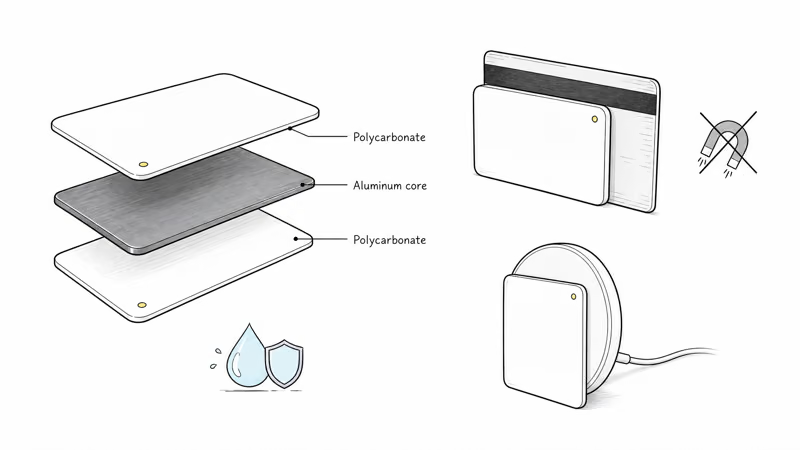
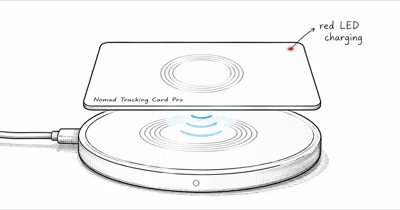
You’re paying for what it does, not how it looks. A red LED confirms alignment, and the card can receive power from a MagSafe puck.
How Does the Pro Compare to the Air?
The cleanest comparison is inside Nomad’s own lineup. The thinner sibling, the Air, is the card to grab when slimness wins; our full Nomad Tracking Card Air review covers the case where 1.7mm beats battery life, and the Air adds dual-network support the Pro lacks.
| Feature | Tracking Card Pro | Tracking Card Air |
|---|---|---|
| Price | $40 | $29 |
| Thickness | ⚠ 2.5mm | ✓ 1.7mm |
| Battery Life | ✓ 16 months | ⚠ 5-7 months |
| Network | ⚠ Find My only | ✓ Find My or Find Hub |
| Charging | ✓ Qi / MagSafe | ✓ Qi |
Want the wider market first? Our best wallet tracker card guide ranks the Pro against every rechargeable card worth a look.
Two head-to-heads are also worth reading before you decide. The Rolling Square AirCard Pro versus the Nomad Air covers thin-card rivals, while the KeySmart SmartCard Gen 3 versus the Nomad Air covers dual-network alternatives.
The Real Limitations You Should Weigh
Thickness comes first, and it’s unavoidable here.
At 2.5mm the Pro is roughly 30% thicker than the Air, and that gap matters most in tight carriers. Measure your wallet first if it’s already packed.
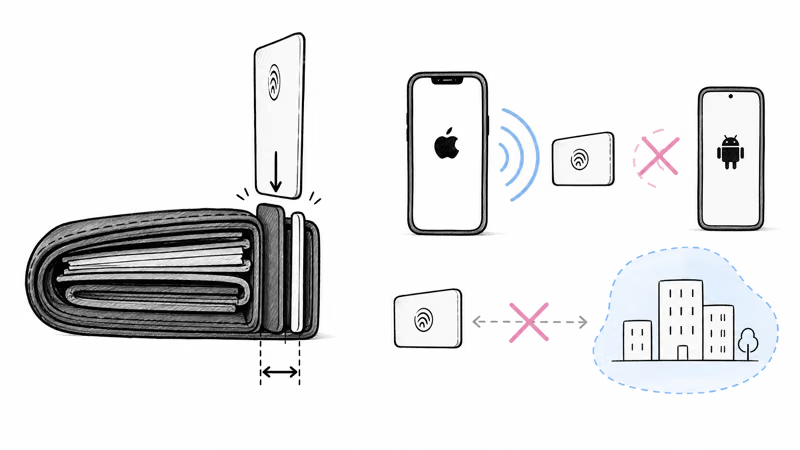
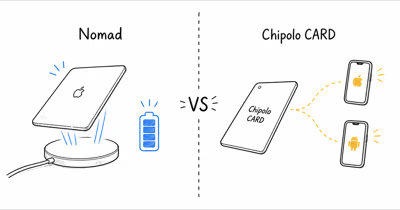
The network ceiling is the second catch. The Pro rides Apple’s Find My network only, so there’s no Android support and no ultra-wideband Precision Finding, because Apple reserves directional arrows for its own hardware. The other big Find My card splits the difference between recharging and a sealed cell, and our Pro-versus-Chipolo card breakdown shows when each one wins.
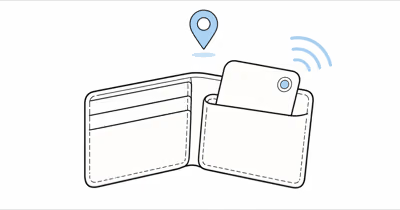
In practice the Bluetooth-plus-Find My combination locates a lost wallet to a building or a block, not to the exact card slot. That’s fine for everyday recovery but short of AirTag-level pinpointing, and switching to Android later means the card stops working entirely. Among broader options, our Find My tracker hub shows where a wallet card sits next to keychain tags and item trackers.
Bottom Line
The Nomad Tracking Card Pro is the wallet tracker to buy when battery life is your priority. Its 16-month rechargeable cell, Qi and MagSafe charging, and magnet-free metal build make it one of the most set-and-forget cards in the category, and the $40 price carries no subscription.
The catch is the 2.5mm thickness and the Find My-only network. If you run a slim wallet or carry an Android phone, the thinner Air or a dual-network rival fits better. For iPhone owners who want to charge once a year and forget about it, the Pro is the easy call.
FAQ
How long does the Nomad Tracking Card Pro battery last?
Nomad rates the battery at 16 months on a single full charge, more than triple the original Nomad card. It’s rechargeable rather than disposable, so a yearly top-up keeps it running for years rather than forcing a replacement.
Does the Nomad Tracking Card Pro work with Android?
No. The Pro works only with Apple’s Find My network, so it requires an iPhone or iPad. Android users who want a wallet card should look at a dual-network option that also supports Google Find Hub.
How thick is the Nomad Tracking Card Pro?
It’s 2.5mm thick and weighs 15 grams. That’s about 30 percent thicker than the 1.7mm Air model, so it adds noticeable bulk in a tight or minimalist wallet.
How do you charge the Nomad Tracking Card Pro?
It charges wirelessly on any Qi or MagSafe pad, including the puck you use for a phone or earbuds. There are no coin batteries and no doors to open, which removes the most common card failure point.
Will the Nomad Tracking Card Pro damage my credit cards?
No. The card contains no magnets of its own, so it won’t demagnetize the magnetic stripes on cards stored beside it, and it can sit flush against a stripe card without causing payment failures.
Is the Nomad Tracking Card Pro waterproof?
Yes, it carries an IPX7 rating, meaning it survives submersion in up to 1 meter of water for 30 minutes. The aluminum-and-polycarbonate body is also dustproof.
Does the Nomad Tracking Card Pro have Precision Finding?
No. It uses Bluetooth and the Find My network but lacks an ultra-wideband chip, so there are no directional arrows. It locates a lost wallet to a building or block rather than to the exact spot.
Where can you buy the Nomad Tracking Card Pro?
Nomad sells it directly on its own website in black or white for 40 dollars, with a discount for buying two. It’s not currently listed on Amazon US, so the official store is the place to order.