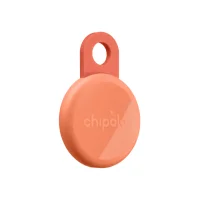
Buy the Chipolo LOOP if you want IP67 submersion sealing and a stated 120m range, all for $39. Buy the Pebblebee Clip 5 to save four dollars at $35 and get a built-in clip with a 12-month battery. Both are USB-C rechargeable universal tags that pair to Apple Find My or Google Find Hub (one network at a time on each), so neither wins on platform. The split is hardware versus price.
These two trackers sit at the same crossroads: both are USB-C rechargeable, both skip the disposable coin cell, and both are universal tags that ride either the Apple or the Google finding network. The split is in the hardware and the price. Android Central’s side-by-side comparison of these universal trackers found that each one wins a different buyer, not an outright knockout.
- Network is a tie: both are universal tags that pair to Apple Find My or Google Find Hub one at a time, so platform is not the deciding factor.
- Alarm: Chipolo publishes a 125 dB peak for the LOOP; Pebblebee rates the Clip 5 siren at 130 dB, so the Clip 5 is the louder finder on paper.
- Battery: both last roughly a year per USB-C charge, the LOOP rated about 1 year and the Clip 5 up to 12 months.
- Water rating: the LOOP is IP67 (submersion to 1m for 30 minutes); the Clip 5 is IP66 (jets and rain, not submersion).
- Price: the Clip 5 is $35 with a built-in clip; the LOOP is $39 with a flexible silicone loop and a stated 120m range.
Pebblebee Clip 5 vs Chipolo LOOP: Spec Comparison
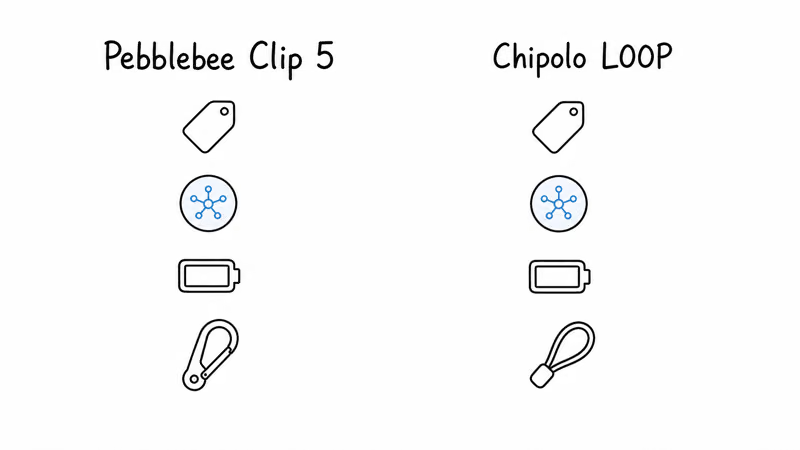
On paper these two keyfinders are close twins. Both are USB-C rechargeable, both are subscription-free, and both are universal tags that work on Apple Find My or Google Find Hub, with one network chosen at setup. That shared network model means the decision comes down to hardware and price rather than ecosystem.
The Chipolo LOOP makes the hardware case: a higher water rating and a stated 120m Bluetooth range. The Pebblebee Clip 5 makes the value case at $35 with a built-in clip versus the LOOP’s $39 with a flexible silicone loop, while still matching the LOOP on the things that matter most day to day. Neither ships with a USB-C cable in the box, so budget a spare charging cord for either one.
| Spec | Pebblebee Clip 5 | Chipolo LOOP |
|---|---|---|
| Price (single) | $35 | $39 |
| Network | Find My or Find Hub (pick one) | Find My or Find Hub (pick one) |
| Battery | USB-C, up to 12 months/charge | USB-C, ~1 year/charge |
| Alarm | ~130 dB siren + LED strobe | 125 dB peak |
| Bluetooth range | Not published | Up to 120m |
| Water resistance | IP66 (jets, rain) | IP67 (submersion to 1m) |
| Attachment | Built-in clip | Flexible silicone loop |
| Subscription | None | None |
Pebblebee Clip 5 vs Chipolo LOOP: Head-to-Head
⇄ Head-to-head
Pebblebee Clip 5 vs Chipolo LOOP
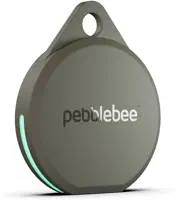
- +125 dB published alarm, among the loudest keyfinders
- +IP67 rated for full submersion to 1 meter
- +Up to 120m Bluetooth range on its spec sheet
- +Flexible silicone loop needs no extra accessory
- +About 1 year of battery per USB-C charge
- +Lowest price of the pair at $35
- +Up to 12 months per USB-C charge, matching the LOOP
- +Built-in clip attaches to keys, bags, and zippers fast
- +Universal: pairs to Apple Find My or Google Find Hub
- +Free companion app plus left-behind alerts
- −Costs $4 more than the Clip 5 at $39
- −Picks one network at setup, like the Clip 5
- −Switching networks requires a factory reset and re-pair
- −No multipack listing for this single SKU
- −Only one color option
- −IP66 only, not certified for submersion like the LOOP
- −No published Bluetooth range figure
- −Single SKU with no multipack bundle
- −Switching networks needs a factory reset, like the LOOP
- ·You want the loudest published alarm to find buried keys
- ·You drop your keys near water and want IP67 margin
- ·You want the longest published Bluetooth range of the two
- ·You prefer a soft silicone loop over a hard clip
- ·You want the lowest entry price at $35
- ·You prefer a clip over a silicone loop
- ·You want a 12-month battery without paying more
- ·You are happy on one finding network at a time
Pebblebee Clip 5: The Value Pick
The Pebblebee Clip 5 is the cheaper of the two, and it doesn’t feel like a downgrade. It’s a universal tag that pairs to either Apple Find My or Google Find Hub, so an iPhone owner and an Android owner can each use the same model, choosing their network at setup.
Pebblebee’s official Clip 5 product page confirms that it works with Apple Find My or Google Find Hub, plus USB-C charging and a built-in clip that snaps onto a keyring, bag, or zipper without a separate holder.
The headline is value. At $35 with no subscription, the Clip 5 undercuts the LOOP by four dollars while matching it on the spec most people care about: battery. Pebblebee rates the Clip 5 at up to 12 months per charge, the same practical ballpark as the LOOP. Our full Pebblebee review walks through the daily-carry experience in more depth.
The tradeoffs are real but modest. The siren carries a 130 dB rating on paper, nominally above the LOOP’s 125 dB peak, though how easy an alarm is to pinpoint also depends on its pitch. Its IP66 rating handles rain and splashes but is not certified for submersion, and Pebblebee does not publish a Bluetooth range figure.
None of that undercuts the core appeal: for a buyer who wants a rechargeable universal tag with a fast clip and a 12-month battery, the Clip 5 is the cheapest way in.
Chipolo LOOP: The Hardware Pick
The Chipolo LOOP starts from the same universal-tag base and pours its advantages into hardware. Chipolo’s official LOOP spec sheet states that the LOOP reaches a 125 dB peak alarm, IP67 sealing, a roughly one-year battery, and up to 120m of Bluetooth range — a stronger sheet than the Clip 5 on alarm, water, and range.
The flexible silicone loop is the design signature. It threads directly onto a keyring or bag strap, so you skip the extra accessory that bare AirTags demand. MacRumors’ hands-on review found that the rechargeable design and silicone strap are the LOOP’s standout upgrades over older sealed-cell Chipolo tags, and our own Chipolo LOOP review covers its rechargeable battery in more depth.
The LOOP follows the same one-network-at-a-time rule as the Clip 5: you choose Apple Find My or Google Find Hub during setup, and switching later means a factory reset and a fresh pairing. So the network model is not where these two differ. The LOOP simply asks $4 more and rewards it with the submersion rating and the longer published range.
Which Tracker Is Louder, Tougher, and Longer-Lasting?
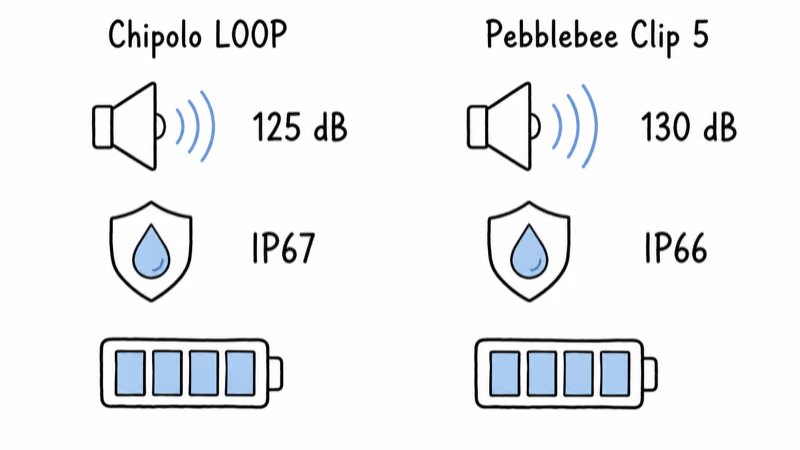
Three hardware specs shape this matchup: alarm, water resistance, and range. On loudness the published specs favor the Clip 5: Pebblebee rates it at 130 dB, nominally above the LOOP’s 125 dB peak. How easy an alarm is to locate by ear also depends on its pitch and tone, so the on-paper gap is small in practice. On water resistance and range, the LOOP leads.
On water resistance, the LOOP’s IP67 rating survives full submersion in up to one meter of fresh water, while the Clip 5’s IP66 protects against jets and rain but not a dunk. Either rating handles sweat and a rainy commute, but keys that live near a pool or sink get more margin from the LOOP.
On battery, the two are close enough to call a tie: the LOOP is rated about a year per charge and the Clip 5 up to 12 months, both over USB-C. Both send low-battery alerts well before they die, so neither leaves you stranded.
The LOOP also lists up to 120m of Bluetooth range, while Pebblebee publishes none, giving the LOOP one more edge for spotting a tag already nearby. Google’s Find Hub support page explains that out of Bluetooth range, either tag still refreshes its location off nearby Android phones, the same way Find My uses passing iPhones.
Who Should Buy Each Tracker?
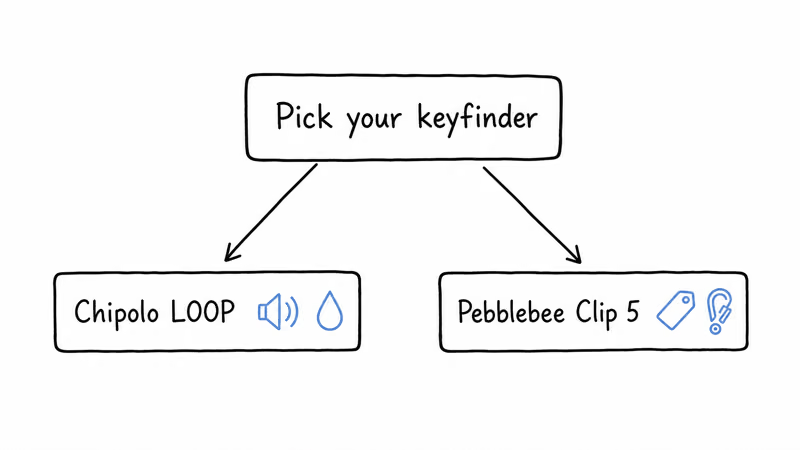
Buy the Chipolo LOOP if you want the better hardware and the $4 premium does not bother you. The IP67 submersion sealing and stated 120m range make it the tougher, longer-reaching tag, and the silicone loop attaches with no accessory. If water margin and range matter most, the LOOP wins, and it sits near the top of our best rechargeable Bluetooth tracker list.
Buy the Pebblebee Clip 5 if you want to spend less without giving up much. At $35 it’s the cheaper tag, the built-in clip is faster to move between items, and the 12-month battery matches the LOOP. You trade some loudness and the submersion rating for the lower price, which is an easy call for many buyers. Because both are universal tags, either one fits a mixed iPhone and Android household equally, as our best dual-network trackers roundup explains.
Shoppers torn between these two and Apple’s tag should also read our Pebblebee vs AirTag comparison before deciding.
Bottom Line
The Pebblebee Clip 5 and Chipolo LOOP are both excellent rechargeable universal keyfinders, and neither is a bad buy. The LOOP wins on hardware with IP67 sealing and a stated 120m range for $39, while the Clip 5 carries the higher rated alarm.
The Clip 5 wins on price at $35, adds a fast built-in clip, and matches the LOOP’s 12-month battery. Since both pair to Apple Find My or Google Find Hub the same way, let loudness, water margin, and price make the call.
Frequently Asked Questions
Does the Pebblebee Clip 5 work on both Find My and Find Hub?
The Pebblebee Clip 5 is a universal tag, which means it can pair to Apple Find My or to Google Find Hub, but you choose one network at setup rather than running both at once. Switching networks later requires a factory reset and a fresh pairing. The Chipolo LOOP works exactly the same way. So for a mixed iPhone and Android household, either tag fits, but each individual tag lives on one network at a time, not both simultaneously.
Which tracker has the longer battery life?
The two are effectively tied. The Chipolo LOOP is rated for about one year per USB-C charge, and the Pebblebee Clip 5 is rated for up to 12 months per charge. Both are rechargeable, so neither one forces you to buy or swap a coin cell. The practical difference is negligible: you reach for the cable roughly once a year with either tag. Heavy ringing and frequent left-behind alerts shorten both estimates.
How loud is each tracker’s alarm?
Chipolo publishes a 125 dB peak alarm for the LOOP and Pebblebee rates the Clip 5 siren at 130 dB, paired with an LED strobe. On paper the Clip 5 is nominally higher, and how easy an alarm is to pinpoint also depends on its pitch and the environment. Both are loud enough to find keys slipped under a couch or into a packed bag, and both are easy to trigger from the companion app or from within Find My and Find Hub.
Which one is more water resistant?
The Chipolo LOOP carries an IP67 rating, meaning it can survive full submersion in up to one meter of fresh water for 30 minutes. The Pebblebee Clip 5 is rated IP66, which protects against strong water jets and rain but isn’t certified for submersion. For most keyrings, either rating handles sweat, rain, and an accidental splash. If you regularly drop your keys near pools, sinks, or the ocean, the LOOP’s submersion rating gives more margin.
Does either tracker require a subscription?
No. Neither the Pebblebee Clip 5 nor the Chipolo LOOP charges a subscription. Both rely on the free Apple Find My and Google Find Hub networks plus their own free companion apps. You pay once for the hardware and nothing after that. This is a key advantage over older GPS-style trackers that bill monthly for cellular location.
Which attachment style is better for keys?
The Chipolo LOOP uses a flexible silicone loop built into the body, so it threads onto a keyring or bag strap with no extra accessory. The Pebblebee Clip 5 has a built-in clip that snaps onto a ring, zipper, or loop directly. The LOOP’s silicone strap is quieter and softer in a pocket, while the Clip 5’s clip is faster to move between items. Both attach without buying a separate holder, which is a common annoyance with bare AirTags.
Are these trackers safe from being used to stalk someone?
Both trackers follow the cross-platform unwanted-tracking standard that Apple and Google support, so an unknown tracker traveling with a stranger can trigger an alert on a nearby iPhone or Android phone. Apple documents how to respond to these alerts in its unwanted-tracking support page. This safety layer applies whether the tag is on Find My or Find Hub. It’s not perfect, but it’s the same protection AirTags use and is far better than the silent trackers of a few years ago.