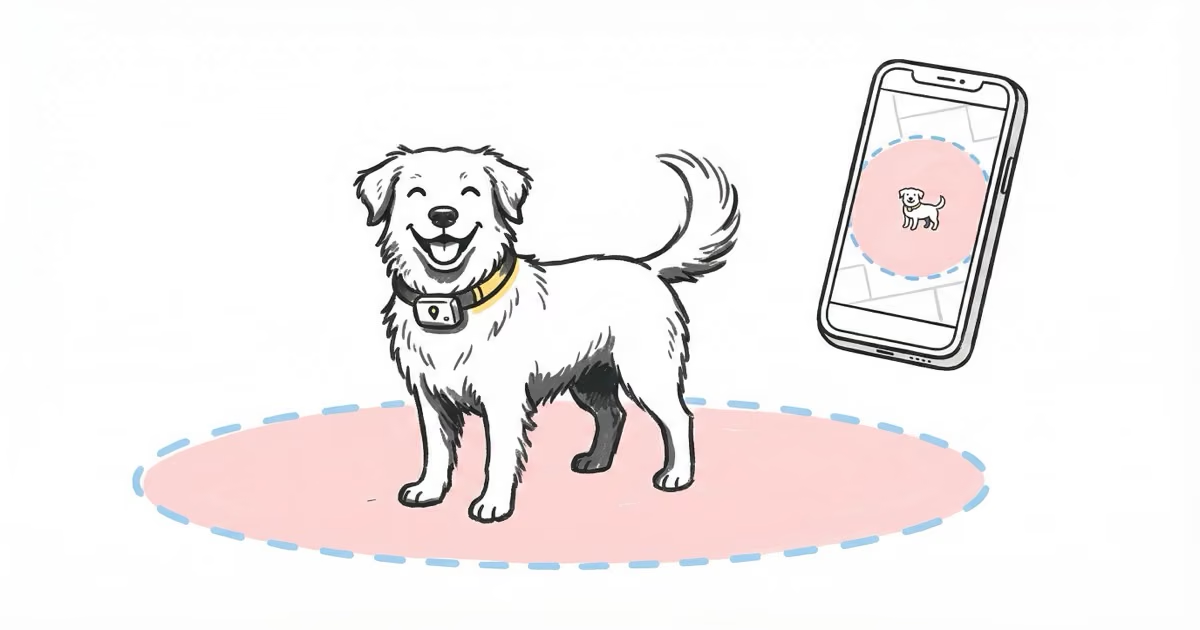
The SpotOn GPS fence replaces buried wires and physical barriers with a GPS collar that creates virtual boundaries on your phone. Walk your property line, draw a fence on a map, and the collar handles the rest — warning tones, vibration, and optional static correction when your dog approaches the edge.
I tested SpotOn’s system and talked to multiple owners about their experiences. The technology works, but whether it’s right for you depends on your dog, your property, and your willingness to invest serious time in training.
Key Takeaways
- SpotOn collar costs $1,295 with cellular tracking plans starting at $5.95/month (2-year prepaid).
- You create unlimited virtual fences by walking property lines or drawing on a map through the app.
- Battery lasts 12 to 22 hours depending on activity, requiring daily charging for most active dogs.
- The collar fits dogs with neck sizes 10 inches and up — too bulky for dogs under about 15 pounds.
- Success depends heavily on dedicated training time; the collar alone won’t contain a determined dog.
How SpotOn GPS Fencing Works
The system has two components: a GPS-enabled collar and a mobile app for iOS or Android.
Here’s the sequence:
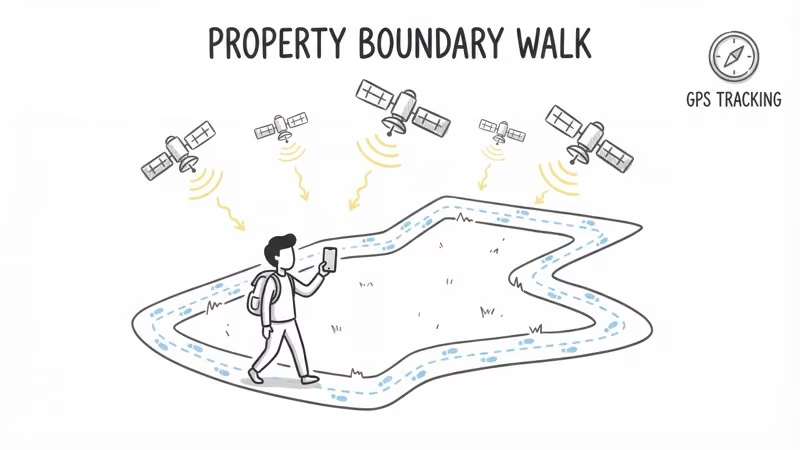
- You map a boundary by either walking your property perimeter while the app tracks your path, or by drawing a fence directly on the map.
- The app smooths your walking path into clean boundary lines and saves the fence.
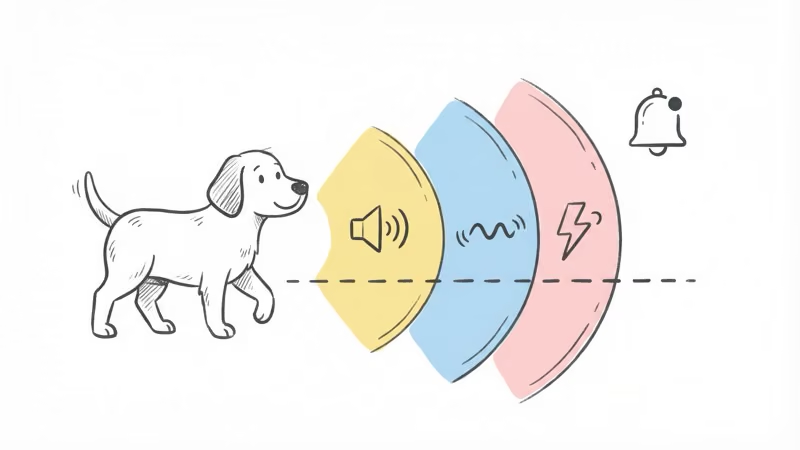
- When your dog approaches the boundary, the collar emits an audible warning tone.
- If the dog keeps going, a second tone sounds, followed by vibration.
- If the dog still pushes forward, optional static correction activates (you control the intensity, or you can disable static entirely).
- If the dog crosses the boundary, you get a real-time push notification on your phone.
You can create as many overlapping boundaries as you want. That means separate fences for the front yard, back yard, and a vacation rental — all saved in the app and switchable in seconds.
The collar connects to GPS satellites for positioning and uses Bluetooth to sync with your phone for setup. Cellular connectivity (AT&T or Verizon, your choice) powers the real-time tracking and escape alerts.
Does SpotOn Actually Keep Dogs Contained?
The honest answer: it depends on the dog and the training.
Dogs that respond well: Well-trained dogs with moderate temperaments generally learn the boundaries within 2 to 3 weeks. Multiple owners I spoke with said their dogs learned to stop at the warning tone and turn back. One owner with a Labrador on a 2-acre property said the dog tested the boundary three times in the first week, then never again.
Dogs that don’t: High prey drive breeds, like huskies and terriers, may blow through the corrections if a squirrel or rabbit is motivating enough. Several owners with escape-artist breeds reported mixed results even with months of training.
SpotOn provides training guidelines and videos, but the burden is on you. This is not a plug-and-play solution. If your dog is the type to challenge physical fences, a virtual one won’t magically solve the problem.
For most dogs with reasonable temperaments and owners willing to put in 2 to 4 weeks of consistent training, SpotOn works. But “most dogs” is not all dogs.
What Comes in the Box
- SpotOn collar (Small, Medium, or Large)
- Charging base with USB cable
- Short and long contact points
- Contact point tester
- Quick start guide with QR code for app download
The collar itself is thick. Think Garmin hunting collar, not fashion accessory. Minimum neck size is 10 inches. If your dog weighs under about 15 pounds, this collar is too heavy and bulky. For small breeds, lighter GPS trackers are a better fit.
Materials are solid — thick rubber coating, sturdy buckle, waterproof (IP67, submersible to 1 meter for 30 minutes). It’s built for outdoor dogs who run through brush and get wet.
Setting Up the Virtual Fence
Setup takes 15 to 30 minutes:
- Download the SpotOn app and create an account.
- Charge the collar fully.
- Pair the collar via Bluetooth.
- Adjust the collar fit — snug but not constricting. Attach the appropriate contact points.
- Walk your property boundary while the app records your path, or draw the fence on the map.
- Customize warning zones, correction intensity, and notification preferences.
- Begin training with your dog on a long leash inside the boundary.
The mapping step is the most satisfying part. You walk the perimeter at a normal pace, the app tracks your GPS path, and smooths the jagged walking line into a clean boundary. Total mapping time for a half-acre yard: about 10 minutes.
What Owners Like
No digging, no wires, no permits. If you’re renting, live in an HOA that restricts fencing, or have rocky terrain, SpotOn solves a real problem.
True portability. Going camping? Visiting family? Map a new fence at the destination in minutes. One owner said this was the single feature that justified the price — she takes her dog to three different properties regularly.
Customizable corrections. You can use tone-only, tone plus vibration, or add static. Some dogs only need the tone after initial training. Sensitive dogs never need static at all.
Real-time escape tracking. If your dog does get out, you know immediately and can see exactly where they went. That alone provides peace of mind that a physical fence can’t match.
What Owners Don’t Like
The price is brutal. $1,295 per collar. If you have two dogs, that’s nearly $2,600 before subscriptions. Replacement collars run $400. Compare that to a Halo Collar at roughly half the cost with similar GPS fencing.
Battery life requires daily charging. 12 to 22 hours depending on activity. Active dogs that patrol the boundary frequently drain faster. You’ll need to charge overnight every night, which means your dog is unfenced while the collar charges unless you have a backup.
The collar is big. It’s fine for German Shepherds and Labs. It’s a brick on a Corgi. Dogs under 20 pounds look and feel overburdened.
Training is non-negotiable. SpotOn’s marketing makes it look easy. It’s not. Budget 2 to 4 weeks of daily training sessions. Stubborn dogs take longer. Some never fully trust the invisible boundary.
It doesn’t keep other animals out. Neighborhood dogs, coyotes, and wildlife walk right through your virtual fence. A physical barrier is the only thing that blocks entry.
SpotOn Pricing
| Item | Cost |
|---|---|
| SpotOn GPS collar | $1,295 |
| Additional collar | ~$1,165 (10% off) |
| Replacement collar | $400 |
| Basic repair | $200 |
| Monthly plan | $9.95/month |
| 1-year prepaid plan | $7.95/month |
| 2-year prepaid plan | $5.95/month |
During setup, you choose AT&T or Verizon as your carrier. No need to match your personal phone carrier.
First-year total cost (one collar, 1-year prepaid plan): approximately $1,390. That’s expensive, but comparable to professional fence installation on a half-acre property, and you can take SpotOn with you if you move.
SpotOn runs seasonal sales, typically $100 to $200 off the collar around holidays. Worth waiting for if you’re not in a rush.
SpotOn vs. Alternatives
SpotOn isn’t your only option for wireless containment:
Halo Collar — Similar GPS fencing technology at about half the price (~$699). Backed by Cesar Millan’s training program. Battery life is comparable. If budget is a concern, Halo deserves serious consideration.
Tractive or Fi Collar — These track your dog’s location but don’t provide fence containment or corrections. Great for monitoring, not for boundary enforcement.
Traditional in-ground fence — Buried wire systems from PetSafe cost $200 to $400 for DIY installation. Cheaper, but permanent and not portable. You’ll need to dig.
Physical fence — Still the most reliable containment. Costs vary wildly ($1,500 to $10,000+ depending on material, property size, and labor). Can’t take it with you.
For portable GPS fencing specifically, SpotOn and Halo are the top two options. SpotOn has a longer track record and slightly more polished boundary mapping, but Halo’s price advantage is hard to ignore.
Bottom Line
SpotOn is the best GPS virtual fence system available, but “best” comes with caveats. It works reliably for well-trained medium to large dogs on open properties. It doesn’t work for small dogs, untrained dogs, or owners who expect plug-and-play containment. At $1,295, it’s a serious investment — consider the Halo Collar if budget matters more than brand pedigree. Take advantage of the 90-day money-back guarantee if you’re unsure.
FAQ
Does SpotOn work for small dogs?
Not well. The collar's minimum neck size is 10 inches, and the unit weighs enough to be uncomfortable for dogs under 15 pounds. Small breed owners should look at lightweight GPS trackers instead of virtual fence systems.
How long does the SpotOn collar battery last?
Between 12 and 22 hours depending on how actively your dog patrols the boundary and how often corrections trigger. Most owners charge it overnight every night. Heavy use (constant boundary testing) can drain it in under 12 hours.
Can I use SpotOn at multiple properties?
Yes. You can save unlimited fence profiles in the app and switch between them. Map your home yard, a vacation property, and a campsite -- then activate whichever fence matches your current location. This portability is one of SpotOn's strongest selling points.
Does SpotOn work without cell service?
The GPS fence corrections work without cellular coverage since they rely on satellite positioning. However, you lose real-time tracking and escape notifications on your phone without a cell signal. The containment function still operates, but you won't get alerts if your dog crosses the boundary.
Is the static correction safe for dogs?
When used at appropriate levels following SpotOn's training guidelines, the static correction is designed to be startling but not harmful. Many owners use tone and vibration only, skipping static entirely. The correction is comparable to static discharge from touching a doorknob -- unpleasant, not painful.
What happens if my dog runs through the fence?
You receive an immediate push notification with your dog's GPS location. The collar continues tracking so you can see which direction they went. This is where the cellular subscription proves its value -- without it, you'd have no way to locate an escaped dog remotely.
How does SpotOn compare to the Halo Collar?
Both use GPS-based virtual fencing with similar accuracy. SpotOn costs roughly twice as much ($1,295 vs. about $699 for Halo). SpotOn has a longer market track record and slightly more refined boundary mapping. Halo includes Cesar Millan's training program. For most owners, the choice comes down to budget.