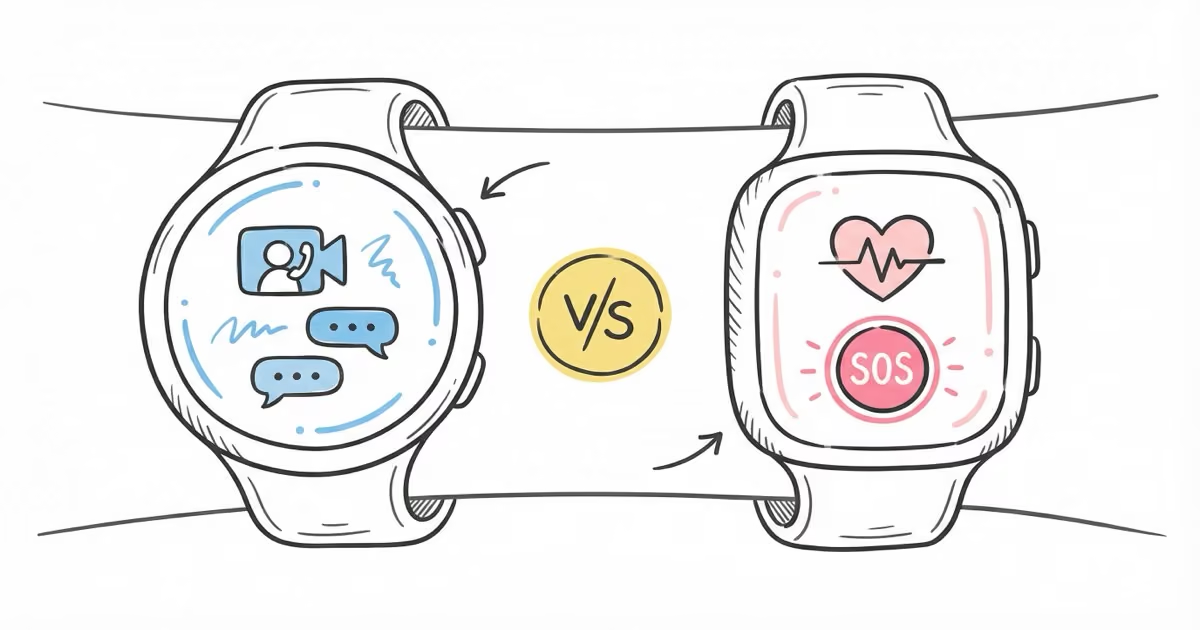
Both the TickTalk 4 and Angel Watch promise parents the same thing: stay connected to your kid without handing them a smartphone. I tested both watches with my 8-year-old over several months. The short version — TickTalk does more for less money, but Angel Watch has genuinely better safety features that some families will prioritize.
Key Takeaways
- TickTalk 4 wins on communication: video calls, voice messages, emojis, photos, and up to 53 contacts through the companion app.
- Angel Watch wins on safety: dedicated SOS button, fall detection, heart rate monitoring, and temperature sensors.
- Both cost around $199 for the watch, but TickTalk’s annual plan ($99/year) is significantly cheaper than Angel Watch’s $10/month ($120/year).
- Angel Watch battery lasts about 48 hours; TickTalk 4 needs charging after roughly 30 hours with regular use.
- TickTalk is the better choice for most families; Angel Watch makes sense if safety sensors and AT&T coverage are your priority.
Quick Spec Comparison
| Feature | TickTalk 4 | Angel Watch |
|---|---|---|
| Price | ~$199 | ~$199 |
| Monthly cost | $5-$8.25/mo (annual plan $99) | $10/month |
| Network | T-Mobile | AT&T |
| Video calling | Yes | No |
| Voice messages | Yes | Yes |
| Text messages | Yes | Yes |
| SOS button | Yes (basic) | Yes (advanced, 3 contacts) |
| Fall detection | No | Yes |
| Health sensors | No | Heart rate, temperature |
| Battery life | ~30 hours | ~48 hours |
| Water resistance | Sweatproof | Sweatproof |
| Games/music | Yes | No |
| Max contacts | 53 | Pre-approved numbers only |
Communication: TickTalk Wins Clearly
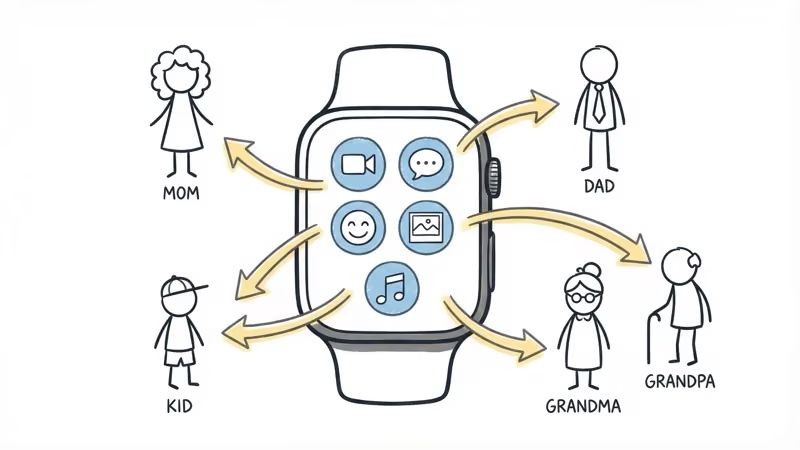
This isn’t close. TickTalk 4 gives kids video calling, voice messages, text messages, emoji art, photo sharing, and handwritten notes. My son spent 20 minutes decorating a voice message with stickers before sending it to his grandmother. She figured out the TickTalk companion app in about 5 minutes.
The companion app is the real advantage. Up to 53 family members and friends can download it and message the watch directly from their phones. No special hardware needed on the adult side.
Angel Watch limits communication to voice calls and text messages. No video calling, which feels like a significant gap in 2026. Call quality over AT&T was actually clearer than TickTalk on T-Mobile in our suburban area, but the feature gap is too wide for that to matter for most families.
One area where Angel Watch does better: the pre-approved contact list means your kid can only communicate with numbers you’ve explicitly authorized. TickTalk’s larger contact capacity is more flexible, but Angel Watch’s locked-down approach gives some parents more control.
Safety Features: Angel Watch Has the Edge
If safety is your number one concern, Angel Watch pulls ahead.
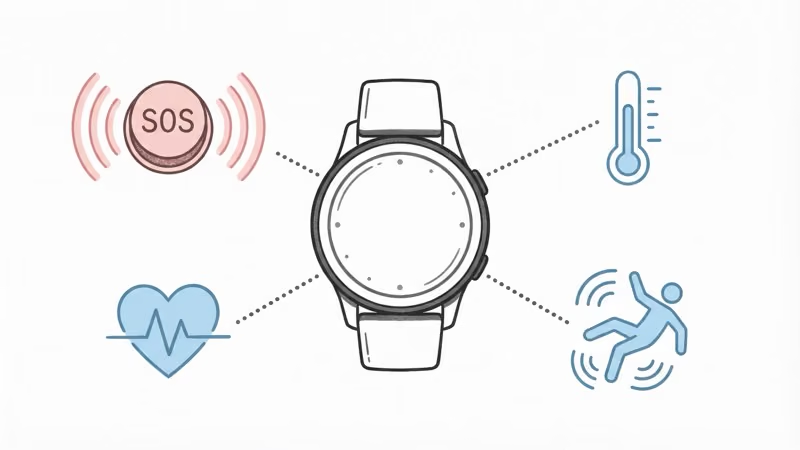
The SOS button connects to three emergency contacts when held for 3 seconds. It also activates an automatic callback so parents can listen to what’s happening. TickTalk has an SOS button too, but it’s more basic — it calls a preset number without the listen-in feature.
Angel Watch’s health sensors are genuinely useful, not gimmicks. The heart rate monitor gives parents baseline data, and the temperature sensor flagged my son’s mild fever before he complained about feeling sick. Fall detection automatically alerts caregivers if the watch detects a hard impact followed by no movement. For kids with medical conditions, or for elderly family members who might also benefit from this type of monitoring, these features matter.
TickTalk 4 offers alarms, reminders, and a sound detector that can alert you to loud ambient noise. Useful, but not in the same category as health monitoring and fall detection.
Location Tracking: Tied
Both watches use GPS and cellular positioning for real-time location tracking. In practice, accuracy depended more on our local cell coverage than on the watch itself.
Both store about two weeks of location history. Both support geofence alerts — draw a zone on the map, get a notification when your kid enters or leaves.
Angel Watch has a longer track record with its tracking algorithms. TickTalk’s Latitude Portal software is newer and occasionally showed our location about a block off in dense neighborhoods. It wasn’t unreliable, but Angel Watch was slightly more consistent in our testing.
Neither watch offers the precision of Apple’s Find My network, but for knowing whether your kid is at school, at a friend’s house, or somewhere unexpected, both get the job done.
Battery Life: Angel Watch Wins
The Angel Watch lasted over two days on a single charge with regular messaging and voice calls. That matched the advertised 48-hour battery life.
TickTalk 4 needed a charge after about 30 hours of typical use. Heavy video calling or gaming drained it faster — sometimes under 24 hours. Plan to charge it nightly.
For a kids’ device, battery life matters more than you’d think. Kids forget to charge things. A watch that dies at 2 PM means you lose tracking and communication exactly when after-school activities start. Angel Watch’s two-day battery gives you a buffer; TickTalk’s doesn’t.
Durability: TickTalk Holds Up Better
Both watches are sweatproof but neither is swim-safe. Don’t let your kid wear either one in the pool.
The TickTalk 4 is bulkier but better protected. Its silicone case absorbs drops well. My son has smacked it against concrete playground equipment multiple times without damage.
The Angel Watch is slimmer on the wrist but feels more vulnerable to impact. The screen scratched within the first month of use — no visible cracks, but cosmetic damage adds up.
For active kids who play rough, TickTalk’s bulk is a feature, not a bug. For kids who want something less noticeable, Angel Watch looks sleeker. Pick your priority.
Setup and Daily Use: TickTalk Is Simpler
TickTalk 4 comes with a T-Mobile SIM pre-installed. Download the app, create an account, activate, done. I had it running in under 15 minutes. The companion app is clean and intuitive.
Angel Watch setup takes longer. Download the app, activate service, link contacts, grant permissions, configure the health monitoring thresholds, then teach your child the interface. It works fine once configured, but the initial process has more steps and more places to get stuck.
Day-to-day, TickTalk’s interface is more kid-friendly. The colorful icons and touch-based navigation clicked immediately with my son. Angel Watch’s menu structure is slightly more confusing for younger kids.
Fun Features: TickTalk, By a Mile
Angel Watch is deliberately distraction-free. No games, no music, no entertainment. Some parents consider that a feature.
TickTalk 4 has music streaming, a video recorder, sound effects, emoji art creation, and three built-in games. My son used it as entertainment during car rides and waiting rooms. If you want the watch to keep your kid occupied occasionally, TickTalk delivers.
If you specifically want a communication-and-safety-only device with zero entertainment distractions, Angel Watch is the better choice for that philosophy.
Value: TickTalk Costs Less Over Time
Both watches retail around $199. The real cost difference is in service:
| Cost | TickTalk 4 | Angel Watch |
|---|---|---|
| Watch | $199 | $199 |
| Annual service | $99 ($8.25/mo) | $120 ($10/mo) |
| Year 1 total | $298 | $319 |
| Year 2 total | $397 | $439 |
The gap widens with multiple kids. Two TickTalks cost about $596 in the first year. Two Angel Watches: $638. Over two years, you save about $84 with TickTalk for a two-child household.
TickTalk also offers a pay-as-you-go plan starting at $5/month if your kid only uses the watch on weekends or during specific activities.
Bottom Line
For most families, get the TickTalk 4. It communicates better, costs less over time, sets up faster, and keeps kids entertained when needed. The only reason to choose the Angel Watch instead: you prioritize health monitoring, fall detection, and a locked-down safety-first approach, or AT&T has better coverage in your area than T-Mobile.
FAQ
Can the TickTalk 4 work on AT&T's network?
No. The TickTalk 4 is locked to T-Mobile's network. If T-Mobile coverage is weak in your area, the Angel Watch on AT&T may provide more reliable calling and tracking. Check T-Mobile's coverage map for your child's school, home, and regular activity locations before buying.
Are either of these watches waterproof?
Neither is waterproof. Both are sweatproof and can handle light rain, but submerging them in water will cause damage. Remove the watch before swimming, bathing, or water play. For water-safe tracking, a dedicated waterproof GPS tracker in a collar pouch is a better option.
What age range are these watches designed for?
Both target kids roughly ages 5 to 12. Younger children may struggle with the touchscreen interface, especially Angel Watch's slightly more complex menus. By age 12 or 13, most kids will want a real smartphone instead. The sweet spot is around 6 to 10 years old.
Can strangers call or message the watch?
No, on either watch. Both only allow communication with contacts that parents have pre-approved through the companion app. Unknown numbers are blocked automatically. This is a standard safety feature on all reputable kids' smartwatches.
Do the watches work internationally?
Both are designed for US cellular networks (T-Mobile for TickTalk, AT&T for Angel Watch). They will not work reliably outside the US and Canada. For international travel, consider a luggage tracker or a local prepaid SIM solution if the watch supports it.
How accurate is the GPS tracking on these watches?
Both are accurate to within about 30 to 100 feet outdoors, depending on satellite visibility and cell tower density. Indoors, accuracy drops significantly. You'll know which building your child is in, but not which room. This is typical for wrist-worn GPS devices and comparable to other kids' smartwatches like Gabb and Gizmo.
Can I listen in on my child through the watch?
Angel Watch has a remote listen-in feature that activates during SOS alerts. TickTalk 4 has a sound detector that alerts you to loud ambient noise but does not stream audio. Be aware that some jurisdictions have laws around audio monitoring -- check your local regulations before using these features.