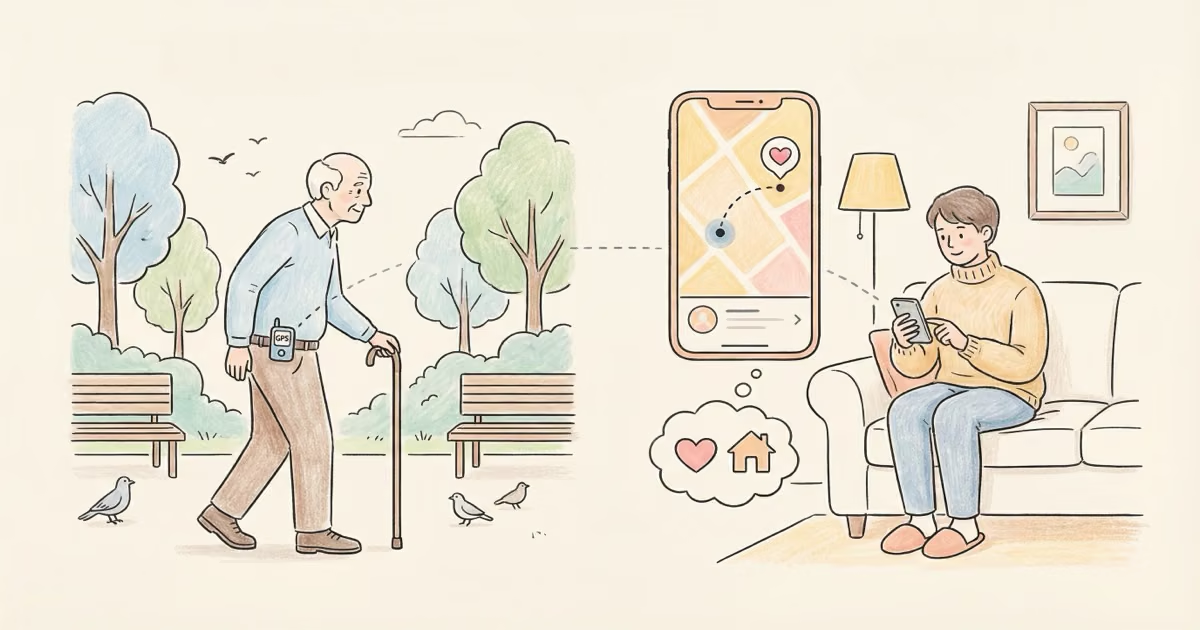
GPS trackers for elderly parents work best when chosen with the senior's input and consent. Jiobit offers 5-7 day battery life in a discreet clip-on design for $130 plus $8-13/month. AngelSense is built specifically for dementia care with two-way voice and caregiver alerts for $100 plus $40-53/month. Start the conversation early, focus on independence rather than surveillance, and always get consent before activating any tracker.
GPS trackers for elderly parents can mean the difference between a quick response and hours of panic when a loved one wanders. As of 2026, dedicated GPS devices have gotten smaller, longer-lasting, and more caregiver-friendly than the clunky units from even a few years ago.
- Tracking elderly parents is legal with their informed consent; written authorization is best, but verbal agreement counts too
- AngelSense ($40-53/month) is purpose-built for dementia with two-way voice, while Jiobit ($8-13/month) suits seniors who still live independently
- Warning signs that trigger the tracking conversation include repeated disorientation, unexplained falls, and missed medications
- Involve the senior in device selection and explain that GPS tracking extends independence rather than restricting it
- Battery life ranges from 1-7 days depending on the device, so prioritize easy charging for seniors with limited dexterity
When to Start Tracking Aging Parents
Not every 70-year-old needs a GPS tracker. But when you notice patterns, not isolated incidents, it’s time to have the conversation.
Mental Changes
- Getting lost on a familiar route home from the grocery store
- Calling you confused about where they are, more than once
- Difficulty following multi-step directions they used to handle fine
Physical Warning Signs
- Unexplained bruises from falls they can’t recall
- Missed medications or double-dosing
- Declining mobility that limits how far they can safely walk alone
Behavioral Red Flags
- Neglecting personal hygiene or household upkeep
- Missing doctor’s appointments or social commitments
- Unusual financial decisions, like paying bills twice or giving money to strangers
One or two of these in isolation might not warrant GPS monitoring. A cluster of three or more over several weeks is a clear signal. If your parent has a dementia diagnosis, skip the wait and explore tracking immediately. Our guide to using AirTags for elderly tracking covers a low-cost starting point.

Is It Legal and Ethical to Track Elderly Parents?
Yes. Tracking elderly family members is legal when they know about it and agree to it. The legal requirements are straightforward:
- The senior must be told exactly what the tracker does and when it’s active
- They must voluntarily agree. Coerced consent doesn’t count
- Written authorization is strongest, but verbal consent is legally acceptable in most U.S. states
- Secret GPS tracking of a competent adult without their knowledge is illegal in every state
If your parent has been declared legally incapacitated and you hold guardianship or power of attorney, you can typically authorize tracking on their behalf. Consult an elder law attorney through NAELA if you’re unsure about your state’s specific requirements.
Ethically, three principles matter:
- Autonomy: monitoring should help them stay independent longer, not cage them
- Dignity: track only what’s necessary. Location, yes. Listening in on conversations, no.
- Trust: if you hide the tracker, you’ve already damaged the relationship
How to Talk to Your Parent About GPS Tracking
This conversation goes wrong when it feels like an ambush. Here’s what works:
Bring it up gradually. Mention a news story about a senior who wandered. Ask how they’d feel about a “just in case” device. Don’t present the tracker at the first conversation.
Let them choose the device. Show them two or three options and let them pick. A senior who chose their own tracker is far more likely to actually wear it.
Frame it as independence, not surveillance. “This lets you keep going to the park alone, because I’ll know you’re safe” works. “I need to know where you are at all times” doesn’t.
Set clear boundaries together. Decide together: who sees the location data? Is it always on, or only during outings? Put it in writing if that helps build trust.
Start with location only. Don’t activate every feature on day one. Basic geofence alerts when they leave home are enough to start. Add more only if the situation changes.
Best GPS Trackers for Elderly Parents in 2026
After researching current options and reading hundreds of caregiver reviews on Reddit and dedicated forums, these three stand out for elderly monitoring in 2026.
| Device | Battery Life | Best For | Cost |
|---|---|---|---|
| Jiobit Gen 3 | 5-7 days | Independent seniors | $130 + $8-13/mo |
| AngelSense | 1-3 days | Dementia/memory loss | $100 + $40-53/mo |
| GizmoWatch | 2-5 days | Seniors who prefer a watch | $30-40/mo |
Jiobit Gen 3

The Jiobit clips onto a belt, waistband, or shoelace and weighs just 18 grams. Most seniors forget it’s there. The 5-7 day battery life means less frequent charging, and the IPX8 waterproof rating handles showers and rain without removal.
It works through GPS, cellular, Wi-Fi, and Bluetooth, so it maintains a location fix indoors and outdoors. The app is straightforward for caregivers, with geofence alerts and location history.
The downside: Jiobit doesn’t have two-way voice or an SOS button. If your parent needs those features, look at AngelSense instead.
AngelSense
AngelSense was designed specifically for individuals with cognitive disabilities and dementia. The two-way voice feature lets you call the device directly, and the “listen-in” mode lets authorized caregivers hear the senior’s surroundings if they’re non-verbal or confused.
At $40-53/month, it’s the most expensive option here. But for families managing moderate-to-severe dementia, the purpose-built features justify the cost. The 1-3 day battery life is the trade-off for its cellular-heavy feature set.
Phone-Based Alternatives
For tech-savvy seniors who already carry a smartphone, Life360 (free to $8/month) provides real-time location sharing without any additional hardware. Apple’s built-in Find My app works if everyone in the family uses iPhones.
These apps drain phone battery faster and only work when the phone is charged and on the person. A dedicated GPS tracker is more reliable for seniors who forget their phone or let it die.

Best Practices for Ongoing Monitoring
Check battery levels remotely. Most GPS tracker apps show battery percentage. Set a reminder to check every other day and charge before it dies.
Keep the tracker on familiar items. Clip it to the same belt or jacket every day. Routine reduces the chance they’ll leave it behind.
Review geofence settings quarterly. If your parent starts visiting a new doctor or church, add those locations as safe zones so you don’t get false alarms.
Don’t over-monitor. Checking the tracker every 15 minutes isn’t helping anyone, including you. Set up geofence alerts for when they leave home and when they arrive at known destinations. Let the alerts do the work.
Reassess needs every 6 months. What works for a parent with mild forgetfulness won’t work when cognitive decline progresses. Be ready to upgrade from a Jiobit to an AngelSense if the situation changes.
For another option comparison, see our Tracki GPS tracker review, which covers a versatile tracker that also works for elderly monitoring.
Bottom Line
GPS tracking for elderly parents works best when it’s a conversation, not a decision made behind their back. Get consent, involve them in choosing the device, and start with basic location monitoring before adding features. Jiobit covers most families with independent seniors at $8-13/month. AngelSense is worth the higher cost for dementia care. Either way, the tracker is the easy part. The hard part is having the talk, and the sooner you do it, the easier it goes.
FAQ
Can I legally track a parent with dementia who can no longer consent?
If you hold legal guardianship or durable power of attorney, yes in most U.S. states. The legal standard shifts from personal consent to "best interest of the ward." Document your reasoning and consult an elder law attorney, especially if other family members disagree about tracking.
What if my aging parent refuses to be tracked?
Don't force it. Revisit the conversation after a specific incident, like getting lost or a fall. Frame it around a real event, not hypotheticals. If they still refuse and you're genuinely worried, ask their doctor to discuss safety risks at the next appointment. A physician's recommendation carries weight that a family member's concern sometimes doesn't.
What is the simplest GPS tracker for seniors who aren't tech-savvy?
Jiobit requires zero interaction from the wearer. Clip it on and forget it. AngelSense is similarly passive but adds two-way voice calling. Both send all location data to the caregiver's phone, so the senior never has to open an app or press a button.
Does Medicare cover GPS tracking devices for seniors?
Standard Medicare does not cover GPS trackers. Some Medicare Advantage plans and long-term care insurance policies reimburse for "personal emergency response systems," which may include GPS-enabled devices. Ask your plan administrator specifically about GPS tracker coverage with a doctor's prescription.
How accurate are GPS trackers for elderly monitoring?
Outdoors, most dedicated GPS trackers pin location within 3-10 meters. Indoors, accuracy drops to 15-50 meters depending on building materials and Wi-Fi availability. Trackers that combine GPS with Wi-Fi and cellular triangulation, like Jiobit, perform better indoors than GPS-only devices.
What should I do if the tracker shows my parent is somewhere unexpected?
Call them first. Most "alerts" turn out to be a trip to a neighbor's house or an unplanned stop at a store. If they don't answer and the location seems unusual, call a nearby family member or neighbor to check. Contact local authorities for a welfare check only if you can't reach anyone and the situation feels genuinely dangerous.
How do I reduce the guilt of monitoring my aging parent?
Remind yourself that the tracker extends their independence. Without it, the alternative is restricting their movement or hiring full-time care sooner. Many caregivers on r/AgingParents report that a GPS tracker delayed the need for assisted living by 6-12 months because it gave them enough confidence to let their parent stay home longer.