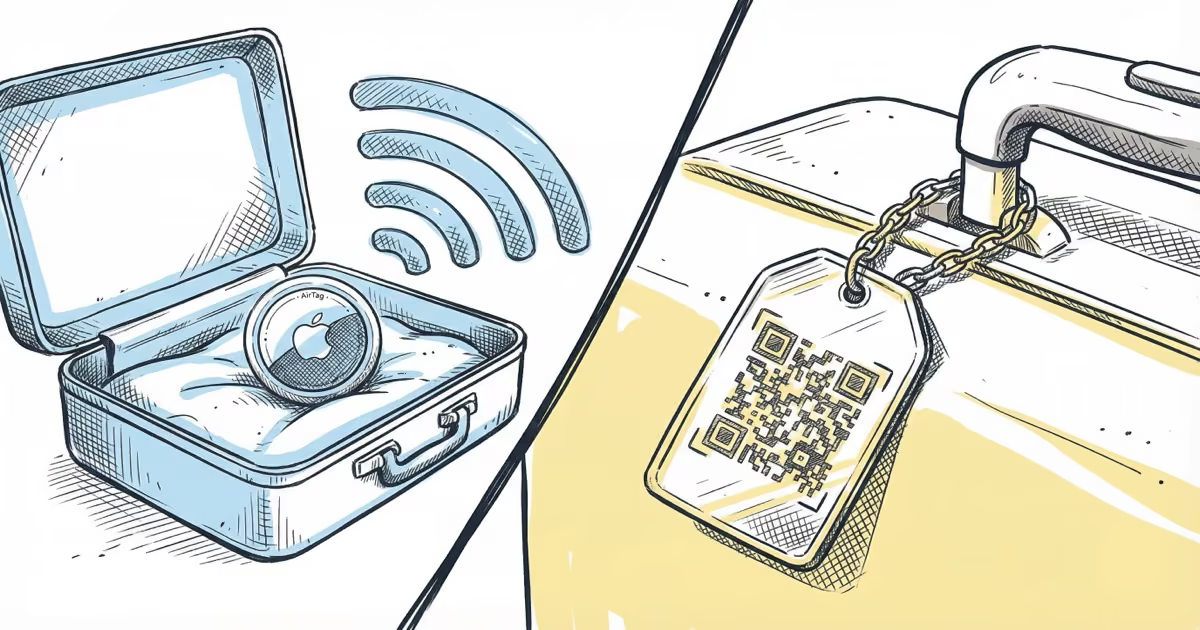
The Apple AirTag is the better luggage tracker for most travelers. It uses Bluetooth and Apple's Find My network of over 2 billion devices to report your bag's location automatically. Dynotag is a passive QR code tag that only works when a stranger physically scans it, providing no active tracking at all. AirTag costs $29 versus roughly $25 for a Dynotag, and the $4 difference buys a massive upgrade in actual tracking capability.
AirTag vs Dynotag is not a typical tracker-versus-tracker comparison. These two products solve the lost-luggage problem with fundamentally different technology. The AirTag is a Bluetooth tracker that communicates with nearby Apple devices. The Dynotag is a smart luggage tag with a QR code and NFC chip that displays your contact information when scanned. We tested both across multiple trips to see which approach actually gets bags back.
- AirTag uses Bluetooth and the Find My network for passive location updates; Dynotag relies entirely on someone scanning a QR code or tapping the NFC chip
- AirTag costs $29 (or $24.75 each in a 4-pack); Dynotag steel tags run $20-30 depending on the model
- AirTag requires an iPhone; Dynotag works with any smartphone that has a camera or NFC reader
- AirTag battery (CR2032) lasts about 1 year; Dynotag has no battery and never needs charging
- Airlines mishandled 33.4 million bags in 2024, making some form of luggage identification or tracking worth the investment
How AirTag Tracking Works
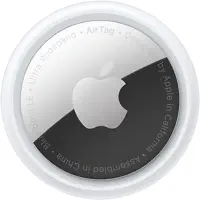
The AirTag is a Bluetooth tracking disc that taps into Apple's Find My network. Every iPhone, iPad, and Mac in the world acts as an anonymous relay. When any of those devices passes within Bluetooth range of your AirTag, it reports the tag's location to your Find My app. With over 2 billion active Apple devices globally, coverage is dense in airports, cities, and transit hubs.
The AirTag 2, released in January 2026, extends Precision Finding range to roughly 200 feet (up from 50 feet on the original) and plays a speaker 50% louder than its predecessor. You can also use Precision Finding directly from an Apple Watch Series 9 or later. In our airport testing, Find My pinpointed our tagged luggage within a few minutes of landing, even when bags were still on the carousel behind walls.
The key limitation: AirTag does not have GPS or cellular. It cannot report its own location. It depends entirely on nearby Apple devices. In an empty rural area with no iPhones around, the AirTag goes silent. For airports, hotels, and urban travel, though, the network is dense enough that gaps rarely last more than a few minutes.
How Dynotag Works
Dynotag is not a tracker in the electronic sense. It is a smart luggage tag made from anodized aluminum or stainless steel with a unique QR code and NFC chip embedded on its surface. It contains no Bluetooth, no GPS, no cellular radio, and no battery. There are zero electronics inside the tag itself.
The concept is straightforward. You register the tag online, enter your contact information, and attach it to your bag. If someone finds your luggage, they scan the QR code with their phone camera or tap the NFC chip. That loads a web page showing your contact details and sends you an email notification with the scanner's approximate location based on their phone's IP address.
Dynotag calls this their DynoIQ Lifetime Recovery Service. Every tag includes a lifetime web subscription at no additional cost. You can update your contact information anytime, and old QR codes remain active for 30 days after changes. The system works with any smartphone on any platform. No app download is required on the finder's side.
The core trade-off is obvious: Dynotag only works when a human being decides to scan it. If your bag sits unclaimed in a warehouse, no notification comes. If an airline worker moves it to a different belt, you get nothing unless they stop to scan the tag. There is no continuous or automatic tracking of any kind.
Head-to-Head Comparison
| Feature | Apple AirTag 2 | Dynotag Smart Tag |
|---|---|---|
| Technology | Bluetooth + UWB + Find My | QR code + NFC (passive) |
| Active tracking | Yes (crowdsourced via Apple devices) | No (requires manual scan) |
| Real-time location | Periodic updates via Find My | Single ping when scanned |
| Battery | CR2032, ~1 year | None (no electronics) |
| Water resistance | IP67 (1 m for 30 min) | Weatherproof (varies by model) |
| Weight | 11 g | ~23 g (steel model) |
| Material | Plastic + stainless steel | Anodized aluminum or stainless steel |
| Platform required | iPhone (iOS 16.6+) | Any smartphone with camera |
| Subscription | None (free Find My) | Lifetime included |
| Price | $29 (1-pack) / $99 (4-pack) | $20-30 per tag |
| Lost mode | Sound + Precision Finding | Contact page displays when scanned |
| Anti-stalking | Yes (unwanted tracking alerts) | Not applicable |
Tracking Reliability in Practice
We put both products through real travel scenarios to measure how well each one actually helps recover lost bags.
With the AirTag clipped inside a checked suitcase, we received location updates within 2-5 minutes of the bag reaching the carousel area on three different domestic flights. At a connecting airport where our bag was rerouted to the wrong flight, Find My showed the bag's location at a different terminal before the airline's own system had updated. That kind of visibility is what makes electronic tracking valuable.
The Dynotag on the same trip produced zero notifications. Nobody scanned it because the bag was never truly "lost" in a way that prompted a stranger to interact with it. This is the fundamental gap. Dynotag only activates when someone takes a deliberate action. In our experience, that scenario is rare unless your bag is visibly abandoned or an airline employee is specifically looking for owner identification.
Where Dynotag does prove useful is in a true lost-and-found situation. If your bag ends up at a hotel, restaurant, or airport lost-and-found desk, the staff scanning the QR code sends you an instant notification with location data. It functions like a high-tech version of the contact card inside your luggage. For that narrow use case, it works well.
Cost Comparison
The AirTag 2 costs $29 for a single unit or $99 for a 4-pack ($24.75 each). The only ongoing cost is a CR2032 battery replacement roughly once a year, which runs $3-5. No subscription, no monthly fees. Apple's Find My service is completely free.
Dynotag pricing varies by model. The steel luggage tag with braided loop runs about $25. Premium stainless steel models can cost more. There are no recurring costs since the lifetime web subscription is included. No batteries to replace either.
On a pure dollar basis, the two products are close. The AirTag typically costs a few dollars more, but it delivers an entirely different category of functionality. You are comparing a passive identification tag to an active electronic tracker. The value per dollar favors the AirTag for anyone who wants to locate their luggage, not just label it.
Compatibility and Setup
AirTag requires an iPhone running iOS 16.6 or later. Setup takes about 30 seconds: hold the AirTag near your iPhone, tap Connect, name it, and you are done. Android users cannot set up or track an AirTag. They can detect an unknown AirTag traveling with them via Apple's cross-platform tracking detection standard, but that is the extent of Android compatibility.
Dynotag works with any device that has a camera or NFC reader. Setup involves visiting the Dynotag website, creating an account, and linking your tag's unique ID to your profile. The process takes about 2 minutes. On the finder's end, scanning the QR code opens a standard web page with no app required. This universal compatibility is Dynotag's strongest advantage, especially for Android users who cannot use AirTag at all.
Durability for Travel
The AirTag 2 carries an IP67 water resistance rating, meaning it survives submersion to 1 meter for 30 minutes. It handles rain, spills, and the general abuse of baggage handling. The polished stainless steel back and plastic top are compact enough to slip into any luggage pocket without adding bulk. At 11 grams, you will not notice the weight.
Dynotag builds its tags from anodized aluminum or brushed stainless steel. The company describes them as weatherproof, impact-resistant, and TSA-safe. In our handling, the steel models feel solid and the laser-etched QR codes show no signs of degradation after months of use. The tags measure roughly 2 x 1.25 inches and weigh about 23 grams.
Both products hold up well to travel conditions. Neither is a weak point here. The AirTag's IP67 rating is more precisely defined than Dynotag's general "weatherproof" claim, which gives it a slight edge in documented water resistance.
Privacy and Security
Apple built anti-stalking protections into the AirTag system. If an unknown AirTag is detected traveling with you, your iPhone sends an alert. On Android, the same detection is available through Apple's Tracker Detect protocol. The AirTag also emits an audible chirp after being separated from its owner for a period. These safeguards are not relevant to luggage tracking specifically, but they reflect Apple's broader commitment to preventing misuse.
Dynotag's privacy model is simpler. The tag displays only the information you choose to share on your web profile. A finder scanning the QR code sees your name and a messaging form, not your phone number or address, unless you choose to display those. The location that gets reported when someone scans the tag comes from the scanner's device, not from any built-in sensor. Since the tag is entirely passive, it cannot be used to track someone without their knowledge.
- You use an iPhone and want automated location tracking
- You travel through airports and cities where Apple devices are dense
- You want to see your bag's location without relying on strangers
- You need Precision Finding to locate a bag at close range
- You use an Android phone and cannot set up an AirTag
- You want a durable, permanent luggage ID that never needs charging
- You prefer a low-tech approach with no battery maintenance
- You already have an AirTag and want a complementary identification tag
Can You Use Both Together?
Yes, and this is actually the approach we recommend for frequent travelers. Place an AirTag inside your bag for electronic tracking through Find My. Attach a Dynotag to the exterior handle for visual identification and a scannable contact method. The two products serve different purposes and do not conflict.
The AirTag handles the "where is my bag right now" question. The Dynotag handles the "someone found my bag, how do they reach me" question. Together, they cover both scenarios for under $55 total. That is a reasonable investment when a single mishandled bag can cost you hours of stress and hundreds of dollars in emergency purchases.
According to the SITA 2025 Baggage IT Insights report, airlines mishandled 33.4 million bags in 2024 despite record-low rates per passenger. Two-thirds of those bags were returned within 48 hours. Having both an active tracker and a scannable tag maximizes your odds of a quick reunion.
How Dynotag Compares to Other QR Tags
Dynotag is not the only QR-based luggage tag on the market. ByteTag offers a similar concept with NFC and QR scanning, and traditional printed luggage tags provide basic contact information. What sets Dynotag apart is the combination of durable metal construction, lifetime web service, and the DynoIQ notification system that alerts you when someone scans your tag.
If you are specifically shopping for a smart identification tag rather than an electronic tracker, Dynotag is one of the more established options with years of reviews and a solid build quality. But if you are comparing it to any active Bluetooth tracker, including the Tile Pro or AirTag, the lack of electronic tracking is a significant functional gap.
Bottom Line
For iPhone users, the AirTag is the clear winner. It delivers automated location tracking through a network of over 2 billion devices, Precision Finding at close range, and year-long battery life for $29 with no subscription. Dynotag cannot match any of that because it is not an electronic tracker.
Dynotag fills a different role. It is a durable, maintenance-free identification tag with a built-in contact system. For Android users who cannot use AirTag, or as a complement to an AirTag for complete coverage, a Dynotag makes sense. Just understand what it is and what it is not: a scannable luggage label, not a location tracker.
FAQ
Does Dynotag track your luggage in real time?
No. Dynotag has no Bluetooth, GPS, or cellular components. It is a passive QR code and NFC tag. You only receive a notification when someone physically scans the tag with their phone. There is no continuous location tracking or movement history.
Can you use an AirTag with an Android phone?
You cannot set up or track an AirTag with an Android device. AirTag requires an iPhone running iOS 16.6 or later for pairing and location tracking. Android phones can detect an unwanted AirTag traveling with them through Apple's cross-platform detection, but that is the only Android-compatible feature.
Is the AirTag allowed in checked luggage?
Yes. All major airlines permit AirTags in both carry-on and checked luggage. The FAA classifies AirTags as consumer Bluetooth devices with a small CR2032 battery, which falls well within hazardous materials exemptions. Dynotag is also permitted since it has no battery or electronics.
How long does a Dynotag last?
Dynotag has no battery, so there is nothing to deplete. The physical tag is made from anodized aluminum or stainless steel and is built to withstand years of travel. The QR code is laser-etched, so it does not fade or peel. The included lifetime web subscription means the tag's digital profile stays active indefinitely.
Does the AirTag require a monthly subscription?
No. The AirTag uses Apple's Find My service, which is free with any Apple ID. There are no monthly or annual fees. The only recurring cost is a CR2032 battery replacement roughly once per year, which costs about $3-5. See our full breakdown of AirTag subscription costs.
What happens if nobody scans the Dynotag?
Nothing. You receive no notifications and no location data. Dynotag depends entirely on a person finding your bag and choosing to scan the QR code or tap the NFC chip. If your bag is misrouted by an airline and sitting in a storage room, the tag provides no information until a human interacts with it.
Can you use AirTag and Dynotag on the same bag?
Yes, and this combination works well. Place the AirTag inside the bag for automated tracking through Find My. Attach the Dynotag to an exterior handle for visible identification and a scannable contact method. The two products serve complementary purposes and together cost under $55.