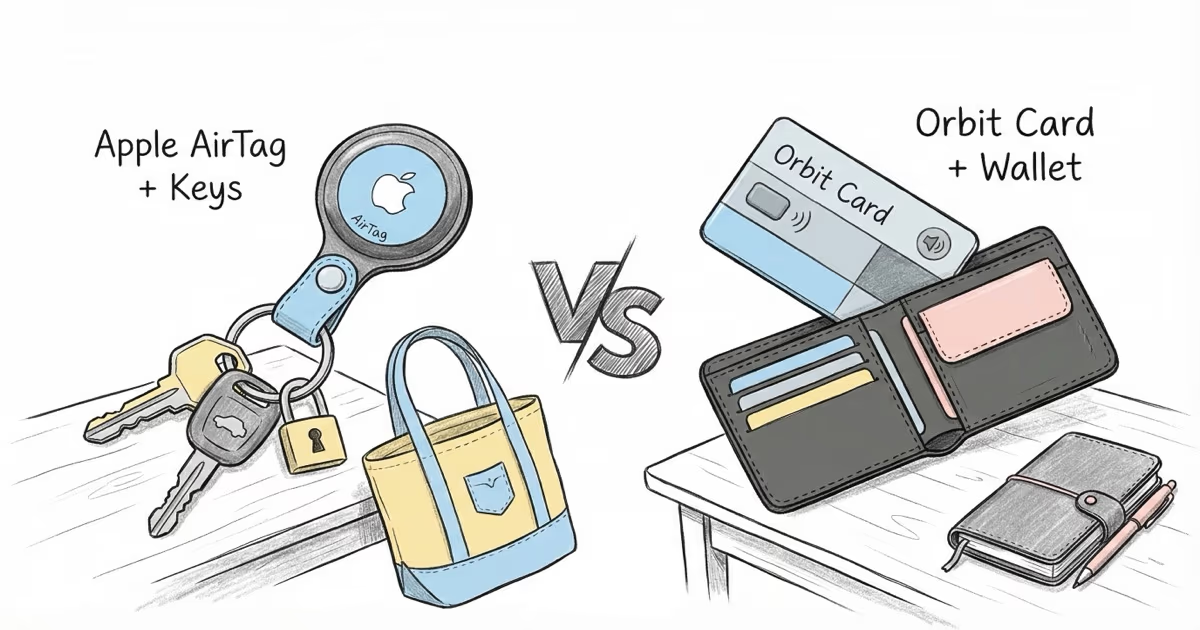
The Apple AirTag is the better Bluetooth tracker for most iPhone users. It connects to Apple's Find My network of over 2 billion devices and offers UWB Precision Finding for close-range guidance. The Orbit Card is thinner at 2.4 mm, fits inside a wallet like a credit card, and comes in two versions: one that works with Find My (iOS only) and one that uses the Orbit app (iOS and Android). For wallet tracking specifically, the Orbit Card's form factor is hard to beat. For everything else, the AirTag delivers stronger tracking performance.
AirTag vs Orbit Card is a comparison between two trackers built for different carrying styles. The AirTag is a 31.9 mm disc that clips onto keys, bags, and luggage with an accessory holder. The Orbit Card is a credit-card-shaped tracker that slides directly into a wallet slot. We tested both over several months to see how their tracking performance, battery life, and everyday usability compare in real-world conditions.
- AirTag uses UWB Precision Finding with a range up to 200 feet on the AirTag 2; Orbit Card relies on standard Bluetooth with a 50-meter (164-foot) range
- Orbit Card measures just 2.4 mm thick and weighs 10 g, fitting inside a wallet card slot where the 8 mm-thick AirTag cannot
- The Orbit Card FMN version works with Apple's Find My network; the original Orbit Card (ORB522) supports both iOS and Android via the Orbit app
- AirTag battery (CR2032) is user-replaceable and lasts about 1 year; Orbit Card FMN has a sealed 3-year battery with no recharging
- AirTag costs $29 (or $24.75 each in a 4-pack); the Orbit Card runs $25-35 depending on the model
How AirTag Tracking Works
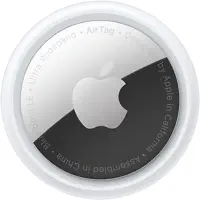
The AirTag connects to Apple's Find My network, which spans over 2 billion active devices worldwide. Every iPhone, iPad, and Mac in range acts as an anonymous relay, reporting the AirTag's location back to your Find My app. In dense areas like airports, shopping centers, and city streets, location updates arrive within minutes.
The second-generation AirTag, released in January 2026, extends Precision Finding range to roughly 200 feet and plays a speaker 50% louder than the original. Precision Finding uses the U1 ultra-wideband chip to show directional arrows, distance, and haptic feedback on your iPhone screen. It also works from an Apple Watch Series 9 or later. In our testing at a crowded airport terminal, Precision Finding guided us directly to a bag on the carousel from across the room.
The main limitation is ecosystem lock-in. AirTag requires an iPhone running iOS 16.6 or later. Android users cannot set up or track an AirTag. There is no standalone GPS or cellular radio inside, so AirTag depends entirely on nearby Apple devices to relay its position.
How Orbit Card Tracking Works
Orbit sells two versions of its card-shaped tracker, and the difference matters.
The Orbit Card FMN connects to Apple's Find My network, giving it access to the same crowdsourced location infrastructure as AirTag. It uses Bluetooth Low Energy 5.1 and has a 50-meter range for direct connections. When out of Bluetooth range, nearby Apple devices relay its position anonymously. The FMN model has a sealed non-rechargeable battery rated for 3 years, an IPX6 water resistance rating, and a 90 dB buzzer. It works with iOS only.
The original Orbit Card (ORB522) uses the Orbit app instead of Find My. It supports both iOS and Android, making it the only Orbit Card option for Android users. The trade-off is a smaller crowdsourced network. The Orbit app's user base is a fraction of Apple's Find My network, which limits location recovery when the card is out of Bluetooth range.
Both versions share the same credit-card form factor: 85 x 54 x 2.4 mm and just 10 g. That is thinner than most hotel key cards. The entire point of the Orbit Card is fitting where disc-shaped trackers cannot.
Head-to-Head Comparison
| Feature | Apple AirTag 2 | Orbit Card FMN |
|---|---|---|
| Tracking network | Find My (2B+ devices) | Find My (same network) |
| Close-range finding | UWB Precision Finding (200 ft) | Bluetooth only (164 ft) |
| Speaker volume | 60+ dB | 90 dB |
| Battery | CR2032, replaceable, ~1 year | Sealed, non-rechargeable, ~3 years |
| Water resistance | IP67 (1 m for 30 min) | IPX6 (high-pressure spray) |
| Dimensions | 31.9 mm diameter, 8 mm thick | 85 x 54 x 2.4 mm |
| Weight | 11 g | 10 g |
| Fits in wallet | No (too thick) | Yes (credit card size) |
| Platform | iOS only | iOS only (FMN) / iOS + Android (ORB522) |
| Price | $29 (1-pack) / $99 (4-pack) | ~$30-35 (FMN) / ~$25 (ORB522) |
| Anti-stalking alerts | Yes (unwanted tracking alerts) | Yes (Find My built-in, FMN only) |
Tracking Range and Precision
This is where the AirTag pulls ahead. The U1 ultra-wideband chip inside the AirTag 2 enables Precision Finding at distances up to 200 feet. Your iPhone shows a live arrow pointing toward the tracker, displays the exact distance in feet, and buzzes with haptic feedback as you get closer. In our testing, we located an AirTag tucked inside a backpack in a different room within about 15 seconds of opening the Find My app.
The Orbit Card FMN uses standard Bluetooth with a 50-meter (164-foot) range for direct connections. Within that range, you can ring the card's 90 dB buzzer through the Find My app. That buzzer is noticeably louder than the AirTag's speaker, which helps when the card is muffled inside a wallet or bag. Outside Bluetooth range, the Orbit Card FMN relies on the same Find My network as AirTag for crowdsourced location updates.
The critical difference is the last 50 feet. AirTag gives you turn-by-turn visual guidance to walk directly to the item. The Orbit Card tells you it is nearby and lets you listen for the beep. For keys dropped between couch cushions or a bag in a crowded room, Precision Finding saves real time.
Battery Life and Maintenance
The AirTag uses a standard CR2032 coin cell battery that lasts roughly 1 year with typical use. When the battery runs low, your iPhone sends a notification. Swapping the battery takes about 10 seconds: press and twist the stainless steel back, drop in a new cell, and twist it shut. A CR2032 costs $3-5 at any pharmacy.
The Orbit Card FMN takes a different approach. Its sealed battery is rated for 3 years with no user intervention. You cannot recharge it or replace the battery. After 3 years, the card becomes e-waste and you buy a replacement. The original ORB522 model has a rechargeable battery with roughly 1-year life between charges via a USB card charger.
Which approach is better depends on how much you value maintenance-free operation. Three years of zero-touch tracking is appealing for a wallet card you want to set and forget. But the AirTag's replaceable battery means the device itself can last indefinitely. Over a 6-year span, one AirTag with battery swaps costs roughly $39-49 total. Two Orbit Card FMN replacements over the same period cost $60-70.
Design and Everyday Carry
The Orbit Card exists to solve one problem that the AirTag cannot: fitting inside a wallet. At 2.4 mm thick, the Orbit Card occupies a single card slot. It looks and feels like a plastic credit card. The AirTag, at 8 mm thick and disc-shaped, does not fit in any standard wallet without a dedicated AirTag wallet or bulky insert.
For keys, bags, luggage, and anything that accepts a keychain or clip, the AirTag is the more versatile option. Apple and third parties sell hundreds of holders in every style from carabiners to adhesive mounts. The Orbit Card has no attachment point. It is designed to live inside a wallet or passport sleeve.
Both devices are water-resistant enough for daily life. The AirTag's IP67 rating covers submersion to 1 meter for 30 minutes. The Orbit Card FMN's IPX6 rating handles high-pressure water jets but not submersion. Neither tracker will fail from rain, spills, or sweat.
Compatibility and Setup
The AirTag pairs with your iPhone in about 10 seconds. Hold it near your phone, tap Connect, name the item, and you are done. It integrates directly with the Find My app with no additional downloads. Android users are completely locked out.
The Orbit Card FMN also uses Find My and requires an iPhone running iOS 14.5 or later. Setup involves holding the card near your phone and following the Find My pairing prompt. If you need cross-platform support, the original Orbit Card ORB522 works with both iOS 9+ and Android 8+ through the Orbit app. That makes it one of the few card-format trackers accessible to Android users.
For households that mix iPhones and Android phones, the ORB522 offers flexibility that neither the AirTag nor the Orbit Card FMN can match. For Apple-only households, the FMN version is the stronger choice because it plugs into the same massive Find My network as AirTag.
Price and Long-Term Value
A single AirTag 2 costs $29, and a 4-pack runs $99 ($24.75 each). There are no monthly fees. The only ongoing cost is a $3-5 battery once a year.
The Orbit Card FMN sells for approximately $30-35 through the Orbit website and select retailers. The original ORB522 is available on Amazon for around $25. Neither model requires a subscription.
| Cost over 3 years | AirTag 2 | Orbit Card FMN |
|---|---|---|
| Device | $29 | ~$32 |
| Battery replacements | ~$10 (3 CR2032s) | $0 |
| Subscription | $0 | $0 |
| Total | ~$39 | ~$32 |
Over a 3-year period, the costs are close. The Orbit Card FMN is slightly cheaper because you never buy batteries. Over 6 years, the AirTag becomes more economical because you only replace $3 batteries instead of buying an entirely new Orbit Card when the sealed battery dies.
AirTag vs Orbit Card: Who Should Pick Which
- You want Precision Finding with directional guidance to your lost item
- You track keys, bags, luggage, or anything that accepts a holder or clip
- You prefer a replaceable battery for indefinite device lifespan
- You already use Find My for other Apple devices
- You need a tracker that fits inside a standard wallet card slot
- You want 3 years of maintenance-free tracking with no battery swaps
- You use Android and need the ORB522 model for cross-platform support
- You want a louder 90 dB buzzer for finding items buried in bags
- UWB Precision Finding with 200-foot range for visual close-range guidance
- Find My network with 2 billion+ devices provides dense global coverage
- IP67 water resistance handles submersion to 1 meter
- User-replaceable CR2032 battery for indefinite device lifespan
- Hundreds of third-party accessories for any attachment style
- Does not fit in a wallet (8 mm thick, disc shape)
- iOS only with no Android support
- Requires a separate holder ($10-35) for most use cases
- Battery replacement needed roughly every 12 months
- Credit-card form factor (2.4 mm) slides into any wallet slot
- 3-year sealed battery on FMN model eliminates maintenance
- 90 dB buzzer is louder than AirTag for close-range finding
- ORB522 model supports Android via the Orbit app
- 10 g weight adds no perceptible bulk
- No UWB Precision Finding for directional close-range tracking
- Sealed battery means the entire device is replaced every 3 years
- No attachment point for keys, bags, or luggage
- FMN model is iOS only; ORB522 has a smaller crowdsourced network
How They Compare to Other Trackers
The AirTag's main competitors are the Tile Pro (500-foot Bluetooth range, works with both platforms) and the Samsung SmartTag 2 (UWB support for Galaxy users). Both offer strong tracking but lack the Find My network's scale.
For wallet-specific tracking, the Orbit Card competes with the Tile Slim ($29.99, 3-year sealed battery, dual-platform) and the Pebblebee Card 5 ($34.99, Qi wireless charging, 18-month battery). The Pebblebee Card 5 is notably thinner at 1.8 mm, and it supports both Find My and Google Find Hub depending on the model you choose.
If you use an Android phone and want a wallet tracker specifically, the Tile Slim or Pebblebee Card 5 with Google Find Hub compatibility are stronger options than either AirTag or the iOS-only Orbit Card FMN.
Bottom Line
The AirTag is the more capable tracker overall. Precision Finding, the massive Find My network, and a replaceable battery make it the default recommendation for iPhone users tracking keys, bags, and luggage. But it does not fit in a wallet, and no accessory changes that.
The Orbit Card solves the wallet problem. Its 2.4 mm credit-card shape slides into a card slot without adding bulk. The FMN version taps into Find My for solid network coverage, and its 3-year battery means zero maintenance. For dedicated wallet tracking, the Orbit Card earns its place alongside an AirTag rather than as a replacement for one.
FAQ
Does the Orbit Card work with Android?
The original Orbit Card (model ORB522) supports both iOS 9+ and Android 8+ through the Orbit app. The newer Orbit Card FMN uses Apple's Find My network and works with iOS only. If you need Android compatibility, the ORB522 is the only Orbit Card option.
Can an AirTag fit inside a wallet?
Not in a standard wallet card slot. The AirTag is 31.9 mm in diameter and 8 mm thick, which is too bulky for a typical billfold. Some wallets are designed with a built-in AirTag compartment, but they add thickness. The Orbit Card at 2.4 mm thick is purpose-built for wallet tracking.
How long does the Orbit Card battery last?
The Orbit Card FMN has a sealed non-rechargeable battery rated for approximately 3 years. After that, the entire card must be replaced. The original ORB522 model has a rechargeable battery lasting about 1 year between charges via an included USB charger.
Does AirTag require a monthly subscription?
No. AirTag uses Apple's Find My service, which is free with any Apple ID. There are no monthly or annual fees for either AirTag or Orbit Card. The only recurring cost for AirTag is a CR2032 battery replacement roughly once per year, which costs $3-5.
Is the Orbit Card waterproof?
The Orbit Card FMN carries an IPX6 rating, which means it resists high-pressure water sprays but should not be submerged. The AirTag has a higher IP67 rating that covers submersion to 1 meter for 30 minutes. Both handle rain, spills, and general moisture without issue.
Can you use AirTag and Orbit Card together?
Yes, and this is a practical combination. Use the AirTag on your keys or bag where Precision Finding adds value, and keep the Orbit Card inside your wallet where the AirTag physically cannot fit. Both appear in the Find My app if you use the FMN version of the Orbit Card.
Which is louder, AirTag or Orbit Card?
The Orbit Card has a 90 dB buzzer, which is noticeably louder than the AirTag's speaker. This can be an advantage when the card is muffled inside a wallet or buried in a bag. The AirTag 2 is 50% louder than the original AirTag but still quieter than the Orbit Card in direct comparison.