PowUnity BikeTrax is the best e-bike GPS tracker: motor-housed with 10-second updates at about $245 over 3 years. Bosch Smart System riders should pick the Bosch ConnectModule.
E-bikes are stolen at roughly three times the rate of traditional bicycles, and the average stolen e-bike is worth $1,500 to $5,000. Most e-bikes don’t have a tracker built in, so you add an aftermarket one. A good U-lock slows a thief down. A GPS tracker tells you where your e-bike is heading while you call the police.
This guide ranks seven GPS trackers by what matters for theft recovery: concealment inside the motor housing, alert speed, battery life, and what you’ll actually pay over three years — across both mid-drive and hub-motor e-bikes. Riding a stand-up model instead? Our e-scooter tracker guide covers the tighter hiding spots a scooter’s slim frame allows.
- PowUnity BikeTrax hides inside the motor housing and tracks every 10 seconds — thieves can’t see or remove it without opening the motor
- 3-year cost ranges from $35 (AirTag alone) to $387 (Tracki with monthly subscription) — Bosch ConnectModule is the cheapest dedicated GPS option at roughly $200
- Over 2.4 million bikes are stolen each year in the U.S. according to the Bike Index 2025 report — e-bikes’ high resale value makes them especially attractive to organized theft rings
- AirTag 2 isn’t a GPS tracker — use it as a hidden $29 backup layer, not your primary theft defense
- Mid-drive e-bikes offer better tracker hiding spots than hub motor models — the motor housing creates a concealed cavity that hub motors lack
The Best E-Bike GPS Trackers at a Glance
An e-bike tracker only earns its keep if it reports a live location the moment the bike moves, not a last-seen Bluetooth ping. Every pick here is a true cellular-GPS unit, so accuracy tracks the U.S. government’s published GPS figure of about 4.9 m (16 ft.) under open sky — tight enough to follow a stolen bike down a specific street. The trade-off is the subscription cost compared in the table.
| Tracker | Type | Battery | Subscription | 3-Year Cost |
|---|---|---|---|---|
| PowUnity BikeTrax | Hidden in-motor GPS | 14h active / 3 wk standby | $3.95/mo (1st yr incl.) | about $245 |
| Invoxia Cellular GPS | No-sub GPS | 4-6 months | Free yr 1, then about $100/yr | about $330 |
| AlterLock Gen3 | Bottle cage alarm + GPS | 1.5 months (USB-C) | $3.49/mo ($34.99/yr) | about $275 |
| Sherlock Plus | Handlebar-hidden GPS | about 14 days | 2 yr data incl., then about $54/yr | about $279 |
| Apple AirTag 2 | Bluetooth (Layer 2) | 1 year (CR2032) | None | about $35 |
| Tracki 4G Mini | Portable 4G GPS | 5 days active / 60 days saver | $9.95/mo | about $387 |
| Bosch ConnectModule | OEM in-motor GPS | Own battery (motor-independent) | $4.99/mo (1st yr incl.) | about $200 |
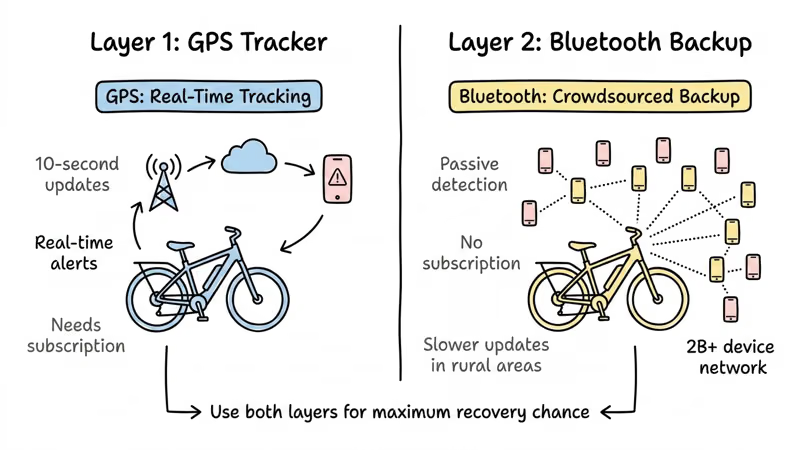
Why Do E-Bikes Need Both GPS and Bluetooth Layers?
How GPS Trackers Work on an E-Bike
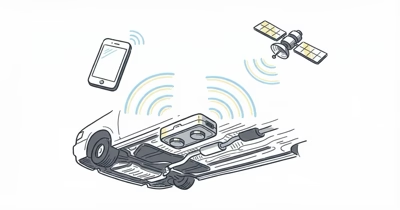
A dedicated e-bike GPS tracker has a cellular modem and a SIM card (or eSIM). When your bike moves, it sends GPS coordinates over the cell network to a server, which pushes an alert to your phone.
What separates trackers is alert speed. The PowUnity BikeTrax sends updates every 10 seconds, while some competitors update every 3 to 5 minutes. During a real theft, those extra minutes are all a thief needs to load your e-bike into a van and disappear.
E-bikes have one advantage over regular bikes when it comes to concealment: the motor housing. Mid-drive systems from Bosch, Shimano, and Yamaha create a sealed cavity where a tracker like the BikeTrax sits out of sight. A thief would literally need to crack open the motor to find it. For a broader look at the technology differences, see our guide on Bluetooth vs GPS trackers.
Why AirTag Is Layer 2, Not Layer 1
An AirTag doesn’t have GPS or a cellular modem. It uses Bluetooth to ping nearby iPhones in the Apple Find My network, which then relay its location. In a dense urban area with heavy foot traffic, that works reasonably well. In a suburban garage or a rural bike path, updates can take hours or never arrive at all.
Apple’s unwanted tracking alerts also work against theft recovery. After a period of separation, commonly reported as 8 to 24 hours, the AirTag starts beeping to warn the person carrying it. A thief who hears it will toss it.
So treat the AirTag as a hidden second layer, not your only defense. For a detailed look at using AirTags on e-bikes specifically, use the AirTag backup section below.
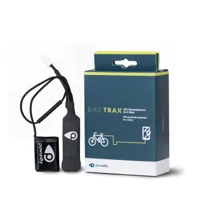
PowUnity BikeTrax: Best Overall E-Bike GPS Tracker
The PowUnity BikeTrax was built specifically for e-bikes. The tracker sits inside the motor housing of Bosch, Shimano, Yamaha, and Brose mid-drive systems. Once installed, your e-bike looks completely stock. Because the tracker sits sealed inside the motor housing, there’s no external box, antenna, or wiring for a passerby to spot.
On a Bosch Performance CX motor, the BikeTrax provides 10-second GPS update intervals during active tracking, and its built-in motion sensor can send an alert when the bike is moved. The tracker sips a small amount from the e-bike battery during standby and carries its own backup battery good for about 14 hours of active tracking if the main battery gets yanked.
The first year of cellular service is included in the purchase price. After that, the subscription runs $3.95 per month. Over three years, total cost comes to roughly $245.
Compatible motor systems include Bosch Gen4/Gen5, Shimano EP8/EP6, Yamaha PW-X3/PW-S2, and Brose S Mag. Check PowUnity’s compatibility list before ordering.
§ Review summary
PowUnity BikeTrax — at a glance
≡ Specs
- Network
- 4G LTE, hidden in motor
- Subscription
- $3.95/mo (1st year incl.)
- Battery
- 3-wk standby / 14h active backup
- Compatibility
- Bosch/Shimano/Yamaha/Brose mid-drive
- Update interval
- 10 seconds
- 3-year cost
- About $245
✓ Pros
- +Completely hidden inside the motor housing
- +10-second GPS updates during active tracking
- +Backup battery works even if e-bike battery is removed
- +First year of cellular service included
✗ Cons
- −Only works with mid-drive motors (not hub motors)
- −Installation requires opening the motor housing
- −US Amazon availability can be limited
§ Buy if
- ·You ride a mid-drive e-bike (Bosch, Shimano, Yamaha, Brose); hub motors are NOT compatible
- ·Stealth is non-negotiable: the in-motor install is invisible until someone opens the motor
- ·10-second GPS updates matter for live theft tracking
- ·Backup battery surviving main-battery removal is critical for your theft scenarios
Invoxia Cellular GPS Tracker: Best No-Subscription Start
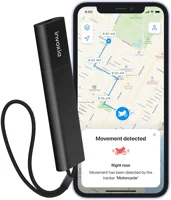
The Invoxia Cellular GPS Tracker ships with one full year of free cellular service baked in. No credit card, no trial to cancel. You activate it and track for 12 months before you pay another cent. After year one, service runs about $100 per year.
The Invoxia mounts under a seat or in a frame cavity with zip ties. It’s about the size of a large USB drive, so squeezing it into tight spots isn’t a problem. The 4 to 6 month rechargeable battery means recharging only a few times a year, not every week.
Geofence alerts fire when the bike crosses a boundary you draw around home or work. Tilt detection is the standout feature: if someone bumps or lifts the bike, the Invoxia flags the movement before it has even left the area.
The 3-year total cost comes to roughly $330, which is higher than the BikeTrax but comes with zero commitment in year one. For the full spec breakdown, see our Invoxia GPS Tracker review.
§ Review summary
Invoxia Cellular GPS Tracker — at a glance
≡ Specs
- Network
- GPS + Wi-Fi + Bluetooth tri-mode
- Subscription
- Free year 1, then about $100/yr
- Battery
- 4-6 months rechargeable
- Size
- Compact USB-drive size
- Alerts
- Tilt detection + geofencing
- 3-year cost
- About $330
✓ Pros
- +1 year free cellular service included
- +Tilt detection catches bump-and-grab attempts
- +Compact enough to hide under an e-bike seat
- +GPS + Wi-Fi + Bluetooth for indoor and outdoor accuracy
✗ Cons
- −About $100/yr subscription after year one
- −Not hidden inside the motor like BikeTrax
- −Push notifications only, no phone call alerts
§ Buy if
- ·You ride a hub motor e-bike (BikeTrax won't fit) and need a compact clip-on alternative
- ·You want a free first year with zero commitment to evaluate before paying anything
- ·Tilt detection matters because your bike sits where someone might lift or bump it
- ·Under-seat or in-frame mounting is acceptable (less stealth than motor-housed, but easier)
AlterLock Gen3: Best Alarm and GPS Combo
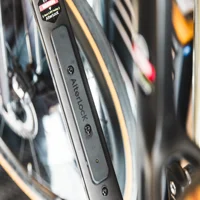
The AlterLock Gen3 packs a 95dB motion alarm and GPS/Wi-Fi tracking into a single bottle-cage-shaped device. Touch the e-bike and the alarm screams while the tracker fires off a GPS location to your phone. No other tracker in this roundup does both.
It mounts in a standard bottle cage slot with anti-theft security bolts and carries an IP66 water resistance rating. The rechargeable battery lasts about 1.5 months on a single USB-C charge.
The 95dB alarm sounds on motion, loud enough to draw attention on a public street, and the AlterLock tracks over LTE-M cellular and GPS. The AlterLock Gen3 US launch brought proper carrier support that earlier versions lacked.
The subscription costs $3.49 per month ($34.99 annually). Over three years, the total comes to about $275.
The main downside: the device is visible in the bottle cage mount. A thief who knows what an AlterLock looks like can remove it with a security bit. Pair it with a hidden AirTag for a complete setup.
For secure home storage, the Hiplok AIRLOK wall hanger adds physical security alongside GPS tracking.
§ Review summary
AlterLock Gen3 — at a glance
≡ Specs
- Network
- GPS + Wi-Fi dual tracking
- Subscription
- $3.49/mo ($34.99/yr)
- Battery
- 1.5 months (USB-C rechargeable)
- Water rating
- IP66 waterproof
- Alarm
- 95dB on motion detection
- 3-year cost
- About $275
✓ Pros
- +95dB alarm deters theft before it happens
- +GPS + Wi-Fi tracking works indoors and outdoors
- +Standard bottle cage mount, fits any e-bike
- +USB-C charging, 1.5-month battery life
✗ Cons
- −Visible in the bottle cage, not fully concealed
- −Can be removed with the right security bit
- −No phone call alerts, app notifications only
§ Buy if
- ·Theft deterrence (95dB alarm at the moment of contact) matters more than pure stealth tracking
- ·Your e-bike has a standard bottle cage mount and you accept the visibility tradeoff
- ·Public parking is your main scenario, where a screaming alarm draws attention
- ·Indoor + outdoor coverage (GPS + Wi-Fi positioning) matches your garage-to-cafe routine
Sherlock Plus: Best Stealth Install
The Sherlock Plus hides inside your handlebar tube. Unless you watched someone install it, you would never know it was there. Remove the bar-end plug, slide the tracker in, and that’s it. For pure stealth, nothing else in this roundup comes close.
The handlebar-tube install is tool-light and reversible. The Sherlock Plus runs on 4G LTE with worldwide coverage, and active tracking trades battery life for more frequent location updates. Rechargeable battery upkeep is the main trade-off for that slim aluminum form factor, and it’s still more hassle than the BikeTrax.
At roughly $225, the purchase price includes two years of cellular data. After that, the subscription is about $54 per year. The 3-year total cost lands at approximately $279.
Sherlock sells directly through their website and select bike shops. It isn’t available on Amazon. For the full installation walkthrough, see our Sherlock bike tracker review.
Sherlock Plus at a glance: the handlebar-tube install is completely invisible, 2 years of cellular data are included in the purchase price, it runs on 4G LTE with worldwide coverage, and the aluminum housing shrugs off vibration and weather. Trade-offs: the rechargeable battery needs routine attention, the $225 upfront is the highest device price here, and it isn’t on Amazon — only via sherlock.bike or bike shops.
Apple AirTag 2: Best $29 Backup Layer
An AirTag isn’t an e-bike GPS tracker. It doesn’t have GPS, doesn’t have cellular, and can’t send real-time alerts. But at $29 with zero subscription, it’s the cheapest insurance you can add to any e-bike security setup.
The AirTag 2 uses Bluetooth to communicate with nearby iPhones in Apple’s Find My network. In a dense city, that network provides location updates every few minutes.
Hide one under your e-bike seat, inside the battery compartment, or deep in a frame tube. An Elevation Lab TagVault Surface uses adhesive mounting to hold one inside the battery cavity.
The catch is the anti-stalking alert. After 8 to 24 hours, the AirTag beeps to warn the person carrying it, and a thief who hears it will pull it off. Bottom line: pair it with a real GPS tracker, don’t rely on it alone. For the full GPS vs Bluetooth breakdown, check our AirTag vs GPS tracker comparison.
Apple AirTag 2 at a glance: $29 with no subscription and a 1-year battery, Find My covers over a billion Apple devices, it’s small enough to tuck into tight e-bike spaces, and IP67 handles rain and puddles. Limits: not a GPS tracker, so no real-time location updates; the anti-stalking beep alerts thieves after 8-24 hours; and it’s unreliable in rural or low-iPhone-density areas.
Tracki 4G Mini: Best Budget E-Bike Tracker
At about $29 for the device, the Tracki 4G Mini matches the AirTag on price but delivers actual 4G GPS with real-time tracking, geofencing, and speed alerts. The catch is a $9.95 monthly subscription that adds up fast.
At just 1.8 x 1.6 x 0.7 inches, the Tracki tucks into the gap between seat rails and battery housing and disappears. Battery life is the biggest headache: active tracking needs frequent charging, while power-saver mode and the optional battery extender trade size or update frequency for longer runtime.
Over three years, the subscription adds up to about $387 total. That is more than the BikeTrax or AlterLock, but the entry cost is the lowest if you want true GPS tracking on a tight initial spend. For the full performance breakdown, see our Tracki GPS Tracker review.
§ Review summary
Tracki 4G Mini — at a glance
≡ Specs
- Network
- 4G LTE real-time
- Subscription
- $9.95/mo
- Battery
- 5 days active / 60 days power-saver
- Size
- 1.8 x 1.6 x 0.7 in (ultra-compact)
- Features
- Geofencing, speed alerts
- 3-year cost
- About $387
✓ Pros
- +About $29 device cost, lowest entry price for real GPS
- +Ultra-compact, fits in tight e-bike spaces
- +4G LTE with geofencing and speed alerts
- +Battery extender option for longer tracking
✗ Cons
- −5-day active battery life requires frequent charging
- −$9.95/mo subscription adds up over time
- −3-year cost reaches about $387 with subscription
§ Buy if
- ·$29 entry cost is the hard constraint and you'll accept higher 3-year subscription totals
- ·You want true 4G GPS (not Bluetooth), but the smallest possible footprint to hide in tight frame spaces
- ·5-day charging cadence (or 60-day with power-saver mode) fits your routine
- ·Optional battery extender pack is acceptable if you need 2-week active tracking
Bosch ConnectModule: Best for Bosch Smart System E-Bikes
If you ride a Bosch Smart System e-bike, the ConnectModule is the most tightly integrated tracker available. It installs inside the motor housing as an OEM accessory, connecting directly to the Bosch ecosystem. The Bosch eBike Alarm system provides a two-stage alert: warning tones first, then a full alarm with GPS tracking if the bike is moved.
The ConnectModule runs on its own independent battery, so even if someone pulls your e-bike’s main battery — a common theft move — the tracker keeps working and sending location updates. The alarm responds to unauthorized movement, and location updates come through the eBike Flow app at about 30-second intervals.
The first year of service is included. After that, the subscription is $4.99 per month. At roughly $200 over three years, it’s the cheapest dedicated GPS tracker in this guide on a total-cost basis.
Limitation: it only works with Bosch Smart System motors. If your e-bike runs Shimano, Yamaha, or a hub motor, this isn’t an option.
Bosch ConnectModule at a glance: lowest 3-year cost among dedicated GPS trackers at about $200, the independent battery keeps working even with the e-bike battery removed, OEM integration runs through the Bosch eBike Flow app, and the two-stage alarm deters and tracks simultaneously. Trade-offs: it only works with Bosch Smart System e-bikes, installation requires a dealer or advanced DIY, and US Amazon availability can be limited.
Where Should You Hide a GPS Tracker on Your E-Bike?
A GPS tracker is only useful if a thief can’t find it. E-bikes actually offer better hiding options than regular bicycles thanks to the motor housing and battery compartment. These are the four spots that conceal a tracker best.
Inside the Motor Housing
This is the best concealment available on any bicycle. Mid-drive e-bikes from Bosch, Shimano, Yamaha, and Brose have a motor housing with space for a dedicated tracker like the BikeTrax or ConnectModule. The tracker is completely invisible and protected from weather. Hub motor e-bikes don’t offer this option because the motor is sealed inside the wheel hub with no accessible cavity.
Under the Seat or in the Seat Post
The easiest spot for any tracker. Most e-bike seats remove with a quick release or a single bolt. Tuck a Tracki, Invoxia, or AirTag into the seat rail area or inside a hollow seat post.
The downside: experienced thieves check under the seat first. For more detailed mounting strategies, see our guide on AirTag bike mount options.
Inside the Battery Compartment
Many e-bikes have dead space around the battery housing. The gap between the battery and the frame tube can fit an AirTag or a small tracker like the Tracki. A thin foam pad wedged in alongside it keeps the tracker from rattling. The battery itself provides partial signal shielding, so test Bluetooth range before committing to this spot.
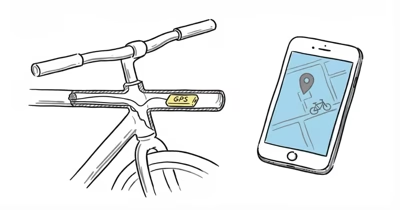
Inside the Handlebar Tube
The Sherlock Plus was designed for this exact location. If you aren’t using a Sherlock, an AirTag fits inside many handlebar tubes after removing a bar-end plug. The metal tube can reduce Bluetooth signal range, so test this spot before relying on it. Either way, it’s nearly undetectable without disassembling the handlebars.
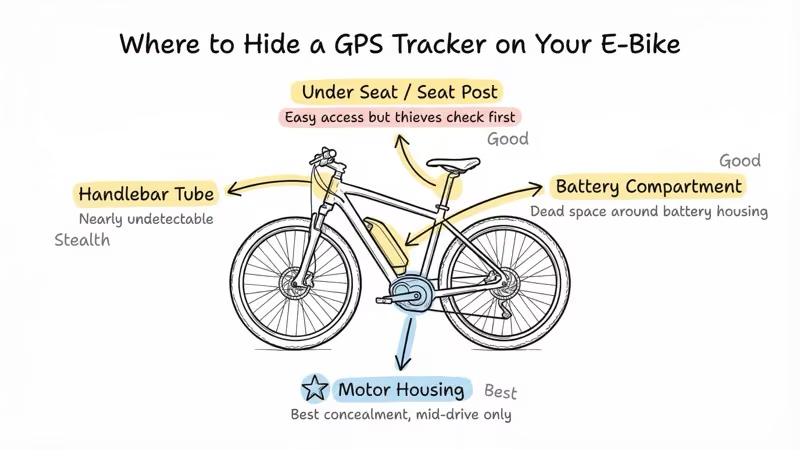
Use two trackers in two different hiding spots. A GPS tracker inside the motor or under the seat for real-time alerts, and an AirTag deep in the frame or handlebar for long-term recovery if the primary tracker is found.
3-Year Total Cost Comparison
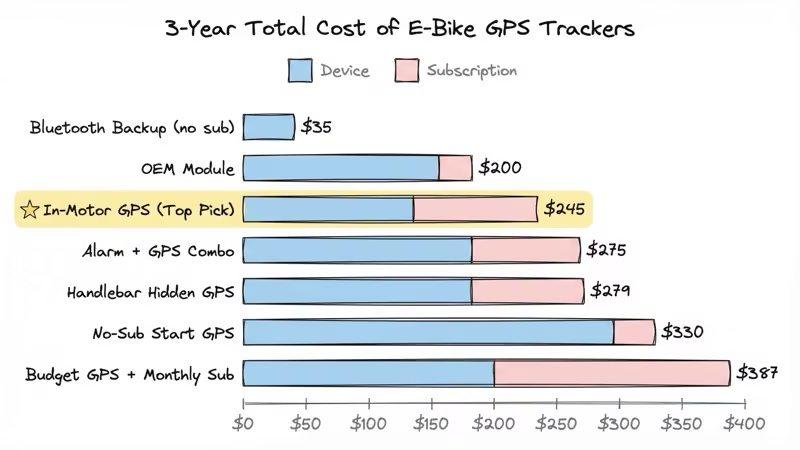
Device price alone is misleading. Here is what each tracker actually costs over three years of ownership, including all subscription fees.
| Tracker | Device | 3-Year Subscription | Total |
|---|---|---|---|
| Bosch ConnectModule | $100 | $100 (yr 2-3) | about $200 |
| PowUnity BikeTrax | $150 | $95 (yr 2-3) | about $245 |
| AlterLock Gen3 | $170 | $105 (3 yr sub) | about $275 |
| Sherlock Plus | $225 | $54 (yr 3 only) | about $279 |
| Invoxia Cellular GPS | $130 | $200 (yr 2-3) | about $330 |
| Tracki 4G Mini | $29 | $358 (36 mo) | about $387 |
| AirTag 2 (backup) | $29 | $0 + about $6 batteries | about $35 |
The Bosch ConnectModule wins on 3-year cost if you already own a Bosch Smart System e-bike. The PowUnity BikeTrax is the best value for riders with Shimano, Yamaha, or Brose mid-drive motors. The Tracki starts at just $29, but its $9.95 monthly subscription pushes the 3-year total past the BikeTrax. For more trackers without recurring fees, see our roundup of GPS trackers with no monthly fee.
E-Bike Theft: The Numbers You Need to Know
Why E-Bikes Are a Prime Target
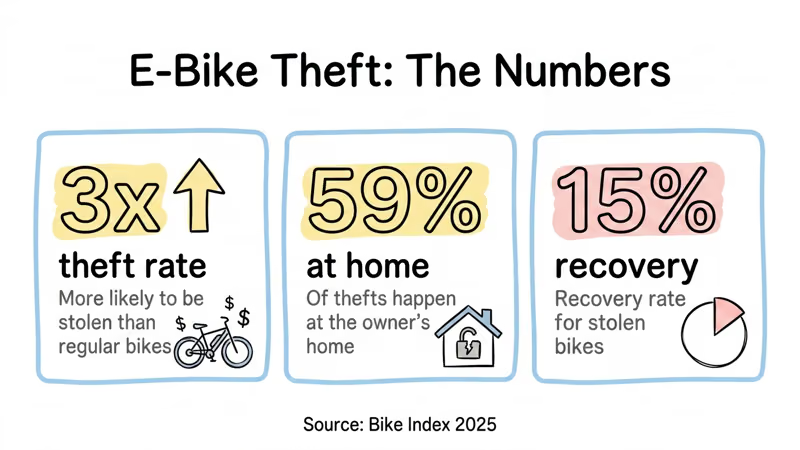
E-bikes combine high resale value with easy portability. At $1,500 to $5,000 per bike, they’re worth 3x to 10x more than a traditional bicycle, which makes them a prime target for organized theft rings. The Bike Index 2025 theft report values stolen bikes in the U.S. at $1.4 billion a year.
A GPS tracker changes that math by giving police a live location to respond to. The National Bike Registry recommends that owners register serial numbers and install GPS trackers as the two most effective recovery measures.
Where and When E-Bikes Get Stolen
The same Bike Index report found that 59% of bike thefts occur at the owner’s home, not at public bike racks. Garages, apartment hallways, and carports are the most common locations. Peak theft months run from May through September, when more riders are active.
NYC, San Francisco, Portland, and Seattle consistently rank as the highest-theft metro areas. A GPS tracker matters most for the 59% of thefts that happen right where you live, often overnight when you wouldn’t notice until morning. For broader context on recovery strategies, see our article on using AirTag to recover a stolen bike.
Choose PowUnity BikeTrax if…
- You have a mid-drive e-bike (Bosch, Shimano, Yamaha, Brose)
- You want the tracker completely hidden inside the motor
- You need 10-second GPS updates for real-time theft tracking
- You want a backup battery that works without the main e-bike battery
Choose Bosch ConnectModule if…
- You ride a Bosch Smart System e-bike specifically
- You want the lowest 3-year total cost (~$200)
- You prefer OEM integration with the eBike Flow app
- You want a two-stage alarm that deters and tracks
Bottom Line
For e-bike theft protection, the PowUnity BikeTrax is the best overall GPS tracker. It hides inside your motor housing where no thief will find it, tracks every 10 seconds on 4G, and costs about $245 over three years. If you ride a Bosch Smart System e-bike, the Bosch ConnectModule offers tighter OEM integration at the lowest 3-year cost of roughly $200.
Regardless of which GPS tracker you choose, add an AirTag 2 as a $29 backup layer. Hide it in a different spot than your primary tracker. If a thief finds and removes your GPS device, the AirTag may be the thing that leads police to your e-bike days later.
The two-tracker approach gives you the best odds: the GPS handles the first few hours with real-time tracking and instant alerts. If a thief finds and ditches the GPS tracker, the AirTag quietly pings Apple’s network and can surface the bike’s location days later.
FAQ
Do e-bike GPS trackers work without a subscription?
Most e-bike GPS trackers require a cellular subscription to transmit location data. The Invoxia Cellular GPS includes one free year of service, after which you pay about $100 per year. The AirTag 2 has zero ongoing cost, but it’s a Bluetooth tracker that relies on nearby iPhones, not a GPS tracker with real-time cellular updates. No dedicated GPS tracker in this roundup works indefinitely without some form of subscription.
Can an AirTag replace a GPS tracker on an e-bike?
No. An AirTag doesn’t have GPS or a cellular modem. It relies on nearby iPhones to relay its Bluetooth signal, which means location updates can be delayed by minutes or hours depending on iPhone density in the area. It also triggers anti-stalking alerts after 8 to 24 hours, warning a thief that a tracker is present. Use an AirTag as a hidden backup alongside a dedicated GPS tracker, not as your only defense.
Where is the best place to hide a GPS tracker on an e-bike?
Inside the motor housing is the best hiding spot for mid-drive e-bikes. Trackers like the PowUnity BikeTrax and Bosch ConnectModule sit completely concealed inside the motor cavity. Other good spots include under the seat, inside the battery compartment, and inside the handlebar tube. Use two trackers in two different locations for maximum protection.
Will a GPS tracker drain my e-bike battery?
Most dedicated e-bike GPS trackers draw minimal power during standby. The PowUnity BikeTrax uses a small amount of the e-bike battery for standby mode and has its own backup battery for active tracking. The Bosch ConnectModule has a fully independent battery that doesn’t draw from the e-bike battery at all. External trackers like the Invoxia, Tracki, and AirTag have their own batteries and don’t affect e-bike range.
Do GPS trackers work if an e-bike is inside a van or building?
GPS signals weaken significantly inside metal enclosures like vans and concrete buildings. A cellular GPS tracker will report its last known outdoor location and attempt to reconnect once the signal returns. Trackers with Wi-Fi positioning, like the Invoxia and AlterLock Gen3, can estimate indoor location using nearby Wi-Fi networks. A hidden AirTag may reconnect to the Find My network when someone with an iPhone passes near the vehicle or building.
Can thieves detect or jam an e-bike GPS tracker?
GPS jammers exist but are illegal in the United States under federal law. Most opportunistic e-bike thieves don’t carry jamming equipment. A tracker hidden inside the motor housing is extremely difficult to find without disassembling the motor. Using two trackers of different types (one GPS, one Bluetooth) in separate locations reduces the risk of both being discovered or jammed simultaneously.
Does insurance cover e-bike theft, and do GPS trackers lower premiums?
Some homeowners and renters insurance policies cover e-bike theft, but many have sub-limits for bicycles (often $500 to $1,000) that don’t cover the full value of an e-bike. Dedicated e-bike insurance from providers like Velosurance and Markel offers full replacement coverage. Some insurers offer 5-15% discounts on premiums for bikes equipped with GPS trackers or approved anti-theft devices. Check with your specific insurer for details.