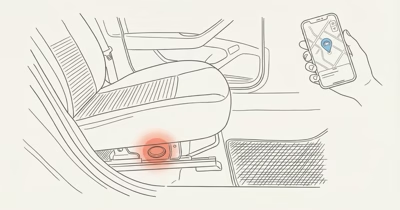
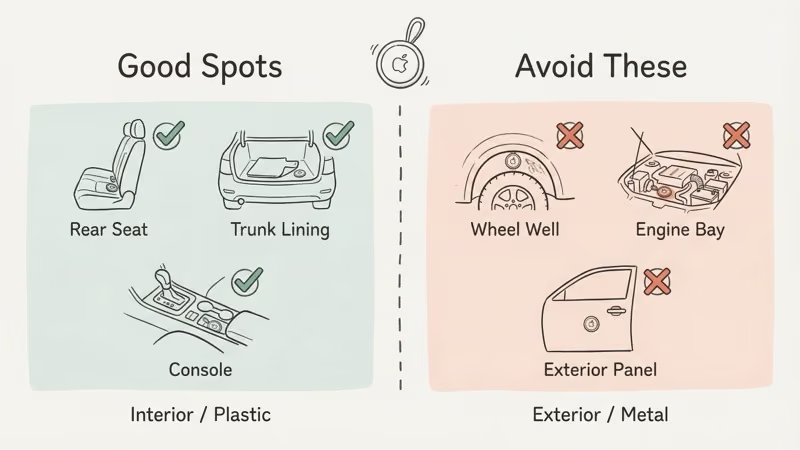
The best place to hide an AirTag in a car is under the rear seat: strong Bluetooth signal through fabric, easy battery access, and no tools needed. Use a second AirTag in the trunk lining or door panel if you want deeper concealment. Avoid the engine bay, wheel wells, and exterior metal.
Car theft in the U.S. dropped 23% through most of 2025 (the steepest decline in 40 years), but nearly 850,000 vehicles were still stolen in 2024 alone. The NICB’s annual report found that vehicle theft cost US insurers over $8 billion in 2024.
AirTag has become one of the most practical low-cost recovery aids available, especially at $29 with no monthly fee. It’s not a real-time GPS tracker, though: it depends on nearby iPhones and shows last-known location, not a live trip log. The problem is placement — a badly hidden AirTag either gets blocked by thick steel (going silent right when you need it most) or gets found by a semi-competent thief in under two minutes.
The spots below are ranked by three factors: Bluetooth signal penetration, concealment depth, and how simple the CR2032 battery swap is each year. AirTag 2, released January 2026, changes the calculus on a few of these spots.
- The rear seat is the best single hiding spot: strong Bluetooth signal through fabric and plastic, decent concealment, and no tools needed for battery swaps.
- Pair two AirTags in different spots — one accessible (OBD area or rear seat), one deeply hidden (door panel or trunk lining) — so a thief who finds one still leaves the other transmitting.
- Interior plastic placements consistently outperform exterior metal mounts; thick steel body panels can reduce Bluetooth signal to near zero in worst-case positions.
- Avoid the engine bay (temperatures exceed AirTag’s 60°C limit), wheel wells (vibration and spray damage), and any exterior flat-mount surface a thief checks in seconds.
- AirTag 2 (January 2026) adds extended UWB range and an “Improved Moving” feature that increases update frequency while the car is in transit — a meaningful upgrade for theft recovery.
Which Car AirTag Hiding Spot Should You Use?
Start with the job you need the AirTag to do. The best spot for signal is not always the best spot for concealment, and neither replaces a dedicated GPS tracker when you need live movement alerts.
| Goal | Best spot | Why it works | Tradeoff |
|---|---|---|---|
| Best single AirTag setup | Under rear seat | Strong cabin signal, hidden from casual view, easy battery access | A determined search can still find it |
| Best two-AirTag setup | Rear seat plus trunk lining | One accessible tracker and one deeper backup | Costs more, but still no monthly fee |
| Maximum concealment | Door panel cavity | Requires trim tools and time to reach | Annual battery swap is annoying |
| Best signal | Center console or OBD area | Plastic and glass let Bluetooth escape cleanly | More obvious during a search |
| Real-time theft alerts | Dedicated GPS tracker | Cellular location, geofences, trip history, speed alerts | Usually needs a monthly subscription |
If you need live alerts when the car moves, start with our anti-theft GPS tracker picks or the AirTag vs GPS tracker comparison. AirTag is best as a cheap recovery layer, not as the only theft-protection system.
What Makes a Good Hiding Spot for an AirTag in a Car
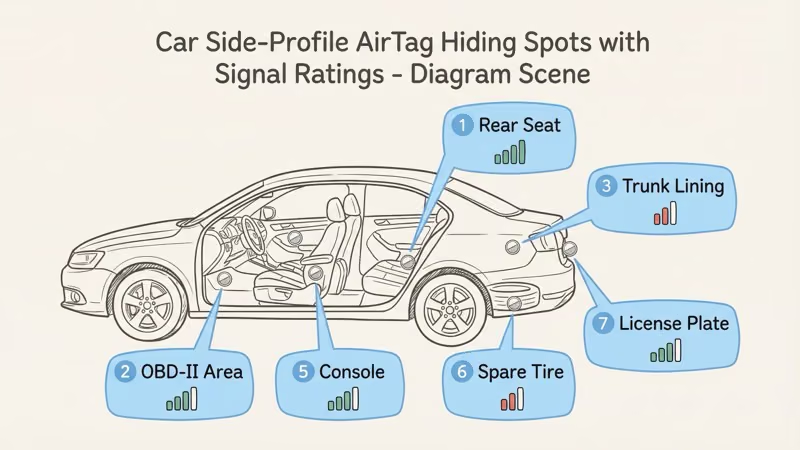
Three things decide whether a hiding spot actually works: signal, concealment, and battery access.
Signal is first. AirTag doesn’t have GPS — it piggybacks on other people’s iPhones. Every device running iOS 14.5 or later acts as a silent relay, picking up the AirTag’s Bluetooth ping and forwarding the encrypted location to Apple’s servers.
That relay layer is why placement matters: among common hiding spots, the rear seat gives Bluetooth a clean path through fabric, foam, and cabin glass as iPhones pass nearby.
Thick steel body panels scatter and absorb that signal, while plastic trim, carpet, and glass let it through. A beautifully hidden AirTag behind a steel wheel arch is basically invisible to the Find My network. Tom’s Guide’s AirTag review tests the signal in real-world conditions.
Concealment is second, but the goal here isn’t just “not visible” — it’s buying time. A spot that requires trim tools to access gives you a 10-to-20-minute head start on a thief who suspects a tracker is present. In most car theft scenarios (850,708 vehicles were stolen in the U.S. in 2024 alone) that’s enough for police to intercept before the car reaches a chop shop.
Battery access is third. The CR2032 lasts roughly a year, and a spot that requires a mechanic to reach means you’ll eventually be tracking a dead device. Our breakdown of how accurate AirTags are covers signal range and update frequency across different environments.
Best two-layer setup: put one AirTag 2 somewhere easy to service, like the rear seat or OBD area, and a second one deeper in the trunk lining or door panel. Use a low-profile adhesive mount on plastic or fabric-backed trim so the tracker does not rattle.
The 7 Best Places to Hide an AirTag in Your Car
1. Under a Rear Seat — Best Overall
This is the top spot for a first AirTag. Under the rear seat cushion frame, there are channels, brackets, and mounting points, all surrounded by fabric and foam rather than metal. Signal is strong because the AirTag is essentially sitting inside the cabin, with a clear path to rear windows and door glass. Thieves who grab a car and drive usually don’t lift seat cushions on the move.
Among the common interior spots, the rear seat tends to give Bluetooth the cleanest path through fabric and glass. An OBD-area mount works well too, but signal can drop in an underground garage, where surrounding concrete cuts off nearby iPhones from relaying the ping.
Wrap the AirTag in a thin foam sleeve to stop vibration rattle, then secure it with a strip of 3M VHB tape to the plastic seat frame. Battery access is simple: lift the seat edge, peel back, done. No tools. If you only put one AirTag in your car, this is the spot.
| Factor | Rating | Notes |
|---|---|---|
| Signal Strength | ✓ Excellent | Fabric and plastic surroundings, near rear windows |
| Concealment | ✓ Good | Invisible without lifting seat cushion |
| Battery Access | ✓ Easy | No tools required |
| Stability | ✓ Good | VHB tape holds without rattling |
2. OBD-II Port Area (Under Dashboard)
The OBD-II port sits in a plastic housing under the driver’s side dash. The space around it, between plastic panels and wiring looms, usually has a cavity where a slim AirTag in a silicone skin fits without any adhesive.
The OBD-II area is mostly plastic trim and open cabin space, so Bluetooth has a cleaner path than it would behind exterior steel. The windshield and door glass give the signal more places to escape, and the spot needs no tools to access.
The tradeoff is concealment depth — crouch down by the driver’s footwell and it’s findable. That’s why this spot works best as your accessible AirTag, paired with a second, deeper-hidden unit elsewhere. One critical note: don’t block the port itself, since a mechanic needs OBD-II access for diagnostics.
| Factor | Rating | Notes |
|---|---|---|
| Signal Strength | ✓ Excellent | All-plastic housing, glass-surrounded cabin |
| Concealment | ⚠ Moderate | Findable if someone checks under the dash |
| Battery Access | ✓ Easy | No disassembly needed |
| Stability | ✓ Good | Wedged in cavity, no rattle |
3. Inside the Trunk Lining
Most trunks have a carpet or fabric lining clipped or stapled along the sides and corners. Peel back an edge (no tools, just firm pressure) and there’s a cavity between the liner and the metal body panel. An AirTag in foam wrap slides in and disappears entirely. Reattach the liner and there’s no visible trace.
Signal is the weakest of the top three spots because of surrounding metal, but the trunk lid’s rear glass or plastic trim lets some signal out. Steel panels attenuate BLE heavily, so keep the tag near trim gaps rather than buried behind uninterrupted metal.
In urban areas, the Find My network density helps compensate as iPhones pass nearby. In an empty suburban lot late at night, expect longer gaps between updates, so this spot works best as a hidden backup rather than the only recovery layer.
| Factor | Rating | Notes |
|---|---|---|
| Signal Strength | ⚠ Moderate | Metal surrounds; trunk lid glass and plastic trim help |
| Concealment | ✓ Excellent | Invisible without deliberate disassembly |
| Battery Access | ⚠ Moderate | Peel lining back, ~2 min total |
| Stability | ✓ Good | Snug fit between liner and panel |
4. Inside a Door Panel Cavity
Door panels are the deepest concealment on this list. Remove the panel with a trim clip tool and one or two screws, and inside there’s a large void between the outer steel skin and the inner plastic. Mount the AirTag to the plastic inner panel with VHB tape. That plastic gives Bluetooth a better path than the outer steel skin, and signal can still escape through the window gap and door seals.
Inside a door panel, Find My depends on nearby iPhones and the signal path through the window gap and door seals. This is the “set it and forget it” option for high-value vehicles — annual battery replacement means repeating the disassembly, which is the one real drawback.
If that sounds annoying, the rear seat is easier. But if your car is a target and you want maximum recovery insurance, a door panel cavity is where a thief needs time and tools to look.
| Factor | Rating | Notes |
|---|---|---|
| Signal Strength | ⚠ Moderate | Metal outer skin; signal escapes via window gap |
| Concealment | ✓ Excellent | Requires trim tools to access |
| Battery Access | ✗ Difficult | Partial panel removal needed annually |
| Stability | ✓ Excellent | Mounted solid behind trim |
5. Inside the Center Console
All-plastic construction means signal here is excellent, one of the strongest placements on this list. Most consoles have a removable organizer tray or a secondary lower compartment beneath the main storage area. Tape the AirTag to the underside of the tray or inside the lower compartment wall. It disappears during normal use and the battery is easy to reach.
The catch is obvious: any thorough search hits the console quickly. Don’t rely on this as your only AirTag. Use it as the accessible, signal-strong unit paired with something harder to reach.
| Factor | Rating | Notes |
|---|---|---|
| Signal Strength | ✓ Excellent | All plastic, central cabin position |
| Concealment | ⚠ Moderate | Found if the console is searched |
| Battery Access | ✓ Easy | Lift tray, swap battery |
| Stability | ✓ Good | Adhesive holds cleanly on plastic |
6. Spare Tire Well
Lift the trunk floor and you reach a well almost nobody touches between flat tires. Tape the AirTag to the side wall of the well, not the spare tire itself, which bounces and vibrates. Signal is weak because of surrounding steel, but trim gaps and trunk glass may still give Bluetooth a path out.
| Factor | Rating | Notes |
|---|---|---|
| Signal Strength | ⚠ Moderate | Metal walls reduce frequency; still usable |
| Concealment | ✓ Excellent | Never accessed day-to-day |
| Battery Access | ⚠ Moderate | Lift trunk floor, access well |
| Stability | ✓ Excellent | Taped to wall, no vibration path |
7. Behind the License Plate Frame — Use as a Decoy
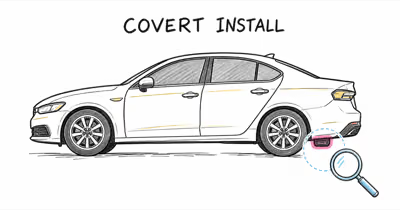
A slim AirTag in a silicone sleeve fits behind most plates using the existing mounting bolts. Signal is outstanding — open air in all directions. But any thief who’s watched a single YouTube video on “how to find a tracker” checks behind the plate first, which is precisely why you want them to find this one. Let them pocket it while your real AirTag stays hidden inside the car.
| Factor | Rating | Notes |
|---|---|---|
| Signal Strength | ✓ Excellent | Open air, no obstruction |
| Concealment | ✗ Poor | First place experienced thieves check |
| Battery Access | ✓ Easy | Remove two plate screws |
| Stability | ✓ Good | Bolted in place |
What Spots Should You Avoid?
A few suggestions you’ll see online will destroy the AirTag or give you zero signal the moment you need it.
- Wheel wells (exterior): Constant vibration, road debris, and water spray will physically destroy the device. AirTag’s IP67 rating covers brief submersion in still water, not continuous spray from a wheel spinning at 60 mph. The surrounding metal arch also kills Bluetooth signal completely.
- Engine bay: AirTag’s maximum operating temperature is 60°C (140°F). An engine bay routinely hits 90–120°C. The battery goes first, then the electronics. Our AirTag heat resistance guide covers the full temperature limits. Don’t do it.
- Near the 12V battery: Electrical interference degrades Bluetooth, and battery off-gassing creates a corrosive environment that will eventually reach the AirTag’s contacts.
- Flat exterior magnetic mounts: A thief scanning with any recent iPhone (or the Android Tracker Detect app) will find an exterior-mounted AirTag within seconds. The metal body also acts as a partial Faraday cage at flush-mount angles, cutting signal further.
How AirTag 2 Changes Car Tracking
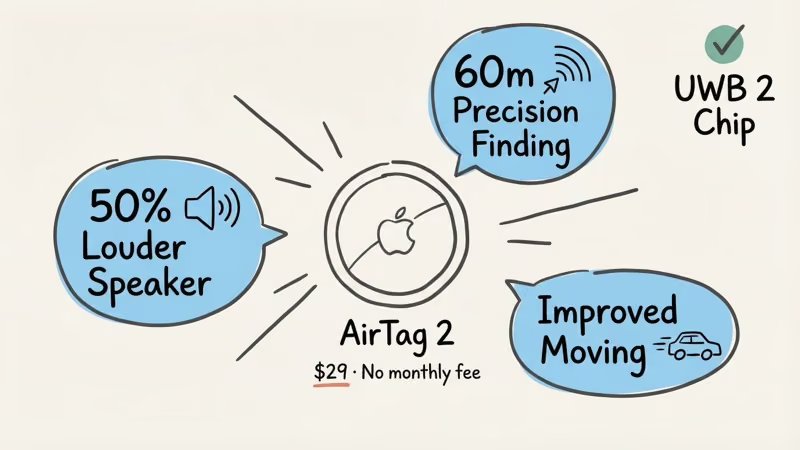
Apple launched AirTag 2 in January 2026. Price stayed at $29 for one, $99 for a 4-pack. Two specific upgrades matter for car anti-theft use, and one cuts both ways.
The UWB 2 chip extends Precision Finding range up to 50% farther than the original. That matters less for finding a hidden tracker inside the cabin and more for the last step of recovery: walking through a chop shop lot or tow yard and using the “play sound” function to locate the device physically.
The speaker is also 50% louder, so you can hear it from farther away in noisy industrial environments. AirTag reaches Find My over the Bluetooth network the Bluetooth SIG maintains.
One tricky upgrade is the “Improved Moving” feature. Apple’s official AirTag 2 announcement states that it gives better location updates when an AirTag is actively in transit, so a car being driven will ping the Find My network more frequently than before. In low-iPhone-density areas like rural highways, this actually matters.
A louder speaker cuts both ways on covert tracking. AirTag beeps when separated from its paired iPhone for three days, and louder means a thief is more likely to notice it. Some owners choose to disable the AirTag speaker; Apple considers it a warranty-voiding modification, so weigh the tradeoff carefully. Also, make sure the AirTag you buy is genuine — our guide on spotting fake AirTags covers the counterfeits.
AirTag vs a Dedicated GPS Tracker for Your Car
AirTag is the right pick if your car lives in a city or suburb where iPhones pass regularly and you want zero ongoing costs. Two years of AirTag ownership costs about $31 ($29 device + two CR2032 batteries at roughly $1 each).
For a rural vehicle, a car worth professional-level protection, or if you want real-time speed data and geofencing alerts, installing a dedicated GPS tracker does significantly more. Our full AirTag vs GPS tracker comparison covers the tradeoffs in depth; here’s the quick version.
| Feature | AirTag 2 | GPS Tracker (e.g., Bouncie) |
|---|---|---|
| Real-time location | ✗ Last known only | ✓ Every 15–60 sec |
| Works without nearby iPhones | ✗ Requires Find My crowd | ✓ Cellular, always on |
| Geofencing alerts | ✗ Not available | ✓ Yes |
| Trip history | ✗ Not available | ✓ Full log |
| Monthly fee | ✓ $0 | $8–$10/month |
| 2-year total cost | ✓ ~$31 | ~$220–$270 |
| Size and concealability | ✓ 31.9mm disc | Larger plug-in or wired unit |
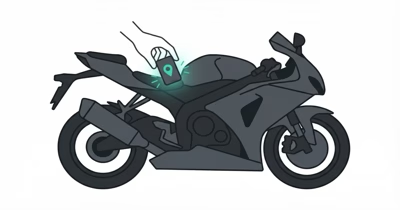
One thing AirTag doesn’t do: store a route or trip log — it shows only the last known position. For the full breakdown, see our guide on AirTag location history. If subscription cost is a dealbreaker but you still want cellular backup, our no-monthly-fee GPS tracker roundup covers the real options. For motorcycle owners, the same two-layer approach works.
How Should You Install an AirTag in Your Car?
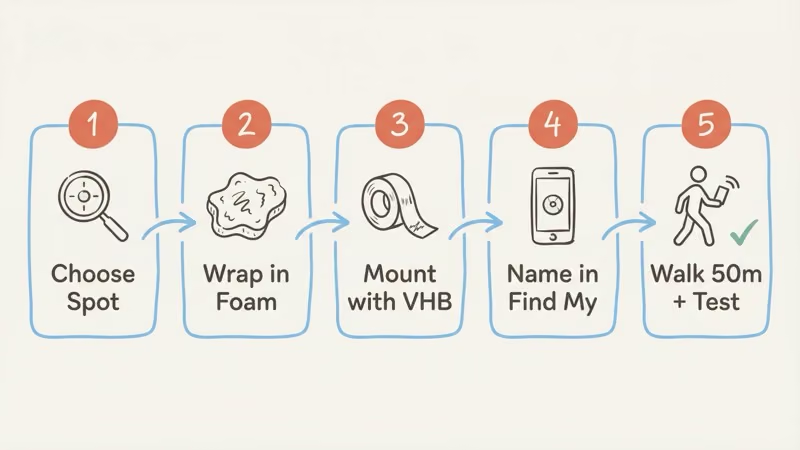
- Wrap in foam or silicone first. A bare AirTag against any hard surface rattles at highway speeds. A snug foam sleeve or silicone skin absorbs vibration and eliminates the sound that would otherwise telegraph its location.
- 3M VHB tape, not generic double-sided tape. Interior car temperatures can hit 65°C on a hot day. Standard tape fails in that heat. VHB holds to 93°C and bonds cleanly to curved plastic without peeling.
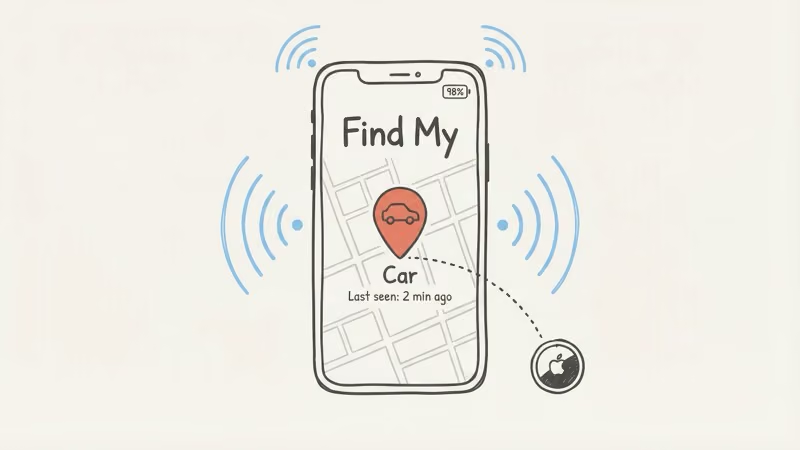
- Name it something generic in Find My. “Car” gives nothing away. If a thief finds it and scans it with their iPhone, a neutral name doesn’t confirm this is an anti-theft device. “Tracker” or any security-related name tips them off immediately.
- Set a battery reminder. CR2032 life is roughly 12 months. A dead AirTag sitting in a door panel when the car is stolen is useless. Set an annual calendar reminder the day you install it. Same date, every year.
- Do the 50-meter walk test. Always. After hiding the AirTag, walk at least 50 meters away from the car and open Find My. If the AirTag isn’t showing a recent update, signal is blocked and you need a different location. This test catches a blocked spot before you commit to a bad placement.
- Use two AirTags in two different spots. One accessible (rear seat or OBD area), one deeply hidden (door panel or trunk lining). If a thief finds and removes one, the other keeps transmitting. A 4-pack of AirTag 2 covers the car, keys, a bag, or a second vehicle at a better per-unit price. For mounting the accessible one cleanly, the Elevation Lab TagVault Surface is purpose-built for car interior adhesive mounts.
Is It Legal to Hide an AirTag in Your Car
Hiding a tracker in your own car is legal in all 50 U.S. states. Putting one in someone else’s vehicle without their knowledge is a separate matter entirely. The laws have gotten sharper.
As of late 2025, Florida increased penalties for using tracking devices to facilitate crimes to up to 15 years. Texas and Pennsylvania passed similar anti-tracker legislation in 2024–2025. Apple’s AirTag safety documentation states that iPhones alert users when an unknown AirTag has been traveling with them, and Android users can scan for nearby trackers using the Tracker Detect app.
If you share the vehicle with a partner or family member who isn’t on your Find My family sharing, tell them the AirTag is there. The anti-stalking alert triggers based on travel time with an unknown device, not on who owns the car.
A partner borrowing the vehicle for an afternoon can get an alert on their own iPhone if they’re not paired to your account. Our full guide on using AirTag for car anti-theft covers the legal nuances in more depth.
If Someone Hid an AirTag in Your Car
This cuts both ways. If you’re seeing an “AirTag Found Moving With You” notification, or you suspect someone placed a tracker in your vehicle, the spots that make good hiding places for your own AirTag are exactly where to look first: under rear seat cushions, along trunk lining edges, in the spare tire well, and behind the license plate.
Our step-by-step guide on finding an AirTag hidden in your car walks through every location and what to do once you find it, including how to disable it without destroying evidence if you need to involve police.
Rental hosts should note that Turo has banned AirTags — dedicated GPS trackers are the compliant alternative.
Bottom Line
Under the rear seat is the best single hiding spot for most people: clean cabin signal path, decent concealment, and no-tool battery access. For a two-AirTag setup, add a second in a door panel cavity or trunk lining where a thief needs tools to reach it.
AirTag 2’s extended Bluetooth range and “Improved Moving” feature make it a meaningfully better anti-theft device than the original, and at $29 it’s the lowest-cost car tracking option available. Just don’t treat it as the only layer — it doesn’t have GPS and won’t update in areas with no iPhones nearby, but it gives police something concrete to act on after the theft, which is often all you need.
If catalytic converter theft is your primary concern, a GPS tracker for catalytic converter protection mounts near the exhaust and sends real-time geofence alerts.
Frequently Asked Questions
What is the best place to hide an AirTag in a car?
Under the rear seat is the top spot for most cars. Bluetooth signal has a cleaner path through the surrounding fabric and plastic, concealment is solid without requiring tools to access, and battery swaps stay simple. For maximum concealment, a door panel cavity is harder for a thief to locate but requires partial disassembly each year to replace the battery.
Can a thief detect my AirTag?
Potentially yes. iPhones alert users when an unknown AirTag has traveled with them over time, and Android users can scan with the Tracker Detect app. That said, a thief has to actually notice the alert and then find the device. Deeply hidden spots like door panels or trunk linings behind lining require deliberate disassembly, which most car thieves won’t bother with if they need to move quickly. Using two AirTags in different spots means removing one still leaves a backup transmitting.
Will an AirTag work if my car is in a parking garage?
It depends on foot traffic through the garage. Busy urban garages update regularly as iPhone users walk through. An isolated overnight lot may go hours between pings. The last known location before the car entered the garage is always recorded, and that’s often the data point police need to narrow their search to a specific block or structure.
How many AirTags should I put in my car?
Two is the practical recommendation. One easy-access unit under the rear seat or in the OBD area, and one deeply hidden in a door panel or trunk lining that requires tools to reach. If a thief finds and removes one, the other keeps transmitting. A 4-pack brings the per-unit cost down to about $25 and covers keys or a bag with the remaining two.
Does metal block AirTag’s Bluetooth signal?
Yes. Thick steel body panels significantly reduce range and update frequency. Interior placements surrounded by plastic and fabric usually give Bluetooth a cleaner path than exterior mounts. Always run a walk-away test after installation: if Find My isn’t showing a recent location update, the signal is blocked and you need a different spot.
Is it legal to put an AirTag in your own car?
Legal in all 50 U.S. states for a vehicle you own. Placing one in someone else’s car without their knowledge is illegal under federal stalking statutes, and state-level anti-tracker laws have added significant penalties. Florida and Texas both passed laws in 2024-2025 that carry up to 15 years for using trackers to facilitate crimes. Tell any regular drivers of your car that the AirTag is there to avoid triggering Apple’s anti-stalking alerts on their devices.
Can I use an AirTag to track a rental car?
Only with explicit permission from the rental company. Placing a tracker in a rental without authorization typically violates the rental agreement and can trigger liability under surveillance statutes in multiple states, regardless of whether your intent was personal property protection or something more serious. Call the company first. Some fleets actually welcome it.