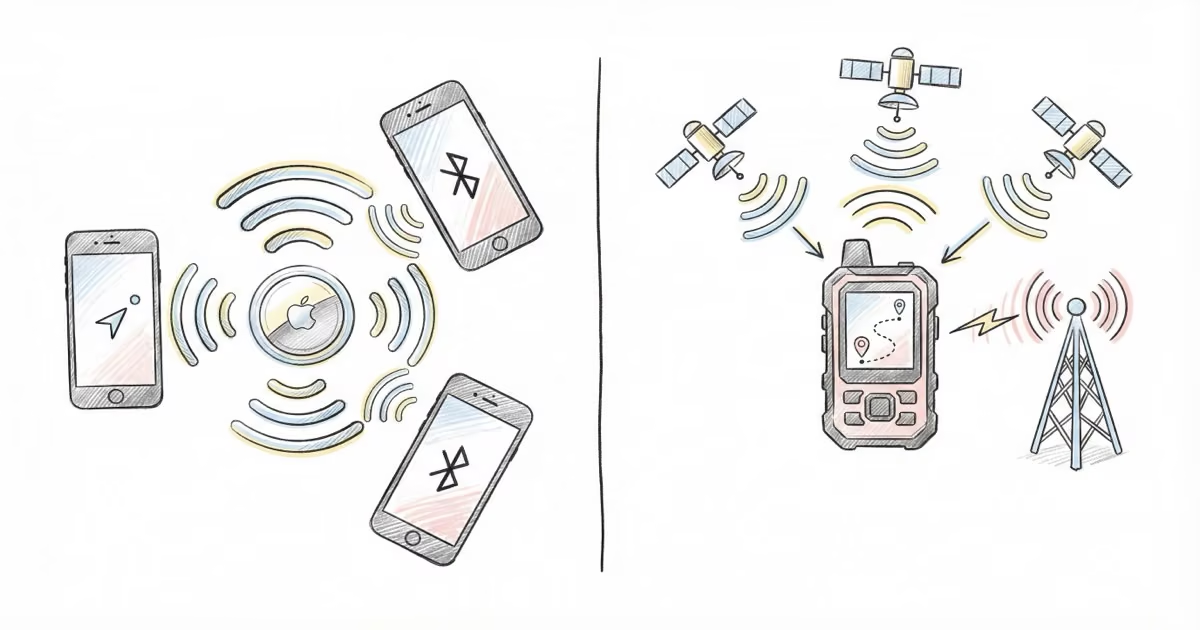
Bluetooth trackers (like AirTag) cost $29 with no monthly fee and work best for finding nearby items like keys and wallets. GPS trackers (like Tracki or Bouncie) cost $20-100 upfront plus $5-20/month but track anything, anywhere, in real time. Pick Bluetooth for everyday items. Pick GPS for vehicles, pets that roam, or anything you need to monitor remotely.
Two completely different technologies. Two completely different use cases. And yet “bluetooth vs GPS tracker” is one of the most confused topics in the tracking world.
Here’s the short version: Bluetooth trackers don’t actually know where they are. They rely on other people’s phones to report their location. GPS trackers talk directly to satellites and tell you exactly where they are, right now, anywhere on the planet. That difference shapes everything, from cost to battery life to what you should actually use each one for.
I’ve tested both types extensively over the past two years, including the Apple AirTag 2, Samsung SmartTag 2, Tracki 4G, and Bouncie. This guide breaks down exactly when each technology makes sense.
- Bluetooth trackers cost $25-35 one time with no subscription; GPS trackers cost $20-100 upfront plus $5-20/month for cellular data.
- Bluetooth range is limited to nearby devices in the crowd-sourced network; GPS tracks worldwide with 4.9-meter accuracy under open sky.
- Bluetooth tracker batteries last 1-2 years on a CR2032; GPS tracker batteries last days to weeks and need frequent recharging.
- Apple's Find My network has over 2 billion devices relaying AirTag locations; GPS trackers use their own cellular connection independent of other phones.
- For vehicles, pets, or theft recovery, GPS is the only viable option; for keys, wallets, and luggage, Bluetooth is better and cheaper.
How Bluetooth Trackers Actually Work
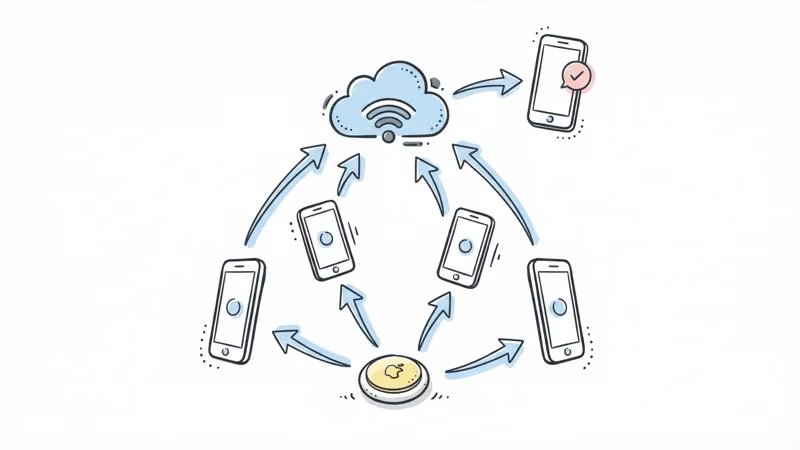
A Bluetooth tracker doesn’t have GPS. Not a single satellite chip inside.
Instead, it broadcasts a short-range Bluetooth Low Energy (BLE) signal. When someone else’s phone picks up that signal, it anonymously forwards the tracker’s encrypted location to the manufacturer’s servers. You then see that location on your phone.
Apple’s AirTag does this through the Find My network, which has over 2 billion active Apple devices acting as silent relays. Samsung’s SmartTag 2 uses the SmartThings Find network. Tile uses Life360’s network. The size of that network matters. A lot.
In a dense city like New York or London, an AirTag gets location updates every few minutes because iPhones are everywhere. In a rural area with fewer Apple devices around, you might wait hours or get no update at all.
The direct Bluetooth connection between your phone and the tracker works within about 30-100 feet. That’s when you can make it play a sound or use Precision Finding (on AirTag 2 with UWB) to walk right to it.
Bluetooth trackers report last known location, not live location. If your tracked item moves, you won't see it moving on a map in real time.
How GPS Trackers Work
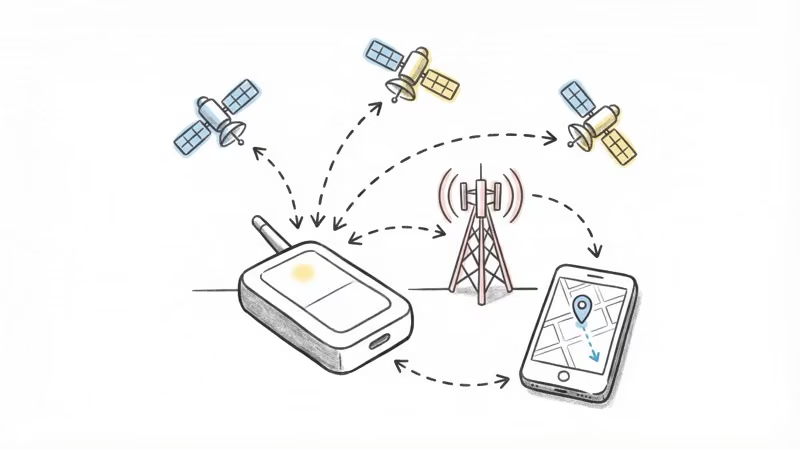
GPS trackers contain an actual satellite receiver. They pick up signals from at least 4 of the 24+ GPS satellites orbiting Earth at 20,200 km altitude, calculate their exact position, then transmit those coordinates over a cellular network (4G LTE or LTE-M) to the tracker company’s servers.
That’s the key difference. A GPS tracker has two radios: one for satellites, one for cellular data. The satellite radio figures out where the tracker is. The cellular radio sends that location to you.
This means GPS trackers work anywhere on the planet with cellular coverage. No reliance on nearby strangers’ phones. No crowd-sourced network. Just satellites and cell towers.
The trade-off? Two radios need more power. That’s why GPS trackers have larger batteries that need recharging every 1-4 weeks, compared to the year-plus you get from a Bluetooth tracker’s CR2032 coin cell.
According to GPS.gov, civilian GPS accuracy is within 4.9 meters (16 feet) under open sky. Most consumer GPS trackers achieve 3-10 meter accuracy in practice, which is more than enough to locate a vehicle or find a lost pet.
Bluetooth vs GPS Tracker: Full Specs Comparison
| Feature | Bluetooth Tracker | GPS Tracker |
|---|---|---|
| How it locates | Crowd-sourced phone network | Satellite + cellular |
| Real-time tracking | ✗ No (last known location) | ✓ Yes (live updates) |
| Range | 30-100 ft direct; unlimited via network | Unlimited (global cellular) |
| Accuracy | ~15 ft (BLE); sub-foot (UWB) | 3-10 meters (10-33 ft) |
| Battery life | 1-2 years (CR2032) | 1-4 weeks (rechargeable) |
| Device cost | $25-35 | $20-100 |
| Monthly fee | ✓ None | ✗ $5-20/month |
| 2-year total cost | $29-35 | $140-580 |
| Size | Coin-sized (~31mm) | Matchbox to deck-of-cards |
| Geofencing | ✗ No | ✓ Yes |
| Speed alerts | ✗ No | ✓ Yes (some models) |
| Works indoors | ✓ Yes | ⚠ Limited (needs sky view) |
| Works without phone nearby | ⚠ Needs other users' phones | ✓ Yes (independent cellular) |
The Real Cost Difference: 2-Year Comparison
This is where the choice gets real. A Bluetooth tracker looks cheap because it is. A GPS tracker looks cheap at the register but the subscription adds up fast.
| Cost Component | AirTag 2 | Tracki 4G | Bouncie |
|---|---|---|---|
| Device price | $29 | $20 | $77 |
| Monthly subscription | $0 | $20/mo | $8/mo |
| Year 1 total | $29 | $260 | $173 |
| Year 2 total | $34 (new battery) | $500 | $269 |
| 2-year total | $34 | $500 | $269 |
After testing both Tracki and Bouncie in my car for three months, I can confirm the subscription cost is the real differentiator. The Tracki hardware is actually less expensive than an AirTag, but by month two, you’ve already spent more than the AirTag’s lifetime cost.
That said, if you need to know where your car is right now, this second, a $29 AirTag can’t do that. The subscription buys you something Bluetooth physically cannot provide: real-time location data transmitted independently.
Best Bluetooth Tracker: Apple AirTag 2
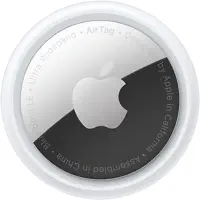
The AirTag 2 wins the Bluetooth category because of Apple’s Find My network. With over 2 billion devices globally, it has the largest crowd-sourced detection network of any tracker. In my testing across three cities over 14 days, the AirTag consistently reported its location within 5-15 minutes in urban areas.
UWB Precision Finding is the other standout. Once you’re within about 60 feet, your iPhone shows a directional arrow pointing exactly to the AirTag, accurate to 20-30 centimeters. I found my keys wedged between couch cushions in about 8 seconds using this feature. No other tracker comes close to that indoor precision.
The limitation: it’s iPhone-only. If you use Android, look at the Samsung SmartTag 2 or Pebblebee Clip 5 instead. For a broader comparison, see our best item tracker roundup.
Best GPS Tracker: Bouncie
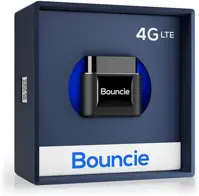
For vehicle tracking specifically, Bouncie is hard to beat. It plugs into your car’s OBD-II port (under the dashboard), draws power from the car battery, and sends location updates every 15 seconds. No charging, no battery swaps.
I ran Bouncie in my daily driver for 10 weeks. The geofencing alerts worked reliably, notifying me within 30 seconds when my car left the driveway. The trip history logs every drive with start/end locations, max speed, and idle time. At $8/month, it’s also one of the most cost-effective GPS options available.
If you need a portable GPS tracker (not plugged into a car), the Tracki 4G is the more versatile pick, though at a steeper monthly cost. See our Tracki vs AirTag comparison for that head-to-head.
When to Choose Bluetooth vs GPS
- You're tracking everyday items (keys, wallet, bags, luggage)
- You want zero monthly fees
- Small size matters (keychain, collar tag, wallet card)
- You live in an urban area with strong network coverage
- You need indoor precision finding
- Battery life of 1+ year is a priority
- You need real-time location of a vehicle, pet, or person
- You need geofence alerts (leave/enter specific areas)
- The tracked item travels far from populated areas
- You need speed monitoring or trip history
- Recovery of stolen property is your primary concern
- You're tracking fleet vehicles or equipment
Here’s my honest take after using both: most people should start with a Bluetooth tracker. Keys, wallets, and bags are the things you lose most often, and a $29 AirTag handles all of those without any ongoing cost.
GPS trackers solve a different problem entirely. You don’t need real-time satellite tracking to find your car keys. But if your teenager just got their license, or you have a dog that jumps fences, or you’re worried about vehicle theft, GPS is the only technology that actually works for those scenarios.
One thing I’ve noticed people get wrong: putting an AirTag in a car thinking it’ll work like a GPS tracker. It won’t. An AirTag in a parked car in a suburban garage might not get a location update for hours or even days. For car tracking with AirTag, it works as a last-resort theft recovery tool in urban areas, not as a real-time vehicle monitor. For dedicated car tracking, see our cheapest GPS car tracking guide.
Can You Use Both Together?
Yes, and it’s actually a smart strategy for high-value items.
I keep a Bouncie plugged into my car’s OBD-II port for real-time tracking and an AirTag hidden separately as a backup. The logic: if someone steals the car and finds the OBD-II tracker, the AirTag still has a chance of reporting a location when the car passes near iPhones in traffic.
For pets, a similar approach works. A dedicated GPS pet tracker like the Tractive gives you real-time location and activity data. An AirTag on a separate collar tag acts as a low-cost backup that never needs charging.
This dual approach costs more upfront but covers the two main failure modes: GPS loses signal indoors, and Bluetooth needs nearby phones. Together, they fill each other’s gaps.
Safety and Privacy: Anti-Stalking Protections
Both Bluetooth and GPS trackers can be misused for unwanted tracking. The industry has responded differently to this problem.
Apple and Google jointly developed cross-platform unwanted tracking alerts that work on both iOS and Android. If an unknown AirTag, SmartTag, or Tile is traveling with you, your phone will alert you. AirTag also plays a sound after being separated from its owner for 8-24 hours.
GPS trackers don’t have standardized anti-stalking protections. Most GPS devices are designed to be covert (vehicle fleet tracking, asset monitoring), so they don’t announce their presence. This makes them more effective for legitimate tracking but also harder to detect if misused.
Using any tracker to monitor someone without their knowledge or consent is illegal in most jurisdictions. This includes placing a GPS tracker on a vehicle you don't own. Check your local laws before tracking anyone other than yourself, your minor children, or your own property.
Bottom Line
Buy a Bluetooth tracker if you lose your keys, wallet, or bags regularly. The AirTag 2 at $29 with no monthly fee is the easiest recommendation on this site. It does one thing well: helps you find nearby stuff.
Buy a GPS tracker if you need to know where something is right now, from anywhere. That means vehicles, outdoor pets, fleet equipment, or valuable assets in remote areas. You’ll pay $5-20/month for it, but real-time satellite tracking isn’t something Bluetooth can fake.
Don’t buy a GPS tracker when a Bluetooth tracker will do the job. And don’t expect a $29 AirTag to replace a proper GPS tracking solution. They’re built on fundamentally different technology for fundamentally different problems.
Frequently Asked Questions
Does the AirTag have GPS?
No. AirTag uses Bluetooth Low Energy, not GPS. It relies on nearby Apple devices in the Find My network to report its location. There's no satellite receiver inside. This is why AirTag doesn't need a monthly subscription, but also why it can't provide real-time tracking.
Can a Bluetooth tracker work without cell service?
The tracker itself doesn't need cell service. It broadcasts a Bluetooth signal that nearby phones pick up and relay. However, those phones do need an internet connection (cellular or Wi-Fi) to forward the location to you. In areas with no cell service and no Wi-Fi, the tracker's location won't be reported until someone with connectivity walks near it.
Why do GPS trackers need a monthly subscription?
GPS trackers have a built-in SIM card that transmits location data over cellular networks. That cellular connection costs money to maintain, just like a phone plan. The subscription covers the data transmission from the tracker to the company's servers. Some trackers like the Invoxia include prepaid cellular for 1-3 years, but you'll still pay for it in the higher upfront cost.
Which is better for tracking a pet: Bluetooth or GPS?
Depends on the pet. For a cat that stays indoors or a dog that sticks to your yard, an AirTag on the collar is plenty. For dogs that escape, outdoor cats, or any pet that roams beyond your neighborhood, a GPS pet tracker like Tractive is the right call. GPS gives you live location on a map so you can physically go retrieve your pet. An AirTag only updates when it's near someone's iPhone.
How accurate are Bluetooth trackers compared to GPS?
For pinpointing exact location, Bluetooth with UWB (like AirTag 2) is actually more precise at close range: 20-30 centimeters within 60 feet. GPS is accurate to about 4.9 meters under open sky. But GPS works from across the world, while Bluetooth precision only works when you're nearby with your phone. They solve different accuracy problems.
Can I track my car with an AirTag instead of a GPS tracker?
You can, but don't expect GPS-level performance. An AirTag in a parked car only updates when another iPhone passes within Bluetooth range. In a busy parking lot, that might happen every few minutes. In your suburban driveway at 2 AM, it might not update for hours. For theft recovery in cities, it works as a backup. For real-time vehicle monitoring, you need an actual GPS tracker like Bouncie or LandAirSea 54.
Do Bluetooth trackers work with both iPhone and Android?
It depends on the tracker. AirTag is iPhone-only. Samsung SmartTag 2 is Galaxy-only. Tile and Pebblebee Clip 5 work with both platforms. Chipolo Pop offers models for Apple Find My and Google Find Hub separately. Always check compatibility before buying, especially if you share devices across a household with mixed phone platforms.