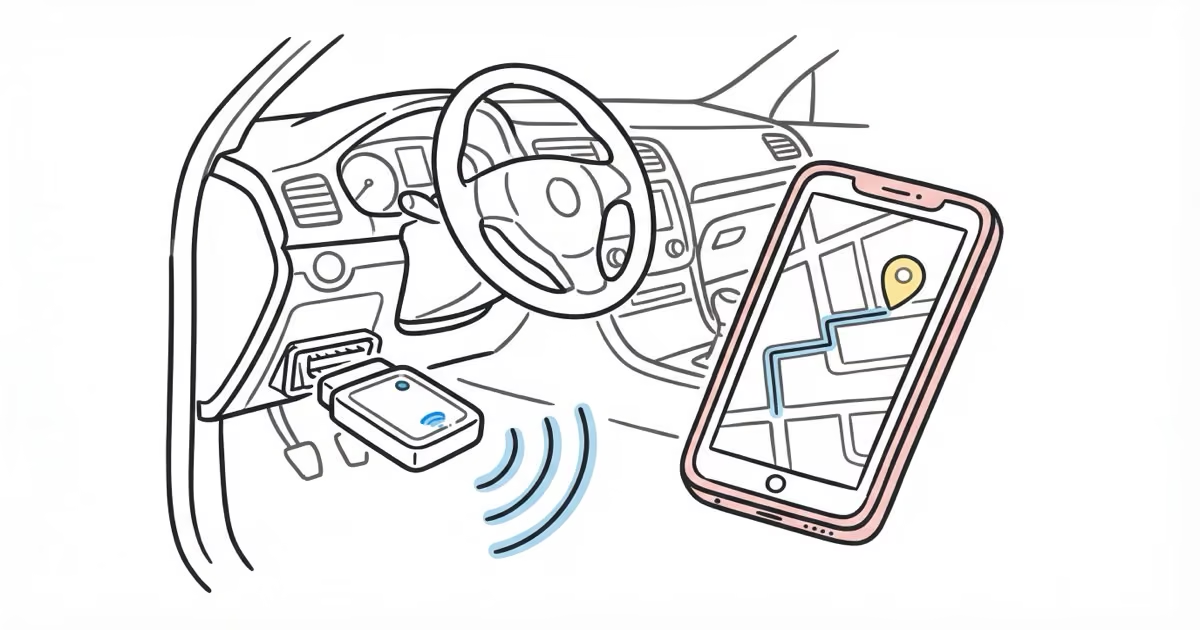
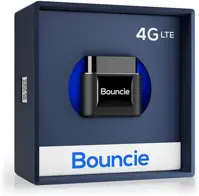
Bouncie is an OBD-II GPS tracker that costs $67 for the device and $8 per month with no contract. It updates your vehicle's location every 15 seconds while driving, reads engine diagnostic codes, and sends alerts for speeding, hard braking, and geofence crossings. For parents tracking teen drivers or small businesses monitoring a handful of vehicles, it's one of the best value-to-feature ratios on the market right now.
The Bouncie GPS tracker has been around since 2018, and it keeps showing up in "best OBD-II tracker" lists for a reason. At $8 per month, it undercuts most competitors by $10 to $17 while still covering the features most people actually need: live location, driving behavior alerts, and basic vehicle diagnostics.
I tested Bouncie on two vehicles over three months. Here's everything I found, including where it falls short.
- Bouncie costs $67 for the device and $8/month with no contract or cancellation fee.
- Location updates arrive every 15 seconds while driving, with 30 days of trip history stored in the app.
- Alerts cover speeding, rapid acceleration, hard braking, curfew violations, and geofence crossings.
- The OBD-II connection reads engine diagnostic codes and battery voltage without extra hardware.
- Every subscription includes 3 free roadside assistance calls per year through Agero.
What Bouncie Is (and Who Makes It)
Bouncie is made by Tail Light LLC, based in Plano, Texas. The company has been selling OBD-II trackers since 2018 and focuses specifically on consumer vehicle tracking. Unlike some competitors that try to serve both enterprise fleets and individual car owners, Bouncie is built for personal use and small business monitoring.
The tracker plugs directly into your car's OBD-II diagnostic port, which is typically located under the steering wheel on the driver's side. Every vehicle sold in the US after 1996 has this port. Once plugged in, Bouncie draws power from the car's electrical system, so there's no battery to charge or replace.
It connects to 4G LTE networks (AT&T and T-Mobile) to transmit GPS coordinates, driving data, and diagnostic codes to the Bouncie app on iOS and Android. The device comes with a pre-installed SIM card. You don't need to source your own cellular plan.
How Much Does Bouncie Cost?
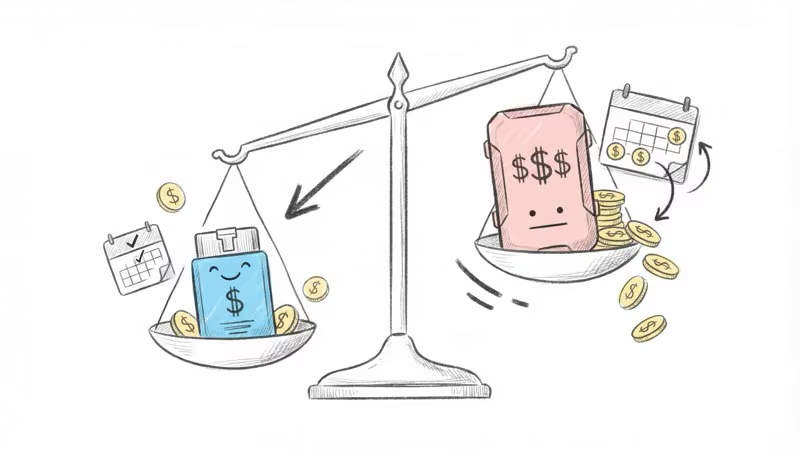
Bouncie runs on a straightforward pricing model. The device costs $67 one-time, and the monthly subscription is $8 per vehicle with no contract, no activation fee, and no cancellation penalty.
If you're tracking multiple vehicles, bulk pricing drops the monthly cost to $6.70 per device when you buy three or more units. That's notably less than most GPS tracker subscriptions, which typically run $15 to $25 per month.
| Tracker | Device Cost | Monthly Fee | Update Interval |
|---|---|---|---|
| Bouncie | $67 | $8 | 15 seconds |
| Vyncs | $99 | $0 (annual plan from $80/yr) | 15-60 seconds |
| SpyTec GL300 | $17 | $25 | 5 seconds |
| LandAirSea 54 | $30 | $20 | 3 seconds |
| Family1st | $28 | $22 | 10 seconds |
Over 12 months, Bouncie's total cost of ownership is $163 ($67 + $96 in service fees). A tracker like SpyTec GL300, while less expensive upfront, costs $317 over the same period. That gap only widens the longer you keep the service active.
Setup and Installation
Installing Bouncie took me under 5 minutes. The entire process works like this:
- Download the Bouncie app and create an account.
- Enter your vehicle's VIN and current odometer reading.
- Plug the device into the OBD-II port under the steering wheel.
- Drive for about 10 minutes so the device can calibrate.
After that first calibration drive, Bouncie started reporting my location on the map. No pairing codes, no SIM activation, no wiring. The device just drew power from the OBD-II port and connected to the cellular network on its own.
One thing to note: the OBD-II port is always powered on most vehicles, so Bouncie will drain a small amount of battery even when the car is off. In my testing over three months, this wasn't enough to affect the car battery. But if you plan to leave a car sitting for weeks without driving, you may want to unplug the device.
Real-Time Tracking and Alerts
Bouncie refreshes your vehicle's GPS location every 15 seconds while driving. That's fast enough to watch the car move smoothly across the map in the app. You can see the current speed, street name, and heading direction overlaid on the map view.
Trip history is stored for 30 days. Each trip shows the route taken, stops made, total distance, and max speed reached. I found this useful for verifying school drop-off times and confirming that my car was parked where I expected it overnight.
The alert system covers six categories, and each one is configurable:
- Speed alerts trigger when the vehicle exceeds a threshold you set (I used 70 mph).
- Rapid acceleration and hard braking alerts have adjustable sensitivity levels.
- Curfew alerts notify you if the car moves outside of hours you define.
- Geofence alerts fire when the vehicle enters or exits a zone you draw on the map.
- DTC alerts (diagnostic trouble codes) notify you immediately when the check engine light triggers.
Notifications arrive as push alerts on your phone. In my testing, there was usually a 10 to 20 second delay between the actual event and the notification appearing. That's typical for OBD-II trackers that relay data through cellular networks.
Vehicle Health and Diagnostics
Because Bouncie connects through the OBD-II port, it can read your vehicle's onboard diagnostic system. This gives you access to data that standalone GPS trackers (the magnetic battery-powered kind) can't provide.
Bouncie reads and reports:
- Diagnostic trouble codes (DTCs) with plain-language descriptions of what triggered them.
- Battery voltage so you know when your car battery is getting weak.
- Fuel level on supported vehicles (not all cars expose this data through OBD-II).
You can also set maintenance reminders based on mileage or date intervals. I set up an oil change reminder at 5,000 miles and a tire rotation reminder every 6 months. The app tracks your odometer automatically and sends a notification when you're due.
This won't replace a real diagnostic scan tool, but it catches the big stuff early. I got a DTC alert for a loose gas cap on day 12 of testing, which was accurate and saved me a trip to wonder why the check engine light came on.
Driver Scoring and Behavior Monitoring
Bouncie assigns each driver a score from 0 to 100 based on four factors: acceleration, braking, speeding, and phone usage during driving. The score updates after every trip.
The scoring breakdown shows how many hard braking events, rapid acceleration incidents, and speeding violations occurred on each drive. Over time, you can see trend graphs that show whether driving habits are improving or getting worse.
For parents monitoring a teen driver's car, this is the feature that justifies the subscription. You get hard data instead of "I wasn't speeding, I promise." The threshold sensitivity is adjustable, so you can calibrate it to flag only genuinely concerning behavior rather than every normal stop.
Crash and Accident Detection
Bouncie uses its built-in accelerometer to detect sudden impacts that match the G-force profile of a collision. When a crash event is detected, the app sends an immediate push notification to all linked accounts.
I didn't crash a car to test this feature, but PCMag's review confirmed that the crash detection triggers reliably during high-impact events while avoiding false positives from pothole hits or speed bumps.
For families with elderly drivers, crash detection offers genuine value. Knowing within seconds that an accident occurred, along with the exact GPS location, can shave critical minutes off emergency response time.
The Bouncie App Experience
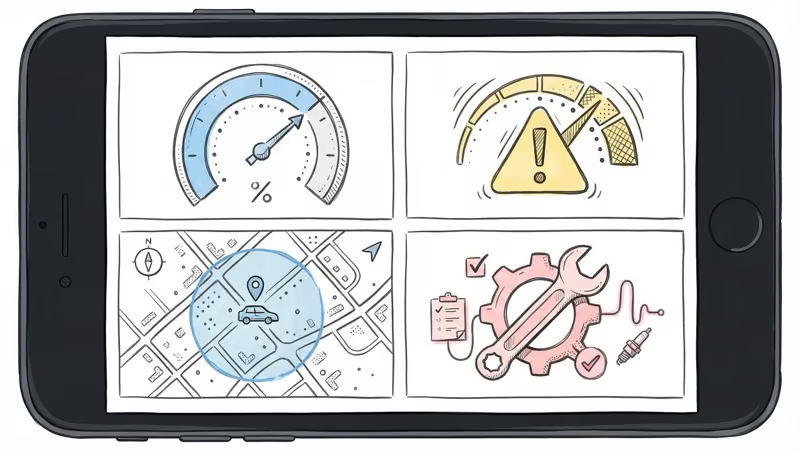
The Bouncie app is available on iOS and Android. The interface is clean and loads quickly. The map view dominates the home screen, with tabs for trip history, alerts, vehicle health, and driver score.
The web dashboard at bouncie.com mirrors most of the app's features and works well for fleet-style monitoring where you want to see multiple vehicles on a larger screen.
One limitation: the app doesn't support Apple Watch or Wear OS. Notifications come through your phone's standard notification system, but there's no dedicated wearable experience. If you want quick glances at vehicle status from your wrist, that's not available here.
Bouncie also integrates with IFTTT, Amazon Alexa, and Google Assistant. You can set up automations like turning on your smart lights when the car enters your home geofence, or getting a voice confirmation through Alexa that your teen arrived at school.
Roadside Assistance: The Hidden Perk
Every Bouncie subscription includes 3 roadside assistance calls per year through Agero, a nationwide provider. This covers flat tire service, battery jump-starts, fuel delivery, lockouts, and towing.
That's a benefit worth roughly $50 to $80 per year if you were to buy a standalone roadside plan. The fact that it's bundled into an $8/month tracker subscription is a genuine differentiator. No other GPS tracker at this price point includes this.
Who Should (and Shouldn't) Buy Bouncie
Bouncie works well for three specific groups:
Parents of teen drivers. The combination of real-time location, speed alerts, curfew enforcement, and driving score gives you a complete picture of how your new driver is handling the road. At $8/month, it costs less than the peace of mind it provides.
Small business owners with 1 to 10 vehicles. If you need to verify that employees are where they say they are, optimize routes, or track mileage for reimbursements, Bouncie handles all of that at a fraction of enterprise fleet management pricing.
Anyone who wants vehicle health alerts. The DTC notifications and maintenance reminders alone justify the cost if you tend to ignore dashboard warning lights until something breaks.
Bouncie is not the right choice if you need a tracker you can hide on a vehicle without OBD-II access. For covert tracking, battery-powered options like the Tracki GPS tracker or the LandAirSea 54 are more flexible. And if you need sub-5-second update intervals for high-speed fleet operations, Bouncie's 15-second refresh won't cut it.
- $8/month with no contract, lowest ongoing cost in its class
- 15-second GPS updates while driving
- OBD-II diagnostics: reads DTCs, battery voltage, and fuel level
- Crash detection with instant push notification
- 3 free roadside assistance calls per year included
- IFTTT, Alexa, and Google Assistant integration
- Plug-and-play install under 5 minutes
- OBD-II only: can't hide it anywhere or use it for non-vehicle tracking
- 15-second updates are slower than some competitors (SpyTec does 5 seconds)
- No built-in battery backup: if someone unplugs it, tracking stops
- No Apple Watch or Wear OS app
- Fuel level reporting depends on vehicle compatibility
Bouncie vs. Top Alternatives
Bouncie competes in a crowded OBD-II tracker market. Here's how it stacks up against the alternatives I've tested.
Bouncie vs. Vyncs
Vyncs is the closest competitor. It offers similar OBD-II tracking with vehicle diagnostics, but uses an annual billing model starting at $80/year instead of monthly payments. Vyncs also offers a battery backup option and a more detailed web dashboard. If you want advanced fleet analytics or prefer paying annually, Vyncs edges ahead. For month-to-month flexibility and lower upfront commitment, Bouncie wins. We compared these two in detail in our Bouncie vs. Vyncs comparison.
Bouncie vs. SpyTec GL300
The SpyTec GL300 is a battery-powered tracker, not OBD-II. It updates every 5 seconds and can be placed anywhere, not just in cars. But it costs $25/month, has no vehicle diagnostics, and requires regular charging. Choose SpyTec if you need a portable tracker. Choose Bouncie if you want always-on vehicle monitoring with diagnostics.
Bouncie vs. AirTag
Apple AirTag is a Bluetooth tracker, not a GPS tracker. It costs $29 with no monthly fee, but it relies on nearby Apple devices to relay its location. An AirTag hidden in a car won't give you real-time speed alerts, trip history, or engine diagnostics. It also won't update its location in a rural area with no iPhones nearby. If you need actual vehicle tracking, Bouncie is the right tool. For a deeper look at how these technologies differ, see our AirTag vs. GPS tracker breakdown.
Bottom Line
Bouncie delivers solid OBD-II GPS tracking for $8/month with no strings attached. The 15-second location updates, configurable driving alerts, and built-in vehicle diagnostics cover what most parents and small business owners need. The included roadside assistance is a genuine bonus that no other tracker at this price includes.
It's not the most advanced tracker on the market, and the OBD-II-only design limits where you can use it. But for straightforward vehicle monitoring at the lowest monthly cost available, Bouncie earns its spot as a top pick in the OBD-II tracker category.
FAQ
Does Bouncie work without a phone in the car?
Yes. Bouncie connects to cellular networks independently through its built-in SIM card. It records all trips, alerts, and diagnostic data regardless of whether your phone is nearby. The data syncs to the app whenever you open it.
Can you move Bouncie between different vehicles?
Yes. Unplug the device from one car and plug it into another OBD-II port. You will need to update the vehicle information in the app, including the VIN and odometer reading. The switch takes about 2 minutes.
Does Bouncie drain the car battery?
Bouncie draws a small amount of power from the OBD-II port even when the car is off. Under normal daily driving, this has no measurable effect on battery life. If you plan to leave a vehicle parked for several weeks, unplugging the device is a good precaution.
What happens if someone unplugs the Bouncie device?
If the device loses power, you will receive a notification that the tracker has disconnected. Bouncie does not have a built-in battery backup, so tracking stops immediately when unplugged. Some competitors like Vyncs offer battery backup options for this scenario.
Is Bouncie compatible with all cars?
Bouncie works with any gasoline or diesel vehicle manufactured after 1996 that has a standard OBD-II port. Most hybrid vehicles are compatible. Fully electric vehicles may have limited OBD-II data availability, and some diagnostic features may not work on EVs.
Can Bouncie track a stolen car?
Yes, as long as the device remains plugged into the OBD-II port. You can share the real-time GPS coordinates with law enforcement through the app. The limitation is that a thief who knows about OBD-II trackers could unplug the device, which would stop all tracking.
Does Bouncie work outside the United States?
Bouncie only works within the continental United States, where it connects to AT&T and T-Mobile 4G LTE networks. It does not support international roaming. If you need a tracker that works globally, look at options with multi-carrier SIM cards or satellite connectivity.