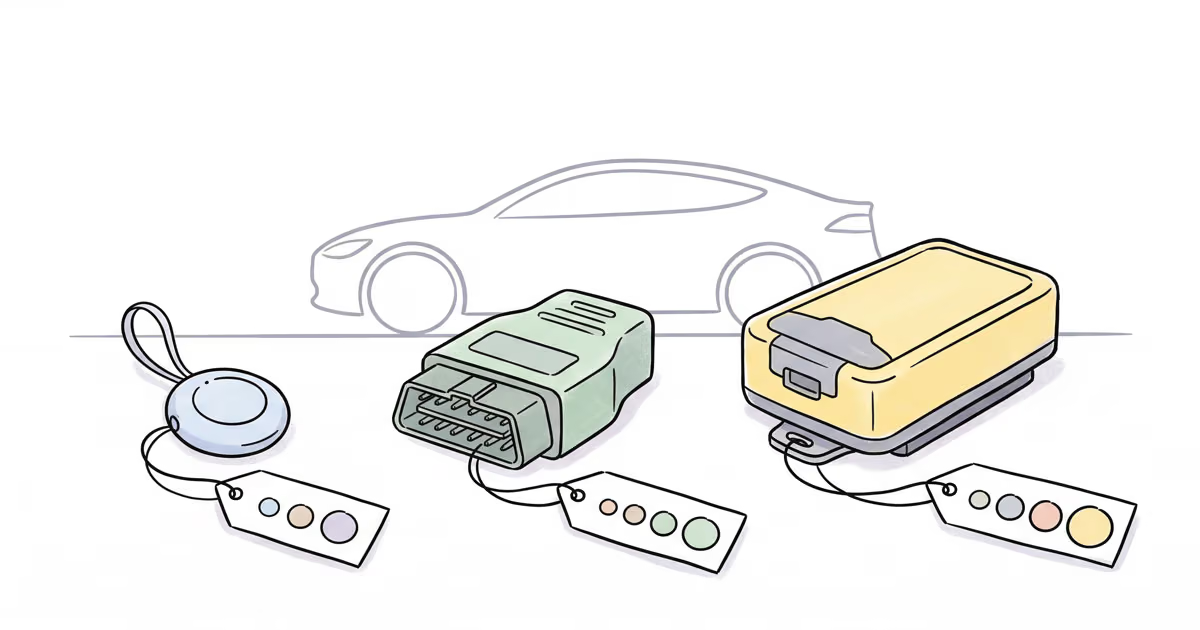
The lowest-cost car tracker depends on what you actually need. An AirTag 2 costs $29 with no monthly fee but is not a GPS device. It uses crowdsourced Bluetooth. For real GPS at low cost, the Bouncie OBD-II tracker runs $8 a month after a one-time $68 hardware purchase. If you want real GPS with no monthly bill, Vyncs GPS offers a basic no-monthly tier for about $50 upfront.
Most people searching for the lowest-cost way to track a car are actually looking for two different things: a way to check on their car’s location occasionally, or a way to follow a vehicle in real time. Those needs pull you toward completely different technologies and completely different price points. This guide breaks down every realistic option in 2026, from a $29 Bluetooth tracker with zero subscription to a GPS tracker that costs less than a streaming service per month.
- An AirTag 2 costs $29 with no subscription, but it relies on nearby iPhones for location updates and has no GPS chip.
- Bouncie OBD-II is the lowest-cost real GPS option at $68 hardware plus $8/month with no contract.
- Vyncs GPS offers a free basic tier after a ~$50 hardware purchase, updating location every 60 seconds.
- Magnetic GPS trackers like LandAirSea 54 cost $15-25/month but can be hidden anywhere on a metal vehicle surface.
- Year-one costs range from $29 (AirTag, no GPS) to $269 (Optimus 2.0, real-time GPS with 30-second updates).
Two Types of Car Trackers You Need to Understand First
Before comparing prices, understand the fundamental divide. Bluetooth-based trackers like AirTag and Tile have no GPS chip and no cellular radio. They work by passively broadcasting a signal that nearby smartphones relay to Apple's or Google's servers. You see a dot on a map, but that dot only updates when another phone walks past. In a busy parking garage, updates might come every few minutes. On a rural highway? You might wait hours.
GPS trackers are a different category entirely. They contain a GPS chip that calculates coordinates from satellite signals, plus a cellular radio that pushes those coordinates to a server continuously. They cost more, and almost all require a monthly data plan. The tradeoff: a live location that updates every 3 to 15 seconds regardless of whether another phone is nearby.
If you're parking at an airport and want to confirm your car is where you left it, a Bluetooth tracker is enough. If you're monitoring a teen driver or need to recover a stolen vehicle, you need GPS. For a deeper look at this distinction, see the full AirTag vs GPS tracker comparison.
Option 1: AirTag or Tile -- Free Location After a One-Time Purchase
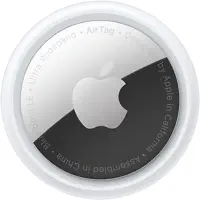
The Apple AirTag 2 costs $29 and requires no monthly fee. Set it up through the Find My app on any iPhone, tuck it somewhere in your car, and you'll see its last-known location on a map whenever another iPhone passes it and relays the signal. Apple's Find My network includes over a billion active devices, so in most U.S. cities, updates come frequently enough to give you a useful location within an hour or two. For a full breakdown of what the AirTag can and can't do in a vehicle, see the AirTag for car guide.
The Tile Mate serves a similar purpose on the Android side via Google's Find Hub network. At $25 with no subscription for basic tracking, it's comparable in price. Samsung SmartTag 2 ($30) covers the same ground for Galaxy owners through Samsung's SmartThings network.
The primary limitation of all Bluetooth trackers for car use: no real-time tracking. If your car is stolen and the thief drives into a low-density area, the tracker may go silent for hours. For most everyday use (airport parking, sharing a car among family, occasional location checks) this isn't a problem. For theft recovery with active police assistance, it often is.
AirTag 2 has one notable advantage for vehicle recovery. It supports non-owner Precision Finding, meaning a law enforcement officer can use their own iPhone to navigate directly to the item. For tips on placement, see where to hide an AirTag in a car.
Total cost, year one: $29 hardware, $0 subscription
Option 2: OBD-II Plug-In GPS Trackers (~$8/Month)
Every car sold in the United States since 1996 has an OBD-II diagnostic port, typically located under the dashboard on the driver's side. OBD-II GPS trackers plug directly into this port, draw power from the vehicle, and require zero installation. They provide real-time GPS location, driving history, speed alerts, and trip reports. Because they're powered by the car, the battery question disappears entirely.
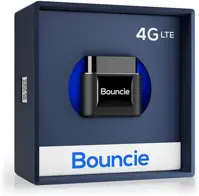
Bouncie is the standout in this category. The device costs $67.99, and the service plan is $8/month with no annual contract. It updates location every 15 seconds while moving and pings every 60 minutes when parked. The app works on both iPhone and Android. Month-to-month billing means you can cancel anytime without penalty. For a deep dive on the device, read the full Bouncie GPS tracker review.
The MOTOsafety OBD tracker targets families with teen drivers at about $25 hardware plus $19.99/month. It adds speed alerts and driver report cards. Optimus 2.0 runs $29.95 hardware and $19.95/month, though its update interval is slower at 30 seconds.
The drawback of OBD-II trackers is visibility. Anyone who checks under the dashboard will find it immediately. For family use or fleet management, that's fine. For discreet monitoring of a vehicle you've loaned out, a magnetic tracker hidden elsewhere is more practical.
Total cost, year one (Bouncie): $68 hardware + ($8 x 12) = $164
Option 3: Magnetic GPS Trackers (~$15-25/Month)
Compact magnetic GPS trackers can be placed almost anywhere on a metal vehicle surface: inside wheel wells, under bumpers, behind license plates, or inside storage compartments. They contain their own battery and cellular radio, working independently of the car's electrical system.
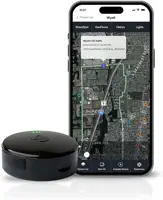
The LandAirSea 54 is one of the more popular options: hardware costs around $37.95 on Amazon, and the subscription starts at $25/month (or roughly $15/month on an annual plan). It's waterproof at IP67, updates every 3 seconds while moving, and works on 4G LTE. Battery life runs 1-3 weeks depending on usage, so you need to retrieve and charge it periodically.
Tracki is smaller at about $18 hardware and $15.95/month. It combines GPS, cellular, and Wi-Fi triangulation for better accuracy in urban areas where buildings block satellite signals. The downside: battery lasts only two to three days on the default update interval.
For a detailed side-by-side of no-monthly-fee and low-fee GPS options, see GPS trackers with no monthly fee.
Total cost, year one (LandAirSea 54 annual plan): $38 hardware + ($15 x 12) = $218
Option 4: No-Monthly-Fee GPS Trackers
A handful of GPS trackers offer a basic tier with no recurring monthly charge. The most practical option in 2026 is Vyncs GPS. Hardware costs around $50, and the base plan is free: you get a GPS location update once per minute, geofencing, and basic trip history at no charge. Faster update intervals (every 15 or 30 seconds) require upgrading to a paid plan at roughly $30/year, but for basic vehicle location monitoring, the free tier works.
The tradeoffs with no-monthly-fee GPS trackers are predictable. They either update location less frequently, require purchasing annual data bundles, or limit the number of alerts and geofences on the free tier. For casual monitoring (checking that a car is parked at home overnight) these limits rarely matter. For active theft tracking or monitoring a driver in real time, a monthly plan with faster updates is worth the additional cost. For more options in this space, see car GPS trackers with no monthly fees.
Total cost, year one (Vyncs basic): ~$50 hardware, $0 monthly
Cost Comparison: Every Option Side by Side
| Tracker | Hardware | Monthly | Year-One Total | Update Interval | Real GPS |
|---|---|---|---|---|---|
| AirTag 2 | $29 | $0 | $29 | Crowdsourced (variable) | No |
| Tile Mate | $25 | $0 | $25 | Crowdsourced (variable) | No |
| Vyncs GPS (basic) | $50 | $0 | $50 | 60 seconds | Yes |
| Bouncie OBD-II | $68 | $8 | $164 | 15 seconds | Yes |
| Tracki | $18 | $15.95 | $209 | 4-15 seconds | Yes |
| LandAirSea 54 (annual) | $38 | $15 | $218 | 3 seconds | Yes |
| Optimus 2.0 | $30 | $19.95 | $269 | 30 seconds | Yes |
Which Option Is Right for You?
For iPhone users who want to check on a parked car at the airport, confirm a family car is where it should be, or add basic theft deterrence without any subscription, an AirTag 2 is hard to beat at $29. It won't give you a live pursuit, but it will tell you where the car was last seen.
For families monitoring a teen driver, or anyone who wants a real account of driving behavior (speed, routes, hard braking), the Bouncie OBD-II at $8/month is the best value in real GPS tracking. The low hardware cost of $68 and no-contract monthly plan make it easy to cancel if your needs change. See how it stacks up against Vyncs in the Bouncie vs Vyncs comparison.
If you want real GPS with no ongoing cost, Vyncs on the free basic tier works for most people. The 60-second update interval is slow compared to paid options, but it's enough to confirm a general location throughout the day.
If you need maximum placement flexibility for a vehicle you can't hardwire or plug into, a magnetic tracker like LandAirSea 54 gives you options OBD-II trackers can't match. Just plan for the battery maintenance schedule.
Bottom Line
For most people, the answer comes down to two options. If occasional location checks are enough and you have an iPhone, an AirTag 2 at $29 with no subscription is the lowest-cost entry point. If you need real GPS coordinates updating in real time, Bouncie at $8/month with no contract is the most sensible starting point. Everything else is a tradeoff between update speed, placement flexibility, and how much you're willing to spend per month.
FAQ
Is AirTag a GPS tracker for cars?
No. AirTag uses Bluetooth Low Energy and relies on other iPhones passing nearby to relay its location. It has no GPS chip and no cellular connection, so it can't track a car in real time or in areas with few iPhones nearby. It's useful for seeing where a car was last detected, but not a substitute for a GPS tracker in theft-recovery or driver-monitoring scenarios.
What is the lowest-cost GPS tracker with no monthly fee?
Vyncs GPS offers the most practical no-monthly-fee option among real GPS devices, with a base plan that's free after the approximately $50 hardware purchase. It updates location every 60 seconds on the free tier and includes geofencing and trip history.
Does an OBD-II GPS tracker drain the car battery?
In normal use, no. OBD-II trackers draw very low standby power, typically under 10 milliamps when the car is off. Most cars with a healthy battery can sustain this for weeks without any issue. If a car sits unused for more than three to four weeks, a battery tender is worth using regardless of whether a tracker is installed.
Can I track a car without the driver knowing?
The legality of covert vehicle tracking varies by jurisdiction. In the United States, tracking a vehicle you own is generally permitted. Tracking a vehicle owned by another person without consent is generally not permitted and may violate federal or state laws. Consult a local attorney before installing any tracking device on a vehicle you don't own.
How accurate are low-cost GPS car trackers?
Consumer GPS chips in the $15 to $70 device range are generally accurate to within 3 to 5 meters under open sky. Urban canyons with tall buildings can introduce 15 to 30 meters of error due to signal bounce. A tracker with a 3-second update interval feels far more accurate than a 60-second one, even if the GPS precision is identical, because you're seeing more data points.
What happens if the car goes into a parking garage?
GPS signals can't penetrate below-ground parking structures. Most trackers will show the last known location before the car entered and resume updating when it exits. Some trackers supplement GPS with Wi-Fi positioning, which can provide coarser location data inside structures. Neither method gives reliable floor-by-floor tracking underground.
Which GPS car tracker has no contract?
Bouncie is the most flexible month-to-month GPS option at $8/month. Cancel any month with no penalty. LandAirSea 54 also offers a month-to-month plan, though the per-month rate is higher than its annual rate. If avoiding a contract is the priority, Bouncie's month-to-month pricing is the simplest choice.