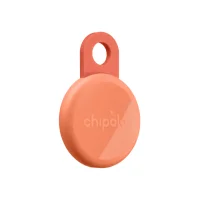
Choose the Chipolo Loop if you want the upgraded tracker: a louder 125dB alarm, IP67 waterproofing, longer 400ft range, and a USB-C rechargeable battery rated for 12 months. Choose the Chipolo Pop if you want the budget pick with a 120dB alarm, IP55 splash resistance, a swappable CR2032 coin cell, and the lowest price. Both run on Apple Find My or Google Find Hub, one network at a time.
The Chipolo Loop vs Chipolo Pop decision is not just about battery type. The Loop is the upgraded model across the board. According to Chipolo’s product specs, the Loop rings at 125 dB, carries an IP67 waterproof rating, and reaches roughly 120 m (400 ft) of Bluetooth range.
By contrast, the Pop sticks at 120 dB, IP55 splash resistance, and about 60 m (200 ft). Its advantage is a lower price and a user-swappable CR2032 coin cell.
- Loop is the upgraded pick — 125dB alarm, IP67 waterproof, and ~120m (400ft) range beat the Pop on every spec
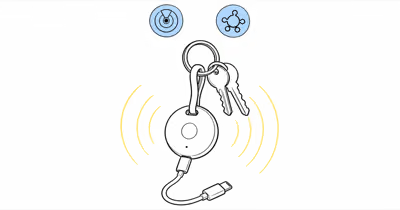
- Loop is rechargeable — a built-in battery lasts a claimed 12 months and tops up over USB-C
- Pop is the budget pick — 120dB, IP55 splash only, ~60m (200ft) range, and a swappable CR2032 coin cell
- Both are dual-network — pick Apple Find My or Google Find Hub at setup, one at a time
- Pop is cheaper — $29 single versus $35 for the Loop
Chipolo Loop vs Chipolo Pop at a Glance
These two trackers share dual-network support across Apple Find My and Google Find Hub, but the hardware is not the same. The Loop is the upgraded model: a louder 125dB speaker, an IP67 waterproof rating, and longer ~120m (400ft) range, versus the Pop’s 120dB, IP55 splash resistance, and ~60m (200ft).
Chipolo’s own listing confirms that the Chipolo Loop launched with a built-in cell rated for 12 months between USB-C charges, while the Pop keeps a user-replaceable CR2032 and a lower price.
If Tile Pro is also on your shortlist, our Chipolo LOOP and Tile Pro comparison covers the network and battery tradeoffs.
The two also differ in how they attach. The Loop’s fixed strap threads straight onto a key ring, while the Pop needs a separate holder to ride alongside it. The Loop’s IP67 rating means it shrugs off rain outdoors, whereas the splash-only Pop is better kept in a pocket or bag when the weather turns.
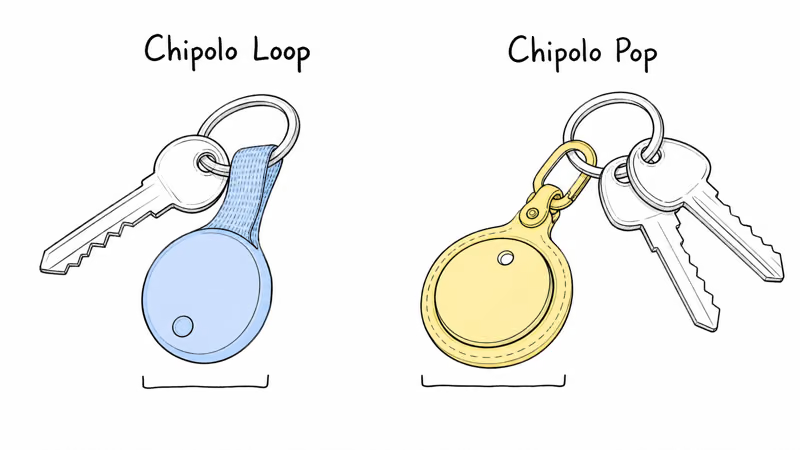
⇄ Head-to-head
Chipolo Loop vs Chipolo Pop
- +Louder 125 dB speaker, the loudest in the lineup
- +IP67 waterproof, survives 1 m of water for 30 minutes
- +Longer ~120 m (400 ft) Bluetooth range in open space
- +Rechargeable battery rated for 12 months, tops up over USB-C
- +Integrated loop fits keys and bags without an extra holder
- +120 dB speaker, audible through closed doors and walls
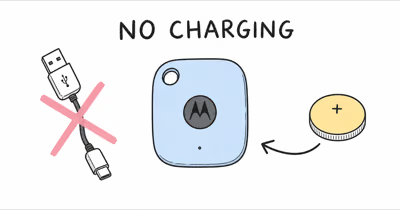
- +User-replaceable CR2032 coin cell, no charging cable
- +Dual-network: switch between Find My and Find Hub
- +Lowest price at $29 single, $99 for a four-pack
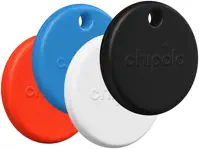
- +Classic round form in multiple colors
- −Costs more at $35 versus the Pop's $29
- −One network at a time, no simultaneous Find My plus Find Hub
- −Built-in battery can't be swapped if it ever degrades
- −Coin cell must be bought and swapped over the years
- −IP55 splash-only, not submersible
- −One network at a time, requires a reset to switch
- −No integrated loop, needs a holder for keys
You want a recharge-and-forget tracker with no coin cells to buy, plus a built-in loop for keys or a bag.
You want the lowest price and prefer swapping a cheap coin cell over plugging in a charging cable.
On paper, the Loop wins the spec sheet: it’s louder, waterproof, and longer-range, and it recharges over USB-C. The Pop’s counter-argument is its price and its swappable coin cell, which you replace yourself instead of plugging in a cable.
Rechargeable or Replaceable: Which Battery Wins?
This is the core decision. The Chipolo Loop carries a sealed rechargeable battery rated for 12 months that tops up over the same USB-C cable you already use, so you never buy a coin cell again. The trade-off is real: a sealed cell can’t be replaced once it degrades, so the tracker eventually reaches end of life with it.
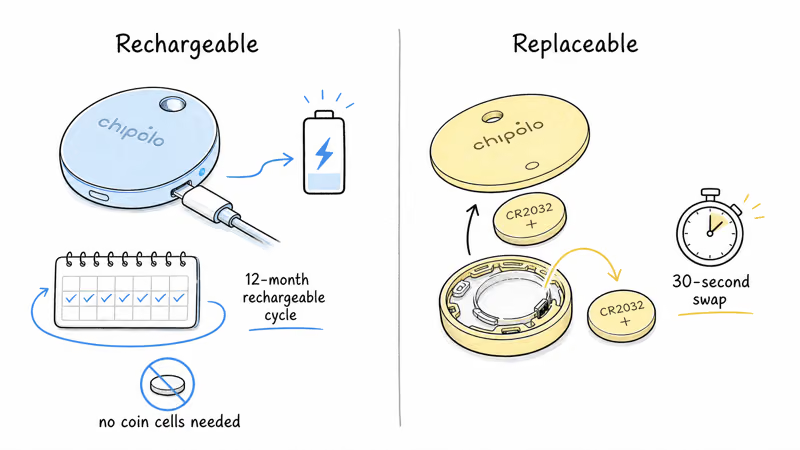
The Chipolo Pop uses a standard CR2032 coin cell you swap in 30 seconds for a couple of dollars. No cable, no charge night. Our best dual-network trackers roundup covers how both approaches stack up.
Dual-Network Support on Each Tracker
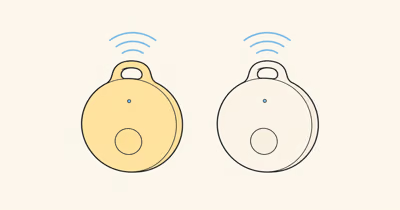
Both trackers are dual-network: Apple Find My or Google Find Hub, one at a time. You pick the network at setup, and switching later needs a reset and re-pair, not a toggle. Google’s Find My Device overview states that the Android side draws on a network of more than 1 billion devices, matching the reach Apple’s side offers iPhone owners.
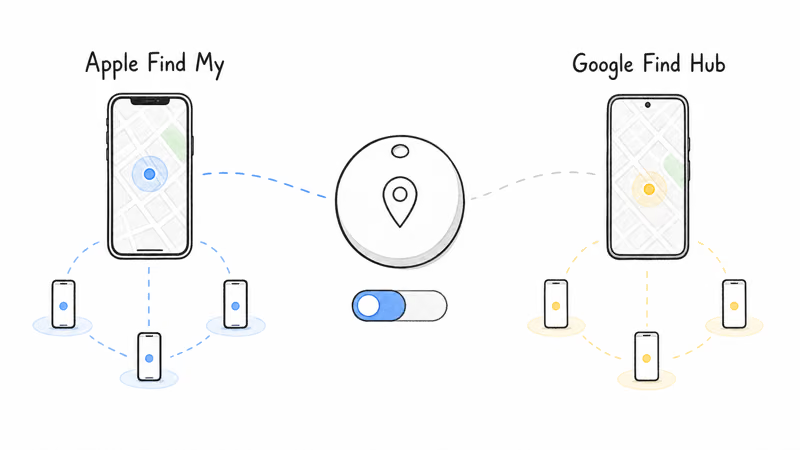
Network choice matters more than the tracker itself. An all-iPhone household should default to Find My, while an Android user should choose Find Hub. The Pop and Loop behave identically here, so this isn’t a tiebreaker between them.
Is the Loop or the Pop Louder?
The Loop is louder. It rings at 125dB, the loudest in Chipolo’s lineup, while the Pop tops out at 120dB. Both are high-output trackers by spec, but the Loop’s extra headroom helps in louder environments. Apple’s guidance on tracker safety and alerts notes that an audible ring matters both for finding your own items and for surfacing an unknown tracker that doesn’t belong to you.
The practical difference is simple: the Loop edges out the Pop when background noise or soft material muffles the ring. If you regularly hunt for keys in noisy rooms, the Loop’s louder alarm is one more point in its favor.
How the Prices Compare
Price is the Pop’s clearest edge. The Pop lists at $29 single, while the Loop runs $35. That $6 gap buys the Loop’s full upgrade: a louder 125dB alarm, IP67 waterproofing, longer 400ft range, and the rechargeable cell plus integrated strap.
Who Should Buy Each Tracker
Curious about the badged variant? Our Mercedes-Benz Chipolo Loop review covers it.
Buy the Chipolo Loop if you want the better tracker: a louder 125dB alarm, IP67 waterproofing, longer 400ft range, and recharge-and-forget USB-C convenience with a built-in loop, all for $35. Buy the Chipolo Pop if you want the lowest price at $29 and prefer a swappable CR2032 over plugging in a cable, and you can live with 120dB, splash-only IP55, and shorter range. For how the Loop stacks up against Apple’s tracker, see our Chipolo Loop vs AirTag 2 breakdown.
Bottom Line
The Chipolo Loop is the upgraded tracker, not just a rechargeable version of the Pop. The Loop wins the spec sheet with a louder 125dB alarm, IP67 waterproofing, longer 400ft range, and USB-C recharging, while the Pop wins on price with a swappable coin cell at $29. Pick the Loop for the better hardware and recharge-and-forget convenience, or the Pop to save money and keep a swappable coin cell instead of a charging cable.
FAQ
Is the Chipolo Loop or Pop louder?
The Loop is louder. The Chipolo Loop rings at 125dB, the loudest in the Chipolo lineup, while the Chipolo Pop tops out at 120dB. Both are loud enough for most rooms, but the Loop has a slight edge in noisy environments.
Does the Chipolo Loop use a replaceable battery?
No. The Loop has a sealed rechargeable battery rated for about 12 months that tops up over USB-C. The Chipolo Pop is the one with a user-replaceable CR2032 coin cell.
Can either tracker run Apple Find My and Google Find Hub at once?
No. Both are dual-network but only on one network at a time. You choose Apple Find My or Google Find Hub at setup, and switching later requires a reset and re-pair rather than a simple toggle.
Which one is cheaper?
The Chipolo Pop is cheaper at $29 for a single, with a four-pack at $99. The Chipolo Loop costs $35, with the extra money paying for the rechargeable battery and integrated loop.
Are the Loop and Pop waterproof?
Only the Loop is truly waterproof. The Chipolo Loop carries an IP67 rating, so it survives submersion in up to 1 meter of water for 30 minutes. The Chipolo Pop is IP55, which resists splashes, rain, and sweat but is not rated for full submersion, so keep the Pop out of a pool or washing machine.
Which Chipolo should I buy in 2026?
Buy the Loop if you want the upgraded tracker, with a louder 125dB alarm, IP67 waterproofing, longer 400ft range, and USB-C charging. Buy the Pop if you want the lowest price and a swappable coin cell. Both run the same dual-network system, but the Loop has the stronger hardware.