The Dogtra Pathfinder 2 is the best GPS tracking and e-collar combo for hunters who don't want to spend $800+ on a Garmin system. It tracks up to 21 dogs from 9 miles, updates every 2 seconds, includes 100 stimulation levels, and costs $429.99 with no monthly fees. The trade-off: it uses your smartphone as the display instead of a dedicated handheld, which means your phone's battery and durability become part of the equation.
The Dogtra Pathfinder 2 does two things at once: it tracks your dog’s GPS position and delivers e-collar training commands. That combination used to mean spending $700-900 on a Garmin Alpha. Dogtra cuts that roughly in half by replacing the dedicated handheld with your smartphone.
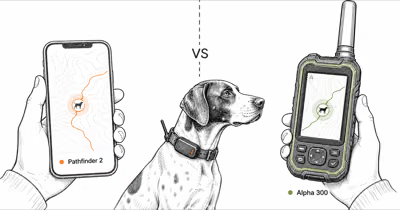
On paper, the Pathfinder 2 matches the Garmin Alpha TT 25 on core tracking specs while using a very different interface. For a focused breakdown, our Pathfinder 2 against the Garmin Alpha 300 covers range, battery, and the phone-versus-handheld trade. But there are real trade-offs that matter depending on how and where you hunt.
- The Dogtra Pathfinder 2 costs $429.99 with zero monthly fees, roughly half the price of a comparable Garmin Alpha system.
- GPS range is rated at 9 miles with 2-second updates, but timber and hilly terrain can cut that open-air claim down.
- 100 stimulation levels plus tone and vibration give finer training control than Garmin's 18 levels.
- Your smartphone is the display, which means phone battery drain, weather exposure, and no backup if your phone dies.
- Tracks up to 21 dogs simultaneously with no subscription, and the app supports offline Google Maps-based satellite imagery.
Dogtra Pathfinder 2: What You Get for $429.99
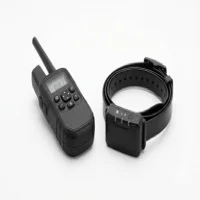
The box includes a transmitter (3.7 oz), a receiver collar (6.6 oz), a charging cradle, test light, and contact points. The receiver measures 3.4" x 1.5" x 1.7" and fits dogs 25 lbs and up.
The Pathfinder 2 system connects to your phone via Bluetooth 5.0 and uses the free Dogtra Pathfinder app (iOS 12.1+ or Android 6.0+) for all mapping and training controls. Wirecutter's best Bluetooth tracker guide found that dedicated dog GPS systems offer 5-9 mile range versus 200 feet for consumer Bluetooth trackers.
One detail worth knowing upfront: the Pathfinder 2 is not backward-compatible with the original Pathfinder series. If you're upgrading, your old collars won't work with the new transmitter.
How Does GPS Tracking Perform in the Field?
The headline spec is 9-mile range with 2-second position updates. In open country -- flat fields, minimal tree cover -- the range has the best chance of approaching that line-of-sight claim.
In real hunting conditions, the numbers come down. Hardwood ridges, elevation changes, and heavy canopy all shorten radio range. That's still enough for many upland scenarios, but it's not the same as a flat open-field spec.
The 2-second update rate matters because a running bird dog can change direction quickly. Faster refreshes make it easier to see whether the dog is casting or committed. The Garmin Alpha updates at about 2.5 seconds, so the Dogtra has the slightly faster published cadence.
The Pathfinder 2 includes a Sleep Mode that reduces the GPS refresh rate and LED flash rate to extend battery during downtime. Turn it on when you're driving between spots or stopped for lunch.
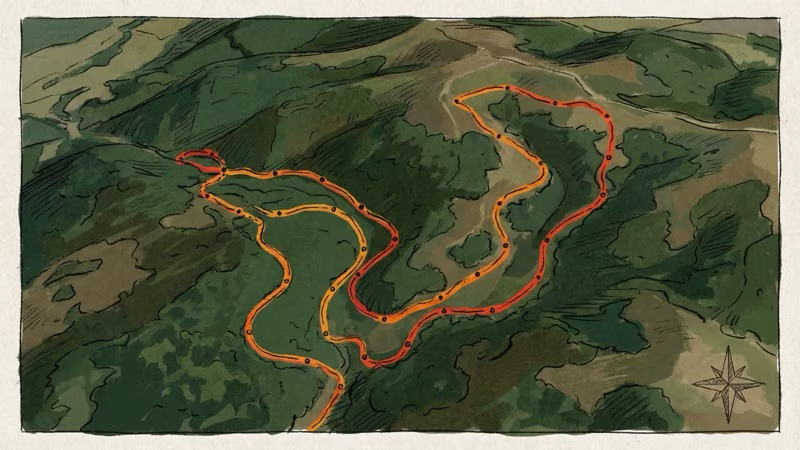
GPS accuracy is still terrain-dependent. Heavy canopy, ravines, and poor satellite geometry can introduce drift, so treat the map as a hunting tool rather than a survey instrument.
Is the Smartphone Dependency a Real Problem?
This is the biggest trade-off. The Pathfinder 2 doesn't have a standalone handheld unit. Your phone is the screen, the map, and the training controller.
That matters in three ways:
Battery drain. Running the Pathfinder app with GPS active and the screen on turns your phone into hunting hardware. A full day of hunting means carrying a battery pack, especially if you also use the phone for photos, navigation, and calls.
Weather exposure. Garmin's Alpha handheld is built for rain, mud, and cold. Your iPhone isn't. Even with a rugged waterproof case and the phone kept in a chest pocket, pulling it out in freezing rain to check a dog's position isn't the same experience as glancing at a ruggedized handheld strapped to your vest.
In below-freezing temperatures, phone batteries and touchscreens are less dependable than a dedicated handheld.
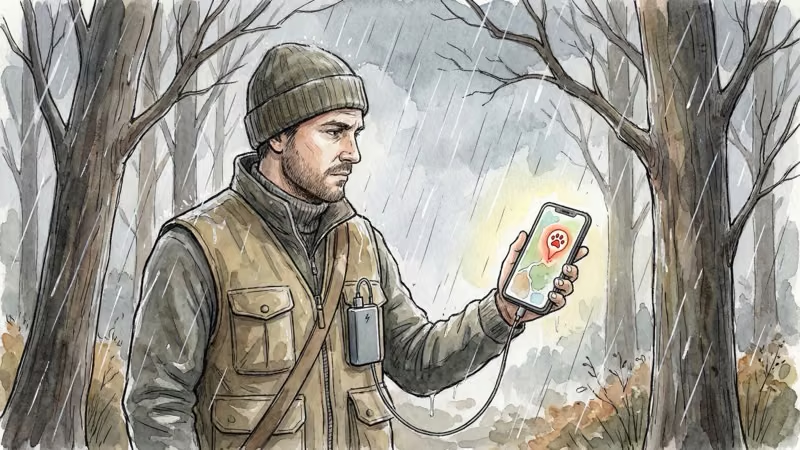
Single point of failure. If your phone dies, locks up, or takes a bad fall, you lose both your map and your training controls. With Garmin, the handheld is a dedicated device -- your phone is irrelevant.
If your phone screen cracks on a fence crossing, you can lose tracking controls. It's a real single-point-of-failure risk.
Dogtra added smartwatch compatibility (Apple Watch and Samsung Galaxy Watch) that lets you send basic training commands from your wrist. It's a nice backup for stimulation and tone, but it doesn't display the full map view.
E-Collar Training: 100 Levels vs. Garmin's 18
The Pathfinder 2 offers 100 stimulation levels in nick and continuous modes, plus pager vibration and audible tone. That's significantly more granular than Garmin's 18 levels.
Does that matter? It depends on the dog. For pointing breeds with soft temperaments, the difference between Garmin's level 3 and level 4 can be the gap between a subtle reminder and an overcorrection.
With Dogtra's 100-point scale, dialing in the right working level for each dog is more precise. Sensitive pointing breeds may respond to a working level in the low teens while a more stubborn dog needs something in the high 20s. That kind of fine-tuning is harder with only 18 steps.
Dogtra's Pathfinder 2 page confirms that the collar offers a low-to-high output range -- you can set the collar to low/medium output for sensitive dogs or low/high for more stubborn breeds. The point is adjustability: Dogtra gives you more steps to find the lowest effective correction.
One downside: adjusting stimulation levels requires the app. With Garmin, you can bump the level up or down on the handheld without looking at a screen. With Dogtra, you're reaching for your phone.
In a fast-moving training scenario, the phone interaction is the trade-off. The smartwatch helps here, but physical buttons on a dedicated remote remain simpler under pressure.
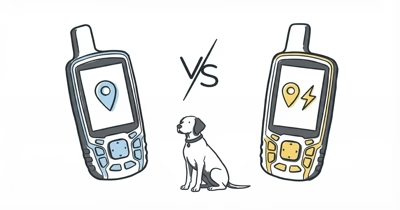
Dogtra Pathfinder 2 vs. Garmin Alpha: Honest Comparison
| Feature | Dogtra Pathfinder 2 | Garmin Alpha 300 + TT 25 |
|---|---|---|
| Price | ✓ $429.99 | $799.99+ |
| Monthly fee | ✓ None | ✓ None |
| GPS range | 9 miles | 9+ miles |
| Update rate | ✓ 2 seconds | 2.5 seconds |
| Dogs tracked | ✓ 21 | 20 |
| Stimulation levels | ✓ 100 | 18 |
| Display | ✗ Smartphone required | ✓ 3.5" dedicated handheld |
| Maps | Google Maps satellite (offline available) | ✓ Preloaded TOPO + satellite |
| Waterproof | IPX9K (collar) | IPX7 (collar + handheld) |
| Handheld battery | N/A (phone dependent) | ✓ 55 hours |
| Additional collars | ~$260-280 each | ~$200-300 each |
The comparison comes down to one question: do you trust your smartphone in the field?
If you hunt in moderate conditions -- October upland in the Midwest, weekend quail trips, training sessions on private land -- the Dogtra saves you $350+ and gives you faster updates and finer stimulation control. The Pathfinder 2 vs Garmin comparison consistently shows that for most hunters, the Dogtra delivers comparable tracking performance.
If you hunt hard in remote backcountry -- multi-day trips, January weather, thick cover where you can't afford a dead screen -- the Garmin's dedicated handheld with 55 hours of battery life, preloaded topo maps, and ruggedized construction is worth the premium. Our best GPS collars for hunting dogs guide breaks down the full lineup.
The App: What Works and What Doesn't
The Dogtra Pathfinder app is the entire control center. Mapping, training commands, collar settings, geofence setup -- everything runs through it.
What works well: The Pathfinder app uses Google Maps as its base layer, which means satellite imagery is high-quality and familiar. You can download offline maps before heading to an area without cell coverage. Dog tracks show as colored lines on the map, and you can replay a dog's path after a hunt. The interface for sending stimulation, tone, or vibration is simple once you learn the layout.
What doesn't: The app occasionally drops Bluetooth connection to the transmitter. It usually reconnects within a minute, but even that gap with no dog position is uncomfortable.
The app also lacks the property boundary overlays and landowner data that Garmin offers through its Explore integration. If you hunt public land and need to know exactly where property lines fall, you'll miss that feature.
Tractive's official site states that its DOG 6 delivers 2-3 second GPS updates with LTE-M connectivity in 175 countries.
No topographic map layer is available. Garmin's preloaded TOPO maps show terrain contours, which help with reading where a dog might be heading based on ridgelines and draws. The Pathfinder's satellite view gives you some terrain sense, but it's not the same as seeing contour lines.
Battery Life and Charging
Dogtra rates the collar battery at up to 60 hours depending on GPS update frequency and stimulation use. That figure applies only at the slowest update settings with minimal use.
At the fastest GPS update settings and with training use, runtime will be shorter than Dogtra's 60-hour ceiling. Dropping to a slower update rate and using Sleep Mode when the dog is stationary extends standby time during breaks.
Charging uses the included cradle. Battery longevity depends on how often you cycle the collar and how aggressively you run the fastest GPS refresh.
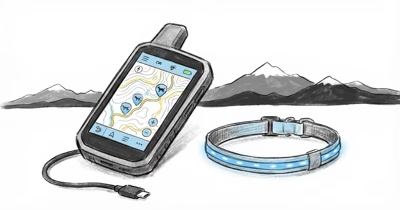
The transmitter runs on its own battery and easily lasts a full day. It charges independently from the collar.
Carry a second collar if you're running multi-day trips. Charge one overnight while the other runs. Additional Pathfinder 2 collars cost $260-280 each.
Multi-Dog Tracking: 21 Dogs, One App
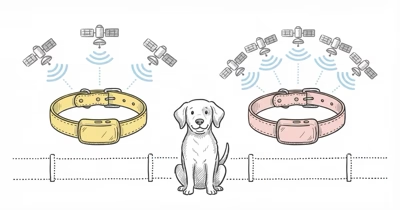
The Pathfinder 2 supports up to 21 dogs on a single transmitter. Each dog gets a unique color on the map. You can send individual training commands to any collar without affecting the others.
Each dog's track displays independently, and switching between collars for training is handled inside the app. For larger hunting parties, the system is rated to handle the full 21-collar capacity.
Adding dogs requires purchasing additional receiver collars and pairing them to the transmitter through the app. Compared to consumer pet GPS trackers that typically track one dog per subscription, the Pathfinder's multi-dog capability with no per-collar fees is a significant advantage.
Build Quality and Durability
The collar receiver is built from reinforced polycarbonate with an IPX9K waterproof rating -- the highest waterproof rating in its class. That's higher than Garmin's IPX7 and is rated for high-pressure water jets, which matters for wet field work.
The contact points are stainless steel and adjustable. Dogtra includes both short and long contact points to accommodate different coat types. For thick-coated breeds like Labradors, the longer points make consistent contact. For short-coated pointers, the standard points work fine.
Build quality's weak link is the transmitter -- but only because it's your phone. Dogtra's transmitter unit clips to a belt or vest, but the system's overall durability depends on how well you protect your smartphone.
Who Should Buy the Dogtra Pathfinder 2
Buy it if: You want GPS tracking and e-collar training in one system without spending Garmin money. You hunt in moderate conditions where your phone can survive the day. You value fine stimulation control (100 levels) for training sensitive dogs. You track 2-4 dogs and want a GPS system with no monthly fees.
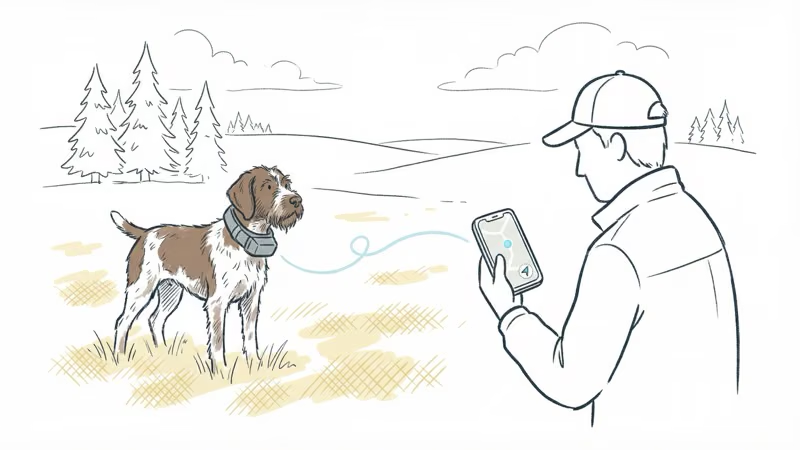
Skip it if: You hunt remote backcountry in extreme weather and need a ruggedized dedicated handheld. You need preloaded topo maps with contour lines and property boundaries. You can't tolerate the risk of losing tracking capability if your phone fails. In those cases, spend the extra money on the Garmin Alpha 300.
- $429.99 with no subscription -- half the cost of Garmin Alpha
- 9-mile range with 2-second GPS updates (faster than Garmin's 2.5s)
- 100 stimulation levels for precise training control
- Tracks 21 dogs from one transmitter
- IPX9K waterproof collar rating
- Google Maps satellite imagery with offline download
- Smartwatch compatible (Apple Watch, Samsung Galaxy Watch)
- Smartphone required as display -- drains phone battery, weather exposure risk
- No standalone handheld backup if phone dies
- No topographic map layer or property boundary data
- Bluetooth phone link can drop and needs reconnecting
- Training adjustments require phone interaction, slower than Garmin's physical buttons
- Not compatible with original Pathfinder collars
Bottom Line
The Dogtra Pathfinder 2 offers Garmin-like hunting-dog tracking specs for roughly half the price. The no-subscription model means your only cost is the hardware. The smartphone dependency is a real limitation, not a dealbreaker -- it just means you need to plan for it with a case, a battery pack, and the understanding that your phone is now a piece of hunting gear.
For weekend hunters, training sessions, and moderate-weather upland work, this is the system to buy. For serious backcountry work in bad weather, save up for the Garmin.
Frequently Asked Questions
Does the Dogtra Pathfinder 2 require a monthly subscription?
No. The $429.99 purchase price covers everything. The app, GPS tracking, and training features all work without any recurring fees. This is one of its biggest advantages over cellular pet trackers like Tractive and Fi, which charge $5-19 per month.
Can I use the Dogtra Pathfinder 2 without cell service?
Yes, but with a caveat. The GPS tracking between the collar and transmitter works without cell service -- it's a direct radio link. However, the map display on your phone requires either pre-downloaded offline maps or cell/Wi-Fi data. Download your hunting area maps before you leave home and you're covered.
How does the Pathfinder 2 compare to the Garmin Alpha for hunting?
The Pathfinder 2 matches the Garmin on range (9 miles), beats it on update speed (2 vs 2.5 seconds) and stimulation levels (100 vs 18), and costs half as much. Garmin wins on having a dedicated weatherproof handheld, preloaded topo maps, and not depending on your smartphone. For most weekend hunters, the Dogtra is the smarter buy. For hard-core backcountry use, Garmin's standalone system is safer.
What size dogs can wear the Pathfinder 2 collar?
The standard Pathfinder 2 collar fits dogs 25 lbs and up. The receiver weighs 6.6 oz, which is manageable for medium and large hunting breeds like pointers, setters, and hounds. For smaller dogs under 25 lbs, Dogtra makes the Pathfinder 2 Mini with a lighter, more compact collar and a 4-mile range.
How long does the Pathfinder 2 collar battery last?
Dogtra rates the collar at up to 60 hours, but that ceiling depends on slower update settings and minimal stimulation use. The fastest GPS refresh and active training shorten runtime, so bring a spare collar or charging plan for multi-day trips.
Is the Pathfinder 2 compatible with the original Dogtra Pathfinder?
No. The Pathfinder 2 uses a completely new platform. Original Pathfinder collars won't pair with the Pathfinder 2 transmitter. If you're upgrading, you'll need to buy new receiver collars. Additional Pathfinder 2 receivers cost $260-280 each.
Can I track my dog with an AirTag instead of the Pathfinder 2?
Not for hunting. AirTag uses Bluetooth and depends on nearby iPhones to relay location. In remote hunting areas, there may be no iPhones within range, so an AirTag on a dog collar can go stale out in the field. For everyday neighborhood tracking, an AirTag dog collar works. For hunting, you need a dedicated GPS system like the Pathfinder 2 or Garmin Alpha.