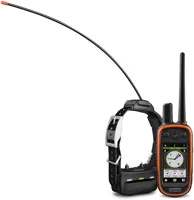
Garmin Alpha (TT 25 + Alpha 300) is the best hunting dog GPS collar: 9+ mile range, 20 dogs, no cell needed. Dogtra Pathfinder 2 is the budget pick at half the price.
The biggest risk in a hunting trip isn’t the weather or the terrain. It’s losing your dog. A GPS collar that actually works in backcountry — where there’s no cell signal, no Wi-Fi, and no one else’s iPhone for miles — is the difference between a 15-minute retrieval and a three-day search.
The pattern is blunt across hunting country, from thick hardwood ridges to open prairie: most consumer GPS pet trackers are useless for hunting dogs. They rely on cellular networks that don’t exist where you hunt.
This guide covers the GPS collars that actually work in remote areas, what to avoid, and why.
- Hunting dogs need standalone GPS (satellite-to-handheld), not cellular-dependent trackers that die when cell coverage ends.
- The Garmin Alpha TT 25 tracks 20 dogs from 9+ miles with 2.5-second updates and built-in training stimulation.
- Dogtra Pathfinder is the best value: 9-mile range, 2-second updates, smartphone mapping, no monthly fees, around $400.
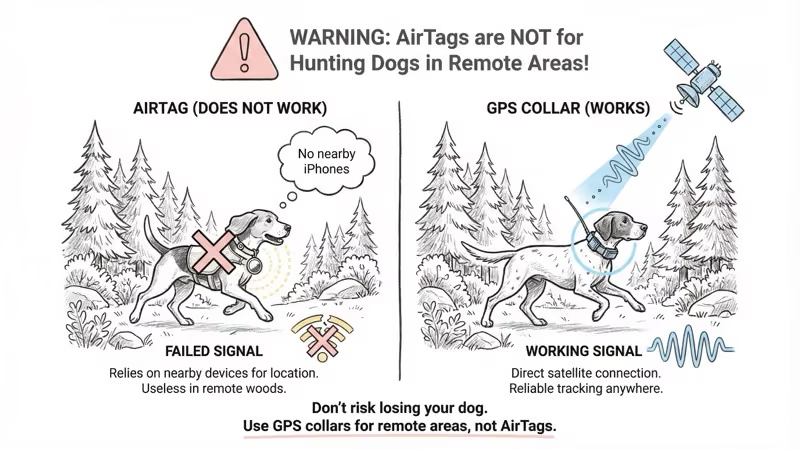
- AirTag and Bluetooth trackers aren’t viable for hunting — they require nearby iPhones, which don’t exist in the backcountry (see our AirTag hunting dog field study).
- All dedicated hunting GPS collars operate with zero monthly fees after the initial purchase.
Why Do Most Pet GPS Trackers Fail for Hunting Dogs?
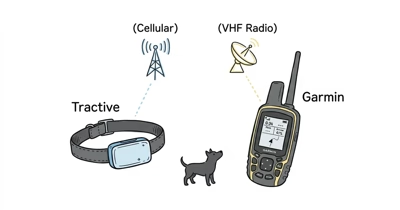
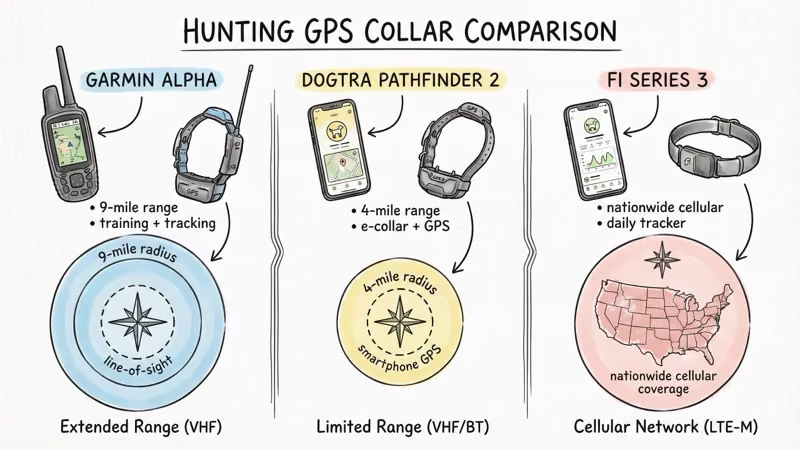
Consumer GPS trackers like Tractive and Fi use cellular networks (LTE-M or Cat-M1) to relay your dog’s position to your phone. The satellite fix itself is accurate: GPS.gov states that consumer receivers land within about 4.9 meters of true position.
The weak link is the cellular backhaul. That works fine in suburbs and city parks, but take those trackers into national forest, BLM land, or anywhere more than a few miles from a cell tower, and they go silent because there is no LTE signal to relay the coordinates.
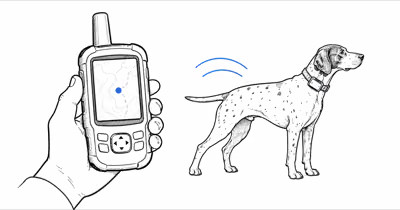
Hunting dog GPS collars solve this with a completely different architecture. The collar communicates directly with a dedicated handheld receiver via radio frequency — no cell tower, no internet connection, no subscription. The collar picks up satellite GPS coordinates and transmits them straight to the unit in your hand. Our no-subscription hunting GPS guide breaks down the handheld systems that skip the monthly fee entirely.
That’s the fundamental divide. Everything else — range, update speed, training features — is secondary to this one question: does it work where you actually hunt?
If you primarily hunt within a few miles of roads and towns, a cellular tracker like the Fi Series 3 can work. But if you’re running dogs in remote timber, ridgetops, or public land with no cell service, a standalone GPS system is the only reliable option.
Best GPS Collars for Hunting Dogs at a Glance
| Collar System | Best For | Range | Update Rate | Dogs Tracked | Training | Price |
|---|---|---|---|---|---|---|
| Garmin Alpha TT 25 | Overall best | ✓ 9+ miles | 2.5 sec | 20 | ✓ Yes (18 levels) | $700-900 |
| Garmin Astro 900 / T5X | Track-only (no training) | ✓ 9+ miles | 2.5 sec | 20 | ✗ No | $600-800 |
| Dogtra Pathfinder 2 | Best value | ✓ 9 miles | 2 sec | 21 | ✓ Yes | $350-500 |
| SportDOG TEK 2.0 | Long range | ✓ 10 miles | 2 sec | 21 | ✗ No | $600-800 |
| Fi Series 3 | Near-road hunting only | ⚠ Cell-dependent | Varies | 1 | ✗ No | $149 + $99/yr |
Garmin Alpha TT 25 — Best Overall GPS Collar for Hunting Dogs
§ Review summary
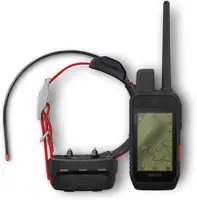
Garmin Alpha 300 + TT 25 Bundle — at a glance
≡ Specs
- Network
- GPS/GLONASS standalone
- Range
- 9+ miles line-of-sight
- Update rate
- 2.5 seconds
- Multi-dog
- Up to 20 dogs
- Water rating
- IPX7
- Subscription
- None
✓ Pros
- +9+ mile range with 2.5-second updates, true real-time tracking
- +Combined GPS + training (stimulation, tone, vibration) in one handheld
- +Track up to 20 dogs from one handheld
- +Preloaded TOPO maps with satellite imagery
- +No monthly fees or subscriptions
✗ Cons
- −High upfront cost ($700-900 for handheld + collar bundle)
- −Each additional collar adds $200-300
- −Heavier than consumer GPS collars (6.6 oz for TT 25)
§ Buy if
- ·You hunt in backcountry where cellular coverage is unreliable
- ·Multi-dog hunts: tracking 5+ dogs simultaneously matters for upland or hound
- ·Combined GPS + training in one handheld beats carrying two devices
- ·$700-900 upfront is acceptable for a system with no recurring subscription
The Alpha series is the standard that every other hunting GPS collar gets compared against. Garmin’s Alpha platform combines full GPS/GLONASS tracking with integrated dog training — stimulation, tone, and vibration — all controlled from one handheld unit.
The Alpha holds lock on dogs running through heavy timber at long distances, and its 2.5-second update interval is fast enough to follow a dog on a hot track in real time.
The handheld’s 3-inch touchscreen displays topo maps with each dog as a colored icon, and Rescue Mode provides a compass bearing and distance to a lost dog’s last known position. Garmin’s product page confirms that the Alpha TT 25 achieves 9-mile line-of-sight range with 2.5-second GPS/GLONASS updates.
Where the Alpha really earns its price is multi-dog hunts. You can track up to 20 collared dogs simultaneously, assign each a unique color and name, and set individual geofence boundaries. If a dog trees or goes on point, the collar detects the change in motion and alerts you.
The TT 25 collar itself is compact enough for medium-breed dogs (from about 25 lbs and up), and the TT 15X handles larger breeds. Battery runs 20-40 hours depending on update rate — enough for a long weekend of hunting without recharging.
Dogtra Pathfinder 2 — Best Value Hunting GPS Collar
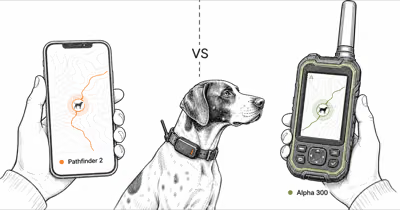
If $800+ for a Garmin system makes you wince, the Dogtra Pathfinder 2 hits most of the same performance targets for roughly half the price. It pairs with your smartphone via the Dogtra Pathfinder app instead of a dedicated handheld, which keeps costs down and gives you access to Google Maps-based satellite and terrain views.
The Pathfinder 2 tracks up to 21 dogs from 9 miles, with location updates every 2 seconds — actually faster than the Garmin Alpha; you can see the Pathfinder 2 and Alpha 300 compared spec for spec to weigh the phone-versus-handheld choice. It also includes e-collar training with 100 stimulation levels plus tone and vibration. The collar is IPX7 waterproof and built from reinforced polycarbonate that survives brush and briars.
Spec-for-spec, the Pathfinder 2 and Garmin Alpha perform nearly identically in open terrain. In dense cover with significant elevation changes, the Garmin’s dedicated handheld holds signal slightly better than the Pathfinder’s Bluetooth-to-phone relay, but for most practical hunting scenarios the difference isn’t a deal-breaker.
The trade-off: you’re relying on your phone’s screen and battery, which means carrying a charged phone and possibly a battery pack. In rain or extreme cold, a dedicated handheld like Garmin’s holds up better than a smartphone in a case.
Pathfinder 2 pros: 9-mile range with 2-second updates at half the Garmin price, smartphone app with Google Maps satellite view, 100-level e-collar training built in, tracks 21 dogs, no monthly fees. Pathfinder 2 cons: requires your smartphone as the display (drains phone battery), no standalone handheld so a dead phone means you’re blind, and maps require phone data or pre-downloaded offline maps.
SportDOG TEK 2.0 — Longest Range Hunting GPS
The SportDOG TEK 2.0 claims the longest range in the hunting GPS category: 10 miles under ideal conditions. Its higher 10-mile rating gives it more headroom than the 9-mile Garmin or Dogtra when terrain starts cutting into line-of-sight range.
The TEK 2.0 uses its own dedicated handheld with preloaded TOPO maps and unlimited free map updates. You can customize the update rate from 2 seconds to 2 minutes, which lets you trade tracking precision for battery life on long hunts. SportDOG lists shorter runtime at the fastest refresh setting and longer runtime at the most conservative setting.
It tracks up to 21 dogs simultaneously and is waterproof to 25 feet (IP68 equivalent), making it the most water-resistant option here. Location sharing lets you send waypoints and dog positions to fellow hunters’ TEK units.
The main drawback: the TEK 2.0 is a tracking-only system. It doesn’t include e-collar training. If you need training features, you’ll have to pair it with a separate SportDOG e-collar or choose the Garmin Alpha instead.
The SportDOG TEK 2.0 is available on Amazon.
Garmin Astro 900 / T5X — Best Track-Only System
The Garmin Astro is the Alpha’s tracking-focused sibling. Same GPS/GLONASS accuracy, same 9-mile range, same 20-dog capacity — but without the training stimulation features. If you don’t need an e-collar built into your GPS system (because you already have one, or your dogs are fully trained), the Astro saves you $100-200.
Garmin updated the Astro 900 with an improved antenna and faster satellite acquisition than the older Astro 430 — a small but real improvement when you’re unloading dogs at dawn.
The T5X collar is functionally identical to the TT 25 for tracking purposes: same IPX7 waterproofing, same battery life, same compact form factor. The difference is purely that the T5X can’t deliver stimulation, tone, or vibration. It tracks. That’s it.
For experienced hunters with well-trained dogs, the Astro 900 is all you need.
The Garmin Astro bundle is available on Amazon.
Fi Series 3 — When Cellular GPS Is Enough
§ Review summary
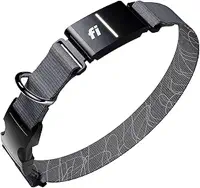
Fi Series 3 Smart Dog Collar — at a glance
≡ Specs
- Network
- GPS + LTE-M cellular
- Battery
- 3 months Lost Dog mode
- Water rating
- IP68
- Module weight
- 28g
- Coverage
- Cellular only (no backcountry)
- Subscription
- From $14/mo
✓ Pros
- +3-month battery on a charge (set-and-forget)
- +LTE-M cellular works anywhere with cell service
- +IP68 waterproof, 28g lightweight collar
- +Escape alerts via the Fi user network
- +From $14/mo subscription, no upfront training device
✗ Cons
- −Won't work in backcountry without cellular coverage
- −Not a true hunting GPS, designed for everyday wear
- −No e-collar training features
§ Buy if
- ·Your hunting is casual: state parks, private farmland near town
- ·Cell coverage is reliable in your hunt areas
- ·You want one collar for everyday wear + occasional hunts
- ·Long battery (3 months) means it's ready when weekend hunts come up
The Fi Series 3 is worth covering because it’s popular with dog owners who also hunt casually — walks in the state park, pheasant hunts on private farmland near town, that sort of thing. The Fi collar tracks via cellular LTE-M, which means it works great anywhere you have cell service.
The battery life is its standout spec: up to 3 months on a charge in normal mode, with shorter runtime when frequent GPS pings are active. That means you can leave it on your dog 24/7 as an escape-alert system and have it ready for weekend hunts without thinking about charging.
But here’s the honest limitation: the Fi Series 3 won’t work in areas without cellular coverage. If your dog runs a mile into timber that’s outside LTE-M range, the collar can’t report its position until it re-enters coverage. For dedicated upland or hound hunting in remote country, this is a disqualifier.
The Fi collar excels as an everyday GPS collar that happens to be useful for casual hunts near civilization. For serious backcountry hunting, stick with standalone GPS systems like the Garmin or Dogtra.
Can You Use an AirTag on a Hunting Dog?
Short answer: no. Not for hunting.
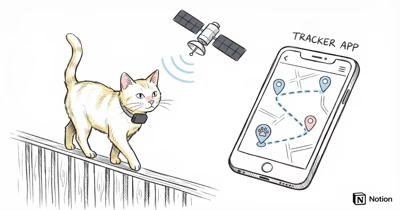
Apple AirTag uses Bluetooth, not GPS. It relies on nearby iPhones in Apple’s Find My network to relay its location. In a city, that network is dense enough to locate an AirTag within minutes. In the backcountry, there are zero iPhones within Bluetooth range of your running dog.
On public hunting land, an AirTag on a dog collar may update only when another person with an iPhone happens to pass by — for hours at a stretch, Find My just shows the last known location near where you started.
An AirTag makes sense for everyday collar tracking in neighborhoods and cities. It’s a $29 insurance policy against your dog slipping out the front door. But for hunting? You need real GPS with direct satellite-to-handheld communication.
How Do You Choose the Right GPS Collar for Your Hunting Dog?
Range vs. Terrain
Manufacturers list maximum range under ideal conditions (flat terrain, line of sight). Hilly, timbered country cuts into those ratings, so treat range numbers as best-case specs rather than guarantees for the Ozarks or Appalachians.
Dogtra’s spec sheet states that the Pathfinder 2 reaches 9 miles line-of-sight with 2-second refresh. The SportDOG TEK’s higher 10-mile rating gives it the edge in mixed terrain. Faster location updates can reduce lost-dog risk by helping handlers correct course sooner.
Update Frequency Matters More Than You Think
A dog on a hot track can cover ground quickly. Faster update rates give you more position pings during that movement, enough to see direction and speed changes in real time. Slower cellular-style intervals can leave you with a vague heading instead. For hound hunting or tracking fast-moving bird dogs, 2-5 second updates aren’t optional.
Training Integration: One Device or Two?
The Garmin Alpha and Dogtra Pathfinder combine GPS tracking with e-collar training. The SportDOG TEK and Garmin Astro are tracking-only. If your dogs are finished training and respond to voice/whistle, a track-only system saves weight and cost. If you’re still conditioning young dogs or want boundary reinforcement, the combined units eliminate carrying a separate e-collar remote.
Battery Life for Multi-Day Hunts
Most hunting GPS collars last 20-40 hours per charge. That covers a full day of hunting with margin. For multi-day trips, bring the charger and top off overnight. Some hunters carry a second collar per dog for back-to-back days without downtime.
Monthly Fees
Every standalone hunting GPS collar in this guide operates with zero monthly fees. You buy the handheld and collar, and that’s the total cost.
Cellular trackers like Fi and Tractive require ongoing subscriptions ($5-19/month). Over 3 years, a $150 cellular tracker with a $10/month plan costs $510 — approaching Garmin territory but with inferior backcountry performance. Check our GPS trackers without monthly fees guide for more options.
Standalone GPS vs. Cellular GPS: What Hunters Need to Know
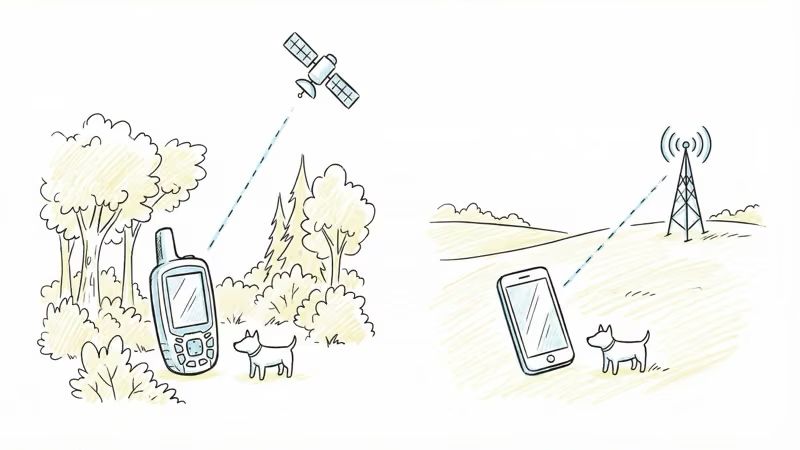
| Feature | Standalone GPS (Garmin, Dogtra, SportDOG) | Cellular GPS (Fi, Tractive) |
|---|---|---|
| Works without cell service | ✓ Yes — satellite direct | ✗ No — requires LTE coverage |
| Range | ✓ 9-10 miles (radio to handheld) | ⚠ Unlimited if cell service exists |
| Update rate | ✓ Every 2-2.5 seconds | ⚠ 3-30 seconds (varies) |
| Multi-dog tracking | ✓ 20-21 dogs on one unit | ✗ 1 collar per phone session |
| Monthly fee | ✓ None | ✗ $5-19/month |
| Upfront cost | ⚠ $350-900 | ✓ $50-350 |
| Training features | ✓ Available (Garmin, Dogtra) | ✗ None |
For a deeper breakdown of how these technologies differ across all use cases, see our AirTag vs GPS tracker comparison.
Bottom Line
Buy the Garmin Alpha TT 25 if you want the best overall system — tracking plus training, bulletproof reliability, and ecosystem support from the dominant brand in hunting electronics. If cost matters more than brand, the Dogtra Pathfinder 2 delivers 90% of the performance for roughly half the money. The SportDOG TEK 2.0 is worth considering if you need maximum range and don’t care about integrated training.
Skip consumer GPS collars like Fi and Tractive for serious hunting. They’re good products for everyday pet tracking, but they’re the wrong tool for backcountry work where cell service doesn’t exist.
Frequently Asked Questions
Do hunting dog GPS collars require monthly fees?
No. Standalone hunting GPS systems from Garmin, Dogtra, and SportDOG have zero recurring costs. You pay once for the handheld and collar, and the satellite GPS works indefinitely. Cellular trackers like Fi ($99/year) and Tractive ($5-10/month) are the ones with ongoing subscriptions.
Can I use a Tractive or Fi collar for hunting?
Only if you hunt in areas with reliable LTE cell coverage. Tractive and Fi rely on cellular networks to transmit your dog’s position. Once your dog runs beyond cell tower range — which happens quickly in national forests, mountain terrain, and most public hunting land — the collar can’t report location until it re-enters coverage.
How far can a hunting GPS collar track?
Rated ranges are 9-10 miles under ideal conditions (flat ground, line of sight). Expect 50-70% of rated range in hilly or heavily timbered terrain. The SportDOG TEK 2.0 has the longest rated range at 10 miles. In mixed terrain, expect closer to 6-7 miles before signal drops.
Is the Garmin Alpha worth the price over the Dogtra Pathfinder?
The Garmin’s main advantages are its dedicated handheld (doesn’t drain your phone battery), superior signal in dense cover, and a larger ecosystem of compatible accessories. The Dogtra matches it on range, update speed, and training features at roughly half the cost. If you hunt remote terrain in bad weather regularly, the Garmin’s standalone handheld justifies the premium. For fair-weather weekend hunting, the Dogtra is the smarter buy.
How long does a hunting GPS collar battery last?
Most hunting GPS collars are rated in hour-level runtimes, with update frequency doing most of the damage. The Garmin TT 25 is rated shorter at the fastest 2.5-second update rate and longer at slower rates, while the SportDOG TEK 2.0 stretches further at its most conservative 2-minute update setting. Charge overnight between hunting days.
What size dog can wear a hunting GPS collar?
Most hunting GPS collars are designed for medium to large breeds weighing 25 lbs and up. The Garmin TT 25 is the most compact option at 6.6 oz, suitable for pointers and setters. The TT 15X is designed for larger hounds and retrievers. Smaller breeds under 25 lbs should use the Garmin T5 Mini collar.
Why can’t I use an AirTag to track my hunting dog?
AirTag uses Bluetooth, not GPS. It depends on nearby iPhones in Apple’s Find My network to relay location. In remote hunting areas, there are no iPhones within Bluetooth range, so an AirTag on a dog collar may update only once in hours, when someone with an iPhone passes nearby. For everyday urban tracking, an AirTag dog collar works well. For hunting, it’s not a viable tool.