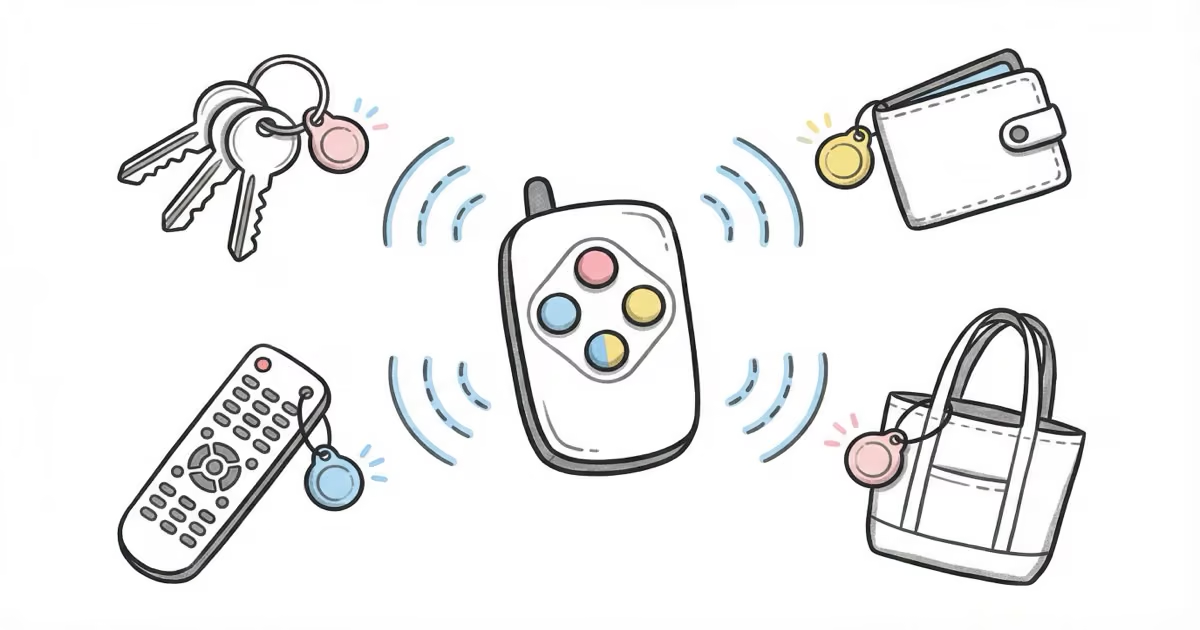
The Esky Key Finder is a basic RF key locator that works without a phone or app. Press a button on the remote, and the matching receiver beeps. It costs around $20 for 6 receivers, but the 100-foot range and average sound volume make it best suited for finding items inside your home. If you need to track items outside the house, a Bluetooth tracker like the AirTag 2 or Tile is a better fit.
The Esky Key Finder takes a completely different approach from Bluetooth trackers like AirTag or Tile. It uses 433.92 MHz radio frequency instead of Bluetooth, which means no phone, no app, no network. Just a remote with color-coded buttons and small receiver tags you attach to your stuff.
I tested the 6-receiver Esky kit (model KF06A) for three weeks around my house and office. The results were mixed.
- Esky uses RF technology (433.92 MHz), not Bluetooth, so it works without a smartphone or internet connection.
- Claimed range is 100 feet, but real-world indoor range dropped to about 40-60 feet through walls and furniture.
- The 85 dB sound claim is optimistic; independent testing by TechGearLab measured closer to 59 dB, which is hard to hear from another room.
- Battery life is solid at 8-12 months per CR2032, and setup takes under 2 minutes with no pairing issues.
- At $15-20 for 6 receivers, the Esky costs a fraction of 6 AirTags ($174), but you sacrifice location tracking, phone alerts, and any out-of-home usefulness.
What Is the Esky Key Finder and How Does It Work?
The Esky Key Finder is a wireless RF item locator. It comes with a handheld remote transmitter and multiple receiver tags (typically 4 or 6, depending on the kit).
Each receiver tag clips onto a keychain or sticks to an item with adhesive. The remote has color-coded buttons. Press a button, and the matching receiver beeps and flashes an LED.
That’s it. No app download. No account creation. No Wi-Fi. The RF signal operates at 433.92 MHz and passes through walls, doors, and furniture, which is something Bluetooth struggles with at short range.
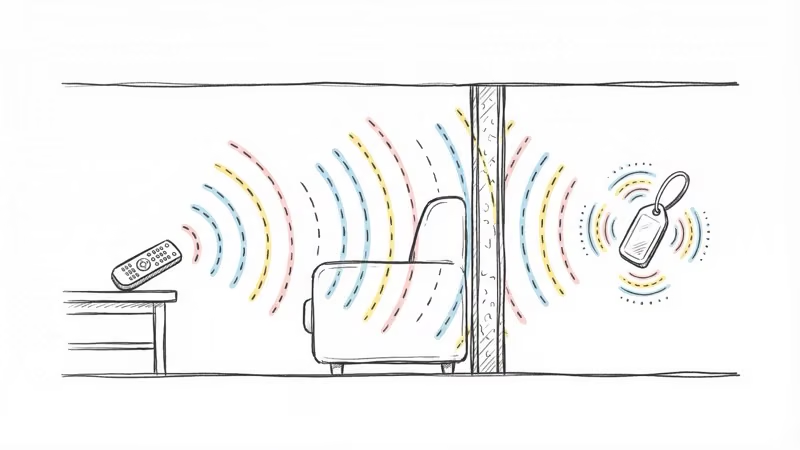
The tradeoff is range. Esky claims up to 100 feet in open space, but indoors I consistently got 40-60 feet before the signal dropped. Compare that to an AirTag, which leverages Apple’s Find My network of over a billion devices for location tracking anywhere, or a Tile Pro with 400-foot Bluetooth range plus the Life360 network.
RF vs. Bluetooth vs. GPS: RF key finders like the Esky are a closed system. They can only beep when you press the remote. Bluetooth trackers connect to your phone and can show location on a map. GPS trackers provide real-time tracking anywhere with cellular coverage. Each technology serves a different need.
Esky Key Finder Specs and Features

Here’s what the Esky actually offers:
Sound Volume: Not as Loud as Advertised
Esky claims 85 dB. TechGearLab’s lab testing measured the Esky at 59.1 dB from two feet away. For reference, normal conversation is about 60 dB. That means you’ll hear the beep in the same room, but finding it from two rooms away gets difficult. The LED flash helps in dark spaces, but it’s small.
Range: Good for One Floor
The advertised 100-foot range holds in open outdoor space. Indoors, walls and furniture cut that to roughly half. In my testing, the signal reliably reached about 50 feet through one wall, but adding a second wall or a floor between the remote and receiver made it inconsistent.
Battery Life: The Genuine Strength
Each receiver uses a CR2032 coin cell battery. I got 10 months before needing a replacement on my most-used tag. That’s competitive with Bluetooth trackers and there’s no recharging required. The remote also runs on CR2032 batteries, and since you press it far less often, it lasts well over a year.
Setup: Two Minutes, Zero Frustration
Unbox. Insert batteries (pre-installed in most kits). Attach tags. Done. No pairing mode, no firmware updates, no Bluetooth scanning issues. This is where the Esky wins over every smart tracker on the market. My 73-year-old father could set this up without calling me, and that matters.
- No phone or app required
- RF signal passes through walls
- CR2032 battery lasts 8-12 months
- 6 receivers for ~$20 (about $3.30 each)
- Setup takes under 2 minutes
- Works for anyone regardless of tech skill
- Real sound volume is closer to 59 dB, not 85 dB
- Indoor range is 40-60 feet, not 100 feet
- No location tracking, map view, or separation alerts
- Lose the remote, lose the entire system
- No crowd-sourced finding network
- Receivers are bulkier than AirTag or Tile Mate
Esky Key Finder vs. Bluetooth Trackers
This is the real question. The Esky isn’t competing with other RF finders anymore. It’s competing for attention against Bluetooth trackers that cost a bit more but do a lot more.
| Feature | Esky Key Finder | AirTag 2 | Tile Mate 2024 |
|---|---|---|---|
| Technology | RF (433.92 MHz) | Bluetooth + UWB | Bluetooth |
| Price (per unit) | ~$3.30 (in 6-pack) | $29 | $25 |
| Phone Required | No | Yes (iPhone only) | Yes (iOS + Android) |
| Range | ~50 ft indoors | Unlimited (Find My network) | 250 ft Bluetooth + Life360 |
| Map Location | No | Yes | Yes |
| Separation Alerts | No | Yes | Yes (Premium) |
| Battery Life | 8-12 months (CR2032) | ~1 year (CR2032) | 3 years (sealed) |
| Works Through Walls | Yes (RF) | Limited (Bluetooth) | Limited (Bluetooth) |
| Monthly Fee | None | None | Free basic / $2.99 Premium |
The cost gap is dramatic. Six Esky receivers cost about $20. Six AirTags cost $174. But the AirTag gives you location on a map, separation alerts, Precision Finding with UWB, and a billion-device finding network. The Esky gives you a beep within 50 feet.

For someone who only loses things inside their home, the Esky does enough. For anyone who leaves things in cabs, airports, or offices, a Bluetooth tracker is worth the extra money. Tom’s Guide’s key finder roundup doesn’t even include RF finders anymore, which tells you where the market has moved.
Who Should Buy the Esky Key Finder?
The Esky isn’t for tech enthusiasts. It’s for people who want the absolute simplest solution.
Buy the Esky if:
- You’re a senior or buying for someone who doesn’t use a smartphone
- You only need to find items inside your home
- You want to spend under $25 to tag 4-6 items
- You don’t want to deal with apps, accounts, or Bluetooth pairing
Skip the Esky if:
- You carry a smartphone and are comfortable with apps
- You need to track items outside your home
- You want separation alerts when you walk away from your keys
- You want to see your item’s last known location on a map
If you fall into the second group, check our best key finder roundup. For the widest range of alternatives to Apple’s tracker, see our AirTag alternative guide.
How to Set Up the Esky Key Finder
Setup is the Esky’s strongest selling point. Here’s the full process:
- Open the box and remove the remote, receiver tags, key rings, and sticker labels.
- Insert CR2032 batteries into each receiver (some kits ship pre-installed).
- Attach receiver tags to your items using the included key rings or adhesive pads.
- Press a button on the remote. The matching receiver beeps.
- Apply the color-coded stickers to the remote so you remember which button goes with which item.
Total time: about 90 seconds. No pairing sequence, no phone needed, no account to create. It either works out of the box or you have a dead battery.
If a receiver doesn't respond, replace its CR2032 battery. The pre-installed batteries sometimes drain during long warehouse storage. A fresh Energizer or Duracell CR2032 fixes it every time.
Is the Esky Key Finder Reliable Long-Term?
After three weeks of daily use, here’s what I found:
The receivers kept working consistently within range. No false beeps, no dropped connections. The RF signal is either on or off — there’s no flaky Bluetooth handshake to worry about.
The biggest reliability concern is the remote itself. Lose it, and your entire system is useless. There’s no backup. No app to fall back on. You can order a replacement remote from Esky’s website or Amazon, but it takes a few days to arrive.
One thing I noticed: the adhesive pads on the receiver backs lose grip after about two weeks on smooth surfaces like a TV remote. The key rings are solid, though. For items without a ring attachment point, use 3M VHB tape instead of the included adhesive.
The build quality is plastic and feels like a $20 product. The receivers rattle slightly if you shake them. They’re not waterproof — just IP55 splash-resistant on some models. Don’t expect these to survive a rainstorm on your dog’s collar.
How Esky Compares to the Nutale Key Finder
If you’re specifically shopping RF key finders, the Nutale Key Finder is the other common option. Both use RF technology and cost about the same. The Nutale has a slightly slimmer profile and claims a wider range, but in practice the two perform similarly within a home.
The bigger decision isn’t Esky vs. Nutale. It’s whether RF is the right technology for your situation at all. For most people with a smartphone, a Bluetooth item tracker offers dramatically more functionality for $10-25 more per unit.
Bottom Line
The Esky Key Finder does one thing: it beeps when you press a button. For $20, that’s a fair deal if your keys only go missing inside your house and you don’t want to involve a phone. But the gap between RF key finders and modern Bluetooth trackers has grown so wide that most people are better served by an AirTag, Tile, or SmartTag. The Esky’s real audience is seniors and anyone who wants zero tech complexity.
FAQ
Does the Esky Key Finder need a phone or app?
No. The Esky works entirely through RF radio signals between the handheld remote and the receiver tags. There's no app, no Bluetooth pairing, and no internet connection involved. You press a button on the remote, and the matching receiver beeps. That independence from smartphones is its biggest advantage over Bluetooth trackers.
How far does the Esky Key Finder actually work?
Esky advertises 100 feet, but that's in open outdoor space with no obstacles. Indoors, expect 40-60 feet through one wall. Adding a second wall or a floor between the remote and receiver cuts the range further. For a typical apartment or single-story house, that's usually enough. For a larger home, you may need to walk closer to the general area first.
Can you use the Esky Key Finder to track a pet?
Technically yes, but it's a poor choice. The 40-60 foot indoor range means you'd lose signal the moment your pet leaves the yard. RF key finders can't show location on a map or alert you when your pet wanders off. For pet tracking, a GPS collar like Tractive or even an AirTag on the collar gives you actual location data over any distance.
How long do the batteries last in the Esky Key Finder?
The receiver tags use CR2032 coin cell batteries that last 8-12 months depending on how often you trigger them. The remote lasts even longer since it only transmits brief signals. Battery replacement takes about 30 seconds per receiver. A 10-pack of CR2032 batteries costs under $8 on Amazon.
Is the Esky Key Finder waterproof?
Most Esky models are rated IP55, which means splash-resistant but not waterproof. They'll survive a few raindrops but shouldn't be submerged or left outdoors in wet conditions. If water resistance matters, Bluetooth trackers like the AirTag (IP67) or Tile Pro (IP67) offer much better protection.
What happens if you lose the Esky remote?
You lose access to all your tagged items. That's the single biggest weakness of RF key finders. There's no backup app, no website, no way to ring the remote from a receiver. You'll need to order a replacement remote from Amazon or Esky's website and wait for delivery. Some users attach one receiver tag to the remote itself as a workaround, using a second remote to find the first.
Is the Esky Key Finder better than an AirTag?
Only in two specific ways: it doesn't need a phone, and it costs much less per unit. In every other category -- range, location tracking, finding network, precision finding, water resistance, build quality -- the AirTag wins by a wide margin. The Esky is better only for people who don't use smartphones or refuse to install apps.