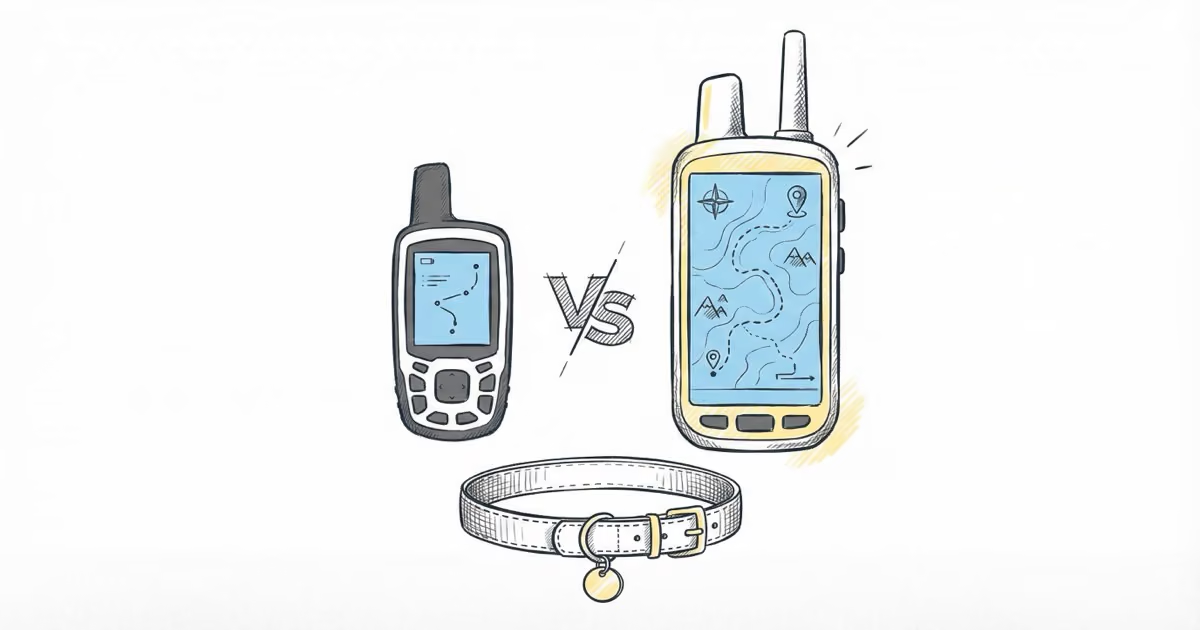
Buy the Garmin Alpha 200. It has a larger 3.5-inch screen, stores up to 250 dogs in groups, adds Wi-Fi and BirdsEye satellite imagery, and includes extra physical buttons for gloved operation. The Alpha 100 is discontinued and only available used or through remaining stock. The only reason to pick the Alpha 100 is price -- used units sell for significantly less.
The Garmin Alpha 100 launched in 2014. The Alpha 200 replaced it in 2020 with a bigger screen, better mapping, and group dog management. Both track up to 20 dogs simultaneously from up to 9 miles away using GPS/GLONASS, but the Alpha 200 is the one Garmin still sells.
If you’re deciding between these two handhelds, this comparison covers every spec that matters — and whether the Alpha 300 changes the equation.
- The Alpha 200 has a 3.5-inch sunlight-readable touchscreen vs the Alpha 100's 3-inch display at 240x400 resolution.
- Both track 20 active dogs, but the Alpha 200 stores up to 250 dogs in groups for quick switching between hunting parties.
- The Alpha 100 is discontinued and only available used or through remaining dealer stock at roughly $400-500.
- The Alpha 200 adds Wi-Fi connectivity and BirdsEye Satellite Imagery downloads that the Alpha 100 lacks entirely.
- The Alpha 300 now exists with 55-hour battery life and USB-C, making the Alpha 200 a mid-tier option at $699-749.
Garmin Alpha 100 vs Alpha 200: Specs Comparison
| Feature | Garmin Alpha 100 | Garmin Alpha 200 |
|---|---|---|
| Release Year | 2014 | 2020 |
| Display | 3" (240x400 px) | 3.5" (282x470 px) |
| Touchscreen | Yes | Yes (capacitive, sunlight-readable) |
| Physical Buttons | 3 buttons | 7 buttons (3 primary + 4 quick-access) |
| Active Dogs Tracked | Up to 20 | Up to 20 |
| Stored Dog Profiles | 20 max | 250 (in groups of 20) |
| Tracking Range | Up to 9 mi (TT 15) | Up to 9 mi (TT 15) |
| Update Rate | 2.5 seconds | 2.5 seconds |
| Satellite Systems | GPS + GLONASS | GPS + GLONASS + Galileo |
| Mapping | Preloaded TOPO U.S. 100K | TopoActive + BirdsEye Satellite Imagery |
| Wi-Fi | No | Yes |
| Hunt Metrics | No | Yes |
| Battery Life | Up to 20 hours | Up to 20 hours |
| Charging Port | Micro-USB | Micro-USB |
| Water Rating | IPX7 | IPX7 |
| Weight | 260 g (9.2 oz) | 304 g (10.7 oz) |
| Stimulation Levels | 18 | 18 |
| Status | Discontinued | Current |
| Price (Handheld Only) | ~$400-500 (used/remaining stock) | ~$699-749 |
Where the Alpha 200 Wins
Bigger, Brighter Screen
The Alpha 200’s 3.5-inch capacitive touchscreen is the single biggest upgrade you’ll feel in the field. It’s not just half an inch bigger — the screen is sunlight-readable, meaning the brighter it gets outside, the easier it is to read. The Alpha 100’s 3-inch display looks washed out in direct sun by comparison.
That extra screen real estate matters when you’re tracking multiple dogs on a topo map while wearing gloves. More pixels, more map detail, less squinting.
Group Dog Management
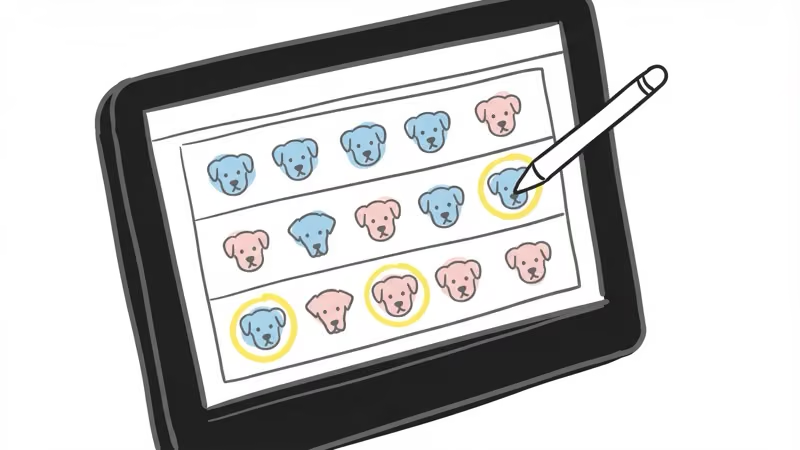
This is the feature that matters most to hunters who run dogs with different groups. The Alpha 100 stores 20 dogs. Period. If you hunt with a different group on Saturday than you do on Wednesday, you have to delete and re-add collars each time.
The Alpha 200 stores up to 250 dog profiles organized into groups of 20. Switch between hunting parties with a few button presses. No re-pairing, no fumbling with collar IDs in the cold. I’ve talked to hound hunters who run with 3-4 different groups during season — for them, this feature alone justifies the upgrade.
Extra Physical Buttons and Hunt Metrics
The Alpha 200 adds four quick-access buttons on the side for switching between screens or dogs without touching the display. In November with thick gloves, touchscreens become unreliable. Those physical buttons keep you in control.
The Alpha 200 also introduces Hunt Metrics, which tracks daily hunting patterns and behaviors for each dog — distance covered, time afield, and pointing/treeing activity. The Alpha 100 doesn’t offer this data at all.
Wi-Fi and BirdsEye Satellite Imagery
The Alpha 100 relies on a computer connection and Garmin BaseCamp for all map transfers. The Alpha 200 has built-in Wi-Fi, so you can download BirdsEye Satellite Imagery directly to the device without a computer.
BirdsEye overlays real aerial photography onto your topo maps. You can see individual tree lines, fence rows, and field edges — details that standard topo contours miss. For scouting new hunting land, it’s a meaningful advantage.
Where the Alpha 100 Still Works
The Alpha 100 tracks just as many dogs (20 active), at the same range (9 miles with a TT 15 collar), with the same 2.5-second update rate. The core GPS tracking is solid. If you already own an Alpha 100 and only hunt with one group of dogs, the upgrade case gets weaker.
Battery life is identical at 20 hours. Both are IPX7 waterproof. Both support 18 levels of stimulation plus tone and vibration commands. The Alpha 100’s preloaded TOPO U.S. 100K maps are adequate for most hunting scenarios.
The real advantage is price. Used Alpha 100 units sell for $400-500, sometimes less. If you’re entering the Garmin Alpha ecosystem on a tight budget, a used Alpha 100 paired with existing TT 15 collars can save you $200-300 compared to buying new.
Note: The Alpha 100 is officially discontinued by Garmin. Remaining new units are dealer overstock. Used units are plentiful because many hunters upgraded to the 200 or 300 series. Check seller ratings carefully on pre-owned units.
Garmin Alpha 200 vs Alpha 200i: The inReach Difference
There’s also the Alpha 200i, which adds Garmin’s inReach satellite communication technology. Everything else is identical to the standard Alpha 200. We cover this in detail in our Garmin Alpha 200i review, but here’s the short version.
With the Alpha 200i, you get:
- Two-way text messaging via satellite — works anywhere on Earth, no cell coverage needed
- SOS emergency alerts that connect to Garmin’s 24/7 monitoring center
- GPS location sharing with family or hunting partners through the Garmin Explore app
- Weather forecasts pulled directly via satellite
The 200i costs roughly $100-150 more than the standard 200 and requires a separate Garmin inReach subscription plan starting at $14.95/month (or $11.95/month on an annual plan).
For hunters who stay within cell coverage, the standard Alpha 200 is enough. But if you run dogs in remote backcountry areas where cell service doesn’t reach — mountain valleys, deep timber, national forest land — the 200i’s SOS capability is worth considering seriously.
Should You Skip Both and Get the Alpha 300?
Garmin released the Alpha 300 series in 2023. It looks nearly identical to the Alpha 200, but the internal upgrades are substantial:
- 55-hour battery life (vs 20 hours on the Alpha 200) — nearly triple
- USB-C charging instead of Micro-USB
- Faster processor for quicker map loading
- Channel View to monitor Garmin collar density in your area and avoid interference
- Group sharing — send an entire group of dogs to another Alpha 300 handheld at once
The Alpha 300 runs $749-799 for the handheld only. The 300i (with inReach) is around $899-999.
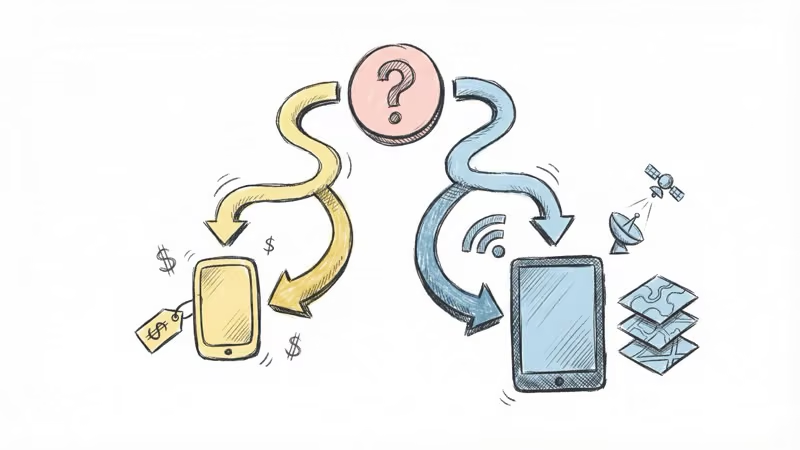
If you’re buying new today and budget isn’t the primary constraint, the Alpha 300 is the stronger buy. That 55-hour battery means multi-day hunts without recharging — a genuine improvement over the Alpha 200’s 20-hour ceiling. But if you find the Alpha 200 at a good price (some dealers are clearing inventory), the 200 is still a very capable device.
Which Garmin Alpha Collar Do You Need?
All Alpha handhelds (100, 200, 200i, 300) are compatible with the same collar lineup. If you’re comparing the Garmin Astro vs Alpha systems, note that collar compatibility differs between those product lines. Your collar choice matters as much as the handheld:
- TT 15 — Full-size collar with 9-mile range and up to 80-hour battery life. Best for big-running hound breeds.
- TT 15 Mini — Smaller collar for dogs under 30 lbs. Same 9-mile range, shorter battery life (~20 hours).
- T 5 / T 5 Mini — Tracking only (no training stimulation). Same GPS performance.
- TT 25 — Newer collar compatible with the Alpha 200 and 300. Similar to TT 15 with minor refinements.
The Garmin support comparison page confirms full collar compatibility across the Alpha lineup.
- You're on a tight budget and comfortable buying used
- You only hunt with one group of dogs (20 or fewer)
- You don't need BirdsEye imagery or Wi-Fi map downloads
- You already own TT 15 collars and want a backup handheld
- You hunt with multiple dog groups and need quick switching
- You want a larger sunlight-readable screen
- You need Wi-Fi connectivity and BirdsEye satellite maps
- You want Hunt Metrics data on each dog's field performance
Bottom Line
Buy the Alpha 200 if you want current Garmin support and the group management features. Buy a used Alpha 100 only if price is your deciding factor and you hunt with a single group. And if you can stretch to the Alpha 300, the 55-hour battery and USB-C make it the best long-term investment in the lineup. For a broader look at tracking options, see our best GPS collars for hunting dogs roundup.
FAQ
Can I use my Alpha 100 collars with an Alpha 200?
Yes. The TT 15, TT 15 Mini, T 5, and T 5 Mini collars all work with both the Alpha 100 and Alpha 200 handhelds. You don't need to buy new collars when upgrading. Just pair the existing collars to the new handheld and you're ready to go.
Is the Garmin Alpha 100 still worth buying in 2026?
Only if you find one at a steep discount. The Alpha 100 is discontinued, so Garmin no longer provides firmware updates or new features. The core GPS tracking still works fine, but you'll miss out on Wi-Fi, BirdsEye maps, group management, and Hunt Metrics. A used unit under $400 is reasonable for hunters who need a backup handheld or are entering the Alpha system on a budget.
How far can the Garmin Alpha track dogs?
Up to 9 miles with the TT 15 or T 5 collar, and up to 4 miles with the TT 15 Mini or T 5 Mini. This applies to the Alpha 100, 200, and 300 -- the range depends on the collar, not the handheld. Actual range varies with terrain. Dense timber and steep ridges reduce it significantly.
Does the Alpha 200 have inReach satellite messaging?
No. Only the Alpha 200i model includes inReach satellite communication. The standard Alpha 200 has no satellite messaging capability. The 200i costs about $100-150 more and requires a separate Garmin inReach subscription plan.
What is the battery life of the Alpha 100 and Alpha 200?
Both handhelds last up to 20 hours on a single charge. Real-world battery life depends on screen brightness, GPS update frequency, and how many dogs you're tracking. Heavy use with the backlight on full typically brings it closer to 14-16 hours.
Can two Alpha handhelds share dog tracking data?
Yes, but with limitations. Both the Alpha 100 and 200 can share individual dog data between handhelds one dog at a time. The Alpha 300 improved this by allowing you to share entire groups of dogs to another handheld at once, which is much faster for multi-handler hunting parties.
Should I get the Alpha 200 or wait for a deal on the Alpha 300?
If you can find the Alpha 300 within $50-100 of the Alpha 200's price, get the 300. The 55-hour battery alone is worth the difference. But the Alpha 200 at a clearance price ($600 or less) is still a strong value -- you're getting 95% of the same capability with the same collar compatibility.