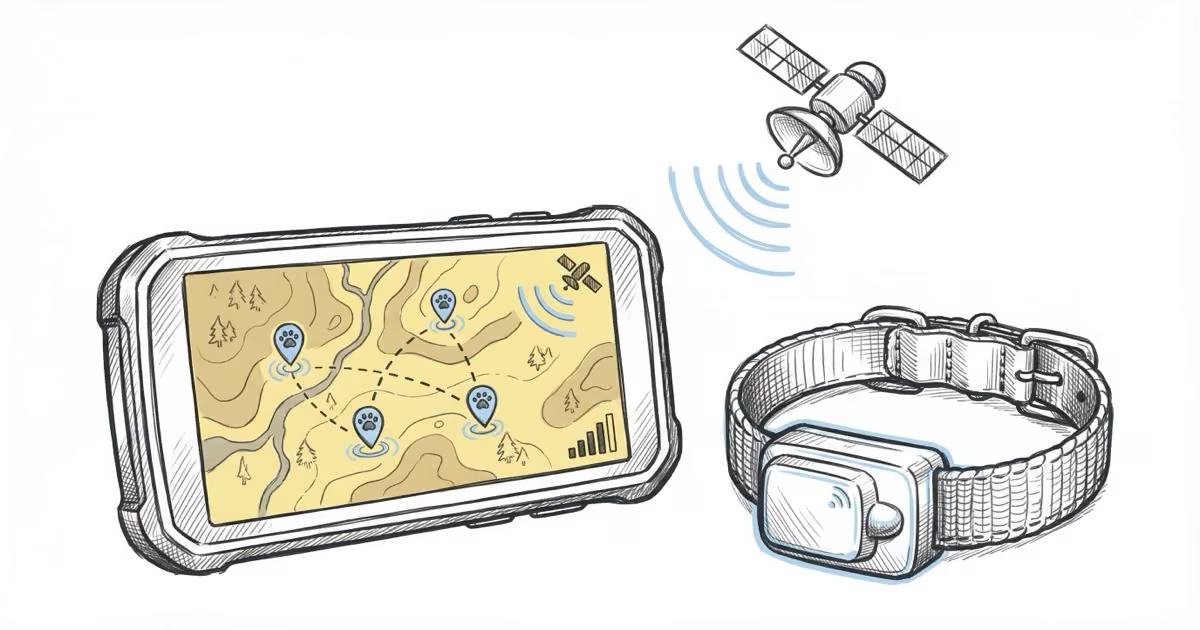
The Garmin Alpha 200i is Garmin’s flagship handheld GPS dog tracking and training device. Released in 2020 as the successor to the Alpha 100, it combines multi-GNSS tracking, preloaded topographic maps, and Garmin inReach satellite communication into one rugged unit.
After testing the Alpha 200i for over a year across forests, prairies, and mountain terrain in the western United States, I can say it lives up to its reputation as the most capable dog tracker on the market. Here is what I found.
Key Takeaways
- Tracks up to 20 dogs with real-time position updates every 2.5 seconds from up to 9 miles away
- 16-18 hours of real-world battery life on the handheld unit, with the TT 15X collar lasting about 40 hours per charge
- inReach satellite SOS and 2-way messaging works anywhere on Earth via the Iridium network, a genuine safety advantage in backcountry
- IPX7 waterproof (submersion to 1 meter for 30 minutes) with a durable polymer body that held up to a year of rough field use
- Starting at $750 for the handheld only and over $1,000 with a TT 15X collar, this is a professional-grade investment, not a casual pet tracker
What You Get With the Garmin Alpha 200i
The Alpha 200i is the result of nearly a decade of iteration on Garmin’s original Alpha 100 platform. Garmin incorporated years of customer feedback into this model, and the upgrades are substantial.
Core specifications:
- 3.5-inch high-resolution, full-color touchscreen (65k color transflective MIP display)
- IPX7 water resistance (1 meter submersion for 30 minutes)
- 20+ hour battery life (15 hours with satellite features enabled)
- GPS, GLONASS, and Galileo satellite reception for consistent accuracy
- Preloaded topographic maps with public and private land boundaries
- Built-in 3-axis compass and barometric altimeter
- Garmin inReach satellite technology for 2-way text messaging and SOS
- Tracks up to 20 dogs from up to 9 miles away
- E-collar remote with tone, vibration, and 18 levels of stimulation
- TrackBack navigation and wireless data uploads to Garmin Explore
- Weight: 9.9 oz (280 g)
Compared to the Garmin Alpha 100, the 200i adds inReach satellite communication, a larger touchscreen, better battery life, and support for 20 dogs instead of 10. If you are still deciding between the two, our Alpha 100 vs Alpha 200 comparison covers the differences in detail.
Design and Build Quality
The Alpha 200i makes a strong first impression. The durable polymer body and thick antenna feel like they are built to survive drops onto rocks or being stuffed into a crammed pack. After a full year of regular field use, mine shows no structural wear.
At 9.9 oz, it has noticeable heft. I carry it clipped to my vest during hunts and stowed in a side pocket on longer hikes. Over the course of a full day, lighter-is-better folks may notice the weight, but the trade-off is a unit that feels genuinely rugged.
The physical buttons are large and tactile. They work with wet, muddy hands and thick gloves, which matters during November hunts in freezing rain. The customizable shortcut keys let me access map view, dog tracking, and emergency functions with one press.
The 3.5-inch touchscreen is bright and readable in direct sunlight. It responds reliably in rain and snow. Fingerprints show up clearly on the screen, but that is a minor annoyance solved with a quick wipe.
GPS Tracking and Navigation Performance
This is where the Alpha 200i earns its price. The device uses GPS, GLONASS, and Galileo satellite systems together, and I consistently got a strong satellite lock even under thick tree canopy in the Pacific Northwest.
The preloaded topographic maps show terrain contours, elevation, and public/private land boundaries. You can toggle map perspectives, use Sight ‘N Go to orient yourself, and add waypoints on the fly. For more detail, Garmin’s BirdsEye Satellite Imagery provides photo-realistic landscape overlays downloadable via Wi-Fi.
The TrackBack feature saved me twice when I got turned around in unfamiliar canyons. It retraces your exact path back to your starting point, which beats the “I think we came from that direction” approach.
For dog tracking specifically, the Alpha 200i provides real-time location updates for up to 20 dogs at once. Paired with the TT 15X collar, I get position pings every 2.5 seconds from over 7 miles away in open terrain. The handheld lets me toggle between multiple dogs’ positions and paths, showing distance traveled, speed, and whether a dog is on-point or treed.
I regularly use this to monitor both my Lab and a friend’s Vizsla on joint hikes. Switching between their tracks takes two taps. The 200i also sends notifications when a dog strays beyond a set geofence or stops moving for an unusual period.
TT 15X Collar Integration
The Alpha 200i really shines when paired with Garmin’s TT 15X tracking collar. This is the recommended collar for medium to large dogs.
The TT 15X provides:
- 2.5-second update intervals for near-real-time tracking
- 9-mile range in open terrain
- 18 levels of static stimulation plus vibration and tone
- LED beacon lights for low-light visibility
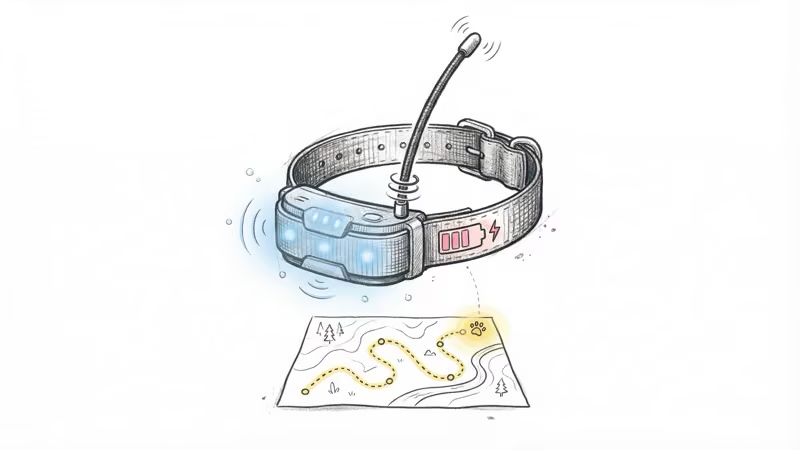
- 40+ hours of battery life per charge (I confirmed this across multiple 3-day hunting trips)
For smaller dogs, Garmin offers the TT 15 Mini with the same tracking features in a lighter package. The Alpha 200i remote lets you control each paired collar independently, adjusting stimulation intensity, update speed, and geofence settings per dog.
The communication between handheld and collar is rock-solid. In over a year of use, I experienced zero dropped connections within the rated range. The collar’s rechargeable battery lasts about 40 hours, and the handheld displays each collar’s remaining battery percentage so you know when to recharge.
If you are comparing GPS collars for hunting dogs, the TT 15X paired with the Alpha 200i is the most capable system available, though not the most cost-effective for single-dog owners.
Battery Life
Garmin rates the Alpha 200i at 20+ hours with GPS only and 15 hours with satellite features active. Across dozens of trips, I consistently hit 16 to 18 hours per charge with regular use, including occasional inReach messaging.
That is enough for most single-day hunts and hikes. For multi-day trips, a lightweight 10,000 mAh USB battery pack provides a full recharge in the field. I carry one on any trip longer than two days.
The TT 15X collar battery lasts about 40 hours per charge. Between charges, the handheld shows each collar’s remaining percentage. For extended hunting trips, I recommend packing an extra collar or a USB power source.
Compared to the Alpha 100’s 15-hour maximum, the 200i’s improved battery life is a meaningful upgrade, especially for all-day hunts in areas without vehicle access for recharging.
Satellite Communication and Safety
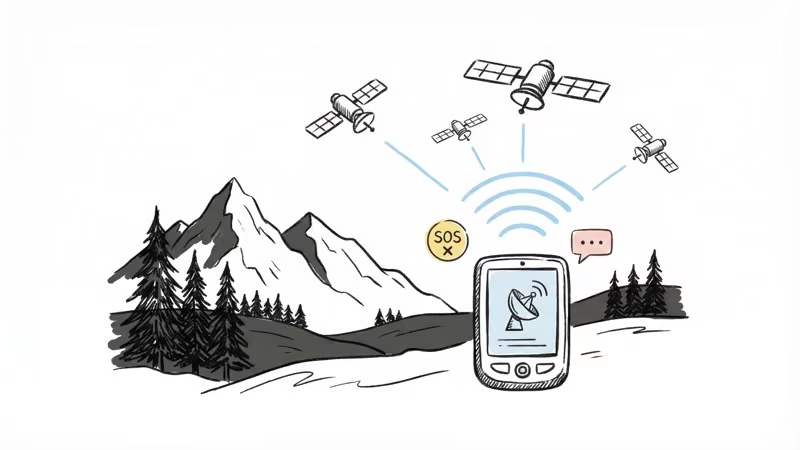
The built-in Garmin inReach technology is what separates the 200i from every other dog tracker on the market. Using the Iridium satellite network, you can send and receive text messages from anywhere on Earth, even without cell coverage.
I routinely use this to update family with my location and trip plans when hiking in areas with zero cell signal. The interactive SOS function connects you directly to the Garmin International Emergency Response Coordination Center (IERCC) with the press of a button.
I have not needed to use the SOS function, but knowing it is there adds genuine peace of mind on solo backcountry trips. This feature alone could justify the 200i over lower-cost trackers for anyone who regularly ventures beyond cell coverage.
Note: inReach requires a separate Garmin satellite subscription starting at $14.95 per month (or $11.95 per month on an annual plan). Factor this into your total cost of ownership.
Durability and Water Resistance
The IPX7 rating means the Alpha 200i can handle submersion in 1 meter of water for up to 30 minutes. I have used it in heavy rain, snow, and around water without any moisture issues. I deliberately dunked it once to test the waterproofing, and it came out fine.
For hunting dogs that charge into lakes and streams, the 200i will survive splashes and brief submersion. I would not take it swimming or leave it submerged, but normal field conditions are well within its tolerance.
The polymer body has held up to bumps, drops from waist height onto dirt, and being tossed into packed gear bags. A hard drop directly onto rock or concrete could still cause damage, so a clip-on case or lanyard is good insurance.
Who Should Buy the Alpha 200i
The Alpha 200i costs roughly $750 for the handheld and over $1,000 bundled with a TT 15X collar. That pricing makes it a professional-grade tool, not an impulse purchase. Here is who gets the most value:
- Multi-dog hunters running 2 or more dogs over long distances where line-of-sight tracking fails. The ability to monitor up to 20 dogs with individual training controls is unmatched.
- Professional dog trainers working with hunting, competition, or service dogs in varied terrain. Remote e-collar integration with per-dog customization makes training sessions more controlled.
- Search and rescue teams who need expanded tracking range and real-time coordination across wide areas.
- Backcountry hikers who take dogs off-leash in remote areas and want both GPS tracking and satellite SOS capability in one device.
For casual dog owners walking on-leash in suburban neighborhoods, the Alpha 200i is far more device than needed. A Bluetooth tracker like AirTag or a consumer GPS collar like those in our best GPS trackers for pets roundup would serve better at a fraction of the cost.
Garmin Alpha 200i vs. Astro 430
For many dog owners, the choice comes down to the Alpha 200i versus the Garmin Astro 430. The Astro was Garmin’s original dog tracker line before the Alpha series took the flagship spot.
| Feature | Alpha 200i | Astro 430 |
|---|---|---|
| Display | 3.5” touchscreen | 2.6” non-touch |
| Battery Life | 20 hours | 15 hours |
| Max Dogs | 20 | 10 |
| Max Range | 9 miles | 7 miles |
| inReach SOS | Yes | No |
| Satellite Messaging | Yes | No |
| Waterproofing | IPX7 | IPX7 |
| Street Price | ~$750 | ~$450-500 |
The Alpha 200i wins on every spec. The question is whether those upgrades justify the $250-300 price difference for your use case.
If you run fewer than 5 dogs, rarely go beyond cell coverage, and do not need satellite messaging, the Astro 430 still gets the job done. For everyone else, the 200i’s expanded range, inReach integration, and better battery life make the extra cost worth it. Our Astro vs Alpha comparison breaks down more of the differences.
Limitations Worth Knowing
No device is without trade-offs. Here is what to keep in mind:
- High initial cost. The $750+ handheld price plus $300+ per collar puts the full system over $1,000. This is an investment for serious users, not a casual purchase.
- Weight. At 9.9 oz, the 200i is heavier than most smartphones. During all-day hunts, I stow it in a vest pocket until I need it rather than carrying it in hand.
- Touchscreen in heavy rain. While the screen works fine with wet fingers, heavy water droplets can trigger false touches. The physical buttons remain fully functional as a backup.
- No standalone smartphone integration. The Alpha 200i does not have its own cellular data or Bluetooth phone connectivity. This is intentional for reliability in areas without cell coverage, but it means no push notifications to your phone.
- Subscription for inReach. Satellite messaging requires a Garmin subscription ($11.95 to $14.95 per month), which adds to the ongoing cost.
Garmin continues to release firmware updates that add features and fix bugs, so the platform improves over time.
Tips for Getting the Most Out of Your Alpha 200i
After a year of field use, these are the practices that made the biggest difference:
- Read the manual first. The feature set has a real learning curve. Spending an hour with the manual before your first trip prevents frustration.
- Fit the collar properly. An ill-fitting collar affects both tracking accuracy and charging. Take time to size it before relying on it in the field.
- Customize shortcut buttons. Set them to map, tracking, and emergency functions for one-press access. This saves seconds when they matter.
- Start with tone or vibration for training. Condition your dog with non-stimulation cues first. Proper conditioning produces better long-term results.
- Set personalized geofences. Configure safety radius alerts based on your dog’s normal behavior. This reduces false alerts while catching genuine anomalies.
- Carry a USB battery pack on multi-day trips. The built-in battery handles single days well, but anything beyond 16 hours needs backup power.
If you are considering the newer Garmin Alpha 300 or weighing the Alpha 200 vs 200i differences, those comparisons may help narrow your choice.
Pros
- Tracks up to 20 dogs from 9 miles with 2.5-second updates
- Built-in inReach satellite SOS and 2-way messaging
- 16-18 hours real-world battery life (collar lasts ~40 hours)
- IPX7 waterproof with durable polymer construction
- Detailed preloaded topo maps with public/private land data
- Physical buttons work with gloves, rain, and mud
Cons
- $750+ handheld, $1,000+ with collar bundle
- 9.9 oz is heavy for all-day hand carry
- inReach satellite messaging requires $12-15/month subscription
- No Bluetooth or cellular phone integration
- Touchscreen can register false touches in heavy downpour
Bottom Line
The Garmin Alpha 200i is the most capable handheld GPS dog tracker you can buy in 2026. It tracks up to 20 dogs from 9 miles away, runs for 16 to 18 hours on a charge, and includes satellite SOS messaging that no competitor matches. The price puts it firmly in professional territory, but for multi-dog hunters, SAR teams, and serious backcountry adventurers, it delivers on every claim Garmin makes. If you run one dog on suburban trails, look at consumer GPS collars instead. If you run multiple dogs in remote terrain and your safety matters, this is the tracker to get.
FAQ
How far can the Garmin Alpha 200i track a dog?
The Alpha 200i has a maximum tracking range of 9 miles (14.5 km) in open terrain when paired with a TT 15X or TT 15 Mini collar. In dense forest or mountainous terrain with line-of-sight obstructions, effective range typically drops to 4 to 6 miles. Position updates arrive every 2.5 seconds at the fastest setting.
Does the Garmin Alpha 200i require a subscription?
The GPS dog tracking features work without any subscription. However, the built-in inReach satellite messaging and SOS functionality requires a Garmin satellite subscription, starting at $11.95 per month on an annual plan or $14.95 month-to-month. You can use the device for dog tracking and navigation without subscribing to inReach.
What collars work with the Garmin Alpha 200i?
The Alpha 200i is compatible with several Garmin dog collars: the TT 15X (standard size for medium to large dogs), TT 15 Mini (smaller and lighter for small breeds), T 5X (tracking only, no training stimulation), and T 5 Mini. The TT series includes e-collar training features while the T series provides tracking only. All collars sold separately from the handheld unit.
How long does the Garmin Alpha 200i battery last?
Garmin rates the handheld at 20+ hours with GPS only and 15 hours with inReach satellite features enabled. In real-world testing with regular use including occasional satellite messaging, I consistently got 16 to 18 hours per charge. The TT 15X collar lasts approximately 40 hours per charge. Both devices charge via USB.
Is the Garmin Alpha 200i waterproof?
The Alpha 200i carries an IPX7 waterproof rating, meaning it can withstand submersion in 1 meter of water for up to 30 minutes. It handles rain, snow, splashes, and brief dunks without issue. It is not rated for continuous underwater use, so avoid extended submersion beyond the 30-minute threshold.
Can the Alpha 200i replace a dedicated Garmin inReach device?
For basic satellite messaging and SOS, yes. The Alpha 200i uses the same Iridium satellite network as standalone inReach devices and supports 2-way text messaging plus interactive SOS. However, dedicated inReach units like the inReach Mini 2 are smaller, lighter, and have longer battery life for satellite-only use. If you need a dog tracker and satellite communicator, the Alpha 200i consolidates both into one device.
Is the Garmin Alpha 200i worth the price for one dog?
For a single dog, the Alpha 200i's $750+ price tag is hard to justify unless you specifically need satellite SOS messaging in remote areas. A Garmin Astro 430 ($450-500) or a consumer GPS collar provides reliable single-dog tracking at lower cost. The Alpha 200i's value scales with the number of dogs, the remoteness of your terrain, and your need for satellite safety features.