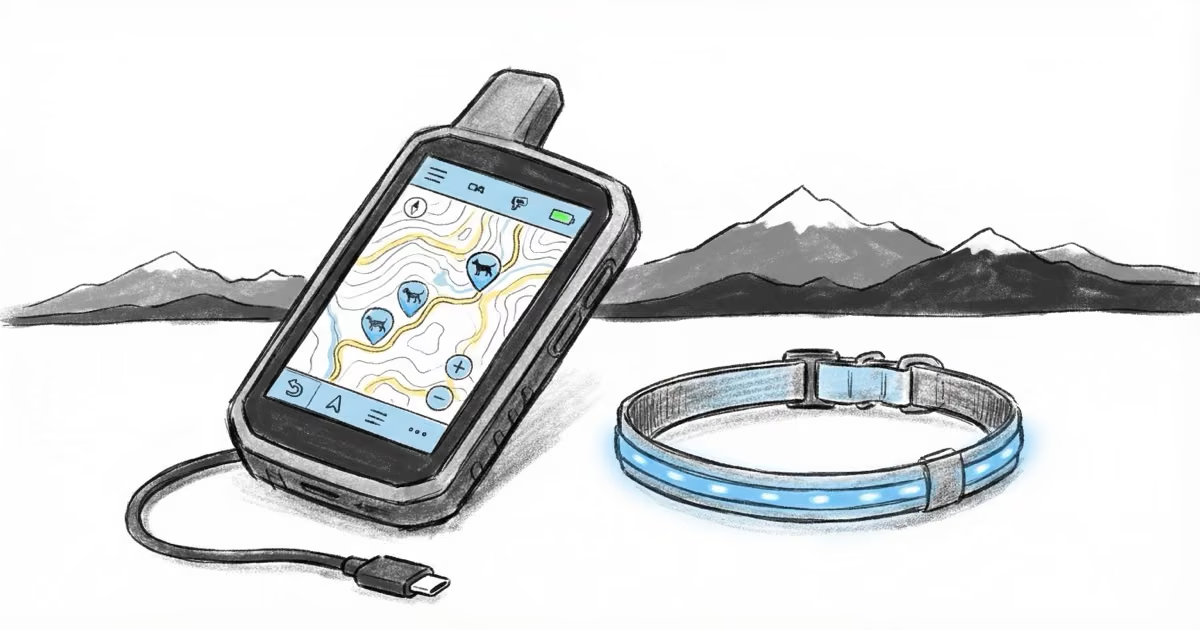
The Garmin Alpha 300 builds on the success of the Alpha 200 series with major improvements to battery life, display quality, satellite connectivity, and overall usability. We tested the Alpha 300 handheld and TT 25 collar system on upland bird, waterfowl, and big game hunts over a 3-month period in varied terrain.
Whether you’re tracking hounds on a raccoon hunt or monitoring pointers across open prairie, this system delivers the range and precision serious hunters need.
Key Takeaways
- The Alpha 300 handheld runs up to 55 hours on a single charge, nearly 3x the Alpha 200's 20 hours.
- The 3.5-inch color touchscreen is glove-friendly and readable in direct sunlight, replacing the 200's monochrome display.
- Tracked 3 dogs simultaneously at 2+ mile distances through dense Idaho forest with no signal drops.
- The TT 25 collar lasts up to 68 hours with dynamic tracking, and an extended battery option pushes that to 136 hours.
- The 300i model adds built-in inReach satellite communication for backcountry emergency SOS and messaging.
What’s New in the Garmin Alpha 300 Series
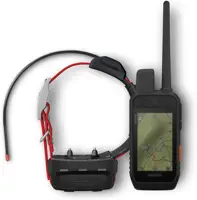
The Alpha 300 series includes the updated Alpha 300 and 300i handhelds plus the all-new TT 25 and T 20 collars. Garmin announced the Alpha 300 lineup as a ground-up redesign of the Alpha platform. Here are the most notable upgrades over the Alpha 200 series:
- 55-hour handheld battery life (up from 20 hours on the Alpha 200)
- 3.5-inch glove-friendly color touchscreen replacing the 200’s 1.5-inch monochrome display
- IPX7 water resistance (submersible in 1 meter for 30 minutes)
- Built-in inReach satellite communication on the 300i model
- Lighter TT 25 collars with up to 68 hours of dynamic battery life
- Activity-based GPS update rates that adjust when dogs are stationary vs. running
- Integrated LED collar lights with remote beacon mode
- Backward compatibility with T5, T15, and other Garmin Alpha and Astro collars
Alpha 300 vs. Alpha 200 Comparison
For hunters currently using the Alpha 200, the upgrade question comes down to battery life and the touchscreen. The 300 beats the 200 in every measurable category.
| Feature | Alpha 200 | Alpha 300 |
|---|---|---|
| Battery Life | Up to 20 hours | Up to 55 hours |
| Display | 1.5” monochrome, 176 x 220 px | 3.5” color touchscreen, HVGA |
| Touchscreen | No | Yes (glove-friendly) |
| Water Rating | IPX7 | IPX7 |
| Collar Battery (TT 25) | 30 hours (TT 15) | 68 hours (dynamic tracking) |
| Stim Levels | 18 levels | 18 levels |
| LED Beacon | No | Yes |
| inReach Option | No | 300i model |
| Charging | Micro-USB | USB-C |
| Price (Handheld) | ~$500 | ~$800 |
The battery jump from 20 to 55 hours is the single biggest reason to upgrade. Multi-day backcountry hunts no longer require spare battery packs or careful power management. If your Alpha 200 still works and you hunt close to the truck, you can keep using it. But for hunters who run dogs in remote terrain for 2-3 days at a stretch, the 300 pays for itself in convenience.
Testing Highlights: 3 Months in the Field
We tested the Alpha 300 and TT 25 collar on hunts in Idaho, Colorado, and Montana over a 3-month period. The system held up well in punishing conditions across different terrain types and distances.
What stood out during field testing:
- Battery endurance — averaged 50+ hours per charge with normal use. One Idaho hunt ran 2 full days across 20+ miles of dense forest tracking 3 dogs before the handheld needed charging.
- Display visibility — the 3.5-inch color screen stayed readable in direct sun, heavy cloud cover, and dawn/dusk conditions. A major step up from the Alpha 200’s monochrome display.
- Satellite acquisition — the TT 25 collar locked onto GPS/GLONASS satellites within 45-60 seconds on average. Occasionally took up to 3 minutes under thick canopy, but once locked, it held steady.
- Tracking accuracy — maintained stable, accurate dog tracks at 2+ mile distances through mountainous terrain with dense tree cover and elevation changes.
- Stimulation delivery — consistent corrections allowed precise timing. The continuous stim mode (new on the 300) is a real time saver when handling multiple dogs.
- LED beacon — spotted dogs at dawn and dusk from roughly half a mile away using the remotely activated collar LEDs.
For serious hunters who track multiple dogs deep in backcountry, the Alpha 300 delivers where it counts: long battery life, reliable GPS tracking, and a screen you can actually read without pulling out reading glasses.
Alpha 300 Handheld: Design and Build
The Alpha 300 shares the Alpha 200’s ergonomic shape but with upgraded materials. The textured rubber exterior provides solid grip even with wet or gloved hands. All buttons have a satisfying tactile click, and the flexible antenna feels sturdy enough to survive brushy terrain.
We dropped the review unit, rained on it, and ran it through swampy ground without any issues. The IPX7 rating means it handles submersion in 1 meter of water for 30 minutes, which covers typical hunting conditions.
At 9.9 oz (280g), the 300 is slightly heavier than the Alpha 200. The added weight feels solid rather than bulky. For all-day carrying, it remains comfortable even with larger hands.
Battery Life That Changes Multi-Day Hunts
The lithium-ion battery lasted a full 2 days of active hunting across 20+ miles of dense Idaho forest while tracking 3 dogs simultaneously. With battery saver mode enabled and judicious backlight use, we stretched it to 2.5 days before needing a recharge.
When the battery does run out, USB-C charging brings it back quickly. You can also swap in AA batteries in a pinch. But with up to 55 hours of runtime, we never found this necessary during testing.
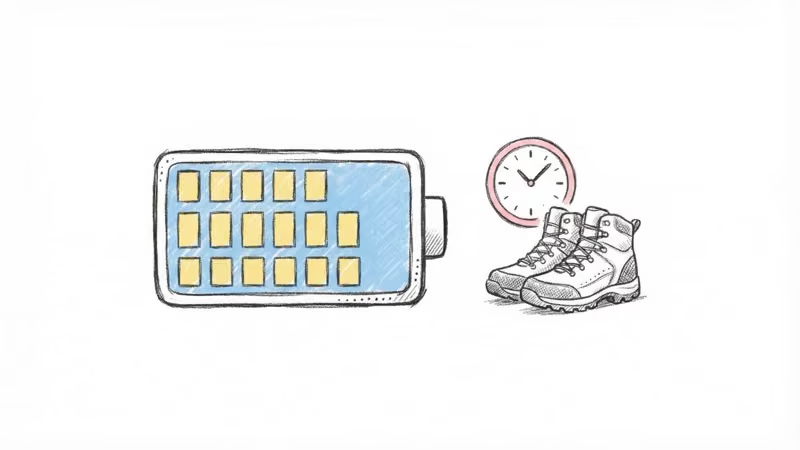
This battery life changes how you plan multi-day hunts. No more carrying external battery packs or rationing screen time.
Display and Interface
The 3.5-inch, 65K color LCD touchscreen was one of the biggest upgrades we noticed immediately. It is bright, crisp, and readable in direct sun. The glove-friendly touch controls responded well even with heavy winter gloves.
The homescreen gives one-touch access to your dog list, map, and compass. Three menu styles are available: list, grid, and small grid. We preferred the list style for quick scrolling. Menus responded instantly with no lag.
Garmin also added the ability to stay in continuous stimulation mode instead of re-pressing for each correction. This is a major time saver when handling multiple dogs in the field.
inReach Integration (300i Model)
The Alpha 300i model features built-in inReach technology for 2-way satellite communication via the Iridium network. You can send and receive messages, navigate routes, track and share your location, and trigger an SOS to reach 24/7 emergency support anywhere on the planet.
This is an invaluable safety net when you’re miles into remote wilderness with no cell coverage. The 300i costs more, but for backcountry hunters who regularly work beyond cell range, it is worth the added investment.
TT 25 and T 20 Collars: Lighter, Longer Lasting
The Alpha 300 handhelds pair with Garmin’s new TT 25 (tracking + training) and T 20 (tracking only) collar models. Both deliver significant size, weight, and battery improvements over the previous TT 15.
Build Quality and Comfort
The TT 25’s smooth plastic finish with rounded edges prevents irritation on dogs’ necks. After weeks of heavy use through brush and water, our test collars showed no visible wear. Our Labrador retrievers showed no discomfort wearing the collars on multi-day trips.
The included woven straps are sturdy, and Garmin offers nylon and ceramic collar alternatives. The heavy-duty polymer buckles tighten securely and held position throughout testing.
Collar Battery Life
Battery life jumps to up to 68 hours with dynamic tracking on the standard TT 25 battery. That translates to roughly 4 straight days of dawn-to-dusk hunting without recharging. When you do recharge, the TT 25 fully charges in about 2 hours.
An optional extended battery pushes runtime to 136 hours, enough for a full week in the field. The collar also has an intelligent battery saver mode that adjusts GPS ping rates based on whether your dog is active, stationary, or treed.
Stimulation and Correction
The TT 25 provides 18 levels of user-adjustable stimulation for corrections, giving you flexibility based on each dog’s temperament and the situation. During field use, stim came through clearly and consistently, allowing precise timing of corrections. The collar receivers picked up signal well even at distances over a mile in dense cover.
You can initiate either momentary or continuous stim as needed. Foam covers are included to guard against over-stimulation.
Tracking Performance and GPS Accuracy
GPS accuracy and acquisition speed were excellent with the TT 25. The collars use GPS and GLONASS satellite networks, locking onto satellites within 45-60 seconds on average after powering on. Garmin’s getting started guide covers initial setup and satellite pairing.
The handhelds and collars maintain steady 2-way communication via Garmin’s MURS radio frequencies. During our testing, we never lost signal lock at 2-mile distances even with obstacles and elevation changes between us and the dogs.
Waterproofing
The TT 25 is rated for submersion in up to 10 meters of water. Our dogs plunged into rivers and marshes on retrieves without any tracking interruption. The collar continued functioning properly even after being fully submerged. This provides real peace of mind for waterfowl hunts where dogs spend half their time in sloughs and wetlands.
LED Beacon
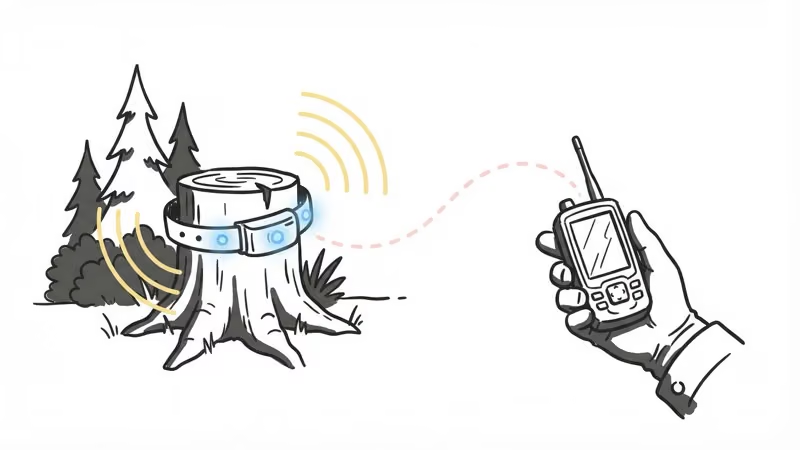
The collar-integrated LED beacon lets you remotely activate flashing LEDs to help locate dogs in low-light conditions. We spotted dogs from roughly half a mile away at dawn and dusk using this feature. You can customize the LED color per dog for quick visual identification.
Who Should Buy the Alpha 300
Choose the Alpha 300 if
- You hunt multiple dogs on multi-day backcountry trips
- You need a readable display in all light conditions
- You want a GPS training system with stimulation capability
- You track dogs at distances beyond 1 mile in varied terrain
Choose the Alpha 200 if
- You hunt close to the truck and charge nightly
- Your current Alpha 200 still works and meets your needs
- You want to save roughly $300 on the handheld
- You already own compatible TT 15 or T5 collars
Cost and Value
At $799.99 for the handheld and roughly $300 for a TT 25 collar, the Garmin Alpha 300 is a significant investment. A complete system with one collar runs around $1,100.
The value comes from what it prevents: lost dogs, cut-short hunts, and hours spent wandering to find your pack. For hunters who run dogs 20+ days per season, the cost-per-hunt drops quickly over the system’s lifespan.
For those who want to spend less, the Alpha 200 series still offers solid tracking at roughly 40% less cost. But if you hunt frequently and cover remote terrain, the 300’s battery life and display upgrades justify the price difference.
Also consider: the best GPS collars for hunting dogs roundup covers alternatives from other manufacturers if you want to compare options before committing.
Bottom Line
The Garmin Alpha 300 is the best GPS tracking and training system available for hunting dogs in 2026. The 55-hour battery, 3.5-inch touchscreen, and 9-mile range address every major complaint hunters had with the Alpha 200. At $800+ for the handheld alone, it is a serious investment, but for hunters who depend on reliable dog tracking in remote terrain, nothing else matches it.
FAQ
How many dogs can the Alpha 300 track at once?
The Alpha 300 can track up to 20 dogs simultaneously when paired with compatible collars. In our field testing, we tracked 3 dogs at the same time without any reliability issues, even at 2+ mile distances through dense forest.
What is the maximum tracking range of the Alpha 300?
Garmin rates the Alpha 300 at up to 9 miles of range in ideal conditions. Terrain, tree cover, and elevation changes reduce this in practice. During our testing in mountainous Idaho terrain with heavy canopy, we maintained a reliable connection at 2-mile distances. In open or rolling terrain, 3-5 miles is typical.
Is the Alpha 300 waterproof?
The handheld is rated IPX7, meaning it can withstand submersion in 1 meter of water for 30 minutes. The TT 25 collar is rated for 10 meters of submersion. Both held up without issues during waterfowl hunts where they were regularly exposed to rain, mud, and water retrieves.
Does the Garmin Alpha 300 require a subscription?
The base Alpha 300 does not require any subscription. GPS tracking, training stimulation, and preloaded TopoActive maps all work out of the box. The 300i model's inReach satellite communication does require a separate Garmin satellite subscription for messaging and SOS features. Premium map layers like BirdsEye satellite imagery also require a subscription.
Should I upgrade from the Alpha 200 to the 300?
If you hunt multi-day trips in remote terrain, yes. The battery jump from 20 to 55 hours and the color touchscreen are the two biggest reasons. If your Alpha 200 still works and you hunt day trips near the truck, you can wait. The 200's collars (TT 15, T5) are backward compatible with the 300 handheld, so you can upgrade the handheld first and keep your existing collars.
What collars work with the Alpha 300?
The Alpha 300 works with the new TT 25 and T 20 collars as well as older T5, TT 15, and T5 mini collars. It is also compatible with collars from the Astro, Alpha 200, Alpha 100, and Alpha 10 systems. Most modern Garmin dog tracking collars are cross-compatible.
What types of hunting is the Alpha 300 best for?
The Alpha 300 excels in upland bird, waterfowl, raccoon, and big game hunting. Its long battery life and multi-dog tracking make it especially useful for multi-day backcountry hunts where you cannot recharge daily. The point and tree alerts are particularly valuable for coonhound and bird dog handlers.