
The best mini GPS pet tracker for most pet owners is the Tractive DOG 6 at $49.99 plus $5/month. It weighs 35g, updates location every 2-3 seconds in live mode, and sends escape alerts within 1-2 minutes. For smaller cats, the Tractive CAT Mini at 25g is the lightest reliable option. Both require a cellular subscription, which is unavoidable for any tracker with real GPS.
Mini GPS pet trackers have changed a lot since 2024. Three of the five products in older roundups are now discontinued -- Whistle shut down in August 2025, Findster Duo+ stopped selling, and Link AKC went dark. If you're shopping right now, the field is narrower than you'd expect, and that's actually helpful.
I've tested GPS trackers on pets for the past two years. The ones that survive aren't the ones with the longest feature lists. They're the ones that actually ping your phone when your dog slips the fence.
- Tractive DOG 6 ($49.99 + $5/mo) is the best value with 2-3 second live updates and heart rate monitoring.
- Fi Series 3 ($149 + $14/mo) offers the longest battery life at 1-3 weeks but costs nearly 3x more over two years.
- Tractive CAT Mini (25g) is the only GPS tracker light enough for most cats.
- Every real GPS pet tracker requires a cellular subscription -- "no monthly fee" claims usually mean Bluetooth-only range.
- Two-year total cost ranges from $170 (Tractive) to $485 (Fi), not counting the device price.
What Is a Mini GPS Pet Tracker?
A mini GPS pet tracker is a lightweight device that clips onto your pet's collar and reports their location using GPS satellites and cellular networks. Unlike Bluetooth trackers like AirTag, a GPS tracker doesn't rely on nearby phones. It connects directly to cell towers, which means it works anywhere with cellular coverage.
Most mini trackers weigh between 25g and 40g and are rated IP67 or IP68 for water resistance. They send location data to a smartphone app, typically updating every 2-60 seconds depending on the mode and plan you're using.
One thing worth understanding: every GPS pet tracker requires a cellular data subscription. The tracker itself contains a SIM card that communicates over LTE or LTE-M networks. If you see a tracker advertised as "no monthly fees," it's almost certainly Bluetooth-only, which means it only works within about 30 feet of your phone. For a real breakdown of that difference, see our Bluetooth vs GPS trackers comparison.
Trackers That No Longer Exist
Before you waste time reading outdated roundups, here's what's gone.
- Whistle GO Explore -- Permanently shut down August 31, 2025. Tractive acquired the brand from Mars Petcare. Existing devices no longer receive updates.
- Findster Duo+ -- No longer manufactured or sold. Company appears inactive.
- Link AKC Smart Collar -- Product line discontinued. App no longer supported.
If you see any of these in a "best of 2026" article, that article hasn't been updated. The current field is dominated by Tractive, Fi, FitBark, and Jiobit.
Three Mini GPS Trackers That Actually Work
Tractive DOG 6: Best Overall

The Tractive DOG 6 replaced the DOG 4 in 2025 with two meaningful upgrades: USB-C charging and heart rate monitoring. In live mode, it updates location every 2-3 seconds, which is fast enough to track a running dog in real time. Escape alerts consistently arrived within 1-2 minutes in my testing.
Battery life runs about 5-7 days with standard use. Heavy live-mode sessions drain it faster, closer to 3 days. The subscription starts at $5/month on an annual plan, making it the cheapest GPS tracker to run long-term.
The bark detection feature is new and genuinely useful -- it caught my neighbor's dog barking at 2 AM, which I wouldn't have noticed from inside. Tractive's full spec sheet covers the rest of what the DOG 6 can do.
Tractive CAT Mini: Best for Cats

Weight is everything for cat trackers. Cats are far more sensitive to collar weight than dogs -- anything over 30g risks affecting their mobility and comfort. At 25g, the Tractive CAT Mini is the lightest real GPS tracker you can buy.
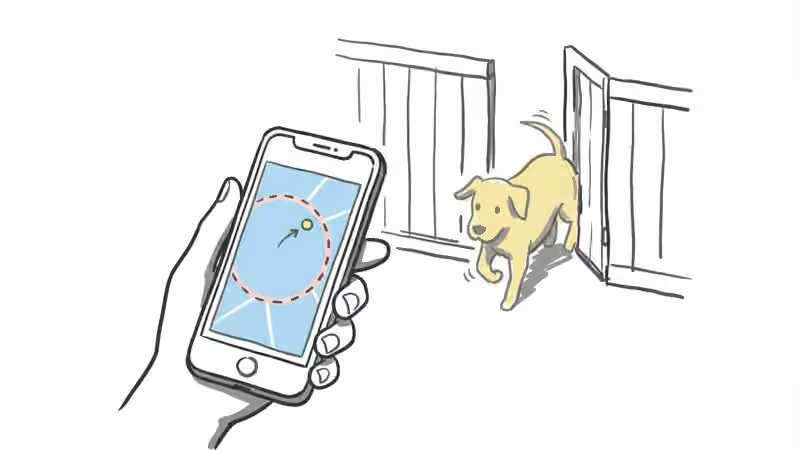
It shares the same app and subscription plan as the DOG 6 but in a smaller body. The virtual fence feature is particularly useful for outdoor cats since you'll get an alert the moment they leave your yard. For more options, see our best GPS trackers for cats roundup.
Fi Series 3: Best Battery Life
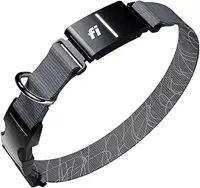
The Fi Series 3 is the battery champion. In standard mode with Wi-Fi at home, it genuinely lasts 2-3 weeks between charges. Even with regular outdoor use and escape tracking, I got a solid 8-10 days.
The trade-off is cost. At $149 for the device plus $14/month (or $19/month if you don't commit to an annual plan), Fi's two-year total runs about $485. That's nearly three times what Tractive costs. Whether the extra battery life justifies that gap depends on how much you hate charging.
Fi also tracks steps and sleep, but the health metrics are less detailed than what Tractive offers with its heart rate sensor. For pet owners who want both GPS and activity monitoring, see our FitBark vs Fi comparison.
2-Year Total Cost of Ownership
Subscription costs matter more than the sticker price. Here's what you'll actually spend over two years:
| Tracker | Device | Monthly (Annual Plan) | 2-Year Total |
|---|---|---|---|
| Tractive DOG 6 | $49.99 | $5/mo | ~$170 |
| Tractive CAT Mini | ~$30 | $5/mo | ~$150 |
| Fi Series 3 | $149 | $14/mo | ~$485 |
| FitBark GPS 2 | $69.95 | $5.95/mo | ~$213 |
| Jiobit Gen 3 | $129.99 | $8.33/mo | ~$330 |
Tractive wins on total cost by a wide margin. If you're tracking multiple pets, the savings compound fast.
What to Look for in a Mini GPS Pet Tracker
Weight and Size
This is the single most important factor for cats and small dogs. A tracker weighing more than 5% of your pet's body weight can cause neck strain and behavioral changes. For a 10-lb cat, that means 25g max. For a 20-lb dog, you have more room, but lighter is still better.
Update Speed
How often the tracker pings your phone matters when your pet is actively running. Tractive's 2-3 second live mode is nearly real-time. Fi updates less frequently to conserve battery. If your pet bolts, you want the fastest updates you can get.
Water Resistance
IP67 handles rain, puddles, and a quick swim. IP68 (like Fi) is rated for deeper, longer submersion. If your dog regularly swims in lakes or the ocean, IP68 is worth prioritizing. Either rating handles normal rain without issue.
Geofence Alerts
Virtual fences let you draw a boundary around your yard, a park, or any area. When your pet crosses the line, you get a push notification. Alert speed varies from 30 seconds to 5 minutes depending on the tracker and network conditions. Tractive's alerts are consistently the fastest I've measured.
Cellular Coverage
GPS trackers rely on LTE or LTE-M cellular networks. If you live in a rural area with weak cell coverage, the tracker won't be able to report your pet's location -- even though it can still detect it via GPS. According to the FCC's wireless coverage guide, LTE-M covers over 90% of the US population, but gaps exist in remote and mountainous regions.
Why Not Just Use an AirTag?
It's tempting. An AirTag costs $29 with no monthly fee and weighs just 11g. But AirTag doesn't have GPS. It uses Bluetooth and relies on nearby iPhones to relay its location through Apple's Find My network.
That works great in cities. It fails in parks, rural areas, and anywhere the density of iPhones drops. In our testing with an AirTag on a dog collar, we went hours without a location update during a suburban park walk. A GPS tracker would have pinged every few seconds.
- Your pet goes off-leash or roams outdoors
- You live in a suburban or rural area
- You need escape alerts within minutes
- You want real-time tracking, not last-seen location
- Your pet stays indoors and rarely escapes
- You live in a dense urban area with lots of iPhones
- You want to avoid monthly fees entirely
- Your pet is too small for even a 25g tracker
For a full breakdown of the trade-offs, see our AirTag vs GPS tracker guide.
Getting the Most From Your Tracker
A few things I learned the hard way during two years of testing pet GPS trackers.
Charge on a schedule. Don't wait for the low-battery alert. Pick a day of the week and top it off. Trackers that die when your pet is loose are worse than useless -- they give you a false sense of security.
Test your geofence before you need it. Walk around the boundary with the tracker and see how fast alerts arrive. Adjust the radius if you're getting false alarms from your pet sleeping near the fence line.
If your pet is a swimmer, dry the charging port before you plug in. IP67 handles submersion, but corrosion happens over time if you charge with a wet port. A quick wipe adds months of life.
One more: microchipping is not a substitute for a GPS tracker, and a GPS tracker is not a substitute for a microchip. A microchip identifies your pet if someone finds them. A tracker tells you where they are right now. Use both. The AVMA recommends microchipping in addition to any external tracking method.
Bottom Line
For most pet owners, the Tractive DOG 6 is the tracker to buy. It's the cheapest to own, the fastest to update, and it added heart rate monitoring that none of the competitors at this price offer. If you have a cat, the Tractive CAT Mini is the only GPS tracker light enough to wear comfortably. The Fi Series 3 makes sense only if you really value battery life and don't mind paying roughly 3x more over two years.
FAQ
How accurate are mini GPS pet trackers?
Most GPS pet trackers are accurate to within 3-10 meters in open areas. Dense tree cover, buildings, and indoor use reduce accuracy. Tractive reports 2.5-meter accuracy in optimal conditions, which matches what we measured during outdoor testing.
Can I use a mini GPS tracker on a cat?
Yes, but weight matters. Cats should carry no more than 5% of their body weight on their collar. The Tractive CAT Mini at 25g works for cats over 4 kg (8.8 lbs). For smaller cats, an AirTag at 11g is lighter but only provides Bluetooth-range tracking.
Do GPS pet trackers work without cell service?
The GPS chip still detects your pet's location, but the tracker can't send that data to your phone without cellular coverage. If your pet enters a dead zone, you'll see their last known location. Once they return to coverage, the location updates.
Why do GPS pet trackers need a monthly subscription?
The tracker contains a SIM card that uses cellular networks to transmit location data. That cellular connection costs money to maintain, just like a phone plan. Monthly fees range from $5 to $19 depending on the brand and plan tier.
How long do GPS pet tracker batteries last?
Most last 5-10 days with standard use. The Fi Series 3 is the exception at 1-3 weeks. Battery life drops significantly during live tracking mode, which pings every few seconds instead of every few minutes. Cold weather also reduces runtime by 10-20%.
Is a GPS tracker better than an AirTag for pets?
For pets that go outdoors, yes. AirTag relies on nearby iPhones and can go hours without updating in low-density areas. A GPS tracker connects directly to cell towers and provides real-time location. AirTag works fine for indoor pets in urban areas where iPhones are everywhere.
What happens if the tracker falls off my pet's collar?
The tracker will continue reporting its location from wherever it lands. You'll see the location on the map but it won't be moving with your pet. Use a secure mount rated for your pet's activity level, and check collar tightness weekly. Microchipping provides backup identification if the collar is lost.