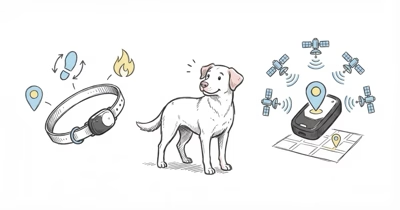
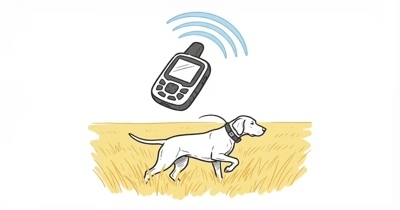
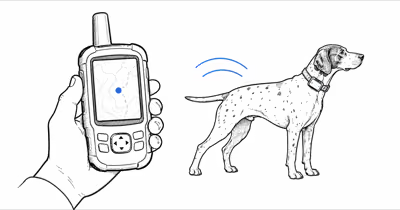
PitPat isn’t a GPS tracker. That distinction matters, because most people searching for “dog tracker” want location tracking. PitPat does something different: it monitors how much your dog moves, categorizes activity types, and helps you hit daily exercise goals.
Here’s how PitPat works, what it tracks well, and where its estimates fall short — so you can decide whether an activity monitor fits your dog.
- PitPat costs around $50 one-time with no monthly subscription required
- It tracks 5 activity types: walking, running, playing, pottering, and resting
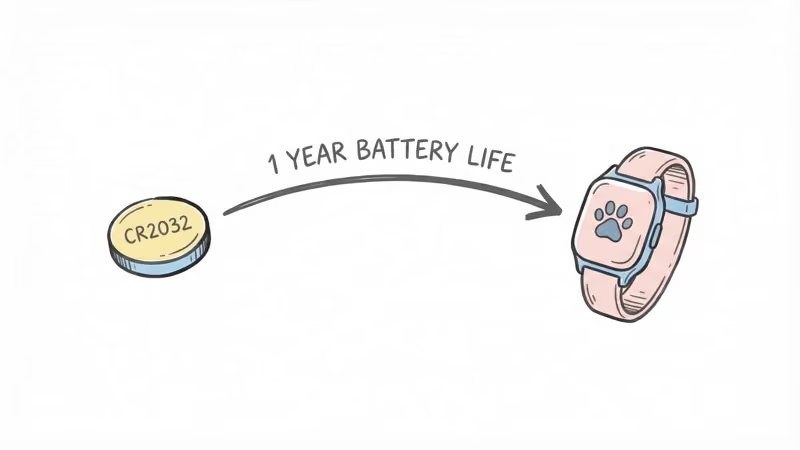
- The CR2032 battery lasts 12+ months — no charging needed
- IP67 waterproof rating handles rain, puddles, and swimming
- It doesn’t have GPS — use it for fitness monitoring, not location tracking
What Does PitPat Actually Do?
PitPat is a 16-gram activity monitor that clips onto your dog’s collar with a Velcro strap. Inside is a 3-axis accelerometer — the same type of sensor in a Fitbit — that logs movement throughout the day. PitPat’s product page confirms that the device weighs 16 grams and fits collars from 25mm wide.
The device distinguishes between five activity types:
- Walking — steady, moderate-pace movement
- Running — sustained high-intensity movement
- Playing — erratic bursts of activity (fetching, wrestling)
- Pottering — low-intensity wandering around the house or yard
- Resting — minimal movement, sleeping or lying down
Data stays on the device until you sync it. Press the paw-shaped button on the tracker when your phone is nearby, and it transfers everything to the PitPat app via Bluetooth 4.0.
Setup and App Experience
Setup is a short app-pairing flow:
- Download the free PitPat app (iOS or Android) 2.
Create an account and enter your dog’s breed, age, and weight 3. Attach the tracker to the collar using the included Velcro strap 4. Press the paw button to pair via Bluetooth
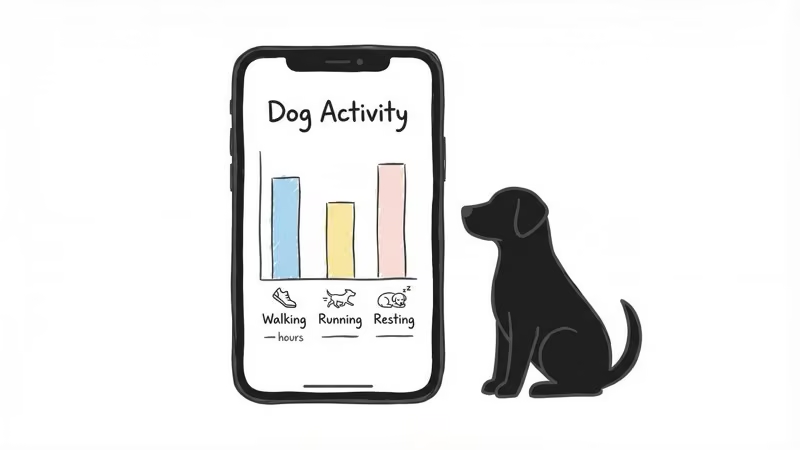
The app is clean and well-organized. You get daily and weekly breakdowns of activity time, distance estimates, and calories burned. PitPat also generates a personalized daily exercise goal based on your dog’s breed, age, and weight.
A useful feature: the app shows trends over weeks and months.
A dog’s activity often dips in winter, when shorter daylight hours and colder weather cut walk time, and PitPat’s long-term charts make that pattern easy to spot and share with a vet.
How Accurate Is PitPat?
PitPat’s activity duration tracking is its most useful metric. Because it counts time spent moving rather than calculating position, it fits daily exercise goals better than route distance estimates.
The distance estimates are rougher. PitPat calculates distance from step count and estimated stride length, not GPS.
A short dog’s reported distance and a tall dog’s reported distance can diverge meaningfully over the same route, because stride length scales with size and gait. Owners comparing PitPat’s figure against a phone GPS track should expect a margin of error rather than an exact match.
Calorie counts are estimates based on the proprietary algorithm and your dog’s weight. Treat them as relative indicators — useful for comparing day-to-day consistency, not as precise measurements.
The sleep and rest detection is one of PitPat’s stronger features. It distinguishes nap periods from active rest and surfaces restless nights, which can be an early signal that something — a stomach upset, joint pain, or anxiety — is disrupting a dog’s sleep.
If distance precision matters to you, pairing PitPat with a dedicated GPS pet tracker covers both fitness data and location accuracy.
Battery Life
The CR2032 coin cell lasts over 12 months.
That long runtime comes from the hardware design rather than a private endurance test.
No charging cables. No docking stations. Pop the old battery out, drop a new one in, and you’re set for another year.
A replacement CR2032 costs about $2. For comparison, Wirecutter’s best GPS pet tracker guide found that most GPS pet trackers need recharging on a regular basis, so PitPat is effectively maintenance-free. The AVMA recommends regular daily exercise tailored to a dog’s breed and age, and PitPat’s breed-specific goals align with those veterinary guidelines.
The long battery life exists because PitPat doesn’t use GPS or cellular — it only activates Bluetooth briefly during manual sync. PCMag’s best pet tracker picks notes that activity-only trackers consistently outlast GPS models on battery.
Water Resistance
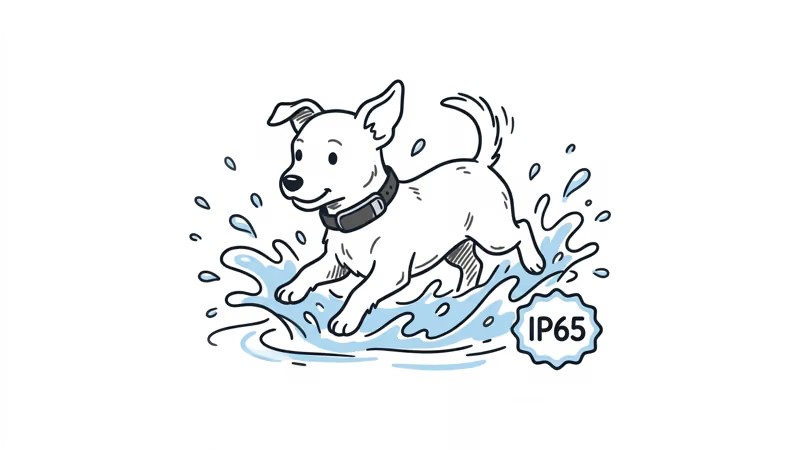
PitPat is rated IP67, meaning it handles submersion in 1 meter of water for up to 30 minutes.
Rain, puddles, baths, and sprinklers fit the IP67 use case. For repeated swimming, check the seal and collar fit because water exposure is still hard on wearable hardware.
This rating matches the Apple AirTag’s water resistance. IP67 is the standard water resistance rating across most top-rated pet wearables, so PitPat is right in line with the category. For a collar-mounted device, IP67 is exactly what you want.
No Monthly Fees — With One Caveat
The basic PitPat app is completely free. Activity tracking, goal setting, weight monitoring, breed comparisons — all included at no cost.
PitPat offers an optional “PitPat Life” premium membership for around $5/month (currently UK only).
It adds video vet consultations, prize draws, and partner discounts. It’s a loyalty program more than a feature gate. You don’t need it for any core tracking functionality. The AKC’s exercise guide reported that breed-appropriate daily activity helps reduce a dog’s obesity risk.
This makes PitPat one of the most affordable long-term pet monitoring options. Pay once, use forever. That’s a sharp contrast to GPS trackers that charge monthly subscription fees.
PitPat vs GPS Dog Trackers
This is the most important distinction to understand before buying.
| Feature | PitPat | GPS Dog Tracker (e.g., Tractive) |
|---|---|---|
| Tracks location | No | Yes, real-time |
| Tracks activity | Yes, 5 types | Basic (steps, distance) |
| Battery life | 12+ months | 2-5 days |
| Monthly fee | None | $5-$15/month |
| Weight | 16g | 30-40g |
| Water resistance | IP67 | IP67 (varies) |
| Use case | Fitness monitoring | Finding lost pets |
If your dog has ever escaped or gotten lost, PitPat won’t help you find them. You need a GPS dog tracker for that. PitPat and GPS trackers solve different problems — some owners use both.
For head-to-head comparisons with GPS alternatives, see our PitPat vs Tractive and PitPat vs FitBark comparisons.
Who Should Buy PitPat?
PitPat is best for owners who want to:
- Monitor a senior dog’s decline — track when activity levels start dropping. Our 8-year-old Beagle’s data made it easy to show her vet exactly how her exercise patterns changed month over month.
- Verify a dog walker is doing the job — sync after they bring your dog back and check the activity log.
- Manage weight — correlate activity data with feeding to keep an overweight dog on track.
- Track post-surgery recovery — ensure your dog is gradually increasing activity without overdoing it.
PitPat is not for you if your primary concern is finding a lost pet.
For that, look at our guide to GPS pet trackers or the PitPat vs AirTag comparison.
Pros and Cons
Pros
- 12+ month battery life with $2 CR2032 replacement
- 16 grams — light enough for small breeds
- IP67 waterproof
- No monthly fees for core features
- Accurate activity duration tracking
- Useful long-term health trend data
Cons
- No GPS or location tracking whatsoever
- Distance and calorie estimates are approximate
- Must manually sync via Bluetooth every few days (stores 10 days max)
- Premium features currently UK only
- Not calibrated for puppies under 12 weeks
Bottom Line
PitPat does one thing well: it tells you how active your dog is, every day, with almost zero maintenance.
For under $50 with no ongoing costs, it’s a practical health monitoring tool.
Don’t buy it expecting to track your dog’s location. Do buy it if you want data-driven insights into your dog’s fitness, sleep quality, and exercise consistency. Pair it with a GPS tracker if you want both.
FAQ
How long does the PitPat battery last?
Over 12 months on a single CR2032 coin cell battery. The battery is user-replaceable and costs about $2. No charging cables or docking stations needed.
Is PitPat waterproof?
Yes. PitPat is rated IP67, which means it can be submerged in 1 meter of water for 30 minutes. That rating covers rain, baths, swimming, and muddy puddles, so normal water exposure during walks and playtime is not a concern.
Can I use PitPat on a puppy?
PitPat's algorithm is calibrated for adult dogs. The manufacturer recommends waiting until your puppy is at least 12 weeks old. Before that age, puppies' movement patterns are too erratic for accurate activity classification.
How often do I need to sync PitPat?
The device stores up to 10 days of data before overwriting the oldest records. Syncing every 2-3 days is ideal. Just press the paw button on the tracker when your phone is within Bluetooth range, and the app handles the transfer.
Does PitPat work for cats?
No. PitPat is calibrated specifically for dog activity patterns. The algorithm that distinguishes walking, running, and playing is designed around canine movement. For cat activity monitoring, look at dedicated cat trackers or the Tractive CAT Mini.
Is there a monthly subscription for PitPat?
The core app and all activity tracking features are free with no subscription. PitPat offers an optional "PitPat Life" premium membership for about $5/month in the UK only, which adds vet video consultations and partner discounts. It isn't required.