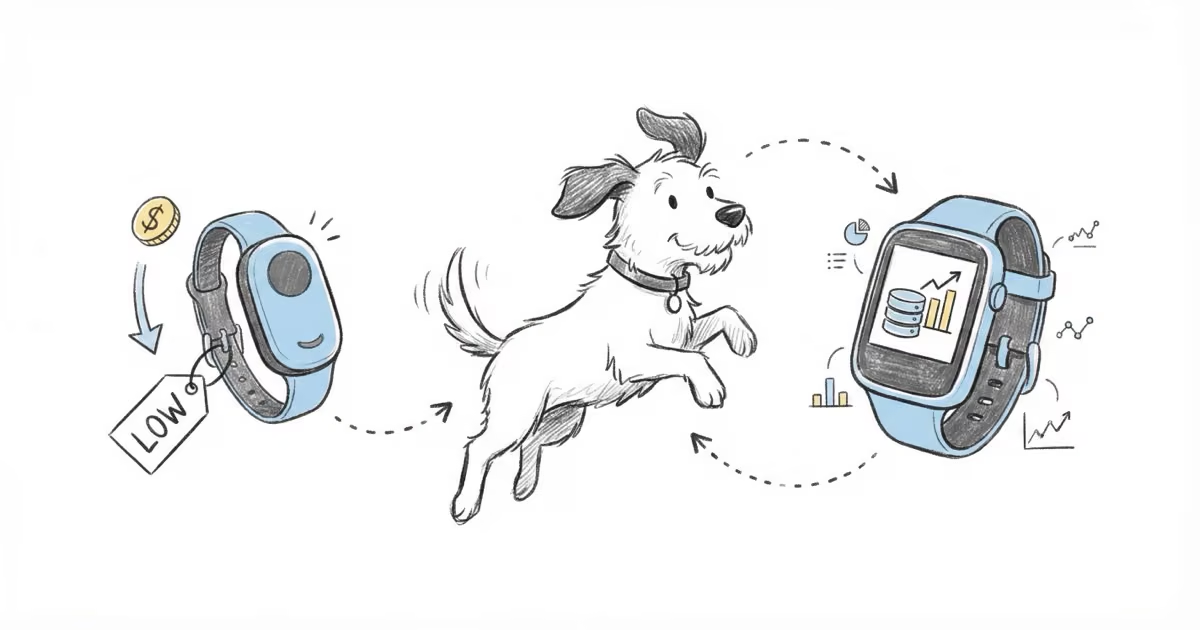
PitPat and FitBark do the same basic job — they clip to your dog’s collar and count how much your dog moves, rests, and sleeps. The differences come down to how much data you want and how much you’re willing to pay for it.
Key Takeaways
- PitPat costs roughly $40 one-time with no mandatory subscription; FitBark runs about $70 for the device.
- PitPat's CR2032 battery lasts 1 year; FitBark's rechargeable battery lasts about 6 months per charge.
- FitBark stores 100 days of minute-by-minute data on-device; PitPat holds only 7 days before syncing.
- Both are IP67 waterproof, use 3-axis accelerometers, and track steps, distance, calories, and sleep.
- Neither device includes GPS -- for location tracking, you'll need a separate GPS pet tracker.
PitPat vs FitBark at a Glance
| Feature | PitPat | FitBark |
|---|---|---|
| Price | ~$40 / £39 | ~$70 / £56 |
| Battery | CR2032, ~1 year | Rechargeable, ~6 months |
| Water resistance | IP67 | IP67 |
| On-device storage | 7 days | 100 days |
| Weight | 8g | 10g (FitBark 2) |
| Metrics tracked | Steps, distance, calories, sleep, rest | Steps, distance, calories, sleep, BarkPoints |
| App style | Simple dashboard | Data-heavy analytics |
| Subscription | Optional Premium ($4.99/mo) | None |
| Phone compatibility | iOS + Android | iOS + Android |
| GPS | No | No |
Battery Life: PitPat’s Biggest Advantage
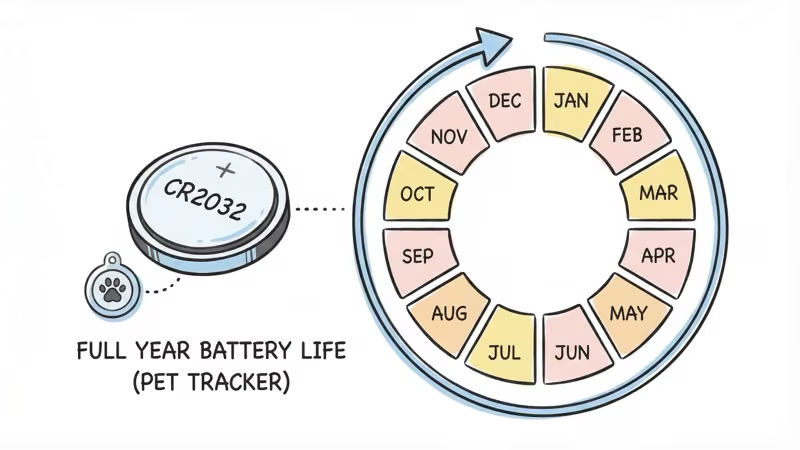
PitPat uses a replaceable CR2032 coin cell that lasts roughly 1 year. Pop in a new battery (costs about $2), and you’re done. No cables, no docking stations, no forgetting to charge.
FitBark uses a built-in rechargeable lithium-ion battery. It lasts about 6 months on a full charge, which is impressive for a rechargeable — but you’ll eventually need to take it off the collar and plug it in. Over two years, that’s four charging cycles versus two $2 batteries.
For owners who want a “set it and forget it” tracker, PitPat wins here easily.
Data Storage: FitBark’s Real Differentiator
This is where FitBark pulls ahead. It stores 100 days of minute-by-minute activity data on the device itself. Even if you don’t sync for three months, nothing is lost.
PitPat holds just 7 days. Forget to sync for a week, and older data disappears.
Why does this matter? If your vet asks for a month’s worth of activity trends after a health concern, FitBark has it. PitPat doesn’t. FitBark’s app can generate health reports that show gradual changes in activity or sleep quality over weeks — the kind of data that helps catch problems like arthritis, weight gain, or pain before they become obvious.
For casual fitness tracking, 7 days is fine. For owners who want veterinary-grade health insights, FitBark’s 100-day storage is hard to beat.

Accuracy and Tracking Quality
Both trackers use 3-axis accelerometers and proprietary algorithms optimized for canine movement patterns. In practice, they’re comparably accurate for the core metrics: steps, distance, calories, and active versus rest time.
PitPat has been validated in a peer-reviewed study published in PLoS ONE showing strong correlation between PitPat data and video-coded activity levels. That’s a meaningful credibility point — not every pet tracker has independent scientific validation.
FitBark tracks activity in “BarkPoints,” a proprietary score that rolls multiple metrics into one daily number. Some owners find this simpler to track than raw minutes and calories. Others prefer PitPat’s straightforward breakdown by activity type (walking, running, playing, resting).
Both handle different dog sizes well. PitPat at 8 grams is slightly lighter than FitBark 2 at 10 grams, making both suitable for dogs as small as 5 pounds.
App Experience
The apps reflect two different design philosophies.
PitPat’s app is clean and simple. You see daily activity time, calories burned, and distance in easy-to-read graphs. It sets breed-specific goals and awards badges when your dog hits milestones. If you just want a quick daily check-in, it does the job without overwhelming you.
FitBark’s app goes deeper. Minute-by-minute activity breakdowns, sleep quality scores, multi-week trend charts, and the ability to compare your dog’s activity to breed averages. You can share data with your vet directly from the app. It’s more complex, but the extra detail is the whole point.
If you’re comfortable with fitness apps on your own wrist (think Garmin or Whoop), you’ll appreciate FitBark’s depth. If you just want to know “did my dog get enough exercise today,” PitPat answers that faster.
Cost Breakdown Over Two Years
| Cost item | PitPat | FitBark |
|---|---|---|
| Device | ~$40 | ~$70 |
| Batteries / charging | ~$4 (2 CR2032s) | $0 (built-in) |
| Optional subscription | $0-$60/yr (Premium optional) | $0 |
| 2-year total (no sub) | ~$44 | ~$70 |
PitPat is the clear budget winner. Even with two years of PitPat Premium ($120 total), you’d still spend less than FitBark plus a comparable data service.
Neither charges a mandatory subscription for core tracking, which sets them apart from GPS-based trackers like Tractive that require $5-$15/month for cellular connectivity.
Durability and Water Resistance
Both carry IP67 ratings, meaning they survive submersion in 1 meter of water for 30 minutes. Your dog can swim, splash in puddles, and get caught in rain without issues.
PitPat uses a hardened plastic casing with a Velcro collar strap. FitBark’s polycarbonate shell attaches with industrial zip ties. Both are built to survive being chomped by curious dogs, though neither is truly indestructible. If your dog is a serious chewer, keep an eye on the attachment.
Who Should Pick Which
Pick PitPat if:
- You want the most affordable activity tracker with no strings
- A 1-year battery with zero maintenance appeals to you
- You prefer a simple, quick-glance app over deep analytics
- Your dog is small or toy-sized (8g is about as light as trackers get)
Pick FitBark if:
- You want 100 days of on-device health data for vet conversations
- Long-term activity trend analysis matters to you
- You don’t mind recharging every 6 months
- Your dog has a health condition that benefits from close monitoring
If you need location tracking on top of activity data, neither PitPat nor FitBark will help. Look at AirTag vs Fi for location options, or check our GPS dog tracker roundup for devices that do both activity and GPS.
Bottom Line
For most dog owners, PitPat delivers everything you need at a lower price with less hassle. The 1-year battery alone is worth the choice. FitBark earns its higher price tag only if you’ll actually use the 100 days of stored health data — for dogs with chronic conditions or owners who want vet-ready reports, it’s a worthwhile upgrade. Neither tracks location, so don’t expect GPS from either one.
FAQ
Do PitPat and FitBark track GPS location?
No. Both are activity-only trackers that use accelerometers to measure movement. They don't include GPS, cellular, or any location tracking technology. For GPS, look at dedicated pet trackers like Tractive or Fi that use cellular networks.
Which is more accurate for small dogs?
Both work well for small breeds. PitPat has been scientifically validated in a peer-reviewed study and weighs just 8 grams. FitBark 2 weighs 10 grams and adjusts its algorithms based on dog size. For dogs under 10 pounds, PitPat's lighter weight puts slightly less strain on the collar.
Can I share my dog's activity data with my vet?
FitBark has a built-in vet sharing feature that exports health reports directly from the app. PitPat doesn't offer direct vet sharing, but you can screenshot daily or weekly summaries. FitBark's 100-day data storage makes it more useful for health conversations than PitPat's 7-day window.
Do either of these trackers require a subscription?
Neither requires a paid subscription for core activity tracking. PitPat offers an optional Premium plan ($4.99/month) that unlocks motivational programs and expanded goals. FitBark's full feature set is included with the device purchase.
Can my dog swim while wearing PitPat or FitBark?
Yes. Both are rated IP67, which means 30 minutes of submersion in up to 1 meter of water. Short swims and splashing are fine. For extended swimming sessions, consider removing the tracker to be safe -- IP67 is designed for incidental water exposure, not continuous diving.
How do I replace the battery on PitPat?
Twist the back cover off the PitPat unit, swap the old CR2032 for a new one, and twist it closed. Takes about 30 seconds. A 4-pack of CR2032 batteries costs $5-8 and covers four years of use.
Is FitBark still being sold in 2026?
FitBark 2 remains available through Amazon and select retailers as of early 2026. The company has been quieter about new hardware releases, but the existing device and app continue to receive support. Check current availability before purchasing, as stock can fluctuate.