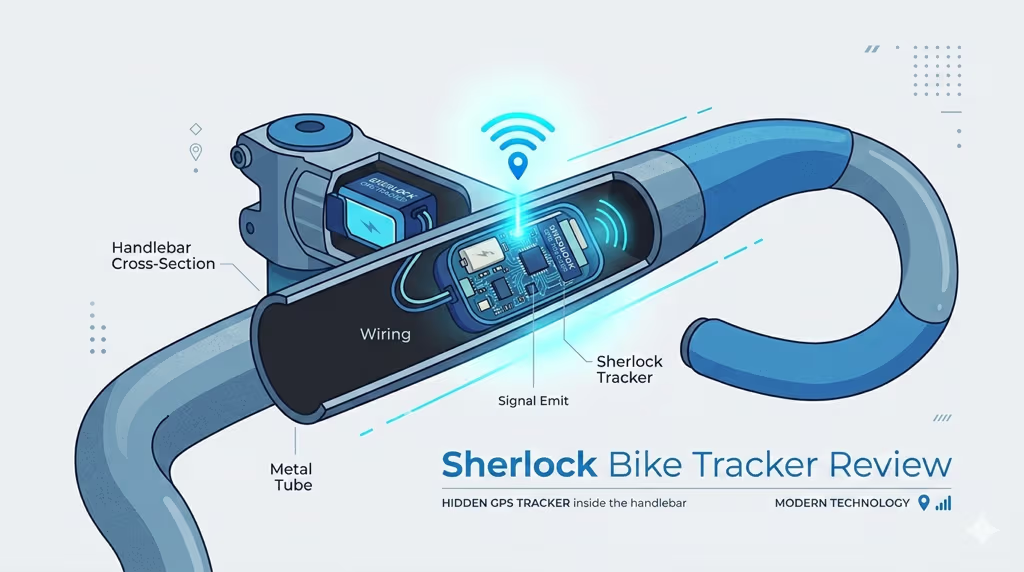
The Sherlock GPS bike tracker hides inside your handlebar tube, completely invisible from the outside. It uses cellular GPS to report real-time location -- no need for a nearby iPhone or Android phone to relay the signal. Battery lasts 4-6 weeks per USB-C charge. The tradeoff is a mandatory monthly subscription. For bikes worth $1,500 or more in theft-prone areas, Sherlock offers better recovery odds than any Bluetooth tracker. For casual riders on lower-value bikes, an AirTag in a good handlebar mount covers the basics at zero ongoing cost.
Bike theft is persistent, and the trackers available to cyclists have generally fallen into two camps: obvious external mounts that thieves remove first, or Bluetooth tags that only update when someone else's phone happens to walk past. Sherlock sidesteps both problems. The entire device lives inside the handlebar tube, hidden behind a standard-looking end cap. Nothing on the outside gives it away.
This Sherlock bike tracker review covers installation, tracking accuracy, battery life, the subscription model, and how it stacks up against using an AirTag for bike security.
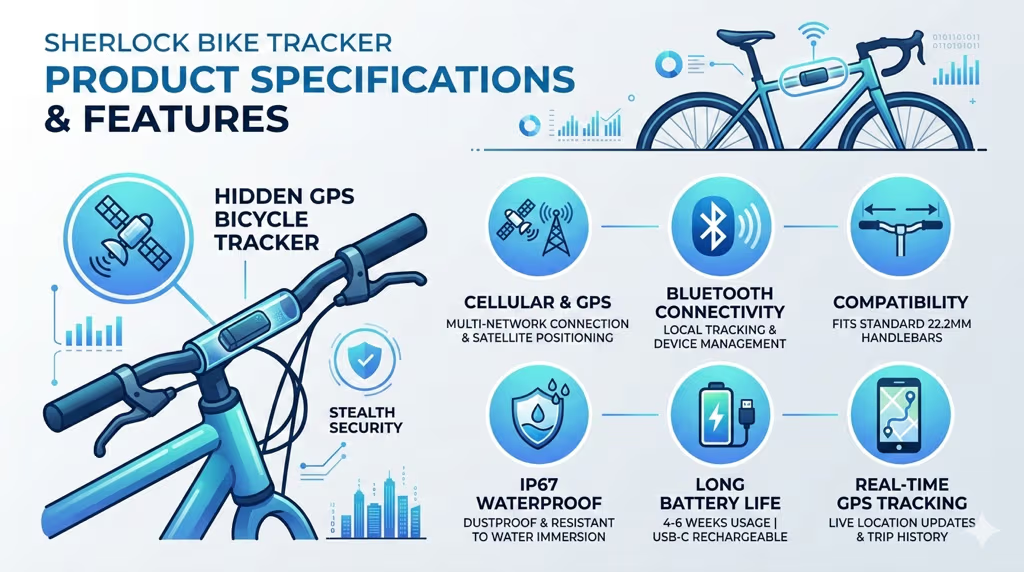
- Sherlock fits inside standard 22.2 mm handlebars and is completely invisible once installed -- no external clues for thieves to spot.
- Cellular GPS provides real-time tracking independent of nearby phones, unlike Bluetooth trackers that need another device within range to relay position.
- Battery lasts 4-6 weeks per USB-C charge under normal use; active real-time tracking drains it significantly faster.
- IP67 water resistance handles rain, puddle splashes, and bike washing without issue.
- A mandatory subscription covers cellular data costs -- without it, the device cannot report its position.
Sherlock Bike Tracker Specs
| Feature | Specification |
|---|---|
| Technology | Cellular GPS + Bluetooth |
| Handlebar compatibility | 22.2 mm (standard road and mountain bike) |
| Waterproofing | IP67 |
| Battery | Rechargeable (USB-C), 4-6 weeks per charge |
| Subscription | Required; plans vary by region |
| Platform | iOS and Android |
| Tracking network | Cellular (2G/4G depending on region) |
| Real-time GPS | Yes |
What Is the Sherlock Bike Tracker?
Sherlock is a GPS bike tracker designed to slide inside the handlebar of a bicycle. It's a compact cylinder that fits snugly inside a standard 22.2 mm handlebar tube -- the most common diameter on road bikes, mountain bikes, and commuters worldwide. Once installed, the only visible part is a small end cap that looks like any ordinary handlebar plug. A thief examining the bike sees nothing unusual.
Unlike Bluetooth trackers such as AirTag or Tile, Sherlock uses cellular GPS. It calculates its position from satellite signals and transmits that position over a mobile data network. Open the app and you see where your bike is right now, without needing another smartphone to walk past and relay the signal. This is the defining advantage over Bluetooth-based approaches, and it's why Sherlock costs more to operate.
The tradeoff is a mandatory subscription. Every location update costs cellular data, and Sherlock requires an active plan to function. For daily riders protecting a bike worth $1,500 or more, the cost is easy to justify. For occasional riders parking a $300 commuter, the subscription math gets harder to defend.
Installation
Installing Sherlock means removing the handlebar grip from one end of the bar, sliding the tracker cylinder into the tube, and replacing the grip. On a flat-bar bike with standard grips, this takes about 10 minutes. Lock-on grips with clamp collars are even faster since they don't rely on friction fit.
Drop handlebars on road bikes add complexity. You'll need to unwrap bar tape from one end, insert the tracker, and rewrap -- adding 15-20 minutes. It's not difficult, but if you've never wrapped bar tape before, watch a tutorial first. Sloppy rewrapping is visible and could hint that something is hidden inside.
Before buying, confirm your handlebars are compatible. Sherlock needs 22.2 mm internal diameter, which covers most bikes sold globally. Some oversize riser bars have thicker walls that shrink the internal space. Measure with a caliper before ordering. Sherlock's website maintains a compatibility list for common bike models.
Once inserted, the tracker pairs with the app via Bluetooth for initial setup, then operates autonomously over cellular. The pairing process takes under five minutes.
Tracking Performance
In urban areas with strong cellular coverage, Sherlock provides reliable real-time location updates that appear on the app map within seconds of movement. GPS accuracy sits at 3-5 meters under open sky -- standard for consumer-grade GPS. Moving through city canyons with tall buildings introduces positional drift, which is normal for any cellular GPS device.
The advantage over Bluetooth trackers becomes clear in the scenarios that matter most. When a bike is moving away from its last known location at 2 a.m. in a low-density neighborhood, AirTag or Tile may never update because no network-connected phone is nearby. Sherlock reports position regardless of who is nearby, as long as the cellular network reaches the device.
Geofencing adds a layer of proactive theft detection. Define a safe zone around your home or workplace, and the app pushes an alert the instant the bike leaves that boundary. This is substantially more useful than checking the app manually every time you think of it. For a broader comparison of GPS and Bluetooth bike tracking approaches, see our GPS bike tracking guide.
Battery Life
Sherlock's battery is rechargeable via USB-C. Expected runtime is 4-6 weeks per charge under normal use, where the tracker pings location periodically and sends alerts on movement detection. Active real-time tracking -- querying position every few seconds -- drains it much faster and isn't intended for all-day use.
Charging means removing the tracker from the handlebar. Same 10-minute process as installation. For a daily commuter, that's a brief maintenance task once a month. For a weekend bike stored indoors, maybe a few times per year.
One thing to think about: if the battery dies while the bike is stolen, the tracker goes silent at the worst possible moment. Sherlock's app sends a low-battery alert, but if you dismiss it and someone takes the bike before you charge, you're out of luck. Adding a monthly charge to your bike maintenance routine -- alongside tire pressure and chain lube -- prevents this from happening.
App Experience
The Sherlock app runs on iOS and Android. The interface centers on a map view showing current bike location, a log of past positions, and geofence settings. Alerts come as push notifications when the bike leaves a zone, when the battery drops low, or when movement is detected while the bike should be stationary.
Everything happens in the app: registration, subscription management, geofence setup, firmware updates. There's no web dashboard. For individual riders this is fine, though fleet managers tracking multiple bikes might want a browser-based option.
One setup step worth doing immediately: disable battery optimization for the Sherlock app on your phone. Both iOS and Android can aggressively throttle background apps, which delays or blocks theft alerts. That defeats the purpose of having a tracker in the first place.
Sherlock vs AirTag for Bike Security
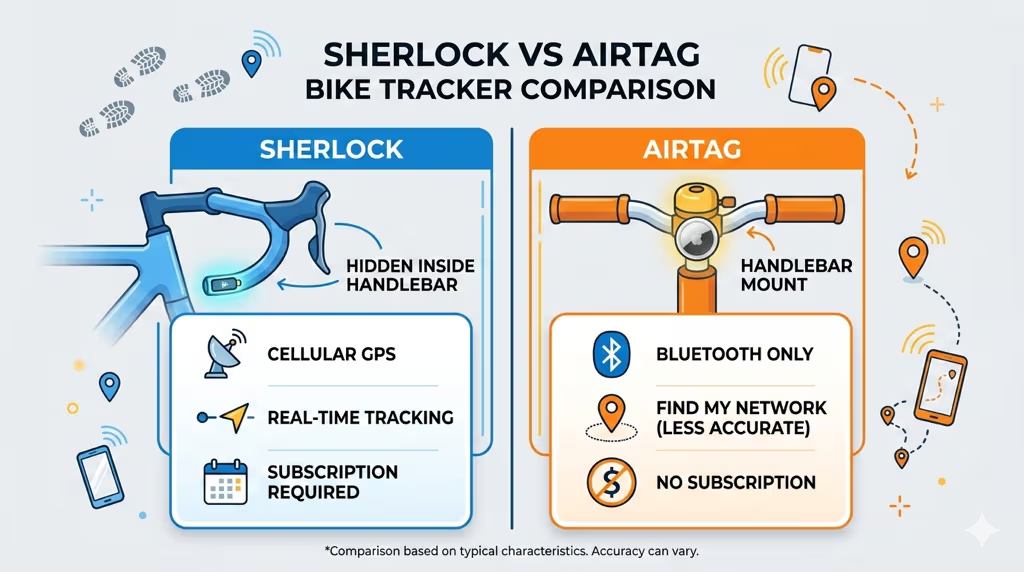
AirTag inside a handlebar with a compatible mount gives you zero-subscription tracking through Apple's Find My network. It costs $29 once, needs no monthly payments, and pings its location whenever another iPhone passes nearby. In a dense city, that happens often enough to be useful. For cyclists weighing AirTag against dedicated trackers, the AirTag vs GPS tracker comparison covers the tradeoffs in more detail.
The gap between Sherlock and AirTag opens in two places. First, rural areas or late-night theft where iPhone density is thin -- Sherlock keeps reporting while AirTag goes quiet. Second, stealth: a handlebar-mounted AirTag holder is visible and removable in seconds, while a Sherlock-equipped bike shows no sign of a tracker. The same stealth logic applies to motorcycles. See our motorcycle AirTag guide for handlebar-tube concealment techniques.
The honest case for AirTag over Sherlock is cost. If your bike is under $500 and you don't want a subscription, AirTag handles the most common scenarios -- left at the wrong rack, taken locally in an iPhone-dense neighborhood -- at a fraction of the price. If your bike is worth $1,500 or more and you want the best realistic shot at recovery after professional theft, Sherlock's cellular GPS with invisible placement is the stronger system. The BikeRadar GPS tracker roundup reaches a similar conclusion about cellular vs Bluetooth for high-value bikes.
Bottom Line
Sherlock is the best option for cyclists who own high-value bikes and want invisible, subscription-based GPS protection. The hidden installation is a genuine advantage that no external mount can match, and cellular GPS delivers tracking updates regardless of nearby phone density. If you ride daily in a city with high bike theft and your bike is worth protecting, Sherlock earns its monthly cost.
Skip it if your bike doesn't justify the subscription, if your handlebars aren't 22.2 mm compatible, or if you just want basic coverage. In that case, an AirTag in a solid handlebar mount gives you meaningful protection at zero ongoing cost.
FAQ
Does the Sherlock bike tracker require a subscription?
Yes. Sherlock uses cellular GPS, which needs a data connection for every location update. Without an active subscription, the device can't report its position to the app. The subscription covers cellular data costs -- without it, the hardware is non-functional for tracking.
Which handlebar sizes is Sherlock compatible with?
Sherlock fits 22.2 mm (7/8 inch) internal diameter handlebars, the most common size on road bikes, mountain bikes, and commuters. Some oversize riser bars or bars with thick walls have a smaller internal diameter that won't fit. Measure with a caliper before ordering, and check Sherlock's compatibility list for your specific bike model.
Can a thief find and remove the Sherlock tracker?
It's difficult but not impossible. A thief who specifically checks both handlebar ends and pulls the end caps could find it. In practice, most bike thieves work fast and don't perform a tracker sweep. Targeted thieves who know about handlebar trackers are a different story. No tracker is undetectable under determined inspection.
How often do you need to charge the Sherlock battery?
Roughly once every 4-6 weeks under normal use. Charging requires removing the tracker from the handlebar, which takes about 10 minutes. The app sends a low-battery alert before it dies. Setting a monthly reminder alongside regular bike maintenance prevents the battery from running out when you need it most.
Does Sherlock work outside the United States?
Yes, in countries with compatible cellular networks. Sherlock supports multiple regions, though subscription plans and available network bands vary. The device uses 2G or 4G depending on the model and region. Check Sherlock's current country coverage list before purchasing if you ride primarily outside the US or UK.
Is the Sherlock bike tracker waterproof?
IP67 rated -- it survives submersion in 1 meter of water for 30 minutes. Rain, puddle splashes, pressure washing, and normal riding in wet conditions won't damage it. The IP67 rating matches what Apple AirTag offers and exceeds what most external bike trackers provide.
Can Sherlock track a stolen bike across a city?
Yes, as long as the tracker has battery charge and cellular coverage at its location. Sherlock reports position continuously as the bike moves, so you can follow its route in real time on the app map. Share the live location link with police for the best chance of recovery while the trail is fresh.