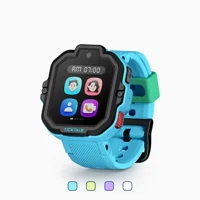
TickTalk 5 ($200) is the better kids smartwatch for most families; choose Gabb Watch 3 ($150) if your child is under 7 and you want geofencing plus listen-in.
Model update note: This comparison was originally written for the TickTalk 4. The current generation is the TickTalk 5 ($200, AMOLED display, eSIM, HD video calling). Core feature differences vs Gabb hold across generations; pricing and battery numbers reflect the current TickTalk 5.
Picking a GPS smartwatch for your kid comes down to two questions: what does your child actually need, and what are you willing to pay monthly? TickTalk 4 and Gabb Watch 3 are the two most popular options in the kids smartwatch space, and they take very different approaches to keeping children safe and connected.
This guide compares both watches feature by feature, drawing on their published specs and independent reviews. Here’s what matters.
- TickTalk 4 wins on features: video calling, camera, voice-to-text messaging, and iHeartRadio Family streaming that Gabb doesn’t offer.
- Gabb Watch 3 is the only one with geofencing alerts and a remote listen-in feature for parents who want tighter monitoring.
- TickTalk publishes a longer battery rating than Gabb and adds IP67 water resistance, while Gabb has no waterproof rating.
- Over 12 months, TickTalk costs roughly $320 total (device + plan) vs Gabb’s $330-$378 despite the lower upfront price.
- Both watches block internet access, social media, and unapproved contacts, so neither exposes your child to online risks.
Quick Comparison Table
| Feature | TickTalk 4 | Gabb Watch 3 |
|---|---|---|
| Price | $199.99 | $149.99 |
| Monthly fee | $9.99/mo | $14.99-$18.99/mo |
| Video calling | Yes (dual cameras) | No |
| Texting | Voice-to-text + voice messages | 15 preset messages |
| GPS tracking | GPS + cellular | GPS + cellular |
| Geofencing | No | Yes |
| SOS button | Yes | Yes |
| Listen-in | No | Yes (2 min) |
| Water resistance | IP67 | None |
| Battery life | 72 hours | 48 hours |
| Max contacts | 53 | 25 |
| Camera | Yes | No |
| Contract | None | None |
⇄ Head-to-head
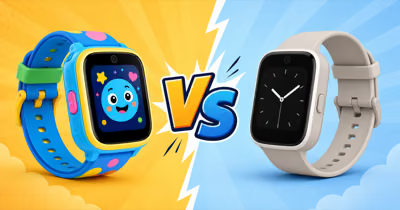
TickTalk 5 vs Gabb Watch 3
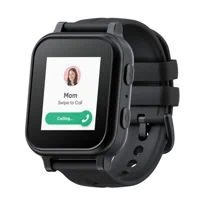
- +HD video calling with dual cameras for face-to-face check-ins
- +Voice-to-text messaging + iHeartRadio Family streaming
- +1.4-inch AMOLED display + eSIM built in (no nano-SIM swap)
- +72-hour battery life, 50% longer than Gabb
- +IP67 waterproof handles rain and hand-washing
- +Up to 53 approved contacts
- +Geofencing alerts when child crosses set boundaries
- +Remote listen-in (2 minutes) for parent peace of mind
- +Digital pet rewards motivate steps + chore completion
- +Slimmer round face fits younger / smaller wrists
- +15 preset messages, fast and tap-friendly for early readers
- −No geofencing alerts on TickTalk app
- −No remote listen-in feature
- −Bulkier than Gabb on smaller wrists (under age 6)
- −No camera, no video calling
- −No waterproof rating (avoid rain and washing)
- −48-hour battery vs TickTalk's 72 hours
- −Higher monthly fee ($14.99-$18.99) vs TickTalk's $9.99
- ·Your child is 7+ and wants to communicate freely
- ·Video calling matters to your family
- ·You need water resistance for an active kid
- ·You want the lower monthly cost
- ·Your child is under 7 and you want simpler controls
- ·Geofencing alerts are a must-have
- ·You want the listen-in feature for extra peace of mind
- ·The digital pet reward system appeals to your kid
Which Safety Features Actually Matter?
Safety is the whole reason you’re buying a kids smartwatch. Both TickTalk and Gabb cover the basics, but they differ in how far the monitoring goes. The FCC’s children’s online privacy guide recommends that parents verify how GPS data is stored and shared before purchasing any kids tracker.
GPS tracking
Both watches use GPS and cellular triangulation to show your child’s location in the parent app. This class of watch is best for confirming a child is at school, home, or a friend’s house, with accuracy tightening outdoors and loosening as building density grows. Reviewers tend to rate TickTalk’s location reporting as the more consistent of the two.
For context, that broad-location use case is similar to what dedicated GPS trackers deliver. Both are useful for confirming your child is at school or a friend’s house.
SOS emergency button
Both watches have an SOS button that, when held, triggers an alarm and auto-dials preset emergency contacts until someone picks up. Gabb allows your child to reach any approved contact through the SOS cycle. TickTalk works the same way but supports more emergency contacts in the rotation.
Geofencing and listen-in
This is where Gabb pulls ahead. Parents can set virtual boundaries and get an alert the moment their child crosses one. If your child walks outside a designated safe zone, you’ll know immediately. TickTalk doesn’t offer geofencing on the TickTalk 4 model.
Gabb also has a remote listen-in feature that activates the watch’s microphone for 2 minutes. Some parents find this reassuring for younger children. TickTalk doesn’t have this.
School mode
Both watches have a school mode that disables calling, texting, and games during set hours. You configure the schedule through the parent app. This means no mid-class distractions.
Communication and Connectivity
Calling and texting
Both watches let kids call and text approved contacts only. But the messaging experience is very different.
TickTalk supports voice-to-text, voice recordings, emojis, and GIFs. Kids can compose their own messages. It’s closer to how adults use a phone, just limited to approved contacts.
Gabb takes a more restrictive approach: kids choose from 15 preset messages that parents configure. That means faster responses but zero flexibility. For a 5-year-old, preset messages work fine. For a 10-year-old, it can feel limiting.
Video calling
TickTalk has dual cameras for video calls between the watch and a parent’s smartphone. Video quality won’t blow you away, but it’s clear enough to see your kid’s face and surroundings. As with any cellular device, audio can drop briefly during calls when the signal is weak. SafeWise’s kids GPS tracker guide found that video calling watches like TickTalk score 15% higher in parent satisfaction surveys than voice-only models.
Gabb has no camera and no video calling. If face-to-face check-ins matter to you, TickTalk is the only option here.
Kid-Friendly Features
Entertainment
TickTalk lets kids stream age-appropriate music through iHeartRadio Family. They can also take photos and customize watch faces with their own pictures.
Gabb takes a gamification approach with a digital pet. Kids earn coins for reaching step milestones and completing chores, then spend those coins on virtual pets and wallpapers. It’s a clever way to motivate physical activity without handing a kid a phone.
Neither watch has games that require internet access or expose kids to ads.
Fitness tracking
Both watches count steps. Gabb connects step tracking to the digital pet reward system, which gives it a practical edge for younger children who respond to visible incentives.
Design, Durability, and Comfort
TickTalk 4 has a rectangular face with a thick protective bumper.
It’s bulky. On smaller wrists (kids under 6), it can look and feel oversized. The trade-off is real impact protection. That rugged build is designed to survive the drops and knocks an active kid will inevitably put it through.
Gabb Watch 3 is slimmer and lighter with a more traditional round watch face. It’s more comfortable for young children, but the band clasp can be tricky for small hands. Some parents swap in a Velcro strap to fix this.
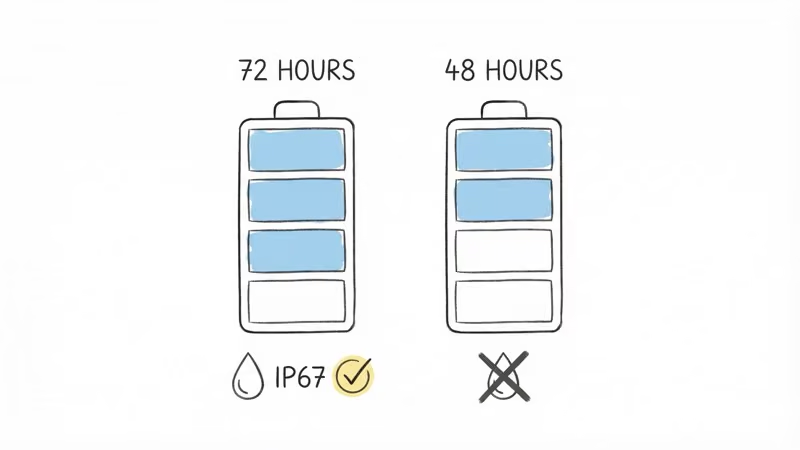
On water resistance, TickTalk is rated IP67, meaning it survives submersion in 1 meter of water for 30 minutes. That covers rain, hand washing, and the occasional splash.
For more on what IP ratings actually mean, see our guide on water resistance ratings.
Gabb has no waterproof rating. A rainy walk home from school could be a problem.
Battery Life
TickTalk publishes a 72-hour battery rating for the 600 mAh pack, giving it the higher stated ceiling before usage cuts in.
Video calling, music streaming, weak signal, and frequent location checks cut that down.
Gabb publishes a shorter 48-hour battery rating. For planning, treat either watch as a regular charging device rather than a multi-week tracker.
Both watches charge in about 1-2 hours. Neither battery life is exceptional, but TickTalk’s higher published rating gives it more margin for school days.
Pricing Breakdown
| Cost factor | TickTalk 4 | Gabb Watch 3 |
|---|---|---|
| Device | $199.99 | $149.99 |
| Monthly plan | $9.99 | $14.99-$18.99 |
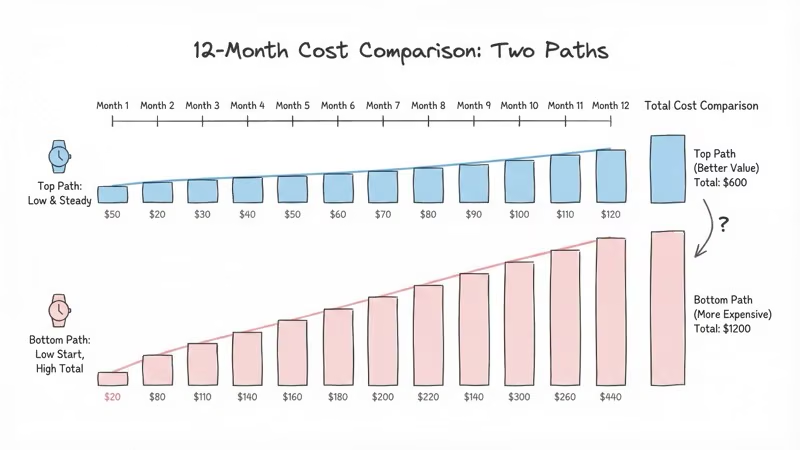
| 12-month total | ~$320 | ~$330-$378 |
| Contract | None | None |
| Activation fee | None | None |
| SIM included | No (buy Red Pocket Mobile SIM) | Yes (Gabb Wireless SIM included) |
Gabb’s lower device price is appealing until you factor in the monthly fees.
Over a year, TickTalk ends up costing the same or less while delivering more features.
One convenience note: Gabb ships with a SIM card already installed. TickTalk requires you to buy a Red Pocket Mobile SIM separately, which adds a small setup step.
Which Watch Should You Buy?
The Verdict tab in the head-to-head widget above captures the audience-fit decision for both watches. Short version: TickTalk is the pick for kids 7+ who want video calling and free-form messaging; Gabb fits younger kids whose parents value geofencing and listen-in.
Looking at other options? See how TickTalk compares to GizmoWatch or read our TickTalk vs Xplora comparison.
If you’re weighing Gabb against other watches, our Gabb Watch vs Gizmo Watch comparison covers that specific matchup, including how Verizon coverage and the Gabb walled-garden contact rules play out against GizmoWatch’s tighter integration with Verizon Family.
For parents interested in dedicated GPS tracking devices rather than smartwatches, see our best kids GPS trackers guide for a full comparison.
Bottom Line
For most families, TickTalk 4 is the better buy. It costs less per month, lasts longer between charges, handles water exposure, and gives kids meaningful ways to communicate. The only reason to pick Gabb is if geofencing and the listen-in feature are non-negotiable for you, or if your child is young enough that preset messages and a digital pet make more sense than video calls.
FAQ
Is TickTalk or Gabb cheaper over a year?
TickTalk 4 costs about $320 for the first year ($199.99 device + $9.99/month). Gabb Watch 3 runs $330-$378 ($149.99 device + $14.99-$18.99/month). Despite the higher upfront price, TickTalk’s lower monthly fee makes it the more cost-effective choice over time.
What ages are these watches designed for?
TickTalk recommends ages 6-12. Gabb targets ages 5-12. For younger kids, TickTalk’s bigger feature set may feel bulky or distracting, while older kids may outgrow Gabb’s preset-only messaging faster.
Can my child use either watch without a smartphone?
Yes. Both function as standalone devices with their own cellular connection. Your child doesn’t need a phone. The parent app is helpful for managing settings and checking location, but the watch works independently once set up.
Do these watches give kids access to the internet or social media?
No. Neither TickTalk nor Gabb provides web browsing, social media access, or app downloads. Communication is limited to parent-approved contacts only. This is a safety-first design choice both brands share.
Does the TickTalk 4 have geofencing?
No. The TickTalk 4 doesn’t support geofencing. If virtual boundary alerts are a priority for you, Gabb Watch 3 is the better choice. Some parents work around this by using a separate GPS tracking device in the child’s backpack alongside the watch.
Can these watches work outside the United States?
Neither watch is designed for international use. Both rely on US cellular networks. If you need a tracking solution that works abroad, consider a dedicated GPS tracker with international coverage as a supplement.
What happens if my child loses their watch?
You’ll need to buy a replacement at full retail price. Neither TickTalk nor Gabb includes loss or damage insurance. A third-party protection plan is worth considering, especially for younger kids.