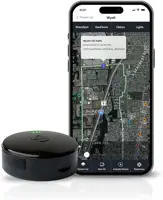
LandAirSea 54 wins for US car tracking: built-in magnet, IP67, 1-2 week battery. Tracki is smaller, 190+ countries, better indoor accuracy via WiFi.
Both Tracki and LandAirSea 54 are cellular GPS trackers with monthly subscriptions. Neither one is an AirTag, and they don’t piggyback on Bluetooth networks — instead, they transmit real-time coordinates over 4G LTE, so you get actual live tracking on a map, geofencing alerts, and speed notifications. The trade-off? A recurring bill that adds up fast.
This tracki vs landairsea comparison covers the specs, real costs, and the use cases where each one actually makes sense.
- LandAirSea 54 wins for US vehicle tracking — built-in magnet, IP67 waterproofing, and 3-second updates beat Tracki’s accessory-dependent setup.
- Tracki wins everywhere else — half the size, works in 190+ countries, and better indoor accuracy via WiFi positioning.
- Subscriptions are nearly identical — both cost ~$9.95/mo on 2-year prepaid; total 2-year cost differs by about $10.
- Battery life gap is real — LandAirSea 54 lasts 1-2 weeks under a car; Tracki’s base battery runs 2-5 days.
- Neither replaces an AirTag — both require a monthly subscription; for lost keys or wallets, a $29 AirTag wins on cost.
Tracki 4G vs LandAirSea 54: At a Glance
⇄ Head-to-head
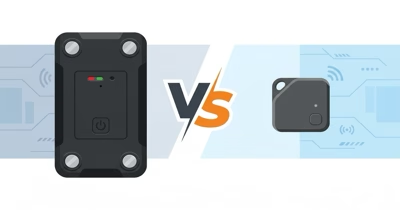
Tracki 4G vs LandAirSea 54
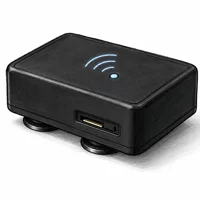
- +190+ country global SIM (auto-selects local carrier)
- +GPS + WiFi + BLE hybrid positioning -- better indoors
- +36g matchbox size disappears into jacket / backpack
- +Lower device cost ($20-30 on sale)
- +WiFi fallback helps in parking garages
- +Built-in magnet -- slap it under any car bumper
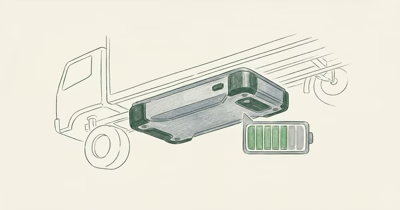
- +1,500 mAh battery lasts 1-2 weeks unattended
- +IP67 fully submersible (handles weather + car wash)
- +3-second fastest update rate (vs Tracki's 10-sec)
- +Hockey puck form factor stays put on metal
- −600 mAh battery -- only 2-5 days under heavy use
- −No built-in magnet (mounting accessory needed)
- −IPX6 splash-only (not submersible)
- −10-second fastest update rate (LandAirSea hits 3-sec)
- −US only -- AT&T / T-Mobile networks (no Canada/Mexico)
- −99g hockey puck is too bulky for personal carry
- −GPS + LTE only (no WiFi positioning indoors)
- −Higher device cost than Tracki on sale
- ·Best for tracking people, pets, bags, suitcases
- ·Best for international travelers (US-only is a non-starter for LandAirSea)
- ·Best for indoor / urban tracking (WiFi positioning wins)
- ·Best when small form factor matters
- ·Best for US vehicle tracking (cars, fleets, motorcycles)
- ·Best when set-and-forget battery (1-2 weeks) matters
- ·Best when waterproofing for outdoor mount matters
- ·Best when 3-sec real-time updates matter
Numbers help, but they don’t tell the whole story. Where you plan to stick this tracker matters more than any single spec on that chart.
Where Does Tracki Pull Ahead?
Size and Portability
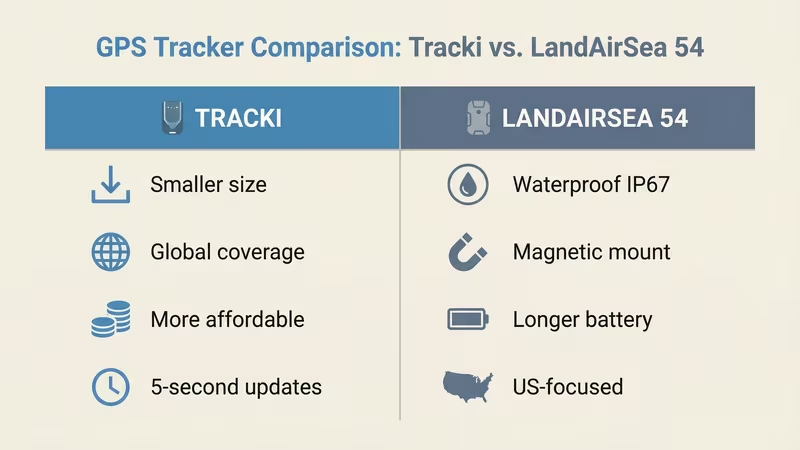
Tracki is tiny. At 36 grams and roughly the size of a matchbox, it disappears into a jacket pocket or a kid’s backpack without anyone noticing. LandAirSea 54 is a hockey puck. Fine under a car bumper, but bulky and obvious anywhere else.
Not tracking a vehicle? Size picks the winner for you.
Global Coverage
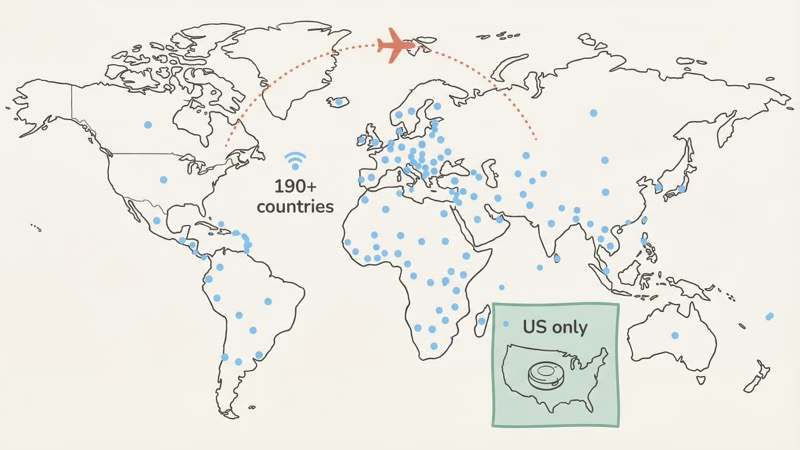
Tracki ships with an international SIM that works in 190+ countries. Tracki’s product page confirms that the SIM auto-selects the strongest local carrier in each country — toss it in your checked bag on a flight to Tokyo and it works when you land. LandAirSea 54 runs on AT&T and T-Mobile only, so cross into Canada or Mexico and it goes dark.
If you travel internationally, there’s really nothing to debate here. LandAirSea doesn’t work outside the US, full stop. No workaround, no third-party SIM fix.
Indoor Accuracy
Tracki combines GPS with WiFi and Bluetooth positioning, which helps where pure GPS struggles — parking garages, shopping malls, dense downtown blocks. Both trackers work best under open sky; underground or between tall buildings, Tracki’s extra positioning modes give it an edge. A SafeWise review called it one of the most accurate GPS trackers they’ve tested.
LandAirSea 54 relies on GPS and LTE tower triangulation only. That works fine on highways, but inside a multi-story parking garage the pin can jump because satellite view is blocked.
Tracki’s WiFi scan picks up nearby router SSIDs and cross-references them against known access point databases, giving the app another signal source when satellite lock is poor. The FCC’s 2025 GPS and 911 accuracy initiative highlights exactly this challenge.
Hybrid positioning combining satellite GPS with WiFi signals significantly improves indoor location accuracy. If you’re tracking a person or bag through airports and city centers, that gap matters a lot more than raw outdoor precision.
Where LandAirSea 54 Wins
Battery Life
LandAirSea 54’s 1,500 mAh battery is built for longer vehicle deployments than Tracki’s smaller cell. According to LandAirSea’s product specifications, the 54 supports up to 6 months of standby time when motion-activated mode is enabled.
Tracki? Its 600 mAh battery runs 2-5 days depending on how aggressively you track. SafeWise’s independent review found that the Tracki 4G lasted 3 days on average with 60-second tracking intervals — fine for a pocket tracker you charge nightly like a smartwatch, but painful when it’s stuck under a car frame requiring you to crawl underneath every few days.
Tracki does sell a 3,500 mAh battery extender that stretches life to 3-4 weeks, though it makes the tracker noticeably bigger.
Built-In Magnetic Mount
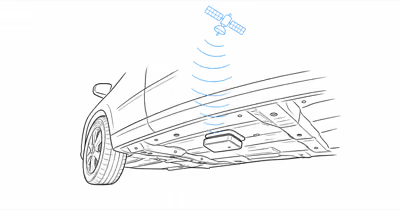
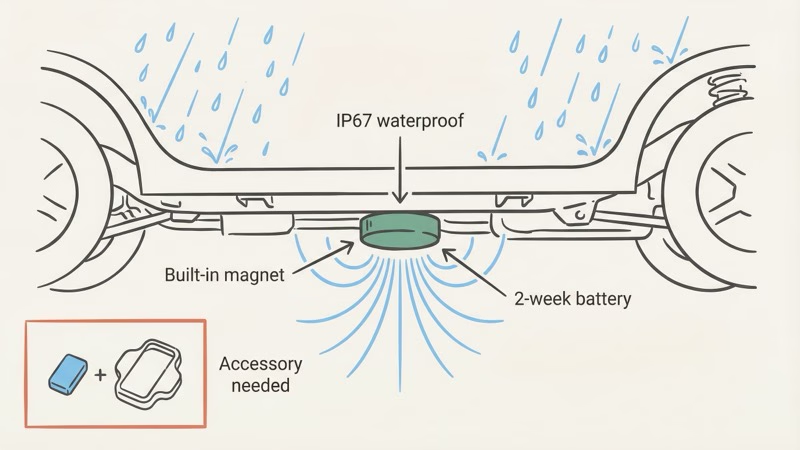
LandAirSea 54’s built-in magnet is designed for direct vehicle mounting. No accessories, no case. You place it on a metal surface under the car and walk away. Whether you’re doing fleet tracking or monitoring a teen driver, that kind of drop-and-go simplicity is hard to beat.
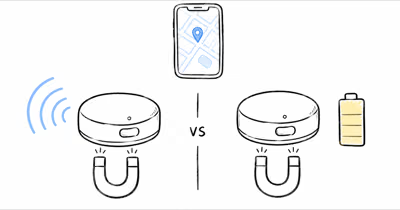
The two trackers take different approaches to mounting. The LandAirSea 54 builds the magnet into the puck, while Tracki relies on an accessory magnetic case. The case adds noticeable bulk to an otherwise pocket-sized device.
Tracki needs a separate magnetic case (sold as an accessory). It works, but it adds $15, adds bulk, and adds one more thing that can fail.
Waterproofing
IP67 versus IPX6 — one survives full submersion in a meter of water for 30 minutes; the other survives a splash. If your tracker lives under a car chassis through rainstorms, puddles, and car washes, you want IP67. Tracki’s IPX6 is fine for a pocket tracker but risky when it’s bolted to the underside of a vehicle exposed to road spray. LandAirSea’s official specs confirm the IP67 rating and waterproof design.
Update Speed
LandAirSea 54 supports 3-second location updates. That’s fast enough to reconstruct a driving route in near real-time. Tracki’s fastest setting is rated at 10-second updates, which is decent but drains the smaller battery faster. If you’re managing a fleet or tracking fast-moving vehicles where every turn matters, LandAirSea’s 3-second refresh is hard to beat.
How Much Do Subscriptions Actually Cost?
Both companies love to advertise low monthly rates. The fine print tells a different story. Here’s what you’ll actually pay.
| Plan | Tracki | LandAirSea 54 |
|---|---|---|
| Monthly (no commitment) | $19.95/mo | $19.95/mo |
| 6-month prepaid | about $16.60/mo | about $14.95/mo |
| 1-year prepaid | about $13.95/mo | about $12.95/mo |
| 2-year prepaid | about $9.95/mo | about $9.95/mo |
Month-to-month or two-year lock-in, the subscription pricing is nearly identical between the two. Where your costs actually diverge is the hardware: the device itself, battery replacements, and whether you need a magnetic case accessory.
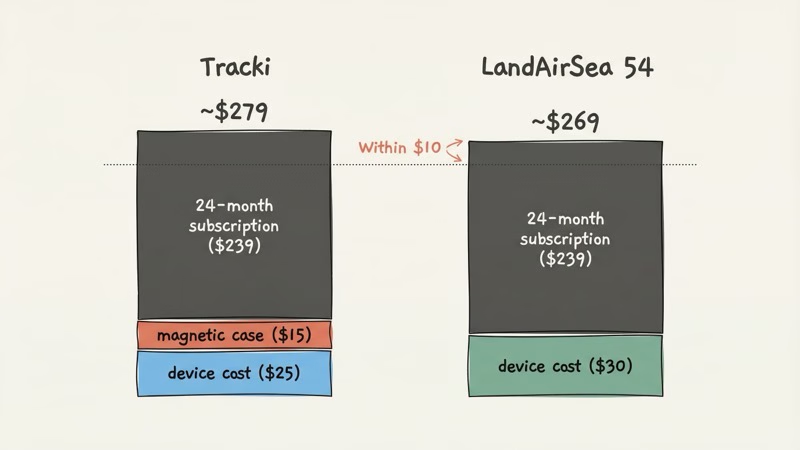
Two-Year Total Cost of Ownership
Here’s the math most comparison articles skip.
| Tracki (2-yr prepaid) | LandAirSea 54 (2-yr prepaid) | |
|---|---|---|
| Device | about $25 | about $30 |
| 24 months at $9.95 | $238.80 | $238.80 |
| Magnetic case (if needed) | about $15 | $0 (built-in) |
| 2-year total | about $279 | about $269 |
On prepaid, they’re within $10 of each other over two full years. On monthly plans, the 2-year total jumps past $500 for both. That’s real money. If the subscription feels like too much, our guide to car GPS trackers with no monthly fees covers alternatives that eliminate recurring costs entirely.
One Tracki drawback: you can’t see subscription costs until you download the app and register the device. You’re basically committed before you know the price. LandAirSea publishes pricing on its pricing page upfront.
Choosing the Right Tracker
Buy LandAirSea 54 If You’re Tracking a Vehicle in the US
Magnetic mount, IP67, long battery life, 3-second updates. LandAirSea 54 was designed for one job: vehicle tracking. Stick it under the frame, open the app when you need to — for fleet tracking, teen driver monitoring, or theft recovery, it’s the better tool. Setup is simple: download the app, activate the SIM, place the puck on metal.
Check LandAirSea 54 pricing on Amazon
Buy Tracki If You Need Portability or Travel Internationally
Small, light, and works practically everywhere on earth. Tracki is the right pick for luggage, kids’ backpacks, pet collars, or anything that crosses borders. It’s also the better indoor tracker thanks to WiFi positioning. If your tracking needs don’t involve a car parked in the US, Tracki wins.
Check Tracki 4G pricing on Amazon
Skip Both If You Just Want to Find Lost Keys
Neither one makes sense for finding lost keys or wallets around the house. That’s AirTag territory: $29, no monthly fee. Our AirTag vs GPS tracker comparison explains the difference.
How They Compare to AirTag
People ask this all the time. AirTag isn’t a GPS tracker — it’s a Bluetooth item finder that piggybacks on nearby iPhones through Apple’s Find My network. No monthly fee, but you also give up real-time tracking, geofencing, and speed alerts. Location updates only when another iPhone wanders within Bluetooth range, which can mean hours of silence in rural areas.
AirTag is great for finding lost stuff in cities, but it can’t do live vehicle tracking, route history, or real-time location monitoring — you need a cellular tracker like Tracki or LandAirSea for that. Just want to know where your keys are? An AirTag at $29 with zero subscription is the obvious pick. Our Tracki vs AirTag comparison goes into more detail.
A 2025 Automoblog roundup ranked both Tracki and LandAirSea 54 among the best car GPS trackers. If budget is your main concern, our cheapest ways to GPS track a car guide covers everything from plug-in OBD trackers to repurposed AirTags.
The Bottom Line
Track a car in the US? Get LandAirSea 54; track a person, pet, or suitcase anywhere in the world? Get Tracki. Subscription costs are basically the same, so the decision comes down to what you’re tracking and where it goes — don’t overthink it, and pick the one that matches your use case.
Our full Tracki review and LandAirSea 54 review go deeper on each device if you want more detail before buying.
If you’re also considering Spytec’s GL300, our Spytec vs Tracki comparison covers the battery and cost tradeoffs between those two.
Frequently Asked Questions
Is Tracki or LandAirSea 54 more accurate for vehicle tracking?
Outdoors, both behave like normal consumer GPS trackers. Indoors is where they split: Tracki’s WiFi and Bluetooth positioning give it an edge in parking garages and urban canyons. On highways and open streets, the difference matters less.
Does LandAirSea 54 work outside the United States?
No. US only, on AT&T and T-Mobile networks. LandAirSea sells a “Global” version with international SIM support, but it’s a different product at a different price point. The standard 54 on Amazon is US-only.
Can I use Tracki to track a car?
Yes, but you’ll need the magnetic waterproof case accessory (sold separately for about $15) and you’ll either charge the built-in battery every few days or buy the 3,500 mAh battery extender for longer intervals. It works. It’s just not as convenient as LandAirSea 54’s all-in-one magnetic puck design for dedicated vehicle use.
Do both trackers require a monthly subscription?
Yes. Both need cellular data to transmit locations, so a plan is required. Cheapest option: 2-year prepaid at $9.95/month. See our no-monthly-fee GPS tracker guide for alternatives.
How long does the LandAirSea 54 battery actually last?
Battery life depends on update interval, motion-activated mode, and cellular signal. LandAirSea rates the 54 for long standby when motion-activated mode is enabled, while aggressive updates shorten runtime. One variable people forget: weak cellular signal forces the modem to work harder, which eats battery faster.
Which tracker is better for monitoring a teen driver?
LandAirSea 54. The magnetic mount hides under the car frame, IP67 handles weather, and the 2-week battery means less maintenance. Both apps support speed alerts and geofencing, but LandAirSea’s 3-second updates paint a more detailed picture of driving behavior.
Is the LandAirSea Overdrive worth the upgrade over the 54?
The Overdrive packs a 4,240 mAh battery, nearly 3x the 54’s capacity. If you’re tracking a car parked at an airport long-term lot or a construction site where retrieving the device is a hassle, the Overdrive earns its price bump. For everyday use where occasional recharging is manageable, the standard 54 costs less and does the job.
Are these trackers legal to use?
Your own vehicle, your minor child, company assets? Legal in all US states. Someone else’s vehicle without consent? Illegal in most states. The FTC has taken enforcement action against apps that enable covert tracking without consent — see their stalking app enforcement guidance for the legal boundary. Seriously, check your state’s GPS tracking statutes before buying. This isn’t a gray area.