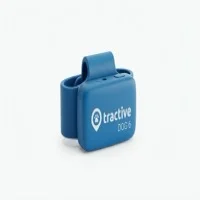
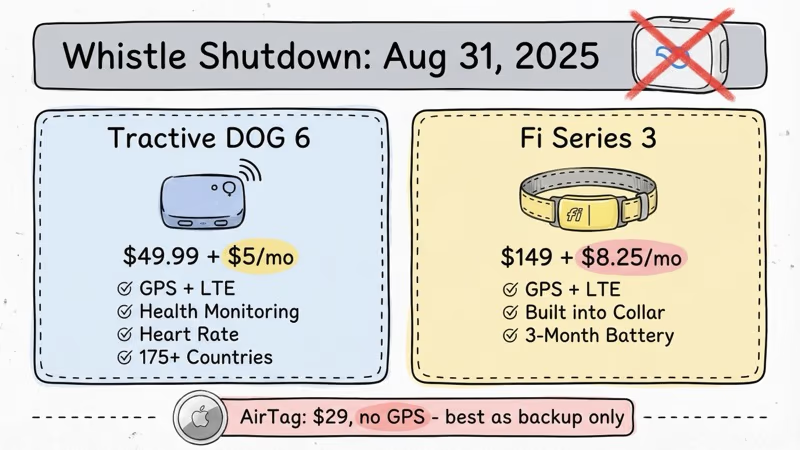
Whistle GPS pet trackers were permanently discontinued on August 31, 2025, after Tractive acquired the brand from Mars Petcare. Every Whistle device stopped working on that date. The Apple AirTag remains available at $29 with no subscription, but it tracks via Bluetooth proximity only, not GPS. For pet owners who relied on Whistle’s real-time GPS tracking, the closest replacements in 2026 are the Tractive DOG 6 and the Fi Series 3 collar.
Comparing AirTag vs Whistle in 2026 isn’t a simple product matchup anymore. Whistle’s entire product line went offline in August 2025, leaving millions of pet owners searching for a replacement GPS pet tracker. The AirTag fills part of that gap, but it was never designed for pets and lacks the GPS, health monitoring, and geofencing features that made Whistle popular.
- Whistle GPS trackers were discontinued August 31, 2025, and no longer function for any user
- AirTag uses Bluetooth and close-range Precision Finding; it has no built-in GPS and depends entirely on nearby iPhones
- AirTag costs $29 with zero subscription fees; Whistle previously cost $149.95 plus $9.95/month for cellular service
- AirTag’s anti-stalking alerts trigger after 8-24 hours of separation from the owner’s iPhone, which can cause unwanted beeping on a pet’s collar
- The best current alternatives for former Whistle users are the Tractive DOG 6 ($49.99) and Fi Series 3 ($149), both offering real-time GPS with health monitoring
Why Whistle Is No Longer Available
In July 2025, Tractive announced the acquisition of the Whistle brand from Mars Petcare, affecting over 500,000 active subscribers. Within weeks, every Whistle tracker on the planet was bricked. The official shutdown date was August 31, 2025. Whistle GO, Whistle GO Explore, and Whistle Fit devices all stopped reporting location and health data on that date.
Tractive offered free replacement trackers to existing Whistle subscribers, along with credit for prepaid Whistle subscriptions. Pet owners without an active subscription received two months of free Tractive service. That transition window closed on September 30, 2025.
If you still have a Whistle device, it’s a paperweight.
This matters for the AirTag comparison because the Whistle GO Explore combined real-time location, activity monitoring, and veterinary health insights in a single device. The AirTag does none of those things.
How Does AirTag Pet Tracking Actually Work?
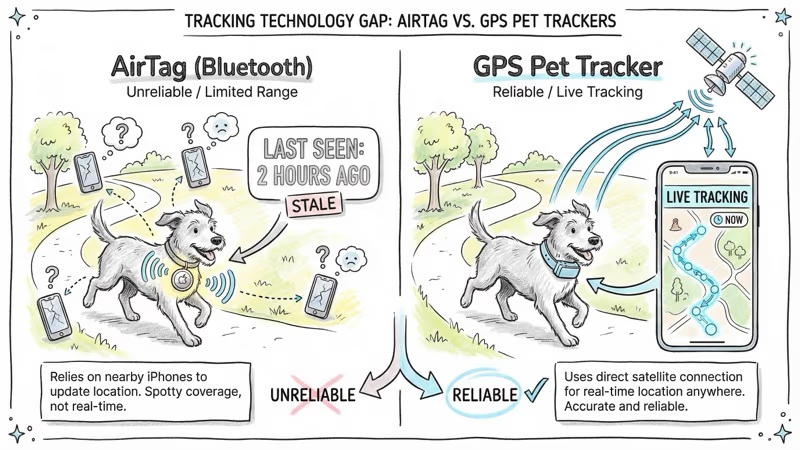
The Apple AirTag is a Bluetooth item tracker that piggybacks on the Find My network. It broadcasts a Bluetooth Low Energy signal. When any nearby iPhone, iPad, or Mac detects that signal, it anonymously relays the AirTag’s location to the owner. Apple’s Find My page says the network uses over a billion iPhone, iPad, and Mac devices around the world, so the relay network is dense in populated areas.
The catch: AirTag has no built-in GPS — it can’t determine its own position. If your dog runs into a rural area, a park with few passersby, or any zone without a nearby Apple device, you get zero location updates.
On a collar-mounted AirTag in a suburban neighborhood, update timing depends entirely on how much foot traffic passes nearby to relay the signal.
Precision Finding helps once you’re already close to the AirTag. It doesn’t help you find a dog that’s a mile away.
What Whistle GO Explore Offered Before Shutdown
For context, here’s what former Whistle users are missing. The Whistle GO Explore combined three tracking technologies in one device: cellular GPS, Wi-Fi, and Bluetooth. It connected to the AT&T network and used Google Maps to deliver frequent location updates — no crowdsourced network dependency, and no need for a nearby smartphone.
Beyond location, it tracked daily activity levels, calories burned, sleep quality, and behavioral patterns like excessive licking, scratching, and changes in activity. The companion app flagged potential health issues and connected owners with on-demand veterinary consultations.
The device weighed 35 grams, carried an IPX8 water resistance rating, and lasted up to 20 days on a single charge. It cost $149.95 upfront plus $9.95/month.
AirTag vs Whistle GO Explore: Side-by-Side Specs
| Feature | Apple AirTag (2nd Gen) | Whistle GO Explore (Discontinued) |
|---|---|---|
| Status | ✓ Available | ✗ Discontinued Aug 2025 |
| Tracking technology | Bluetooth + Find My network | GPS + LTE cellular + Wi-Fi |
| Range | Close-range Precision Finding / crowdsourced | Anywhere with AT&T coverage |
| Real-time tracking | ✗ No | ✓ Yes (cellular GPS) |
| Battery | CR2032, about 1 year | Rechargeable, up to 20 days |
| Water resistance | IP67 (1 m, 30 min) | IPX8 (2 m, 30 min) |
| Weight | 11.8 g (plus holder) | 35 g |
| Monthly cost | $0 | $9.95/mo (discontinued) |
| Activity tracking | ✗ None | ✓ Steps, calories, sleep, behavior |
| Health alerts | ✗ None | ✓ Licking, scratching, vet insights |
| Platform | Apple only | iOS and Android |
| Pet-specific design | ✗ No | ✓ Yes |
AirTag Strengths and Weaknesses for Pets
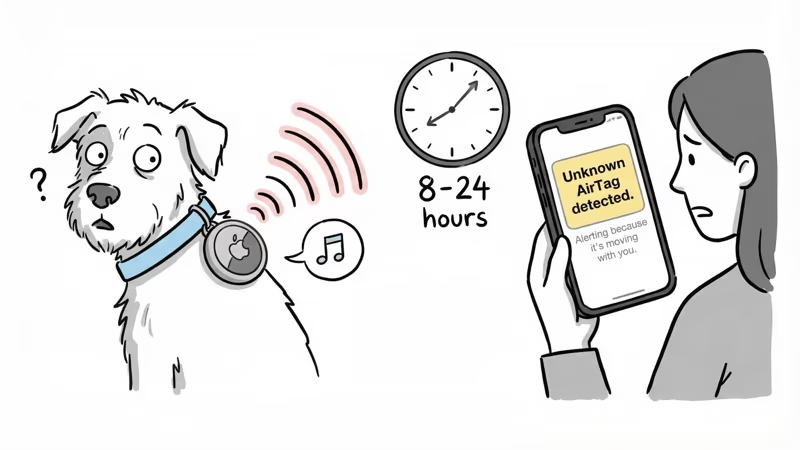
The anti-stalking feature deserves extra attention. Apple designed AirTag to prevent people from being tracked without consent. If an AirTag travels away from its paired iPhone for 8 to 24 hours, it starts beeping and sends alerts to nearby iPhones.
On a pet that spends all day outdoors, this means the AirTag may chirp on the collar, confusing the animal and alerting strangers. Apple’s unwanted tracking safety guide states that an unknown AirTag traveling with someone triggers an unwanted-tracking alert. It can’t be switched off by the owner, and the tag begins beeping within a reported 8 to 24 hours. We covered this in more detail in our guide on why your AirTag is beeping.
What Are the Best Alternatives for Former Whistle Users?
If you relied on Whistle for real-time GPS tracking and health monitoring, the AirTag isn’t a direct replacement. These two dedicated GPS pet trackers cover most of what Whistle offered:
If you’re replacing older pet GPS hardware, our Gibi GPS tracker replacement covers what still makes sense.
These two trackers split along clear lines. The Tractive DOG 6 is better for owners who want health insights like heart rate and bark monitoring, while the Fi Series 3 wins on battery life by a wide margin. Either one is a massive upgrade over trying to use an AirTag for pet tracking.
⇄ Head-to-head
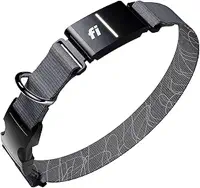
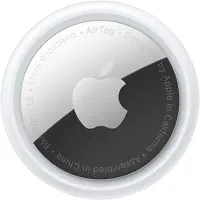
Tractive GPS DOG 6 vs Fi Series 3 vs Apple AirTag 2
- +Closest Whistle replacement: Tractive acquired Whistle and migrated 500K+ subscribers
- +Worldwide 4G LTE-M GPS coverage in 175+ countries
- +Heart rate monitoring and bark detection added on DOG 6
- +Activity + sleep tracking comparable to what Whistle GO offered
- +Lower upfront cost ($49.99) and from $5/mo subscription
- +GPS hardware built into the collar band, no clip-on module to lose
- +3-month standard battery, longest of the GPS alternatives
- +Lost Dog Mode pings every 2 seconds when activated
- +IP68 waterproof, rugged for rough play and weather
- +Step counting, sleep tracking, and breed-benchmark comparisons
- +$29 once, no subscription ever — cheapest option by far
- +Apple Find My network of over a billion devices for crowdsourced location
- +CR2032 battery about 1 year, replaceable for $3 each
- +Only 11.8g, comfortable for small dogs and cats
- +Fast setup for iPhone owners
- −Subscription required at $5-13/mo, $158/yr on 1-year plan
- −2-5 day rechargeable battery, needs charging cycles unlike Whistle's longer cell
- −35g device, heavier than Fi's 28g collar module
- −Activity insights less vet-grade than FitBark's longitudinal data
- −Single-dog account by default
- −$149 upfront plus $14/mo subscription ($168/yr)
- −Requires cell coverage, fails in true backcountry
- −Single-dog only, no multi-dog accounts
- −No heart rate or bark detection like the DOG 6
- −Subscription is more expensive than Tractive's annual plan
- −No GPS, no real-time tracking, just Bluetooth crowd relays
- −Coverage drops in rural or low-traffic areas
- −Anti-stalking alerts cause collar beeping after 8-24 hours separated
- −No activity, health, or geofence features
- −Apple does not officially recommend AirTag for pet tracking
You're a Whistle refugee, you want the most direct replacement (same company now), and you need worldwide cellular GPS with health metrics.
You want the lightest GPS option (28g collar-integrated module), 3-month battery life matters, and your dog stays in cell coverage areas.
Your dog stays in populated urban or suburban areas, real-time GPS is not required, and you want zero ongoing cost.
When AirTag Still Makes Sense for Pets
Despite its limitations, the AirTag works well in specific pet tracking scenarios. It’s not a GPS tracker, but it doesn’t need to be for every situation.
Indoor cats that occasionally escape. According to Apple, the Find My network uses over a billion active devices worldwide. If your cat slips out a door in a suburban neighborhood, nearby Apple devices may relay the AirTag. The compact size fits cat collars without weighing them down.
Backup tracker on a GPS collar. Attaching a $29 AirTag alongside a dedicated GPS tracker gives you redundancy. If the GPS collar battery dies or the cellular network drops, the AirTag provides a fallback location signal through the Find My network.
Multi-pet households watching costs. Tracking three or four pets with GPS subscriptions can run $20-35/month. A 4-pack of AirTags costs $99 total with zero ongoing fees. For pets that stay close to home, that math works.
Dogs in dense urban areas. In a city like San Francisco or New York, Apple device density is extremely high. An AirTag on a dog collar can update as nearby iPhones relay its signal. The zero monthly cost makes it an easy addition.
2-Year Cost of Ownership Compared
| Cost | AirTag | Whistle GO Explore (Was) | Tractive DOG 6 | Fi Series 3 |
|---|---|---|---|---|
| Device | $29 | $149.95 | $49.99 | $149 |
| Collar holder | $10-20 | Included | Included | Included |
| Year 1 subscription | $0 | $119.40 | $60 | $99 |
| Year 2 subscription | $0 | $119.40 | $60 | $99 |
| Battery cost | about $5 | $0 | $0 | $0 |
| 2-Year Total | $44-54 | $388.75 | $169.99 | $347 |
The AirTag is by far the least expensive option. But that low cost reflects what it doesn’t include: GPS tracking, cellular connectivity, activity monitoring, or health alerts. GPS.gov reports that GPS-enabled smartphones are typically accurate to within 16 feet, so for pet owners who need location accuracy beyond Bluetooth range, the subscription-based GPS trackers deliver significantly more value per dollar.
AirTag vs GPS Pet Tracker: How the Technology Differs
The fundamental gap between AirTag and any GPS pet tracker is the tracking mechanism itself. Understanding this difference prevents frustration after purchase.
Bluetooth (AirTag) requires a relay device nearby. The AirTag broadcasts its identity, a passing iPhone detects it, encrypts the location, and sends it to Apple’s servers, and the owner sees the last-reported position on Find My. If no Apple device passes by, the location goes stale. We’ve covered this in depth in our AirTag vs GPS tracker comparison.
Cellular GPS (Whistle, Tractive, Fi) determines its own position using satellite signals, then transmits coordinates through the cell network directly to the owner’s app. Updates arrive through the tracker service without a relay device. The trade-off is a monthly subscription to cover cellular data costs.
For a dog that escapes a backyard and runs two miles, the GPS tracker shows a live breadcrumb trail in real time. The AirTag shows the last spot an iPhone happened to pass near the dog, which may be stale by the time you check it.
Put a Bluetooth AirTag and a cellular GPS collar on the same dog and the technical difference is clear: one reports wherever a stranger’s phone last passed, the other reports through its own GPS and cellular service.
What About Using Both Together?
Some pet owners run a GPS collar plus an AirTag as a backup. This actually makes sense in a few scenarios.
If your dog’s GPS collar dies mid-walk, the AirTag still broadcasts to nearby iPhones. And AirTag’s 1-year CR2032 battery outlasts any rechargeable GPS collar, so it’s always on. The total cost is just $29 on top of your existing GPS subscription.
The main downside is bulk. A GPS collar module plus an AirTag holder plus the collar itself adds weight and hardware around your dog’s neck. For dogs under 15 pounds, that might be uncomfortable. For medium and large breeds, it’s barely noticeable.
If you want to try this approach, look for collar holders that sit flush against the band so the AirTag doesn’t dangle. You can also read more about how accurate AirTags really are to set realistic expectations.
Bottom Line
Whistle is gone. Every device stopped working on August 31, 2025, and nothing will bring them back. If you were a Whistle user, the Tractive DOG 6 is the most natural transition since Tractive acquired the Whistle brand and customer base.
The AirTag works for pet owners who want basic location awareness in populated areas with no ongoing costs. It’s not a GPS tracker and shouldn’t be treated as one. For serious pet tracking with live location, geofencing, and health insights, a dedicated GPS collar from Fi or Tractive is the right tool.
FAQ
Is the Whistle pet tracker still available in 2026?
No. Whistle GPS pet trackers were permanently shut down on August 31, 2025, after Tractive acquired the brand from Mars Petcare. All Whistle devices, including the Whistle GO, GO Explore, and Fit, stopped functioning on that date. Tractive offered free replacement trackers and subscription credits to existing Whistle customers, but that transition window closed on September 30, 2025.
Can you use an AirTag as a GPS tracker for dogs?
Not really. AirTag uses Bluetooth and the Apple Find My network to report location only when a nearby iPhone detects it. In populated areas, this can provide useful updates. In rural areas, parks, or trails with few Apple devices, you may receive no location data until an Apple device passes nearby. Apple’s own AirTag specs page doesn’t list pet tracking as an intended use case.
Why does my AirTag beep on my pet’s collar?
AirTag includes anti-stalking measures that trigger a sound alert when the tracker is separated from its paired iPhone for 8 to 24 hours. If your pet spends extended time outdoors or away from your phone, the AirTag will beep on the collar. This behavior is built into the hardware and can’t be turned off. The AirTag 2’s speaker is also 50% louder than the original, which makes the alert more noticeable.
What is the best replacement for a Whistle pet tracker?
The Tractive DOG 6 is the most direct replacement since Tractive acquired Whistle and honored existing subscriptions. It offers real-time GPS tracking, activity monitoring, heart rate tracking, and bark monitoring starting at $49.99 plus $5/month. The Fi Series 3 collar is another strong option at $149 plus $8.25/month, with GPS tracking built directly into the collar band and battery life up to 3 months.
How far can an AirTag track a lost pet?
There’s no fixed range limit because AirTag relies on the crowdsourced Find My network. Precision Finding shows direction and distance at close range. Beyond that, the AirTag only updates its location when any Apple device passes within Bluetooth range. Dense cities and open countryside can behave very differently.
Is it worth putting an AirTag on a cat’s collar?
For indoor cats that occasionally escape, yes. The AirTag weighs only 11.8 grams, light enough for most cats. In a residential neighborhood with plenty of iPhones, Find My can pick up the signal as Apple devices pass nearby. The main risk is the anti-stalking beep, which may startle the cat after 8-24 hours. For outdoor cats that roam long distances, a GPS tracker like Tractive provides more reliable coverage.
Do you need a subscription for AirTag pet tracking?
No. AirTag requires no subscription, no monthly fee, and no cellular plan. The Find My network that powers AirTag location tracking is free for anyone with an Apple ID. The only ongoing cost is a CR2032 battery replacement roughly once per year, which runs $3-5. This makes AirTag the least expensive pet tracking option available, though you’re trading cost for tracking capability compared to GPS alternatives.