The TKSTAR TK905B is the best GPS tracker for farm equipment: a 10000mAh battery gives up to 80 days of standby for idle assets, and magnets clamp it to a steel frame.
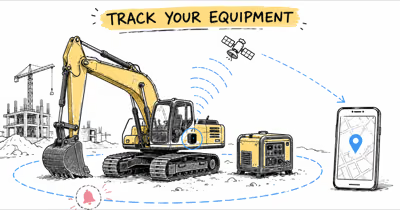
Farm equipment is a slow, high-value target. A tractor, baler, or fence energizer often sits in an open field or an unlocked barn for weeks, and stolen machines move fast once they’re gone. The National Equipment Register, which runs a heavy-equipment theft database in alliance with NICB, reported that recovery rates for stolen equipment run below 25 percent. A cellular GPS tracker won’t stop the theft, but it turns a parked machine into a recoverable asset.
That long-idle, remote-area job needs a different tracker than a daily-driven car. The five units below do it best.
- Best overall: TKSTAR TK905B with a 10000mAh battery rated for up to 80 days of standby and five magnets for steel frames
- Best live 4G with geofence: Tracki Pro at $36 plus from $20/mo, with a 10,000 mAh battery rated up to a year in power-save mode
- Best motion-alarm anti-theft: Monimoto 9 auto-arms by key fob and runs about 12 months per battery, ideal for parked equipment
- Best magnetic backup: LandAirSea 54 at $30 plus from $15/mo, with a removable mount for steel frame members
- An AirTag updates only when a stranger’s iPhone passes within about 30 feet, so it goes dark on rural land and can’t track a machine hauled onto a trailer
Choosing a GPS Tracker for Farm Equipment
The choice comes down to how long your equipment sits idle and where you can hide a tracker on a large metal machine. A tractor parked in a back field between seasons is a different problem from a daily-used skid steer. The factor that separates a recovered machine from a written-off one is whether the tracker still has battery and signal weeks later. Only a long-idle cellular unit clears that bar.
The same long-idle pattern shows up with job-site tools, which is why our construction tool tracking guide lands on a similar conclusion, though farm assets are larger, more remote, and harder to wire into onboard power.
Three questions narrow the field fast.
How long will it run untouched? Equipment can sit for a month or more, so a tracker needs deep standby. The TKSTAR TK905B reaches up to 80 days; the Tracki Pro and Monimoto 9 stretch to a year in low-power modes.
Where will it hide on a big metal frame? A magnet that clamps to a steel rail or a body small enough to tuck inside a toolbox matters more than on a car. The technical overview of GPS tracking units explains that a cellular modem sends coordinates to a server during a theft, but the unit still needs the signal to escape the metal around it.
Does it cover remote rural land? A 4G LTE tracker reports anywhere it reaches a tower, which covers most farmland but can drop in deep backcountry. The FBI reported that, in data spanning 5 years from more than 14,000 agencies, stolen vehicles change hands fast, and the same speed makes early, accurate location critical on farm equipment that is often missed for days.
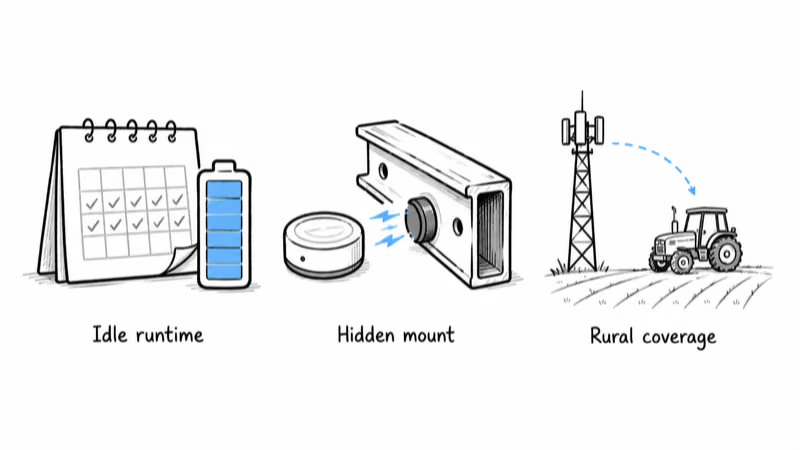
At a Glance: The 5 Farm Equipment Trackers Compared
The table below summarizes the five picks. Pricing reflects current US listings, and idle battery life is the standby figure that matters most for equipment that sits for weeks.
| Tracker | Idle battery | Mount style | Subscription | Best for |
|---|---|---|---|---|
| TKSTAR TK905B | up to 80-day standby | 5 magnets (steel) | BYO micro-SIM | Long-idle assets |
| Tracki Pro | Up to 1 year power-save | Hidden cavity or pouch | From $20/mo | Live 4G + geofence |
| Monimoto 9 | ~12 months | Hidden, key-fob arm | From $4/mo | Motion-alarm theft alerts |
| LandAirSea 54 | 2 weeks | Built-in magnet (steel) | From $15/mo | Magnetic backup |
| Optimus 3.0 | Up to 1 month | Pouch or case | From $19.95/mo | SOS on remote land |
None of these need a professional install. Four are grab-and-hide portables; only the magnetic units depend on a steel surface, which most older farm frames provide.
The Best Farm Equipment GPS Trackers in 2026
Each pick is judged on the factors that actually decide a farm recovery: idle battery life on an asset that sits untouched for weeks, hidden-mount fit on a large metal frame, signal escaping a steel cab, and three-year cost with the SIM plan folded in. The picks below focus on those farm-specific trade-offs rather than generic spec sheets, because a tracker that shines on a daily-driven car can still go dark on a parked baler.
TKSTAR TK905B: Best Overall Farm Equipment Tracker
The TKSTAR TK905B is the default pick because it’s built for the exact problem farm equipment creates: an asset that sits unused for weeks. The 10000mAh battery delivers up to 80 days of standby, so a tracker hidden on a baler in October is still reporting when you check it weeks later. Five strong magnets clamp it to any steel frame member, and the bring-your-own micro-SIM lets you run a cheap rural data plan.
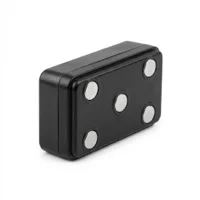
Magnetically mounted inside the steel battery box of a parked tractor, the TK905B’s 10000mAh cell sends a daily location ping deep into its rated 80-day standby window, and can be switched to a 60-second interval during a recovery to stream live updates over its cellular link.
The trade-off is that it relies on GPS plus AGPS rather than the fastest 4G live mode of the pricier units, and the IP65 rating handles rain and dust but not submersion. For a machine that mostly sits and occasionally needs recovery, that combination of long idle life and magnetic mounting is exactly right.
Tracki Pro: Best Live 4G With Geofencing
The Tracki Pro is the pick when you want live 4G LTE updates and a geofence alert the instant a machine leaves its boundary. Its 10,000 mAh battery is rated up to a year in power-save mode, and the global SIM holds a signal across rural US, Canadian, and Mexican coverage. For a working farm that moves equipment between plots, the geofence catches a theft in progress. Our Tracki Pro review covers the plans and setup.
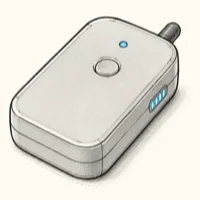
Set a geofence around a field and the Tracki Pro sends an alert to your phone when a machine crosses the line, then reports at 60-second intervals in live mode. Its IP67 rating handles dust and water, including a direct hose-down.
The catch is the $20/month subscription floor, higher than the SIM-only TKSTAR, and live mode shortens the battery from the year-long power-save figure to a few weeks of continuous reporting. For equipment that sits in power-save until it moves, that drain rarely matters.
Monimoto 9: Best Motion-Alarm Anti-Theft
The Monimoto 9 takes a different approach: it auto-arms when your key fob walks away and fires a phone alert the moment the machine is touched or moved. That motion-triggered alarm suits a tractor parked in a barn or a baler left in a field, where you want to know about movement before the machine is gone. It runs about 12 months per battery and carries an IP68 fully waterproof rating, the toughest here.
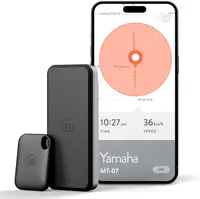
With the fob out of range, bumping the parked machine triggers the Monimoto 9’s wake-and-locate alert, then it begins tracking. Its LTE-M and eSIM combination is built to hold a weak rural signal where consumer-grade units struggle.
The trade-off is that it’s built around the alarm-then-track model rather than constant live mapping, and the subscription starts around $4/mo. For an owner who wants early warning on parked equipment more than minute-by-minute tracking, that is the right design.
LandAirSea 54: Best Magnetic Backup
The LandAirSea 54 is the right second unit when you want a tracker a thief won’t find after pulling the first one. The built-in magnet sticks to any steel frame rail, so you can clamp it under a tractor frame or inside a steel implement housing. At $30 it’s the cheapest entry here, and its $15/month annual plan is the lowest live subscription of the portable picks. Our LandAirSea 54 review covers the mount and plans.
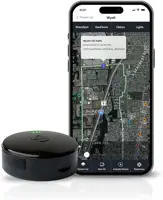
Clamped against a steel frame rail, the LandAirSea 54’s built-in magnet is designed to hold position through field vibration; confirm the rail is bare steel and wrap the unit in foam to stop rattle. It pairs naturally with the TKSTAR as a deep-hidden primary plus a magnetic decoy-buster.
The catch is the 2-week battery, so it needs a recharge twice a month and suits equipment you check often rather than a machine left idle all season. The magnet also grips steel only, so aluminum or composite panels need the adhesive backup.
Optimus 3.0: Best for Remote Land With SOS
The Optimus 3.0 is the pick for owners working large or remote acreage, because it pairs live 4G tracking with a physical SOS panic button and up to a month of battery at default reporting. On a spread where help is far away, the SOS button is a genuine safety feature, and the geofence plus speed alerts cover the theft-recovery basics. Our Optimus GPS tracker review covers the app and alerts.
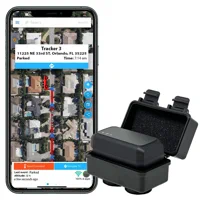
Mount the Optimus 3.0 near cab glass rather than deep inside metal, since a steel cab weakens the GPS and cellular signal, and its geofence sends an alert when a machine crosses a boundary. The SOS button sends an alert to the paired phone at the press of a button. Its up-to-1-month battery sits between the 2-week LandAirSea and the months-long TKSTAR.
The downside is the $19.95/month subscription, near the top of this list, and the unit is not magnetic, so a frame mount needs a pouch or case. For a remote property where an SOS button earns its keep, that cost is easy to justify.
Where Do You Hide a Tracker on Farm Equipment?
Hidden placement is the single biggest factor in a successful recovery. A tracker a thief spots in the first minute gets pulled and tossed, while a well-hidden unit keeps reporting all the way to a back lot, the steel intermodal box a thief loads it into, or the trailer it left on. On a large machine, placement also fights the metal, since a sealed steel compartment chokes both GPS and cellular signal.
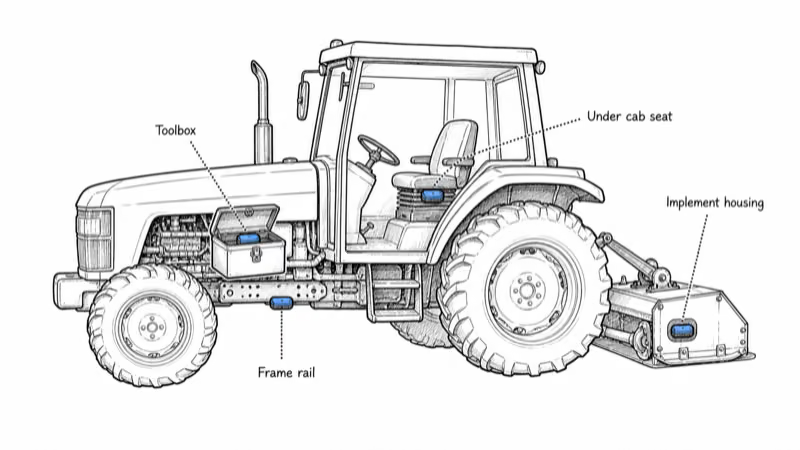
Four spots work best on farm equipment.
Under the cab seat or behind a panel. Most tractor cabs have a cavity under the seat or behind a plastic trim panel. A portable TKSTAR or Optimus 3.0 sits in a Velcro pouch here, close enough to glass for a clean signal and out of casual sight.
Inside a steel toolbox or battery box. The battery box and any frame-mounted toolbox give a magnetic LandAirSea 54 or TKSTAR a solid steel surface. Keep the unit clear of terminals and orient it so the signal escapes the open side of the box.
Magnetically against a hidden frame rail. A magnetic unit clamped low on a frame rail is hard to find without crawling under the machine, which is exactly what makes it a strong spot. Use a foam wrap to stop rattle, confirm the rail is bare steel before relying on the magnet, and angle the unit so its antenna faces down and out rather than up into the chassis metal.
Inside an implement housing. Balers, mowers, and energizer boxes have gearbox covers and enclosures with void space. A Monimoto 9, with its motion alarm, fits here to guard an implement that has no cab at all.
The strongest pattern is a two-tracker setup: a deeply hidden primary plus a second magnetic unit. A thief who finds and ditches the first assumes the machine is clean and keeps moving, while the second keeps reporting from a spot he never checked. That second signal is where most recoveries actually come from, and the extra unit costs about $30 of hardware plus a few dollars a month.
How Long Should the Battery Last for Idle Equipment?
Idle battery life is what separates a farm tracker from a car tracker. A car gets driven and can charge a wired unit; a baler or fence energizer can sit untouched from one season to the next. Plan for the longest gap your equipment ever sits, then add a margin.
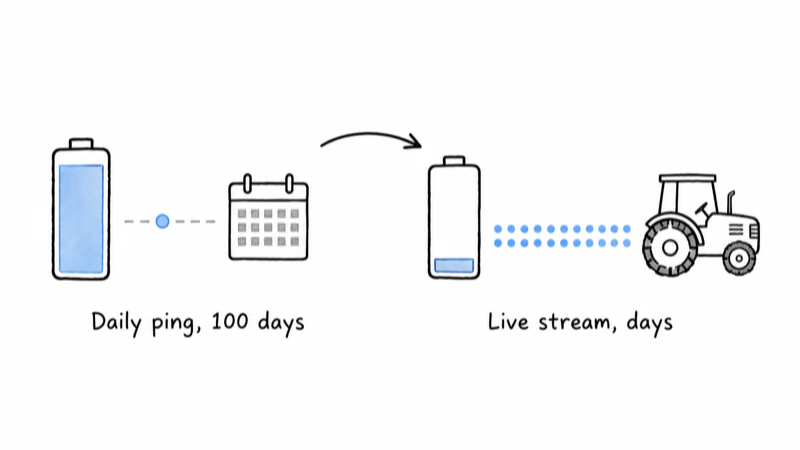
The TKSTAR TK905B leads here with up to 80 days of standby on its 10000mAh cell, which covers most of an off-season on a parked machine. The Tracki Pro and Monimoto 9 stretch to roughly a year in their low-power modes, trading update frequency for runtime. The Optimus 3.0 lands at up to a month, enough for shorter idle stretches, while the LandAirSea 54’s 2-week battery needs a twice-monthly recharge and works best on equipment you handle regularly.
Reporting interval is the lever that decides practical battery life. A daily ping on a parked machine sips power; a 60-second live stream during a recovery drains it quickly. Most of these units sit in deep power-save until motion wakes them, which is exactly the behavior long-idle farm equipment needs. The same battery-versus-interval trade-off shapes our GPS tracker for power tools guide, where smaller assets favor compact cells over long standby.
For owners cross-shopping vehicles, the best GPS tracker for truck guide covers wired options that sidestep the battery question entirely, and the full GPS tracker hub compares cellular units across asset types.
Geofencing, available on the Tracki Pro, LandAirSea 54, and Optimus 3.0, adds a boundary alert that catches a theft the moment a machine leaves its plot, regardless of how long the battery has been sitting.
An AirTag Is Not Enough for Farm Equipment Theft Recovery
An AirTag is cheap, and it’s better than nothing, but it’s not a substitute for a cellular GPS tracker on equipment you actually want to recover. The reason is the network. An AirTag has no GPS chip and no cellular radio of its own, so it reports location only by piggybacking on nearby Apple devices through the Find My network.
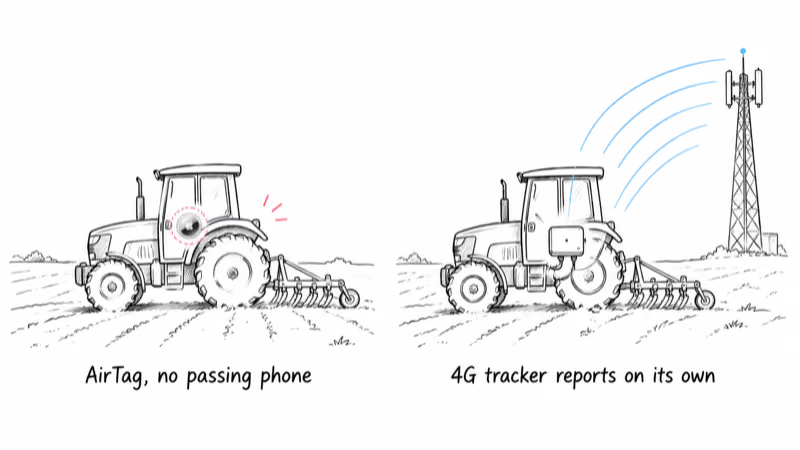
On a farm, that network is mostly absent. An AirTag updates only when a stranger’s iPhone passes within Bluetooth range of the machine, which rarely happens in a back field, a barn, or an equipment yard far from a road. The same tag that looks reliable in a suburb can go dark on rural land, exactly where farm equipment lives.
NICB reported that US vehicle thefts fell 17 percent in 2024 as owners adopted more tracking tools. That trend depends on a tracker that actually reports, not one waiting for a passing phone.
The detection problem makes it worse. An AirTag beeps when separated from its owner and can be surfaced by Android phones after a short delay, so a thief gets an audible warning and a simple path to disable it. Those anti-stalking features protect people, but on a stolen tractor they work against recovery. The same Find My network gap hampers job-site tools too, and it’s even wider on remote farmland than on a busy site.
A 4G LTE tracker keeps reporting on its own the entire time, no passing phone required. The honest verdict: an AirTag is a fine silent backup tucked into a cab as a third signal, but for real theft recovery on long-idle, remote equipment, the cellular trackers above are the tools that actually bring a machine back.
Bottom Line
The right farm equipment GPS tracker is the one that survives the long idle stretches your machines sit through. The TKSTAR TK905B is the default for its up to 80-day standby and magnetic mounting, with a LandAirSea 54 added as a hidden second unit on a high-value tractor. For live 4G and a geofence, choose the Tracki Pro; for motion-alarm warning on parked equipment, the Monimoto 9; for remote acreage, the Optimus 3.0 with its SOS button.
Whatever you choose, make it cellular and make sure it lasts the off-season. An AirTag is a useful silent backup but goes dark on rural land and can’t track a machine hauled away on a trailer; only a long-idle 4G LTE tracker keeps reporting and turns a stolen asset into a recoverable one.
FAQ
What is the best GPS tracker for farm equipment?
The TKSTAR TK905B is the best overall pick for farm equipment because its 10000mAh battery gives up to 80 days of standby, so it keeps reporting on a tractor or implement that sits in a field or barn for weeks. Its five magnets clamp to a steel frame. For live 4G updates and geofencing, the Tracki Pro is the stronger choice, and the Optimus 3.0 adds an SOS button for remote properties.
How long should the battery last for idle equipment?
Aim for at least several weeks of standby, because farm equipment often sits unused between seasons or jobs. The TKSTAR TK905B reaches up to 80 days of standby on its 10000mAh battery, the Tracki Pro and Monimoto 9 are rated up to a year in low-power modes, and the Optimus 3.0 runs up to a month at default reporting. A 2-week battery like the LandAirSea 54 needs a recharge twice a month, so it suits equipment you check often rather than long-idle assets.
Where do you hide a tracker on farm equipment?
The best spots are inside the cab under the seat, behind plastic body panels, inside a toolbox or battery box, and magnetically clamped to a hidden steel frame member. Avoid the metal engine bay or a closed steel cab roof, which block the cellular and GPS signal. On implements with no enclosure, a magnetic unit tucked against a frame rail or inside a gearbox housing works. A two-tracker setup, one hidden deep and one magnetic backup, gives the best recovery odds.
Will a metal cab block the GPS signal?
A fully enclosed steel cab can weaken both GPS and cellular signal, so placement matters more on farm equipment than on a car. Mount the tracker near a window, a plastic panel, or low on the frame outside the steel box rather than deep inside a sealed metal compartment. Modern 4G units like the Tracki Pro and Optimus 3.0 hold a fix through glass and thin panels. Test the spot for a few days and confirm pings before relying on it.
Do farm equipment GPS trackers work in remote rural areas?
Yes, as long as there is some cellular coverage. A 4G LTE tracker reports anywhere it can reach a cell tower, which covers most farmland but can drop in deep valleys or far backcountry. The TKSTAR TK905B, Tracki Pro, and Monimoto 9 use global or multi-carrier SIMs that latch onto whatever network is strongest. Check the carrier coverage map for your land before buying, and pick a unit that stores location locally and sends it once signal returns.
Is an AirTag enough to track a tractor?
No, an AirTag is not enough for farm equipment theft recovery. It has no GPS or cellular radio and only updates when a stranger’s iPhone passes within Bluetooth range, which rarely happens on rural land or in a barn. It also beeps when separated from its owner and can be detected by Android phones, so a thief gets a warning. Use an AirTag only as a silent low-cost backup, never as the primary tracker on equipment you want to recover.
Do these trackers need a monthly subscription?
Most live cellular trackers need a SIM plan because they report over 4G LTE. The TKSTAR TK905B uses a bring-your-own micro-SIM, so you choose a cheap data plan. The Tracki Pro, LandAirSea 54, Monimoto 9, and Optimus 3.0 bundle their own SIM with monthly plans that range from about $4 to $20. Over three years the subscription costs more than the hardware, so factor it into the total when comparing picks.