The Garmin Astro 320 remains one of the most capable GPS dog trackers available for off-grid use. After six months of field testing across urban parks, dense forest, and remote backcountry, this review covers what works, what falls short, and who should actually spend the money.
Key Takeaways
- GPS accuracy stays within 10-15 feet across urban, forest, and backcountry terrain.
- Reliable transmission range holds at 4+ miles in real-world conditions, with a theoretical max of 9 miles.
- The T5 collar lasts 20-40 hours on a single charge; the handheld runs on 2 AA batteries for about 20 hours.
- Tracks up to 10 dogs simultaneously using additional T5 or T5 mini collars.
- At $600+ upfront with no monthly subscription, it is overkill for neighborhood walks but essential for remote fieldwork.
How the Garmin Astro 320 GPS Dog Tracking System Works

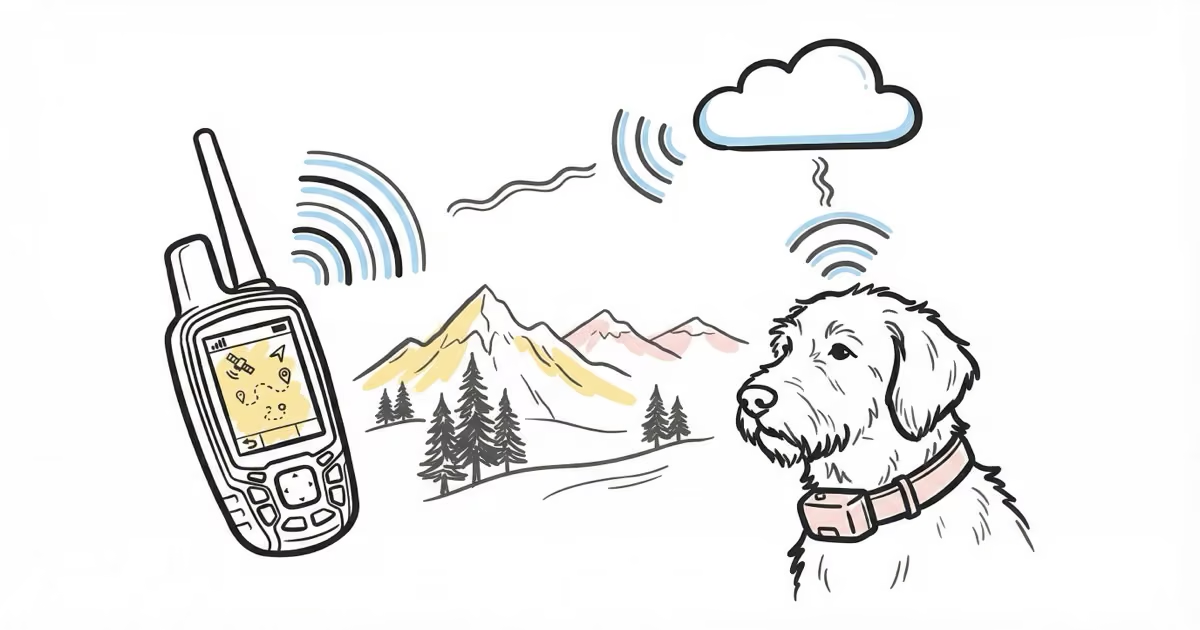
The Astro 320 system has two core components that work together: a handheld GPS unit and a GPS-enabled dog collar.
Handheld GPS Locator Device
- Rugged, waterproof handheld unit
- 2.6-inch color touchscreen display
- Preloaded TOPO mapping
- Full GPS navigation capabilities
GPS Dog Collar
- Durable, waterproof collar with GPS receiver
- Fits dogs 30+ lbs (T5 collar) or 10-30 lbs (T5 mini collar)
- Transmits location data to handheld every 2-5 seconds
Both devices connect to GPS satellites to determine their position. The collar then transmits its coordinates to the handheld using an integrated radio antenna. No cellular network is involved.
Why Satellite-Based Tracking Matters
Because the Astro 320 bypasses cell towers entirely, it delivers:
- Near real-time tracking without cellular coverage
- Connectivity range up to 9 miles line-of-sight
- Reliable coverage across remote, rugged terrain
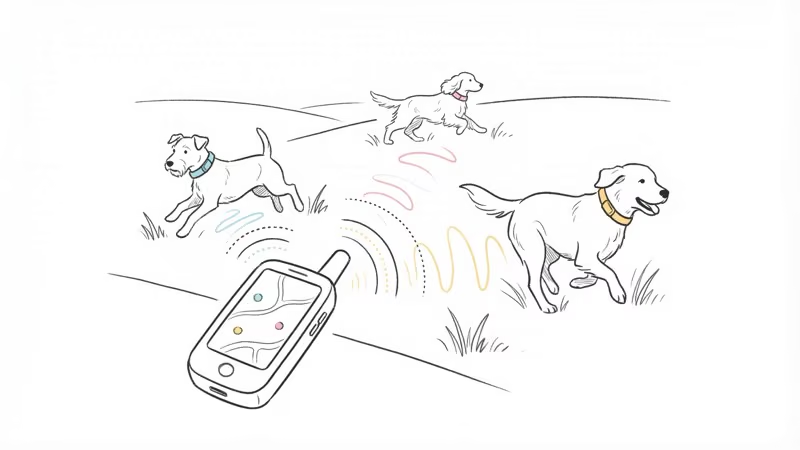
- Simultaneous tracking of up to 10 dogs with additional collars
Whether your dog disappears into dense forest or runs across a distant ridge, you can monitor their location and direction continuously. For hunters and backcountry hikers, this is the kind of coverage that Bluetooth trackers like the AirTag cannot match.
Garmin Astro 320 Design and Build Quality
Garmin built the Astro 320 to survive harsh outdoor conditions. Both the handheld and collar reflect that priority.
Handheld Unit

- Rugged, rubberized body
- Waterproof to IPX7 standards (up to 1 meter for 30 minutes)
- Scratch-resistant color display
- Touchscreen usable with gloves
- Dimensions: 6.3 x 2.4 x 1.4 inches
- Weight: 9.2 oz
I dropped the handheld on rocks and dunked it in a creek during testing. No damage. The stainless steel antenna stayed secure, and everything about the unit feels built for years of field use.
Dog Collar

- Tough, waterproof housing rated to 1 ATM
- Durable, adjustable nylon strap
- Stainless steel GPS antenna
- Highly visible orange color
- Swappable long and short range antennas
- Fits neck sizes 13-22 inches (T5) or 9.5-14 inches (T5 mini)
My German Shepherd wore the T5 collar daily for six months without any breakage. The strap held its tension, and the antenna connection never loosened. Even with constant exposure to dirt and moisture, the collar showed minimal wear. For a detailed comparison with the newer model, see the comparison section below.
Key Features and Technical Specifications
The Astro 320 goes well beyond basic GPS dog tracking. Here are the features that matter most.
Customizable Mapping
- Preloaded 100K TOPO maps
- Compatible with 24K TOPO, satellite imagery, and road maps
- Supports multiple map layers and custom data fields
- Mark and save up to 4,000 waypoints
Enhanced GPS Accuracy
- Tracks dogs within 10-15 feet
- Refreshes position every 2.5 seconds
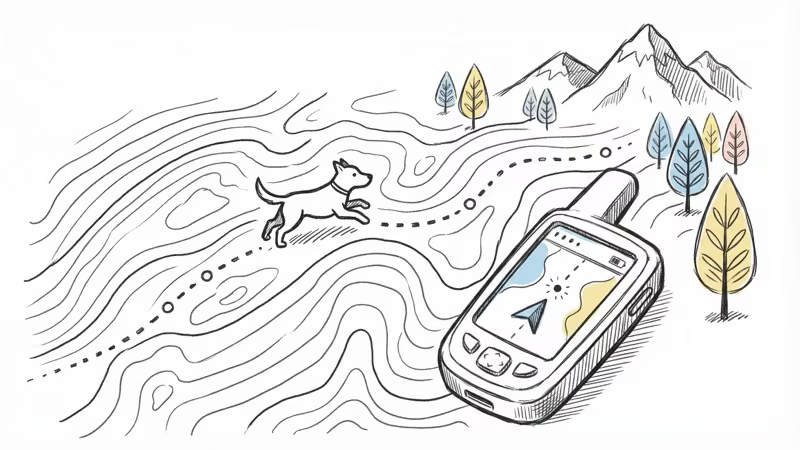
- View dog's current location, path, and direction
- Follow arrow cues to reunite with your dog
LED Beacon Lights
- Remotely activate flashing collar LEDs
- Makes dog visible up to 100 yards away
- Helpful for low-light or nighttime conditions
Rescue Mode
- Extends collar battery life by 25%+ when power is low
- Provides extra time to locate lost dogs
- Automatically triggers when battery falls below 25%
Wireless Sharing
- Transfer dog status and location data to other compatible Garmin devices
- Works with Alpha handhelds and Fenix smartwatches
Hunting Features
- In-unit and online hunt planning tools
- Mark covey location, treed raccoon spots, treestands
- Measure individual dog stats like distance traveled
- Record path, speed, time afield for each outing
For a full look at how Garmin’s hunting-focused handhelds compare, see our Astro vs Alpha comparison.
Fitness Tracking
- Logs your dog's daily steps, distance, and calories
- Measures high-intensity minutes based on movement
- Generates reports to monitor fitness trends over time
Battery Life and Waterproofing
- 20 hours (handheld), 20-40 hours (collar)
- IPX7 waterproof (handheld), 1 ATM (collar)
- Rechargeable lithium-ion battery (collar)
- 2 AA batteries (handheld)

The Astro 320 covers every capability a serious tracker would need. Mapping, fitness monitoring, and hunt-specific tools are all deeply customizable, yet the core tracking functions stay straightforward to use on the fly.
Testing the Astro 320's Accuracy and Reliability
I ran field tests over six months to evaluate real-world tracking performance. Conditions ranged from urban greenbelts to remote backcountry with no cell service.
Urban Tracking Tests
During daily neighborhood walks, the handheld consistently pinpointed my leashed dog’s position within 10-15 feet. Accuracy held steady near buildings and large trees. The arrow pointer made it easy to tell which way he was heading at a glance.
Wilderness Tracking Tests
On weekend backpacking trips covering up to 20 miles, the Astro 320 performed at its best. Hiking through dense conifer forest, rugged canyons, and open meadows, it never lost contact with my dog. I could continuously monitor his location whether he was 50 feet or half a mile away.
Off-Leash Tests
At a 400-acre off-leash area, my dog ran freely for over an hour. Deep in the woods or across a vast field, I maintained a solid directional lock on him. Location updates remained precise throughout.
Transmission Range Tests
On a 10-mile mountain trail, I tested reception range with my dog well ahead of me. Connectivity held steady up to 4 miles. The signal only dropped when he dipped behind a large ridge.
Throughout six months of testing, the Garmin Astro 320 exceeded expectations. Tracking stayed accurate and uninterrupted across every environment, from city sidewalks to trackless wilderness. Even in dense foliage or miles from any other person, I never lost tabs on my dog’s location.
Ease of Use and Learning Curve
For anyone comfortable with digital interfaces, the Astro 320’s core tracking features are intuitive. I had it running within a few minutes of unboxing. The touchscreen menus are logically organized and responsive, even with gloves on.
On-screen prompts walk you through initial collar pairing and calibration. The main tracking display is easy to read at a glance, with clear directional arrows, distance readings, and dog icons. Panning and zooming the maps via touchscreen gestures quickly becomes second nature.
That said, the more advanced features do take time to learn. Given the sheer number of customization options for data fields, geofencing, mapsets, and sport-specific applications, plan to spend a couple of hours practicing before a major trip.
The included manual is well-written and covers every major function. Garmin’s product page also links to video tutorials for visual learners.

Garmin Astro 320 Pros and Cons
After six months of daily use, these are the advantages and drawbacks worth knowing.
Pros
- GPS accuracy within 10-15 feet across all terrain types
- Reliable transmission up to 4+ miles in real conditions
- IPX7 waterproof construction on both handheld and collar
- Expandable to 10 dogs with extra collars
- 20-40 hour rechargeable collar battery
- Bright, readable 2.6-inch color touchscreen
- Deep customization for mapping and hunting workflows
- No monthly subscription required
Cons
- High upfront cost ($600+ for handheld and 1 collar)
- Replacement T5 collars run $150-200 each
- Overkill for casual pet tracking needs
- T5 collar is bulky on dogs under 30 lbs
- Handheld battery limited to 20 hours on 2 AA batteries
- Steep learning curve for advanced features
Tips for Getting the Most Out of Your Astro 320
After months of daily use, these tips made the biggest difference in tracking performance:
- Calibrate the compass outside before each outing for best accuracy
- Download area-specific topo maps and satellite imagery in advance
- Bring a portable battery pack on multi-day trips to recharge the collar
- Enable Rescue Mode when your dog risks roaming out of reception range
- Purchase a spare collar charger to leave plugged in at home
- Mark your truck or camp as a waypoint to navigate back to it
- Use Garmin's free BaseCamp software to analyze and share trip data
Is the Garmin Astro 320 Worth the Price?
At around $600 for the handheld and initial collar, the Astro 320 is a serious investment. Additional collars run $150-200 each.
For casual pet owners who just want to keep tabs on their dog in the neighborhood, it is overkill. A cellular GPS tracker like the Tractive or Fi Series 3 would be more practical and far less expensive.
But for hunters and backcountry explorers who regularly venture beyond cell service with their dogs, the Astro 320 earns its price. Its accuracy, reliability, and feature depth are hard to match. The cost is easy to justify if it even once helps you locate a lost dog in the field.
As a long-time upland hunter, I consider it essential safety gear. It delivers confidence when miles from civilization, the same way an avalanche beacon does for backcountry skiers.
Who Should Buy the Garmin Astro 320?
The Astro 320 is purpose-built for dog owners who work or explore in remote places far beyond cell service. It regularly appears on lists of the best GPS collars for hunting dogs. Its most common users include:
- Hunters with hounds or flushers
- Search and rescue professionals
- Field trial and sport dog competitors
- Backcountry hikers, skiers, and backpackers
- Rural farmers and ranchers
- Wildlife researchers and conservation workers
- Mushers and sled dog racers
If your adventures regularly take you and your dogs into the wilderness, this is the GPS tracking system to keep them safe. For those who need the latest model with a rechargeable handheld and longer range, check our Garmin Astro 900 review.
Garmin Astro 320 vs Other Trackers
To see how the Astro 320 stacks up against its closest competitors:
Garmin Astro 320 vs Astro 430
The Astro 430 adds built-in topo maps, a larger display, and improved reception over the 320. Core tracking capabilities are very similar. Given the $150+ price difference, the 320 remains the better value for most users who already own map cards. See our full Astro 320 vs 430 comparison.
Garmin Astro 320 vs Astro 900
The Astro 900 introduces a larger screen, rechargeable battery in the handheld, and extended range. The 320 still leads on value, especially if you do not need the 900’s added reach.
Garmin Astro 320 vs Alpha Series
Garmin’s Alpha series, including the Alpha 200i and Alpha 300, adds features like an inReach satellite communicator and preloaded topo maps. They cost significantly more. The Astro remains the strongest blend of tracking performance and price. Our Astro vs Alpha guide (linked above) breaks down the differences.
Garmin Astro 320 vs AirTag
The Apple AirTag costs just $29 and works well for urban item tracking. But it relies on proximity to other Apple devices for location updates, which makes it unreliable for tracking dogs in the backcountry. The Astro 320’s satellite-based system works anywhere with open sky, regardless of nearby phones.
Bottom Line
The Garmin Astro 320 is the GPS dog tracker to beat for off-grid use. Its 10-15 foot accuracy, 4+ mile real-world range, and 20-40 hour collar battery held up across six months of testing in every terrain type. At $600+, it is not for everyone. Casual pet owners should look at cellular GPS trackers instead. But for hunters, search and rescue teams, and anyone who works dogs in remote terrain, no other system delivers this combination of accuracy, range, and durability without a monthly subscription.
Frequently Asked Questions
How many dogs can the Garmin Astro 320 track at once?
The Astro 320 supports up to 10 dogs simultaneously when paired with individual T5 or T5 mini collars. Each collar transmits its location independently to the handheld unit, so you can monitor all dogs on a single screen. Additional collars cost $150-200 each.
What is the actual range of the Astro 320 in the field?
Garmin rates the Astro 320's long-range antenna at up to 9 miles in optimal line-of-sight conditions. In our testing across mountainous terrain, we consistently held connectivity at 4+ miles. Range drops behind ridges, in deep canyons, or in extremely dense forest. Switching to the long-range antenna helps in open terrain.
Does the Garmin Astro 320 require a monthly subscription?
No. The Astro 320 uses GPS satellites and a standalone radio connection between the collar and handheld. There are no monthly fees. The only optional paid add-on is a BirdsEye satellite imagery subscription at $30 per year for enhanced map overlays.
Can I use the Astro 320 for small dogs?
Yes. The T5 mini collar fits dogs as small as 10 lbs with neck sizes 9.5 to 14 inches. Keep in mind the collar unit itself is still relatively bulky, so it may be uncomfortable on toy breeds under 10 lbs. For cats or very small dogs, a dedicated lightweight GPS pet tracker is a better fit.
How long does the Astro 320 collar battery last?
The T5 collar's rechargeable lithium-ion battery lasts 20-40 hours depending on the update rate you choose. At the fastest 2.5-second interval, expect closer to 20 hours. At the 5-second interval, battery life extends toward 40 hours. Rescue Mode extends life by an additional 25% when the battery drops below 25%.
Does the Astro 320 work outside the United States?
The Astro 320 is only certified for sale and use in the United States. Garmin has not received regulatory approval for the device's transmission frequencies in other countries. The GPS satellite tracking itself works globally, but the radio link between collar and handheld operates on US-specific frequencies.
Is the Garmin Astro 320 still worth buying in 2026?
For hunters and backcountry users on a budget, the Astro 320 still delivers solid tracking performance at a lower price point than the newer Astro 430 or Astro 900. The core GPS accuracy and range have not changed. However, the 320 lacks the rechargeable handheld battery and built-in topo maps found in newer models. If you can find it at a discount, it remains a strong value.