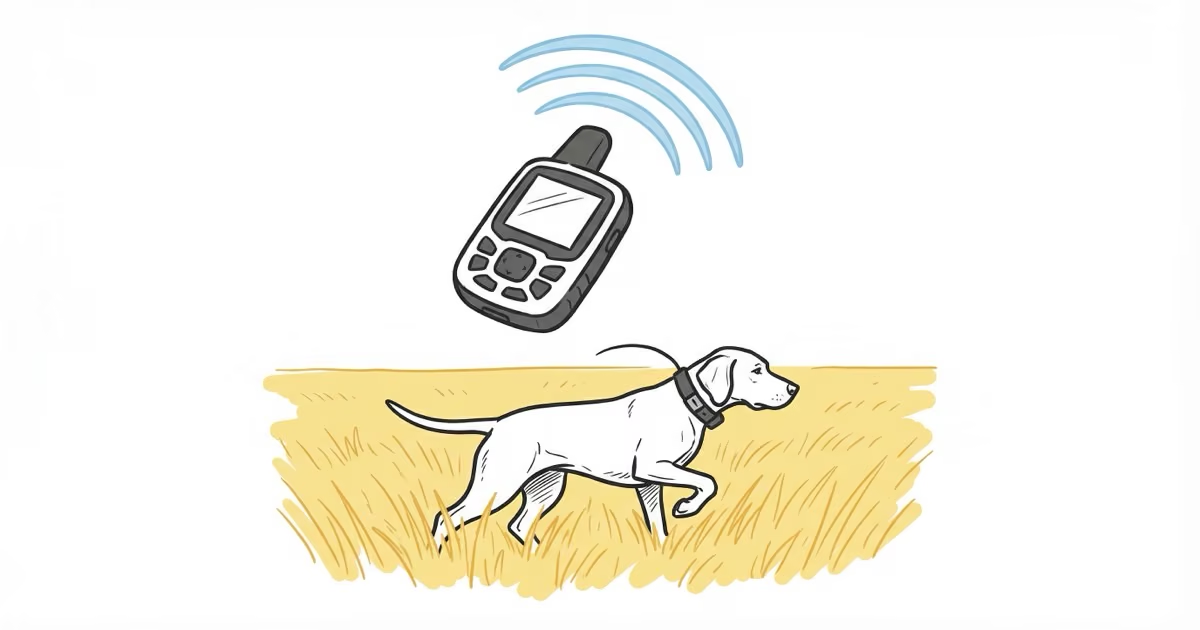
The Garmin Astro 430 has been a staple in the hunting dog GPS tracker category since its release. After testing it across mountain terrain, dense forest, and open fields over multiple seasons, I can say this system earns its reputation. But at $649.99, the price demands scrutiny.
This review covers tracking performance, battery life, mapping, durability, and the real trade-offs you should weigh before buying.
- Tracks up to 20 dogs simultaneously from one handheld unit with GPS + GLONASS positioning.
- Location updates every 2.5 seconds with a maximum range of 9 miles line-of-sight using the T5 collar.
- Battery lasts 20-40 hours on the T5 collar and 20 hours on the handheld unit.
- No monthly fees or subscriptions required for GPS tracking. Satellite map imagery is an optional add-on.
- Designed for hunting and field work, not everyday pet tracking. No smartphone app, no fitness metrics, no cellular connectivity.
Overview of the Garmin Astro 430 Dog Tracking System
The Garmin Astro 430 pairs a handheld GPS unit with the T5 dog tracking collar. It uses GPS and GLONASS satellite positioning combined with VHF radio frequency to relay your dog’s location back to the handheld device in near real time.
Core specs at a glance:
- Tracks up to 20 dogs from one handheld unit
- 9-mile range with the included T5 collar
- Location updates every 2.5 seconds
- IPX7 water resistance (submersible to 1 meter for 30 minutes)
- Preloaded TOPO US 100K maps with 1-year BirdsEye Satellite Imagery subscription
- On-screen dog status icons: running, on-point, treed, resting
The system retails for $649.99 for the bundle including the handheld unit and T5 collar. Additional T5 collars run around $249.99 each.
Tracking Performance and Reliability
The Astro 430’s dual GPS/GLONASS satellite reception delivers consistent tracking even in areas where cell-based trackers fail completely. In remote mountain terrain and dense hardwood forest, the system held a lock and relayed position data without dropout.
Location updates arrive every 2-2.5 seconds, which is fast enough to follow a running hound in real time on the handheld screen. You see direction, distance, and speed on a color display. Toggle to map view and you get your position relative to the dog overlaid on topographic data.
I tested the Astro 430 across rugged mountain terrain, dense forest, open fields, and during water retrieval exercises. The tracking stayed accurate through all of it.
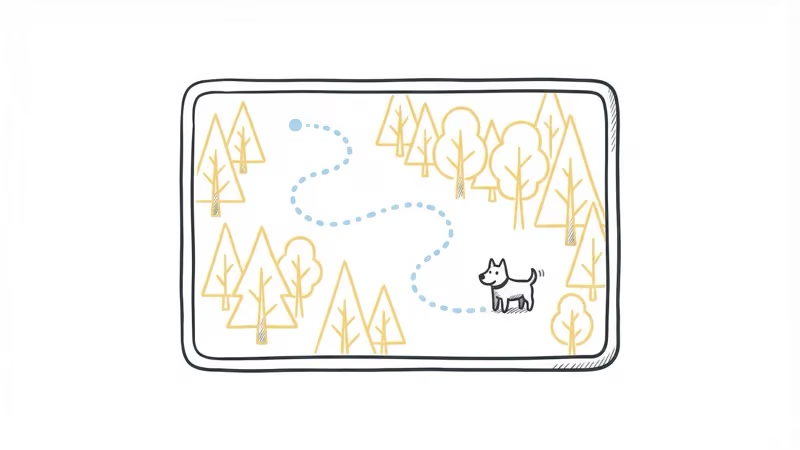
With the included T5 collar, the maximum range is 9 miles line-of-sight. In hilly or heavily wooded areas, expect 4-6 miles of usable range. That is still enough room for most upland bird hunting and hound work.
For smaller breed dogs, Garmin offers the T5 Mini collar with tracking up to 5 miles. If you are shopping for a hunting collar specifically, our best GPS collars for hunting dogs roundup covers more options.
The combination of satellite positioning and VHF radio gives the Astro 430 a fundamental advantage over cell-based trackers. There is no dependency on cellular towers, which means it works in areas where your phone shows zero bars. For a deeper look at why that matters, see our breakdown of Bluetooth vs GPS tracking technology.
Mapping and Navigation
The Astro 430 doubles as a full outdoor handheld GPS navigator. It comes preloaded with Garmin TOPO US 100K topographic maps and includes a 1-year BirdsEye satellite imagery subscription.
You can view your position and all tracked dogs overlaid on the map in real time. Additional map options include City Navigator NT road maps, HuntView detailed topo maps, and BlueChart g2 marine charts.
Built-in tools include a 3-axis compass, barometric altimeter, and paperless geocaching support. The Covey Counter feature lets you mark up to 2,000 waypoints with location, time, and elevation data, which is useful for marking tree stands, covey flushes, or hunting blinds.
For hunters who already carry a separate GPS navigator, the Astro 430 consolidates two devices into one.
Battery Life
The T5 collar runs on a rechargeable Li-ion battery rated at 20-40 hours depending on update rate and usage. The handheld unit lasts up to 20 hours.
In practice, I got about 24-28 hours from the T5 collar during active hunting with the default 2.5-second update interval. Switching to the 5-second update mode pushed that closer to 36 hours.
That runtime covers a long weekend of hunting without needing a recharge. For extended backcountry trips, I recommend carrying spare Li-ion batteries for the collar and AA batteries for the handheld unit. Swapping takes under a minute.
The built-in Rescue Mode conserves battery if a dog gets lost. It reduces the update rate to extend tracking time while you close the distance. That is a thoughtful design choice for the worst-case scenario.
Durability and Water Resistance
The handheld unit meets IPX7 water resistance standards per the IEC 60529 protection rating, meaning submersion to 1 meter for 30 minutes. I have dropped it in creeks and used it in heavy rain without any failures.
The T5 collar is also fully waterproof. Retrievers have worn it through repeated swims and underwater plunges with no problems.
The handheld has a rubberized casing that absorbs drops. The VHF antennas are flexible and snap back into shape if bent or crushed against brush. The collar itself handles being dragged through mud, snagged on brambles, and occasionally chewed on. It shows cosmetic wear, but keeps functioning.
After multiple hunting seasons, the system still performs like it did out of the box. If you are comparing build quality against competitors, our Garmin Astro vs Alpha comparison covers how the newer Alpha line stacks up.
Ease of Use
The 2.6-inch color touchscreen provides access to all device functions through a menu system that is straightforward to navigate. Pairing a collar to the handheld takes about 30 seconds. You can assign unique IDs and colors to each dog for quick identification.
The main tracking screen shows direction, distance, dog status, and GPS signal strength. You can customize which data fields appear and toggle between map view and compass view.
Advanced functions like Rescue Mode alerts, training stimulation levels, and software updates have their own dedicated menus. The learning curve for basic tracking is short. I was using core features right out of the box. Mastering the hunt metrics, waypoint management, and BaseCamp data syncing takes a few sessions.
One notable limitation: there is no smartphone app. All tracking happens on the handheld device. You can sync data to a computer through Garmin’s BaseCamp software, but there is no real-time phone integration.
Hunting-Specific Features
Beyond position tracking, the Astro 430 includes tools built specifically for sporting dog work:
- Hunt Metrics: Track distance traveled, time in the field, on-point and treed alerts. Export data after each session to analyze dog performance
- Covey Counter: Mark and save waypoints at points of interest, covey locations, and hunting spots with timestamps
- Dog Status Icons: See when each dog is running, on-point, treed, or resting directly on the tracking screen
- LED Beacon Lights: Remotely activate flashing beacons on collars to locate dogs at night or in low visibility
- Stimulation/Vibration: Deliver tone, vibration, or static stimulation for training through the T5 collar
- BaseCamp Integration: Plan routes, share waypoints, and sync dog data between multiple Astro units wirelessly
These features are why the Astro 430 costs more than a standard pet GPS tracker. For hunters running multiple dogs on large tracts, the hunt metrics and multi-dog tracking justify the premium. If you are primarily interested in the training collar functions, our Garmin Delta SE review covers a more focused option.
Garmin Astro 430 Pros and Cons
- Dual GPS/GLONASS provides consistent tracking in remote terrain with no cellular dependency
- 2.5-second updates with up to 9-mile range covers serious off-leash work
- No monthly subscription fees for core tracking functionality
- Tracks up to 20 dogs from one handheld unit
- IPX7 water resistance on both handheld and collar components
- Preloaded TOPO maps turn it into a standalone outdoor navigator
- Hunt-specific features (Covey Counter, Hunt Metrics, dog status icons) not found on pet trackers
- $649.99 entry price is significant, with additional collars at $249.99 each
- No smartphone app. All tracking requires carrying the separate handheld device
- No daily activity or fitness tracking for routine pet monitoring
- Preloaded maps are U.S.-only. International maps sold separately
- Steep learning curve for advanced features like BaseCamp and hunt metrics customization
- T5 collar fits dogs 30 lbs and up. Not suitable for small breeds without the Mini version
How the Astro 430 Compares to Newer Garmin Models
Garmin has released the Astro 900 and the Alpha line since the 430 launched. The Astro 900 adds an expanded satellite constellation (GPS + GLONASS + Galileo), a larger display, and longer battery life.
The Alpha 300 series integrates inReach satellite communication, which lets you send SOS messages and share dog locations via the Iridium satellite network. That is a meaningful safety upgrade for backcountry hunters.
| Feature | Astro 430 | Astro 900 | Alpha 300 |
|---|---|---|---|
| Satellites | GPS + GLONASS | GPS + GLONASS + Galileo | GPS + GLONASS + Galileo |
| Range (T5 collar) | 9 miles | 9 miles | 9 miles |
| Update interval | 2.5 seconds | 2.5 seconds | 2.5 seconds |
| Satellite messaging | No | No | Yes (inReach) |
| Display | 2.6 inch | 3.5 inch | 3.5 inch |
| Price (with T5) | ~$650 | ~$750 | ~$900+ |
If you can find the Astro 430 at a discount, it remains a strong value. The core tracking performance is identical across all three. For a side-by-side look at the older model, see our Garmin Astro 320 vs 430 comparison.
Bottom Line
The Garmin Astro 430 is the right tool for hunters, field trainers, and search-and-rescue teams who need reliable, subscription-free dog tracking in areas without cell service. The 9-mile range, 2.5-second updates, and 20-dog capacity make it the most capable dedicated dog tracking system in this price range. If you want smartphone integration or daily activity monitoring for a house pet, look at cell-based options instead. But for off-leash sporting dog work, the Astro 430 earns its price. If your needs justify the newer features, consider the Astro 900 or check our best GPS dog trackers with no subscription roundup.
Frequently Asked Questions
Does the Garmin Astro 430 require a monthly subscription?
No. The Astro 430 uses GPS/GLONASS satellites and VHF radio for tracking. There are no monthly fees or service plans required. The only optional paid add-on is the BirdsEye satellite imagery subscription, which costs around $30 per year and is not needed for core tracking.
How many dogs can the Astro 430 track at once?
A single Astro 430 handheld can track up to 20 dogs simultaneously when paired with individual T5 or T5 Mini collars. Each dog gets a unique ID and color on the tracking screen. The system ships with one T5 collar, and additional collars cost around $249.99 each.
Does the Astro 430 work without cell service or Wi-Fi?
Yes. The system is completely self-contained. It relies on GPS/GLONASS satellites for positioning and VHF radio for communication between the collar and handheld unit. It works anywhere with a clear sky view, including remote wilderness areas with zero cellular coverage.
What is the real-world battery life of the T5 collar?
Garmin rates the T5 collar at 20-40 hours depending on usage. In active hunting with the default 2.5-second update interval, expect about 24-28 hours. Switching to a 5-second update interval extends runtime closer to 36 hours. Carrying a spare Li-ion battery lets you swap and keep going without downtime.
Can I use the Astro 430 to track cats or small dogs?
The standard T5 collar fits dogs 30 pounds and up. For smaller dogs, Garmin offers the T5 Mini collar with a 5-mile range. The T5 Mini may physically fit a large cat, but the collar weight and antenna size make it impractical for most cats. Garmin does not officially support cat use.
How accurate is the Garmin Astro 430 location tracking?
The dual GPS/GLONASS positioning provides accuracy within approximately 10 feet in most conditions. In dense tree canopy or steep terrain, accuracy may reduce to 15-20 feet. Open sky conditions deliver the best results. The 2.5-second update rate means you are seeing near-real-time position changes.
Is the Garmin Astro 430 worth buying in 2026?
If you can find it at a discount below the original $649.99, yes. The core tracking performance matches newer models like the Astro 900. You miss out on the larger display and Galileo satellite support, but the 9-mile range and 2.5-second updates are identical. For hunters who want to spend less, it remains a strong buy.