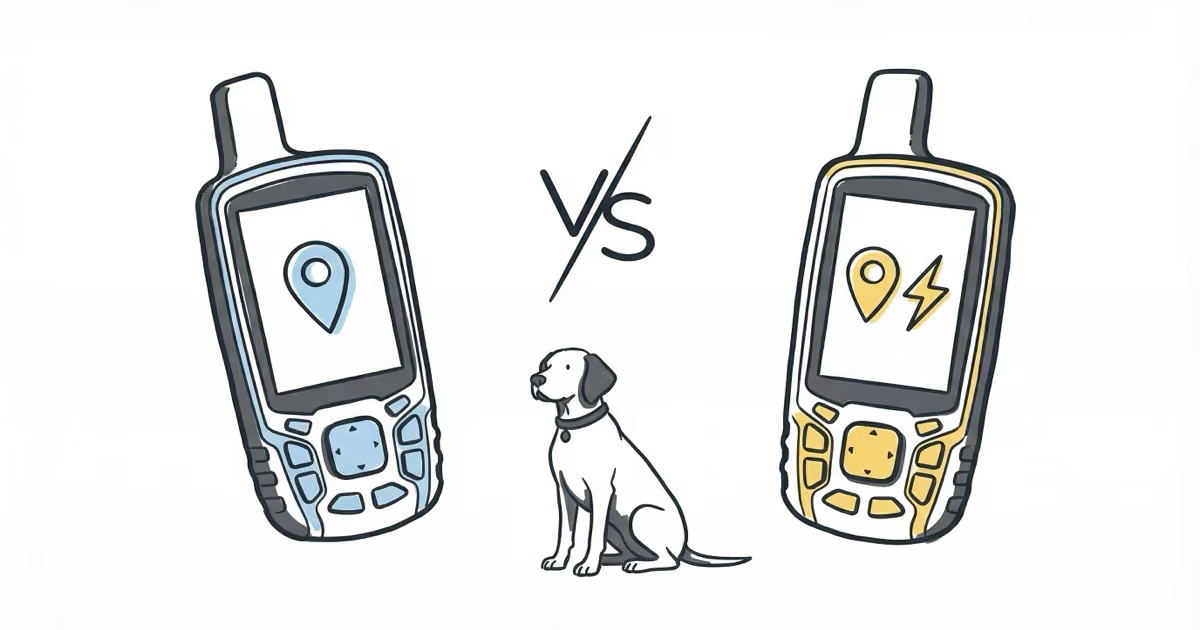
Garmin dominates the satellite-based GPS dog tracking market with two flagship product lines: the Astro series (tracking only) and the Alpha series (tracking plus training). Both use GPS and GLONASS satellites rather than cellular networks, which means no monthly subscription fees and reliable coverage in remote backcountry where cell service drops out. This comparison breaks down where the two systems overlap and where they diverge so you can match the right one to your fieldwork.
Key Takeaways
- Both systems track up to 20 dogs at ranges up to 9 miles with 2.5-second location updates.
- The Astro 430 collar lasts up to 26 hours versus the Alpha 100 collar at 20 hours.
- Only the Alpha includes integrated 18-level e-collar stimulation for remote training.
- Neither system requires a monthly subscription since they use satellite GPS, not cellular.
- The Astro costs less upfront since it skips the training electronics built into the Alpha.
How the Astro and Alpha GPS Systems Differ
Garmin launched the Astro in 2007 as the first consumer GPS dog tracker designed for hunters and field sport handlers. The system uses satellite positioning to show your dog’s location on a handheld receiver. No cell towers, no Wi-Fi, no subscription.
The Alpha arrived in 2014 and added something the Astro never had: built-in electronic training. The Alpha 100 pairs GPS tracking with a programmable e-collar, giving handlers one device for both location monitoring and behavior correction.
Here is the core distinction:
- Garmin Astro tracks your dog’s location. That is all it does, and it does it well.
- Garmin Alpha tracks your dog’s location and lets you deliver tone, vibration, or stimulation commands remotely.
If you already own a standalone e-collar and just want satellite tracking, the Astro makes sense. If you want both functions in one system, the Alpha eliminates carrying two devices.
Spec-by-Spec Comparison Table
| Feature | Astro 430 | Alpha 100 |
|---|---|---|
| Primary function | GPS tracking only | GPS tracking + e-collar training |
| Display | 2.6” color, button-operated | 3.0” color touchscreen |
| Max dogs tracked | 20 | 20 |
| Tracking range | Up to 9 miles | Up to 9 miles |
| Update interval | Every 2.5 seconds | Every 2.5 seconds |
| Satellite systems | GPS + GLONASS | GPS + GLONASS |
| Handheld battery | 15-20 hours | 10-20 hours |
| Collar battery | Up to 26 hours | Up to 20 hours |
| Training stimulation | None | 18 levels (continuous + momentary) |
| Bark detection | Collar-based | Collar or handheld |
| Maps | Preloaded TOPO 100K | Preloaded TOPO 100K |
| Water resistance | IPX7 | IPX7 |
| Monthly subscription | None | None |
The numbers that matter most are collar battery life and training capability. Everything else is functionally identical between the two platforms.
Tracking Capabilities: Nearly Identical Performance
Both systems deliver the same core GPS dog tracking performance:
- 9-mile maximum range under open-terrain conditions (typical working range is 4-6 miles in forested or hilly terrain)
- 2.5-second update intervals for near-real-time position data
- GPS + GLONASS dual-satellite reception for faster lock and better accuracy in tree canopy
- On-screen mapping showing dog direction, distance, speed, and status (moving, treed, on point)
- Bark detection alerts when dogs vocalize out of hearing range
In our field comparisons, both handhelds maintained consistent satellite lock through dense hardwood canopy and across ridge lines that block cellular signals entirely. The tracking engine is shared between the two product lines, so any performance difference comes down to collar battery duration, not positioning accuracy.
Training Features: The Alpha's Defining Advantage
This is where the two systems split completely.
The Astro 430 has zero training functionality. It shows you where your dog is, and that is all.
The Alpha 100 includes a full remote training system built into the same collar that handles GPS tracking:
- 18 levels of stimulation in both continuous and momentary modes
- Tone and vibration options for low-intensity correction
- Stimulation level lockout to prevent accidental over-correction
- Two progression modes: Traditional (low/medium/high) and Linear (levels 1-18)
- Dedicated training button on the handheld for one-handed operation
For upland bird hunters and retriever handlers, the Alpha lets you reinforce commands at distances where your voice cannot carry. You see the dog on the map, confirm its location relative to game birds, and deliver a tone or stimulation to redirect behavior. All from one device.
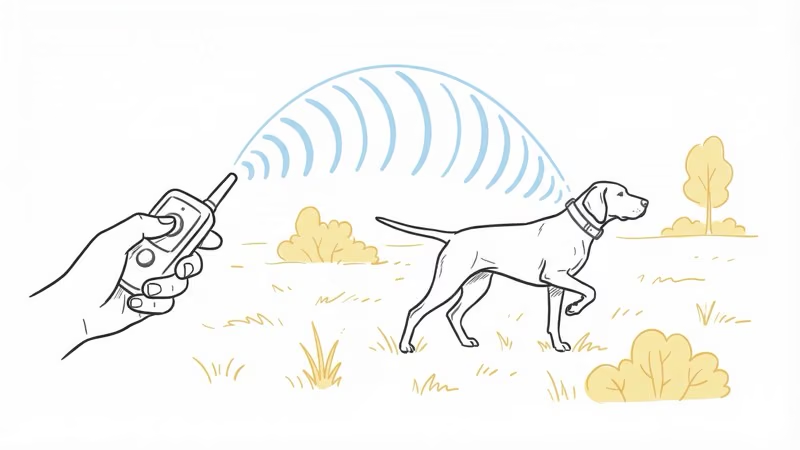
If you already own and prefer a separate e-collar brand (like Dogtra or SportDOG), the Astro keeps things simpler. But the Alpha’s integrated approach means fewer devices to charge, fewer collars on your dog’s neck, and faster response times in the field.
Mapping and Navigation
Both handhelds come preloaded with Garmin TOPO 100K maps that show terrain contours, roads, waterways, and landmarks. You can expand coverage with:
- BirdsEye satellite imagery for aerial views of hunting grounds
- Premium TOPO layers with higher contour resolution
- Garmin BaseCamp trip planning software for pre-loading GPX routes and waypoints
The Alpha 100’s 3-inch touchscreen makes map interaction faster. Pinch-to-zoom and tap-to-select are more intuitive than the Astro’s button-driven menu system. In cold weather with heavy gloves, though, the Astro’s physical buttons can be easier to operate than a touchscreen.
Battery Life and Field Endurance
Collar battery life matters more than handheld battery life in practice. You can swap handheld batteries in the truck. A dead collar means a lost dog.
- Astro 430 collar: up to 26 hours on a full charge
- Alpha 100 collar: up to 20 hours on a full charge
- Astro handheld: 15-20 hours
- Alpha handheld: 10-20 hours
The Astro’s 6-hour collar advantage makes a real difference on multi-day hunts. Both collars support Rescue Mode, which slows the update rate to conserve battery when a dog goes missing overnight.
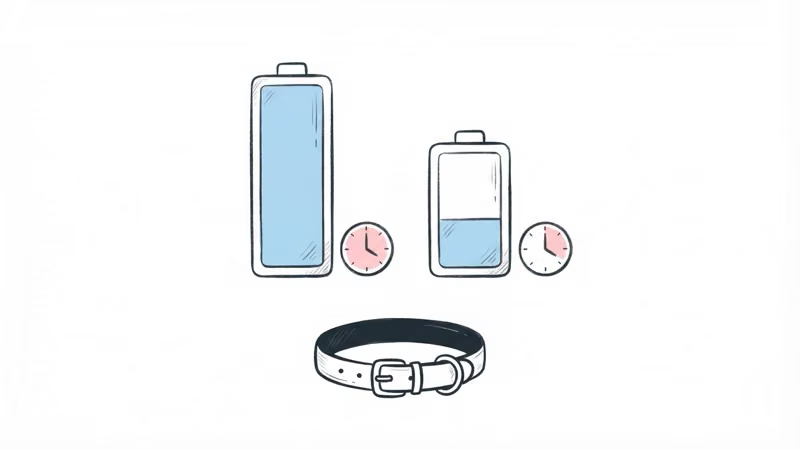
For weekend hunts, either system lasts a full day without worry. For extended backcountry trips lasting two or three days, the Astro gives you more margin before you need to pull collars for recharging.
Pricing and Total Cost of Ownership
Neither the Astro nor the Alpha requires a monthly subscription, which sets them apart from cellular GPS dog trackers like Tractive or Fi that charge $5-17 per month.
The Astro 430 bundle (handheld + one T 5 collar) typically runs $100-150 less than the Alpha 100 bundle (handheld + one TT 15 collar). The price gap reflects the Alpha’s added training electronics.
Additional collars cost $200-300 each for either system. Since both platforms support up to 20 dogs, the collar cost adds up fast for multi-dog operations.
| Cost factor | Astro 430 | Alpha 100 |
|---|---|---|
| Handheld + 1 collar bundle | ~$500-600 | ~$650-750 |
| Additional collar | ~$200-250 (T 5) | ~$250-300 (TT 15) |
| Monthly subscription | $0 | $0 |
| 2-year total (1 dog) | ~$500-600 | ~$650-750 |
| 2-year total (3 dogs) | ~$900-1,100 | ~$1,150-1,350 |
The zero-subscription model means the upfront investment is the only cost. Over two years, both systems are significantly cheaper than cellular alternatives that charge $60-200 annually per dog.
Which System Fits Your Use Case
- You only need GPS tracking without remote training
- You already own a standalone e-collar you prefer
- Maximum collar battery life is your priority
- You want the lower upfront cost
- You prefer physical buttons over a touchscreen
- You want GPS tracking and e-collar training in one system
- You train multiple dogs and want consolidated equipment
- Touchscreen map interaction matters to you
- You need both bark detection sources (collar and handheld)
- You value having one collar instead of two on each dog
Newer Models Worth Considering
Garmin has released updated versions of both product lines since the Astro 430 and Alpha 100. If you are buying new rather than used, consider these current models:
- Garmin Astro 900 — Updated satellite tracking with improved mapping and longer battery life
- Garmin Alpha 300 — Latest tracking-plus-training system with enhanced display and collar options
- Garmin Alpha 200i — Adds inReach satellite communication for emergency SOS in areas with zero cell coverage
The Alpha 300 vs 200 comparison covers the differences between the latest Alpha generations.
Bottom Line
The Garmin Astro and Alpha share the same GPS tracking engine: 9-mile range, 2.5-second updates, 20-dog capacity, no monthly fees. The only real difference is training. If you need integrated e-collar functionality, the Alpha is the clear choice. If tracking alone handles your needs, the Astro delivers identical GPS performance for less money and with better collar battery life.
Frequently Asked Questions
How accurate are the Garmin Astro and Alpha GPS systems?
Both systems use GPS and GLONASS dual-satellite positioning, which provides accuracy within a few yards under open sky. In heavy tree canopy, accuracy may drift to 10-15 yards, but the high-sensitivity receivers on both platforms maintain lock better than consumer-grade GPS devices. The 2.5-second update interval keeps the position data current enough for real-time tracking during hunts.
Can I use the Alpha 100 as a tracker without the training features?
Yes. The Alpha 100 does not require you to use the stimulation, tone, or vibration functions. You can run it as a GPS-only tracker if preferred. The training features are always available but never activate unless you press the training button on the handheld.
Do the Garmin dog tracking systems require a phone or cell service?
No. Both the Astro and Alpha operate entirely on satellite GPS signals. They do not need cellular coverage, Wi-Fi, or a smartphone connection to track dogs. The handheld receiver communicates directly with the dog collar via radio frequency. This makes them reliable in remote backcountry where cell service does not exist.
What is the realistic tracking range in the field?
Garmin rates both systems at up to 9 miles under ideal line-of-sight conditions. In real-world hunting terrain with hills, trees, and valleys, expect a working range of 4-6 miles. Dense forest and steep terrain reduce range further. Positioning the handheld on higher ground improves reception significantly.
Can I mix Astro and Alpha collars on the same handheld?
Not directly. The Astro handheld works with T 5 and T 5 mini tracking collars. The Alpha handheld works with TT 15 and TT 15 mini tracking-and-training collars. However, the Alpha handheld can also pair with T 5 collars for tracking-only dogs in a mixed pack, giving it more collar flexibility than the Astro.
Is a monthly subscription required for either system?
No. Both the Garmin Astro and Alpha use satellite GPS rather than cellular networks. There are no monthly fees, no activation charges, and no service plans. The upfront purchase price covers everything. This is a major cost advantage over cellular GPS dog trackers that charge $5-17 per month per collar.
How do these compare to Bluetooth trackers like AirTag for dogs?
Garmin Astro and Alpha are true GPS systems with 9-mile range and real-time tracking. An AirTag on a dog collar relies on nearby iPhones to relay location, which works in urban areas but fails in rural hunting terrain. For field sport and hunting dogs, satellite GPS is the only reliable technology. Bluetooth trackers are designed for lost keys, not working dogs in remote areas.