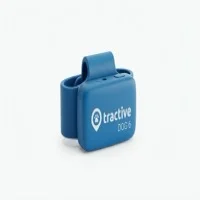
Tractive GPS is the better pet tracker for most owners.
It offers frequent live-mode location updates, runs on broad 4G LTE networks, and starts with a lower device price. Invoxia’s slower update cycle and reliance on aging 2G/Sigfox networks make it harder to trust when your pet actually goes missing.
If your dog bolts out the front door, a slow update cycle is an eternity.
That’s the core difference between Tractive GPS and the Invoxia Pet Tracker — one is built around live pursuit, the other is built around longer battery life and slower reporting.
Both are true cellular GPS trackers, but they split sharply on the one spec that matters when a pet bolts: how fast they report a new location. Tractive’s live mode is built for real-time pursuit; Invoxia’s longer battery life is appealing, but its tracking lag and network gaps undercut its reliability in exactly that moment.
- Tractive GPS offers frequent live-mode updates, while Invoxia’s slower intervals are a critical gap when tracking an escaped pet
- Tractive runs on broad 4G LTE networks; Invoxia relies on T-Mobile 2G (being phased out) and Sigfox with known coverage gaps
- 2-year total cost: Tractive runs about $166 (device + annual plan) vs Invoxia at roughly $259 (device + one paid renewal after the bundled first year)
- Tractive is IP68 waterproof and charges on-collar via USB; Invoxia (IP67) must be removed from the collar to recharge
- Invoxia’s standout advantage is battery life — longer between charges than Tractive — but that won’t help if the tracker can’t find your pet
Tractive GPS vs Invoxia Pet Tracker at a Glance
⇄ Head-to-head
Tractive GPS DOG 6 vs Invoxia Pet Tracker
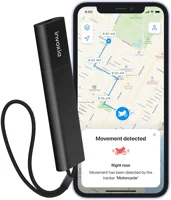
- +Frequent live updates in active escape mode
- +Broad 4G LTE coverage
- +On-collar USB-C charging; no need to remove
- +$166 over 2 years on the annual plan
- +Polished app + Premium health insights add-on
- +Battery lasts weeks to months on a single charge
- +Lightest in class at 14 g; fits very small cats
- +IP67 dust + water resistance
- +Built-in activity monitoring at no extra cost
- +First year of cellular service included
- −Multi-day battery life on standard mode
- −Heavier than Invoxia (39 g vs 14 g)
- −Premium features cost extra ~$4/mo
- −Subscription required after free trial
- −Slower update interval — too slow for active escapes
- −US relies on T-Mobile 2G (being phased out)
- −Outside US uses Sigfox with coverage gaps
- −Must remove from collar to recharge
- −$10/mo with no flexible plan tiers
You need real-time tracking when your pet escapes, live in suburban or rural areas, and want lower 2-year cost.
Battery life is your top priority, you live in a metro area with strong T-Mobile 2G coverage, and slower tracking is acceptable.
Which Tracker Is Faster and More Accurate?
The single most important feature in a pet tracker is how fast it tells you where your pet is.
Everything else — battery life, app design, price — is secondary when your dog is running toward a busy road. Wirecutter’s best Bluetooth tracker guide found that update frequency is the most critical spec for tracking an escaping pet.
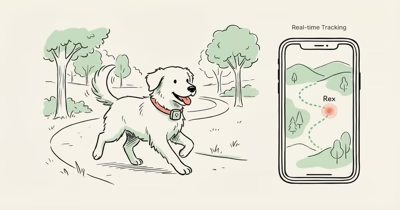
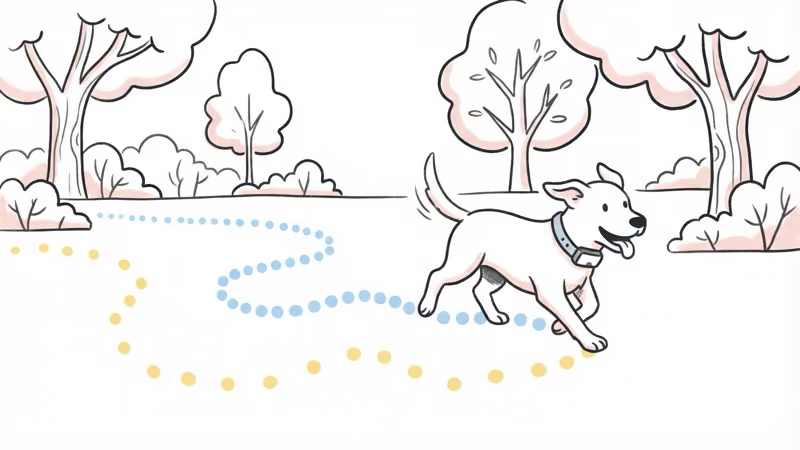
Tractive GPS activates a live mode built for frequent pings. At that cadence the movement trail updates smoothly enough to follow a pet’s path and heading in near real-time on the map.
Invoxia’s fastest mode uses a slower interval. That leaves the on-screen position lagging well behind a pet that is actively moving.
By the time a fresh pin lands, an escaping dog at a trot has often already covered a long stretch of ground.
That delay makes it nearly useless for active tracking during an escape. The AVMA’s pet identification resources note that a microchip only helps reunite a pet once someone brings it to a shelter or vet to be scanned — an active GPS tracker, by contrast, shows live location right away, which is why the two work best together rather than as substitutes.
Both devices store location history. Tractive keeps unlimited history on all plans.
Invoxia stores recent history before you need to export — a minor inconvenience, but worth noting.
For anyone considering Bluetooth trackers vs GPS trackers, both Tractive and Invoxia are true GPS devices with cellular connectivity, so they work well beyond Bluetooth range.
Battery Life
Invoxia wins this category outright. Depending on how often it pings location, the Invoxia Pet Tracker can last far longer on a single charge. Tractive GPS is a multi-day tracker under normal use, with shorter runtime if you use live tracking frequently.
That sounds like a landslide, but there’s a catch.
Invoxia requires you to remove the entire tracker from the collar to recharge it. Tractive clips onto the collar and charges via a magnetic USB cable — you don’t have to take it off your pet.
Day to day, Tractive’s recharging routine is low-effort: plug it in overnight and clip it back on in the morning. The convenience of on-collar charging offsets the shorter battery life.
If you’re tracking a cat that’s outdoors for extended periods and you don’t want to worry about weekly charging, Invoxia’s battery longevity is a real advantage. For most dog owners, Tractive’s cycle is manageable. For more pet GPS options that skip monthly fees entirely, see our best GPS dog trackers without subscription guide.
Durability and Water Resistance
Both trackers handle rain, puddles, and the occasional swim. Tractive carries an IP68 rating (dust-tight and submersible beyond 1 meter). Invoxia is rated IP67 (also dust-tight, submersible to 1 meter for 30 minutes).
Tractive’s rounded shape and rubberized finish are designed to absorb knocks, while Invoxia’s slimmer build uses a harder angular plastic shell that is more prone to visible scuffing on an active dog’s collar.
Neither tracker works underwater — GPS signals don’t penetrate water — but both should reacquire a signal after surfacing.
Which Tracker Has Better Coverage and Connectivity?
This is where Invoxia falls short for US users.
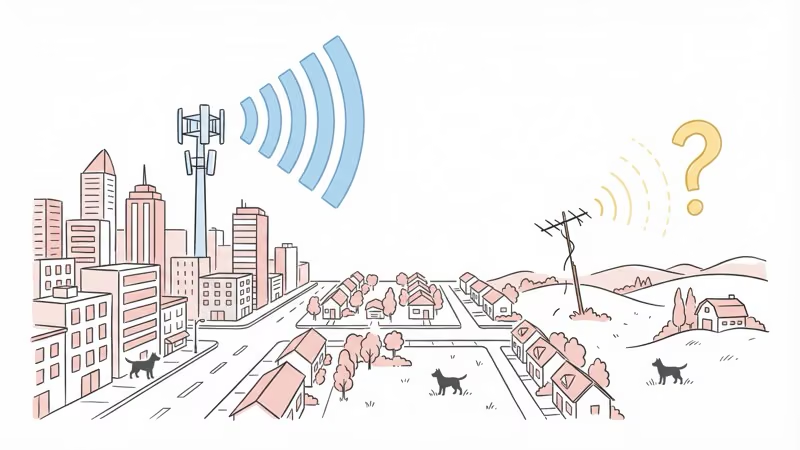
Tractive uses 4G LTE networks (Cat-1bis), which piggyback on major carriers’ cellular infrastructure. Coverage is broad across the US, Europe, and many international travel markets, because that LTE service rides on existing 4G towers rather than a niche IoT network.
Invoxia in the US relies on T-Mobile’s 2G network, which is being gradually phased out. Rural coverage is already spotty. Outside North America, Invoxia uses Sigfox, a proprietary IoT network with inconsistent coverage depending on your country.
If you live in a major metro area with strong T-Mobile coverage, Invoxia may work fine. Rural escapes are the concern.
2-Year Cost of Ownership
| Cost component | Tractive GPS | Invoxia Pet Tracker |
|---|---|---|
| Device | $50 | $139 |
| Year 1 subscription | $58 (annual plan) | Included |
| Year 2 subscription | $58 | $120 |
| 2-year total | ~$166 | ~$259 |
Tractive is cheaper both upfront and long-term. It also offers month-to-month ($6.99/mo) and 2-year plans ($4.33/mo) for more flexibility. Invoxia’s first year of service is bundled with the device, but after that you’re paying $10/month with no alternative plan options. The AKC’s pet microchip guide recommends combining microchips with active trackers for maximum pet safety.
For context, a Bluetooth tracker like AirTag costs $29 with no subscription but doesn’t provide real-time GPS tracking — it relies entirely on nearby iPhones.
App Experience
Tractive’s app is noticeably more polished. The map is built around live tracking, and custom safe zones (geofences) sit close to the main controls. Pet profiles with breed-specific info, care reminders, and a community feed make it feel purpose-built for pet owners.
Invoxia’s app gets the job done but feels dated.
The interface is functional — you can view location, set alerts, and check activity data — but it lacks the speed and refinement of Tractive’s experience.
One specific annoyance: sharing access with a family member requires re-sharing the device each time.
Tractive lets you add permanent co-owners.
Tractive’s official site confirms that the DOG 6 ships with 4G LTE (Cat-1bis) connectivity in over 175 countries.
Tractive also offers a Premium add-on (~$4/month extra) that adds health insights, wellness scores, and fitness goals tailored to your pet’s breed and age. Invoxia includes basic activity monitoring (steps, rest periods) at no extra cost, which is useful but less detailed.
If you’re comparing other GPS trackers for pets, app quality varies widely — Tractive’s is among the best in the category.
Who Should Choose Which
Bottom Line
For most pet owners, Tractive GPS is the better tracker. Frequent live updates, reliable 4G LTE coverage, and lower total cost make it the practical choice. Invoxia’s extended battery life is appealing on paper, but the slower tracking cadence and 2G network dependency limit its usefulness in the exact scenario you need a pet tracker most — when your pet is actively on the move.
Buy the Tractive if you want to find your pet fast. Consider Invoxia only if ultra-long battery life outweighs everything else for your situation.
FAQ
Is Tractive or Invoxia better for cats?
Tractive is better for most cat owners because cats tend to move through unpredictable routes where real-time tracking matters. Invoxia’s lighter weight is an advantage for very small cats, but its slower tracking cadence makes it harder to locate a cat that’s actively moving through backyards and fences. For more options, see our best GPS trackers for cats roundup.
Does Invoxia Pet Tracker work without a subscription?
The first year of cellular service is included with the device purchase. After that, you’ll need to pay ~$120/year ($10/month) to maintain GPS tracking. Without a subscription, the tracker can’t communicate its location — it becomes a paperweight. Tractive also requires a subscription but offers more flexible plan options starting at $4.33/month.
How often does Tractive GPS update location?
In standard mode, Tractive spaces out updates to conserve battery. When you activate live tracking mode, it updates much more frequently. This drains the battery faster, but the real-time visibility is worth the trade-off when you need it.
Can you track multiple pets with one Tractive account?
Yes. Each pet needs its own Tractive device and subscription, but you can manage all of them from a single app account. You can also add family members as co-owners so everyone can track the pets. Invoxia supports multiple devices per account too, but the sharing process is clunkier.
Will Invoxia still work when T-Mobile shuts down 2G?
That’s a legitimate concern. T-Mobile hasn’t announced a firm 2G shutdown date in the US, but the network is being deprioritized. If 2G coverage in your area degrades further, the Invoxia tracker will lose connectivity. Tractive’s 4G LTE network is future-proof by comparison — it’s part of the 4G/5G infrastructure roadmap.
Are these trackers accurate enough to find a lost pet?
Tractive is strongest in open areas with a clean satellite view. In dense tree cover or urban canyons, accuracy can drop, but the frequent updates compensate because you can follow the movement trail. Invoxia can show a plausible location, but the slower update gap means you’re often chasing a stale pin.
What happens if the tracker gets wet in a lake or pool?
Both trackers are rated for temporary submersion. They’ll survive a splash, a puddle, or a brief dip. GPS signals don’t penetrate water, so neither device will update location while submerged. Once your pet surfaces, both should reacquire a signal. Don’t leave either tracker submerged for extended periods.