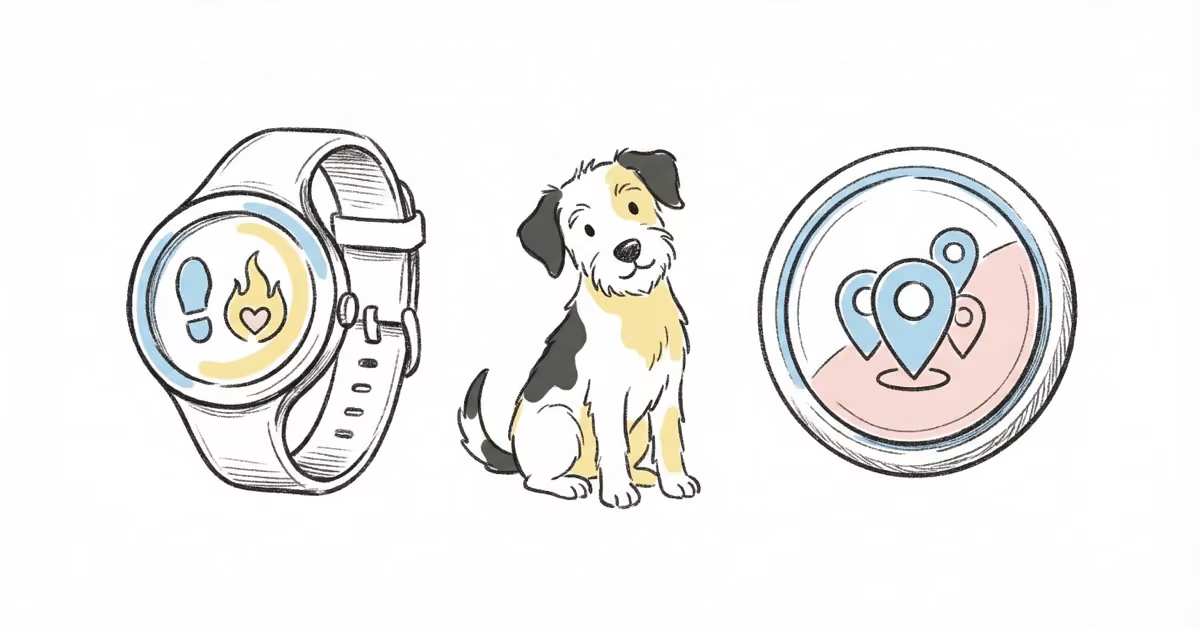
PitPat vs AirTag is a comparison that comes up often, but these two devices solve completely different problems. One tracks what your dog does. The other tracks where your dog is.
Key Takeaways
- PitPat monitors activity (steps, sleep, calories) with a 1-year CR2032 battery and no monthly fees.
- AirTag tracks location via Apple's Find My network but offers zero fitness data.
- PitPat works with iOS and Android; AirTag requires an iPhone running iOS 14.5 or later.
- Both cost under $40 with no recurring subscription, making them the most affordable dog tracking options.
- For true real-time GPS with unlimited range, you'll need a dedicated pet GPS tracker like Tractive or Fi.
How PitPat and AirTag Actually Work
These two devices use fundamentally different technology. Understanding the difference saves you from buying the wrong one.
PitPat: Activity Tracker, Not a Location Tracker
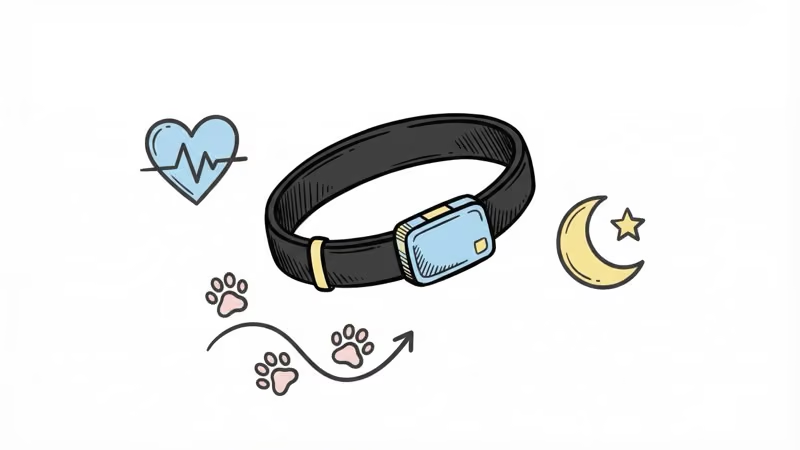
PitPat clips onto your dog’s collar and uses a 3-axis accelerometer to track movement. It logs steps, active time, rest, calories burned, and sleep quality. Data syncs to the PitPat app via Bluetooth when your phone is nearby.
The PitPat GPS model adds a handheld Locator device that guides you toward your dog using LED indicators — but only within about 100 meters. There’s no map view and no remote tracking.
AirTag: Location Tracker, Not an Activity Tracker
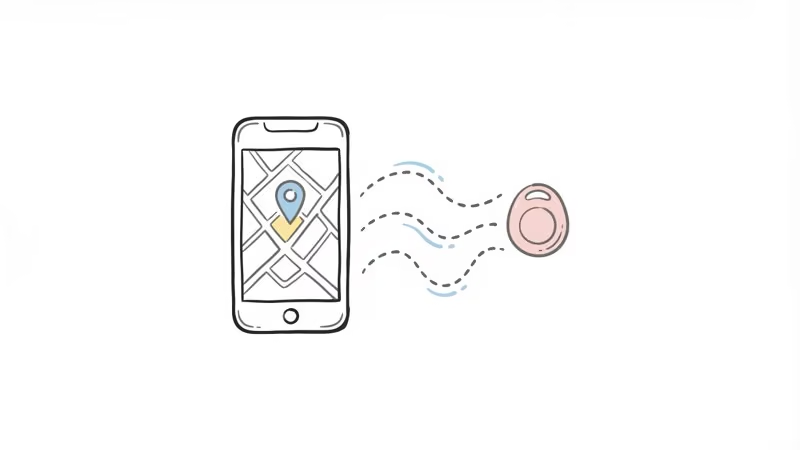
AirTag uses Bluetooth to broadcast a signal. Nearby Apple devices in the Find My network pick up that signal and relay your AirTag’s location to iCloud. You see the position on a map in the Find My app.
In cities and suburbs, this crowd-sourced network works well because iPhones are everywhere. In rural areas with few Apple devices around, updates become infrequent and unreliable. AirTag provides location only — no fitness or health data.
Head-to-Head Feature Comparison
| Feature | PitPat | AirTag |
|---|---|---|
| Primary function | Activity tracking | Location tracking |
| Technology | Accelerometer + Bluetooth | Bluetooth + Find My network |
| Range | ~100m (with Locator) | Crowd-sourced (varies) |
| Activity data | Steps, calories, sleep, rest | None |
| Map view | No | Yes (Find My) |
| Battery | CR2032, ~1 year | CR2032, ~1 year |
| Water resistance | IP67 (submersible to 1m) | IP67 (submersible to 1m) |
| Phone compatibility | iOS + Android | iPhone only (iOS 14.5+) |
| Subscription | None required | None required |
| Weight | 8g (tracker only) | 11g |
| Price | ~$40 / £39 | ~$29 / £29 |
Both run on the same CR2032 coin cell and last roughly a year. Both are IP67 water resistant. The real difference is what they measure.
Where PitPat Wins
PitPat’s strength is health monitoring. If your vet says your dog needs more exercise or you want to track weight management progress, PitPat gives you the data.
The app shows daily breakdowns of walking, running, playing, and resting time. It sets breed-specific activity goals so you know whether your Labrador is getting enough exercise or your Bulldog is overdoing it. Sleep tracking can flag changes in behavior that might indicate health issues — a drop in activity or restless nights are worth mentioning at your next vet visit.
At 8 grams, PitPat is light enough for toy breeds. No charging cables, no docking stations. Replace the battery once a year and forget about it.
PitPat also works with both iOS and Android. If your household has mixed devices, that matters.
Where AirTag Wins
AirTag’s strength is finding your dog. Attach it to the collar with a waterproof AirTag holder, and you can see your dog’s location on a map from anywhere.
Precision Finding on newer iPhones uses Ultra Wideband to guide you within inches once you’re close. That’s genuinely useful if your dog slips through a gate and you need to track them through a neighborhood.
The Find My network includes over a billion Apple devices worldwide, according to Apple’s AirTag page. In a city, location updates can arrive within minutes. AirTag also costs less upfront — about $29 versus $40 for PitPat.
The catch: AirTag has no monthly fee, but it also has no activity tracking whatsoever. It tells you where your dog is, not how your dog is doing.
When Neither Is the Right Choice
Here’s the thing most comparison articles won’t tell you: neither PitPat nor AirTag is a real GPS tracker.
PitPat doesn’t track location beyond 100 meters. AirTag depends entirely on nearby iPhones and can go hours without an update in rural areas. If your dog bolts into the countryside, both will leave you guessing.
For dogs that roam, escape, or go on off-leash adventures in remote areas, you need a dedicated GPS pet tracker like Tractive or Fi. These use cellular networks for real-time tracking with unlimited range. The trade-off is a monthly subscription ($5-$15/month) and shorter battery life (3-7 days typically).
If budget is the main concern and you don’t need GPS, check out our guide to pet trackers without monthly fees.
PitPat vs AirTag: Pros and Cons
PitPat Pros
- Tracks activity, sleep, calories, and rest
- 1-year battery life, no charging needed
- Works with iOS and Android
- No subscription required
- Lightweight at 8g
PitPat Cons
- No location tracking beyond 100m
- No real-time map view
- Requires separate Locator device for any tracking
- Limited to collar attachment
AirTag Pros
- Location tracking via Find My network
- Precision Finding with UWB on newer iPhones
- Lower price at ~$29
- No subscription required
- 1-year CR2032 battery
AirTag Cons
- Zero activity or health tracking
- iPhone only — no Android support
- Unreliable in rural areas with few iPhones
- Not designed specifically for pets
- Anti-stalking alerts may trigger on nearby strangers’ phones
Who Should Buy What
Get PitPat if you want to monitor your dog’s daily activity, track fitness goals, or watch for health changes over time. It’s the better choice for multi-device households (iOS + Android) and owners who don’t need location tracking.
Get AirTag if you’re an iPhone user who wants a low-cost way to locate your dog. It works best in cities and suburbs where Apple devices are dense. Pair it with a secure AirTag dog collar holder to keep it attached.
Get a GPS tracker instead if you need real-time location tracking with unlimited range, especially in rural areas. Check our dog GPS tracker guide for options with and without subscriptions.
Bottom Line
PitPat and AirTag aren’t really competitors. PitPat is a fitness tracker for your dog. AirTag is a location finder that happens to work on a collar. Pick based on whether you need to know what your dog is doing or where your dog is. If you need both, buy both — the combined cost is still under $70 with no monthly fees.
FAQ
Can AirTag replace a GPS dog tracker?
No. AirTag uses Bluetooth and Apple's Find My network, not GPS satellites. It depends on nearby iPhones to relay its location, so it works well in populated areas but poorly in rural zones. A dedicated GPS tracker like Tractive provides real-time updates anywhere with cellular coverage.
Does PitPat track my dog's location?
Only within about 100 meters using the optional PitPat Locator accessory. It uses radio frequency signals and LED indicators to guide you toward your dog. There's no map view, no remote tracking, and no GPS. PitPat is primarily an activity and fitness monitor.
Do PitPat or AirTag require monthly subscriptions?
Neither requires a subscription. PitPat's core activity tracking is free, though an optional Premium plan ($4.99/month) unlocks extra motivation features. AirTag uses Apple's Find My network at no ongoing cost. Both use replaceable CR2032 batteries costing about $2 each.
Can I use AirTag with an Android phone?
Not for tracking. AirTag requires an iPhone with iOS 14.5 or later to set up, pair, and view location. Android phones can detect unknown AirTags nearby (an anti-stalking feature), but they can't track AirTags you own. PitPat works with both iOS and Android.
Is AirTag safe to put on a dog collar?
The AirTag itself is IP67 water resistant and durable enough for collar use. The main concern is attachment -- Apple's own holders aren't designed for active dogs. Use a dedicated waterproof pet mount like the Elevation Lab TagVault Pet to keep it secure during rough play and swimming.
Which is better for small dogs under 10 pounds?
PitPat at 8 grams is lighter and designed specifically for dogs of all sizes, including toy breeds. AirTag weighs 11 grams, which is still manageable for most small dogs. Both are comfortable for dogs over about 5 pounds. For very tiny dogs, PitPat's lower weight and purpose-built collar clip are the safer bet.
How long does the battery last on PitPat and AirTag?
Both use a standard CR2032 coin cell battery rated for approximately 1 year. Actual life depends on usage -- heavy Precision Finding sessions drain AirTag faster, and frequent Bluetooth syncing can shorten PitPat's battery. Replacement batteries cost $1-2 each and take seconds to swap.