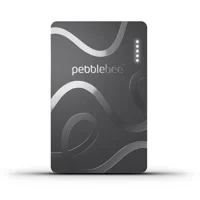
Pebblebee Card 5 wins in 2026 with Apple Find My / Google Find Hub access and no subscription. Pick Tile Pro only if you’re in the Tile ecosystem already.
Tile has dominated the Bluetooth tracker market for a decade. Pebblebee has quietly built a challenger lineup that now connects to Apple’s and Google’s massive location networks. For 2026, those two facts change the entire comparison. Here’s what actually matters when choosing between the two brands.
- Pebblebee Card 5 and Clip 5 connect to Apple Find My or Google Find Hub — networks that dwarf Tile’s 70-million-user proprietary system
- Pebblebee Card 5 is just 1.8mm thick — slim enough to fit in any wallet without adding noticeable bulk
- Tile Pro requires a $29.99/year subscription for Smart Alerts and location history — Pebblebee includes all features free
- Pebblebee uses Qi wireless rechargeable batteries lasting up to 18 months — eliminating the need for disposable coin cells
- Both brands price their flagship at $34.99 — but Pebblebee delivers more network coverage and no ongoing costs at the same price
Tile vs. Pebblebee: At a Glance
The headline difference: Pebblebee works on Apple Find My and Google Find Hub; Tile uses only its own proprietary network of approximately 70 million devices.
That network gap is the whole story. Apple’s Find My network spans more than a billion devices, so a Find My-mode Pebblebee gets relayed far more often than a Tile leaning on roughly 70 million app users — especially once you leave a dense city. Range and price, in the matrix below, only matter after the network covers your area.
⇄ Head-to-head
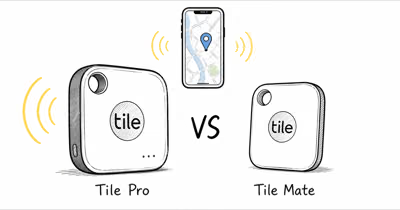
Tile Pro 2024 vs Pebblebee Card 5
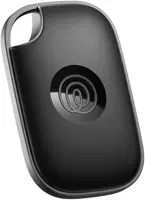
- +Apple Find My OR Google Find Hub access — 1B+ device networks each
- +1.8mm thin, slimmest wallet tracker on the market
- +Qi wireless rechargeable lasts up to 18 months per charge
- +Zero subscription, all features free
- +Bluetooth 5.2 LE with low-power efficiency
- +Replaceable CR2032 — no charging, just swap battery once a year
- +500 ft (152m) Bluetooth range, longest in Tile lineup
- +IP67 waterproof (1m submersion for 30 min)
- +Polished Tile app with Siri / Google Assistant integration
- +Location history with Tile Premium ($29.99/year)
- −Choose ONE network at setup (Find My or Find Hub, not both simultaneously)
- −IP66 vs Tile's IP67
- −Requires Qi charging pad (most modern phones can charge it)
- −Goes silent if you forget to charge
- −Tile's proprietary network is only ~70M users (vs Find My / Find Hub's billions)
- −Smart Alerts and location history require Premium subscription
- −Tile app required on iOS (no native Find My)
- −Coin-cell waste over device lifetime
- ·You want Apple Find My or Google Find Hub network access
- ·You hate subscription fees (all Pebblebee features are free)
- ·You need an ultra-thin wallet tracker (Card 5 at 1.8 mm)
- ·You want rechargeable batteries and no annual coin-cell swaps
- ·You already have a Tile ecosystem (shared trackers, Premium subscription)
- ·You want a simple replaceable-battery keychain tracker with no charging
- ·You prefer Tile's more polished app and Siri/Google Assistant integration
- ·You want location history without signing up for a new platform
Why Did the Finding Network Change Everything in 2026?
Pebblebee’s biggest 2025 upgrade wasn’t hardware. It was network access. The Card 5 and Clip 5 both work with Apple’s Find My network (1 billion+ Apple devices worldwide) or Google’s Find Hub (formerly Find My Device, available on hundreds of millions of Android phones).
You pick one at setup; simultaneous dual-network isn’t supported, but either option gives Pebblebee far more crowdsourced coverage than Tile’s 70-million-user proprietary network. Tile’s official support center documents the network size.
Tile doesn’t support Apple Find My or Google Find Hub. Apple’s Find My network privacy documentation confirms that the Find My network uses over a billion active devices for crowdsourced location updates. If your tracker ends up in a crowd of iPhone users, Tile won’t see them, but a Pebblebee Card 5 set to Find My will.
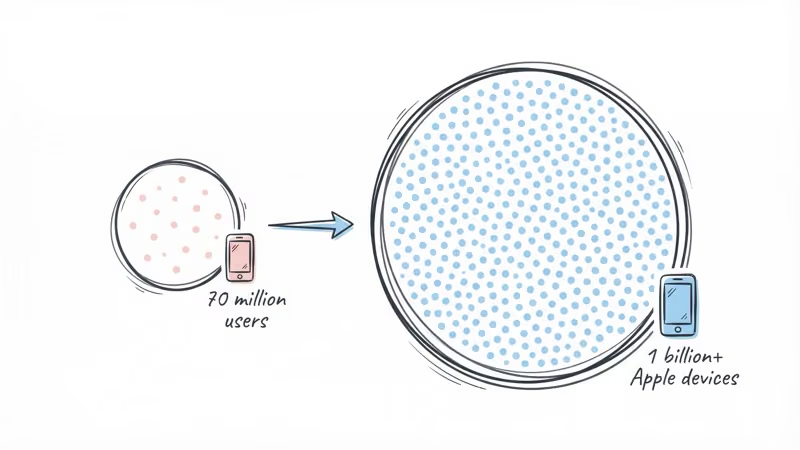
This is the single biggest reason to reconsider Tile for new buyers in 2026. If you’re an iPhone user choosing between the two brands today, Pebblebee offers access to a location network that is an order of magnitude larger. Android users in Google’s Find Hub ecosystem get the same advantage.
For a deeper look at how Bluetooth trackers compare on location accuracy, see how accurate AirTags really are vs. rivals; the same crowdsourcing principles apply to Tile and Pebblebee.
Current Product Lineups and Design
Tile offers four models; Pebblebee’s Gen 5 lineup gives you two best-in-class options. Here’s what’s current for 2026.
Tile Tracker Models (2024)
Tile’s lineup is owned by Life360 and hasn’t changed dramatically in form factor, but battery life specifics shifted in the 2024 refresh:
- Tile Pro ($34.99): 500 ft range, loudest chime, replaceable CR2032 battery lasting ~1 year. Best overall Tile option.
- Tile Mate ($24.99): sealed non-replaceable battery with ~3-year lifespan. Budget pick; shorter range than Pro.
- Tile Slim ($29.99): credit-card form factor for wallets. Non-replaceable 3-year battery.
- Tile Sticker ($24.99): adhesive-back disc. Non-replaceable 3-year sealed battery. Good for laptops and remotes.
Note: The Tile Mate, Slim, and Sticker all use sealed batteries; you replace the whole tracker after ~3 years, not just the battery. That sealed-battery shift means a dead tracker becomes a full repurchase rather than a cheap coin-cell swap. The Tile Pro’s user-replaceable CR2032 is rated for roughly a year of use before the low-battery warning appears. Only the Tile Pro uses a user-replaceable CR2032.
Pebblebee Gen 5 Models (2025/2026)
Pebblebee’s fifth-generation lineup launched in late 2025 and is the biggest update the brand has shipped:
- Pebblebee Card 5 ($34.99): 1.8 mm thin (thinner than most credit cards), Qi wireless rechargeable, up to 18-month battery life, IP66 water resistance, Apple Find My or Google Find Hub.
- Pebblebee Clip 5 ($34.99): circular keychain-style tracker, 500 ft Bluetooth range, USB-C rechargeable, up to 12-month battery, louder speaker, brighter LED, Apple Find My or Google Find Hub.
Pebblebee also sells older Universal models (Card Universal, Clip Universal, Tag Universal) at lower price points if you don’t need Gen 5 hardware. For a full breakdown of today’s best alternatives to mainstream trackers, see our AirTag alternatives guide.
Tracking Range and Volume
Tile Pro and Pebblebee Clip 5 are essentially tied on range; both claim 500 ft (152 m) in open space. Indoors, walls and radio noise reduce Bluetooth range for any tracker, so treat the 500 ft figure as an open-air maximum rather than a room-to-room guarantee. Chipolo’s official product page publishes comparable range specs as a third reference point. If Tile Pro is also on your shortlist, our Tile Pro vs rechargeable trackers covers the network and battery tradeoffs.
On speaker volume, both are loud on paper: Tile Pro is rated 105+ dB; Pebblebee’s Gen 5 product page states that the Clip 5 buzzer is 40% louder than the Gen 4 model. The Clip 5’s louder buzzer has a spec-sheet edge for finding an item muffled under cushions or in another room.
The Pebblebee Card 5’s ultra-slim 1.8 mm profile means its speaker is smaller, so volume trades off for thinness. If you need max ring volume, choose the Clip 5 or Tile Pro over the Card 5.
For reference on how proximity-based tracking accuracy compares across tracker brands, our Tile tracker review goes deeper into real-world ring-and-locate scenarios.
Battery Life: Tile vs. Pebblebee
Pebblebee’s rechargeable approach wins on convenience; Tile Pro wins on the simplicity of dropping in a new coin cell.
| Tracker | Battery type | Claimed lifespan |
|---|---|---|
| Tile Pro 2024 | Replaceable CR2032 | about 1 year |
| Tile Mate / Slim / Sticker | Sealed non-replaceable | about 3 years (then replace tracker) |
| Pebblebee Card 5 | Qi wireless rechargeable | Up to 18 months per charge |
| Pebblebee Clip 5 | USB-C rechargeable | Up to 12 months per charge |
The Pebblebee Card 5’s 18-month wireless charging cycle means most users will charge it once a year. The Clip 5 charges via USB-C and lasts up to 12 months. Neither requires buying replacement batteries.
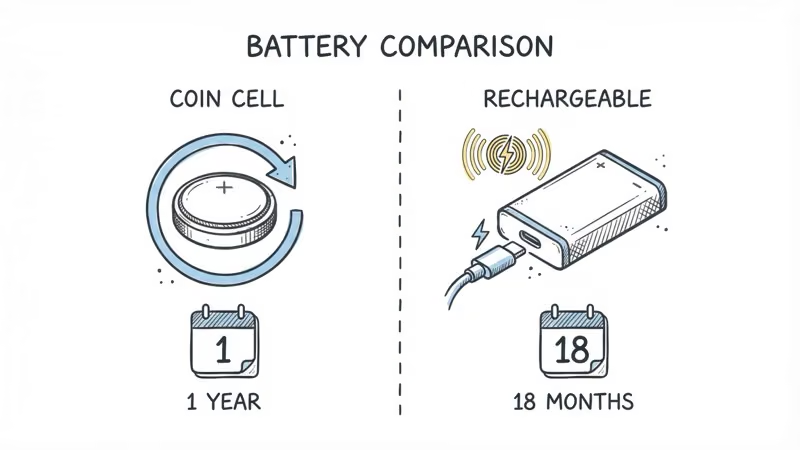
Tile Pro users swap a CR2032 (about $1) annually, a minor task, but one Pebblebee users never deal with. Tile Mate/Slim/Sticker users avoid battery swaps entirely but must replace the whole $25–$35 tracker every three years, which costs more than periodic CR2032s over a five-year period.
Subscription Costs and Total Price
Pebblebee has no subscription. Tile has an optional Premium plan that adds meaningful features but isn’t required for basic use.
Tile Premium ($29.99/year or $2.99/month) unlocks: 30-day location history, smart alerts (including separation alerts away from home), and up to $100 item reimbursement per year. Basic Tile tracking (ring, last-seen location, community find) is free.
Pebblebee includes everything for free: separation alerts, location history, and the Scan & Secure anti-stalking detection feature. No upsells, no paywall.
Over three years, two Tile Pro trackers at $35 each plus Premium = $70 hardware + $90 subscription = $160. Two Pebblebee Clip 5s at $35 each = $70 total. The savings are real, especially for households with multiple trackers. Pebblebee’s official product page confirms that all Find My / Find Hub features ship without any recurring subscription.
If you currently use Tile and want to optimize your existing setup, see our guide on how to manage your Tile tracker, including how to decide if Premium is worth the annual fee for your use case.
Should You Buy Tile or Pebblebee?
For most buyers in 2026, Pebblebee is the better choice: stronger location network, no subscription, and the Card 5 is the thinnest wallet tracker on the market at 1.8 mm. Here’s how to decide:
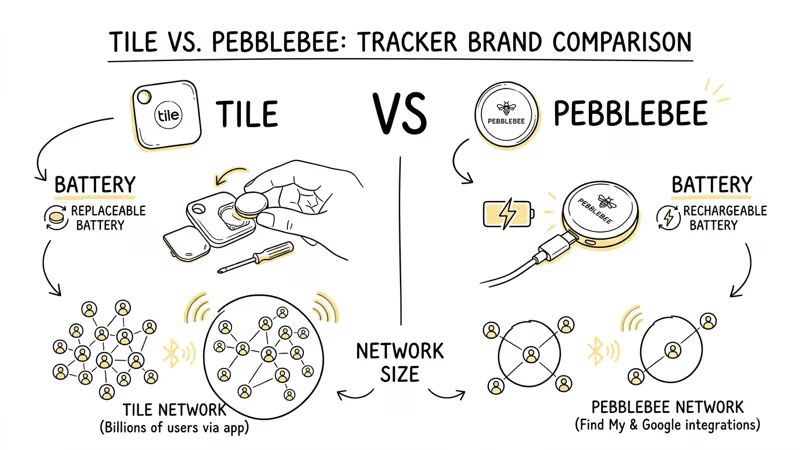
See the Verdict tab in the head-to-head widget at the top for each tracker’s audience-fit checklist. Short version: Pebblebee Card 5 for Apple Find My / Google Find Hub access and no subscription; Tile Pro if you’re already in the Tile ecosystem.
If you’re coming from an AirTag background and want a cross-platform alternative, the Pebblebee Clip 5 set to Apple Find My is the closest AirTag equivalent in the non-Apple ecosystem. For a broader head-to-head, see our AirTag vs. Tile comparison. For wallet-specific tracking, our hands-on Pebblebee Card 5 review covers everything from Qi charging speed to real-world thickness measurements.
The Bottom Line
Buy the Pebblebee Card 5 or Clip 5 if you’re choosing a Bluetooth tracker in 2026. Access to Apple Find My or Google Find Hub gives Pebblebee a location network 10x larger than Tile’s, and you pay zero subscription fees for features Tile locks behind a $30/year paywall. Pick Tile Pro only if you’re already invested in the Tile ecosystem and prefer swapping a $1 coin-cell battery over plugging in a USB-C cable once a year.
Frequently Asked Questions
Does Pebblebee work with Apple Find My?
Yes. Pebblebee’s Gen 5 trackers (Card 5 and Clip 5) and the Universal lineup all support Apple’s Find My network. During initial setup you choose either Apple Find My or Google Find Hub; you can’t use both simultaneously. iPhone users who choose Find My gain access to Apple’s 1 billion+ device network for crowdsourced location.
Is Tile compatible with Android?
Yes, Tile works with Android. The Tile app is available on Google Play and all core tracking features (ringing, last-seen location, and community find) work on Android. The limitation is that Tile doesn’t integrate with Google’s Find Hub network; Tile uses its own proprietary network of approximately 70 million devices. For Android users who want Find Hub access, Pebblebee is a stronger option.
Does Pebblebee require a subscription?
No. Pebblebee includes all features for free: separation alerts, location history, Scan & Secure anti-stalking detection, and full app access. Tile offers a comparable free tier but locks 30-day location history, smart alerts (away from home), and item reimbursement insurance behind its Premium plan at $29.99 per year.
Which has better battery life — Tile or Pebblebee?
It depends on the model. Tile Pro: replaceable CR2032 lasting ~1 year. Tile Mate/Slim/Sticker: sealed non-replaceable battery lasting ~3 years, after which you replace the tracker. Pebblebee Card 5: Qi wireless rechargeable, up to 18 months per charge. Pebblebee Clip 5: USB-C rechargeable, up to 12 months per charge. Pebblebee offers longer per-cycle life without buying replacement batteries; Tile Pro is simpler to service (drop in a $1 coin cell).
Which is better for Android users — Tile or Pebblebee?
Pebblebee is better for most Android users in 2026. Set to Google Find Hub, a Pebblebee Card 5 or Clip 5 taps into Google’s network of hundreds of millions of Android devices, far more than Tile’s ~70-million-user proprietary network. Both apps work on Android, but Pebblebee’s network advantage is significant for recovering truly lost items. If you already use Tile with several devices on a shared Premium plan, the switching cost may not be worth it.
What happened to the old Pebblebee Finder and Tag models?
Pebblebee has consolidated around its Gen 5 line (Card 5 and Clip 5 at $34.99 each) and the still-available Universal series (Card Universal, Clip Universal, Tag Universal) at lower price points. The older “Pebblebee Finder” branding has been retired. Gen 5 models are the best choice for new buyers. They include the improved Find My/Find Hub support, wireless charging on the Card 5, and upgraded speakers and LEDs.
Can you use Tile or Pebblebee to track pets?
You can attach either tracker to a pet collar, but Bluetooth trackers aren’t ideal as stand-alone pet trackers. Direct Bluetooth range is short compared with GPS, and location updates happen only when a network member’s phone comes near the tracker. For pets that roam or escape outside, a dedicated GPS pet tracker with live cellular tracking is far more reliable. Tile or Pebblebee work as a backup, useful if a cat hides inside the house or slips a collar nearby.