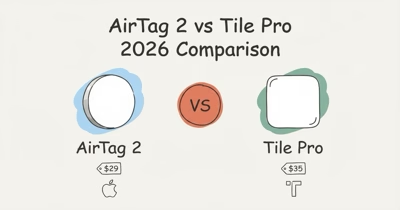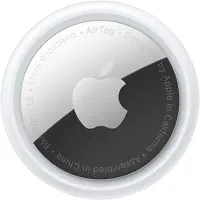
AirTag ($29) wins for iPhone pet tracking with Apple’s 1B+ device Find My network; pick Yip Smart Tag ($35) only if you’re on Samsung Galaxy or want a built-in ID engraving.
Choosing between the Yip Smart Tag and Apple AirTag for your dog comes down to one question: what phone do you use? But there’s more to it than ecosystem compatibility. Network size, tracking precision, water resistance, and price all factor in.
This comparison weighs both tags across every metric that matters for keeping tabs on a dog, from network size to water resistance.
- AirTag wins on tracking coverage thanks to Apple’s Find My network of over 1 billion devices
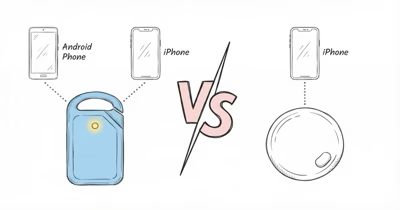
- Yip Smart Tag works with both Samsung Galaxy (SmartThings) and iPhone (Find My), while AirTag is Apple-only
- Neither tracker has GPS — both rely on Bluetooth and crowdsourced networks for location updates
- AirTag is $29 vs Yip’s $35, but Yip includes free custom engraving as a pet ID tag
- For serious pet tracking beyond Bluetooth range, a GPS collar like Tractive or FitBark is the better investment
Quick Comparison
Both tags locate through Apple’s Find My network, so coverage is identical — Apple’s AirTag overview states that the network spans 1 billion+ devices, and neither tag adds GPS. For a pet that means the same crowd-sourced limit: useful in a dense neighborhood, near-useless on a rural trail. The real split is price and Precision Finding, compared below.
⇄ Head-to-head
Yip Smart Tag vs Apple AirTag 2 (for Pets)
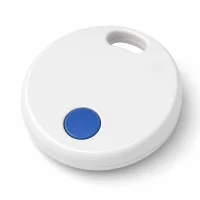
- +Apple Find My network of 1B+ devices, vastly larger than Yip's network
- +Far larger device network means more frequent location updates on walks away from home
- +UWB Precision Finding on iPhone 11+ for arrow-guided close-range search
- +IP67 waterproof (vs Yip's IPX7)
- +$6 cheaper than Yip; 4-pack drops per-unit to under $20
- +Works with both iPhone (Find My) and Samsung Galaxy (SmartThings)
- +Built-in custom engraving doubles as a traditional pet ID
- +Built-in collar attachment ring, no separate holder needed
- +IPX7 water resistance for pet outdoor use
- +CR2032 ~1-year battery matches AirTag
- −iPhone only, no Samsung Galaxy or other Android support
- −No built-in collar attachment, needs $5-$20 holder
- −No physical engraving for stranger-found-without-phone scenarios
- −Bluetooth only, no GPS, depends on nearby phones for location updates
- −Network is much smaller than Apple Find My
- −No UWB Precision Finding
- −$6 more expensive than a single AirTag
- −No GPS, Bluetooth-only like AirTag
- −Smaller relay network than Apple's 1B+ Find My network
- ·You have an iPhone and want the widest tracking coverage
- ·You value Precision Finding to locate a hiding pet at close range
- ·You're OK adding a $5-$20 collar holder
- ·You don't need physical engraving as a backup ID
- ·You use a Samsung Galaxy phone and need SmartThings compatibility
- ·You want physical engraving as a backup ID (no phone-scan required)
- ·Your household mixes iPhone + Galaxy phones
- ·You want a collar-ready design without buying a separate holder
Where Does the AirTag Win?
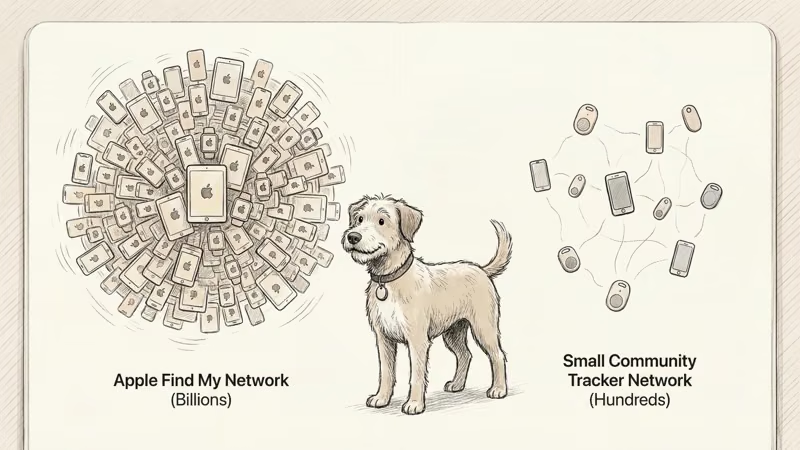
Network size is the biggest differentiator
The AirTag connects to Apple’s Find My network, which includes every iPhone, iPad, and Mac running a recent OS.
That’s over a billion active devices acting as anonymous relay points. When your dog wanders out of your direct Bluetooth range, any nearby Apple device can detect the AirTag and silently report its location to you. Apple’s Find My overview confirms that relay data stays anonymous and encrypted across the network’s billion-plus devices.

The Yip Smart Tag’s community network is much smaller.
It relies on other Yip app users and, when paired via Find My, on Apple devices.
The AirTag’s larger device network typically surfaces more frequent location updates than the Yip’s. In suburbs or rural areas, the AirTag’s vastly larger network gives it a real edge for finding a lost pet. PCMag’s best Bluetooth tracker roundup confirmed that network size is the most critical factor in tracker reliability.
Ultra Wideband Precision Finding
Apple’s AirTag technical specifications state that AirTag supports Ultra Wideband for Precision Finding on compatible iPhones; our Ultra Wideband directional tracking guide explains the close-range mechanics.
Your phone shows an arrow pointing toward the tag with distance guidance on supported iPhones. The Yip has nothing comparable. For finding a dog hiding under a porch or stuck in dense brush, that directional guidance is useful.
Lower price
At $29, the AirTag costs $6 less than the Yip Smart Tag.
A small difference, but the AirTag also comes in a 4-pack for $79, which brings the per-unit cost down to under $20 per tag if you have multiple pets.
Where the Yip Smart Tag Wins
Samsung Galaxy compatibility
This is the Yip’s strongest selling point.
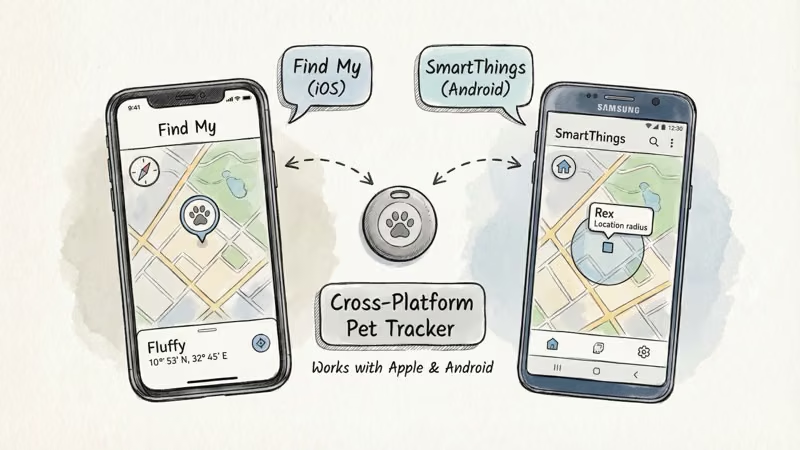
If your household uses Android, specifically Samsung Galaxy phones, the AirTag isn’t an option. The Yip Smart Tag connects to Samsung devices via SmartThings and to iPhones via Find My.
That cross-platform flexibility matters for families with mixed phone ecosystems. The trade-off is network scale: Apple’s linked Find My network claim is public and much larger, while Yip’s non-Apple relay path depends on a smaller community.
Built-in pet ID tag
The Yip tag doubles as a traditional pet ID with custom engraving.
Your dog’s name, your phone number, and your address are physically etched on the tag. If a stranger finds your dog and doesn’t have a smartphone (or doesn’t know what a Bluetooth tracker is), the engraving still works. The AirTag has no way to display owner contact info without an iPhone scanning it via NFC. Apple’s AirTag technical specifications page confirms that NFC tap surfaces the owner’s contact page, which any NFC-capable phone can read.
If price is pushing you away from Apple, our budget AirTag alternative comparison explains what you give up.
Collar-ready design
The Yip has a built-in attachment ring designed for pet collars. The AirTag is a smooth disc that requires a separate collar holder or case, typically costing $5-20 extra. That added cost narrows the price gap.
What Can Neither Tracker Do?
Neither the Yip Smart Tag nor the AirTag has GPS.
Both are Bluetooth-only trackers that depend on nearby smartphones for location updates. If your dog runs to a remote area with no phones around, neither tracker can tell you where they’re.
This matters more than most comparison articles admit. With either tag, location updates can stop entirely once a dog wanders into an area with sparse phone traffic. A Bluetooth tracker is great for finding keys in your house, but for a dog that might run far from home, it has serious blind spots.
For dogs that roam, a GPS pet tracker with cellular connectivity is the right tool. Options like Tractive GPS ($5/month) track your pet in real time over unlimited distance.
FitBark adds health monitoring on top of GPS. The monthly fee buys capability that Bluetooth simply can’t match.
Which One Should You Buy
See the Verdict tab in the head-to-head widget at the top of this article for each tracker’s audience-fit checklist. In short: AirTag for iPhone households (the Find My network is so much larger that the coverage advantage is hard to overstate); Yip for Samsung Galaxy users who value the built-in engraving and collar-ready design.
Get a GPS tracker if your dog is a flight risk.
Neither Bluetooth option can reliably track a dog beyond direct Bluetooth or relay-network coverage. A GPS collar costs more but actually solves the problem.
If your Yip tag has connection issues, see our Yip Smart Tag troubleshooting guide.
Bottom Line
The AirTag is the better Bluetooth pet tracker for most people, purely because Apple’s Find My network gives it tracking reach that the Yip can’t match. The Yip Smart Tag earns its place as the go-to option for Samsung Galaxy users and pet owners who value the built-in ID engraving. But if your dog regularly escapes or you live in a rural area, skip both and invest in a GPS pet tracker.
FAQ
Can you put an AirTag on a dog collar?
Yes, but you need a collar holder or case since the AirTag has no built-in attachment point. Options range from $5 silicone loops to waterproof enclosures like the Elevation Lab TagVault Pet. The Yip Smart Tag has a built-in ring and doesn’t need an extra accessory.
Does the Yip Smart Tag have GPS?
No. Like the AirTag, it uses Bluetooth only. Location tracking depends on nearby smartphones with the Yip app, SmartThings, or Apple Find My. There is no built-in GPS chip.
Which has better tracking range for pets?
Both are close-range Bluetooth trackers. The AirTag wins on passive tracking reach because Apple’s Find My network has over a billion devices worldwide, compared to the Yip’s much smaller community network.
Does the AirTag work with Android phones?
No. The AirTag requires an iPhone with iOS 14.5 or later. Android users can detect a nearby AirTag for anti-stalking purposes but can’t set up or track an AirTag. The Yip Smart Tag works with Samsung Galaxy via SmartThings.
Are there monthly fees for either tracker?
No. Both the Yip Smart Tag ($35) and AirTag ($29) are one-time purchases with no subscriptions. The only ongoing cost is a CR2032 battery replacement roughly once per year, which costs a few dollars.
Is a Bluetooth tracker good enough for pet tracking?
For indoor or close-range tracking around your home, yes. For dogs that wander far from home, no. Bluetooth trackers depend on nearby phones and can’t provide long-distance live tracking by themselves. A GPS pet tracker with cellular connectivity is the only reliable option for long-distance tracking.
What is the best GPS tracker for dogs?
For most dog owners, Tractive GPS offers the best balance of price ($5/month), features, and reliability. Fi Smart Collar is a premium alternative with a built-in collar design. See our full best GPS pet trackers guide for detailed comparisons.