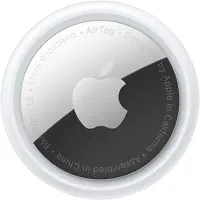
AirTag 2 wins for iPhone users with UWB Precision Finding and a billion-plus-device network that no competitor can match. Tile Pro wins for Android or mixed households with 500-foot Bluetooth range, a 3-year battery, and IP68 water resistance. Chipolo Pop is the best hedge: dual-network support (Find My or Google Find Hub), a 120dB speaker, and $29 pricing that lets you switch ecosystems without buying new hardware. No single tracker is best for everyone. Your phone decides your network.
AirTag 2, Chipolo Pop, and Tile Pro are the three most popular Bluetooth trackers in 2026, but most comparisons only pit two against each other. That means reading three separate articles to make one decision. This guide puts all three side by side across the factors that actually decide which one fits your phone and your budget.
- AirTag 2’s U2 chip delivers longer-range UWB Precision Finding — neither Chipolo Pop nor Tile Pro has UWB at all
- Tile Pro’s 500-foot Bluetooth range is the longest of any mainstream tracker — far longer than the standard Bluetooth range on AirTag 2 or Chipolo Pop
- Chipolo Pop works on both Apple Find My and Google Find Hub — mixed iPhone/Android households can standardize on one tracker brand
- All three use replaceable CR2032 batteries, but Tile Pro lasts up to 3 years — AirTag 2 and Chipolo Pop each last about 1 year
- Apple Find My’s 1B+ device network dwarfs Tile’s roughly 70M users — making AirTag 2 more reliable in rural and international areas
AirTag 2 vs Chipolo Pop vs Tile Pro: Specs at a Glance
Here is how the three trackers stack up on paper, with the practical differences explained in the sections below.
| Feature | AirTag 2 | Chipolo Pop | Tile Pro 2024 |
|---|---|---|---|
| Price | $29 | $29 | $35 |
| Network | Apple Find My (1B+ devices) | Find My or Google Find Hub | Life360 / Amazon Sidewalk |
| UWB Precision Finding | Yes (U2 chip, longer range) | No | No |
| Bluetooth range | Standard BLE | Standard BLE | Up to 500 ft (rated) |
| Battery | CR2032, about 1 year | CR2032, about 1 year | CR2032, about 3 years |
| Water resistance | IP67 | IP55 | IP68 |
| Speaker volume | 50% louder than Gen 1 | 120dB | Loudest in Tile lineup |
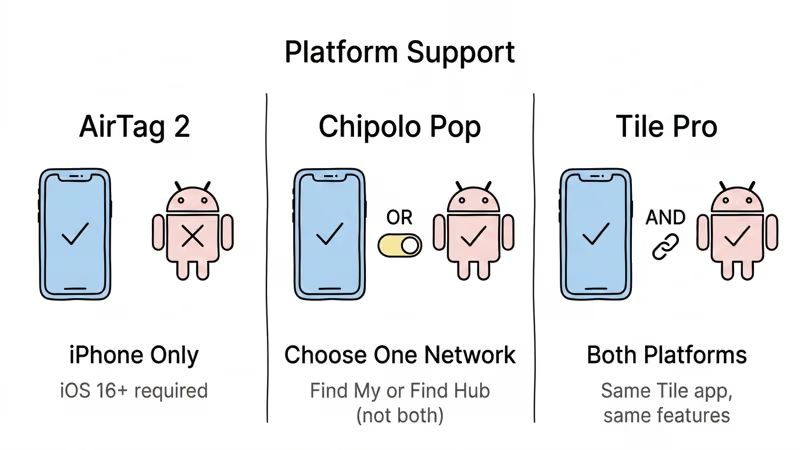
| Cross-platform | iPhone only | iOS and Android | iOS and Android |
| Weight | 12.2g | 8g | 34g |
Wirecutter’s tracker guide recommends AirTag 2 as the top overall Bluetooth tracker for iPhone users despite the range gap. Tile Pro’s 500-foot rated Bluetooth range is far longer than the standard Bluetooth range on AirTag 2 or Chipolo Pop.
But range only matters while your phone is nearby. Network size determines what happens when your item is out of Bluetooth range entirely, and that is where AirTag 2 pulls ahead hard. For a deeper look at how Bluetooth range relates to real-world tracking accuracy, see our guide on how accurate AirTags are.
Why Does Network Size Matter More Than Range?
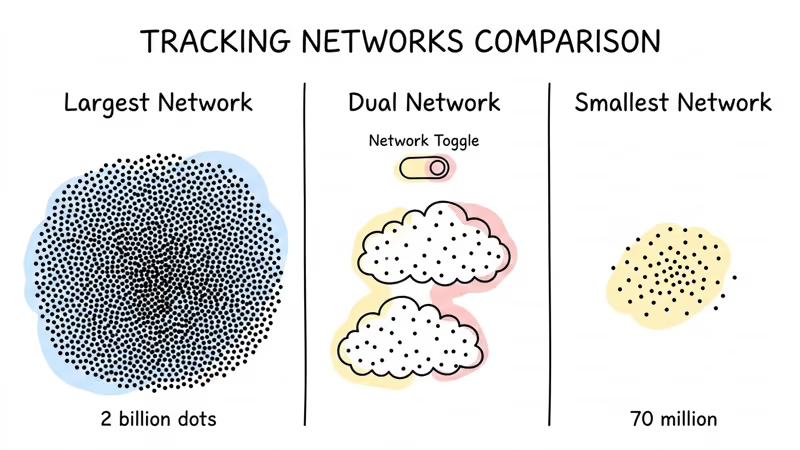
A Bluetooth tracker doesn’t have GPS. Network size is the single biggest factor in recovery success — Apple’s billion-plus-device Find My is far larger than Tile’s 70 million-user network, and that gap determines how quickly your item gets relayed back to you.
Apple’s Find My page states that the network uses over 1 billion iPhone, iPad, and Mac devices around the world. Every iPhone, iPad, Mac, and Apple Watch passively scans for nearby AirTags and reports their encrypted location.
Apple’s network density is high enough that an AirTag in a busy area can update quickly, while quieter spots see longer gaps between updates.
Tile Pro runs on the Life360 network (roughly 70 million users) plus Amazon Sidewalk, which uses Echo speakers and Ring cameras as relay points. In dense urban areas, that combined network performs well enough.
But the gap shows up far from town: in rural areas miles from the nearest city, Tile’s smaller network can leave a tracker silent for hours, while an AirTag on the same bag still gets relayed by passing iPhones. Android Police’s Tile Pro 2024 review reported that this network gap is Tile’s biggest weakness.
Chipolo Pop connects to either Apple Find My or Google Find Hub, depending on which mode you choose during setup. Find My mode gives it access to the same billion-plus-device network as AirTag 2; Find Hub mode taps into 1 billion+ Android phones.
You pick one at setup and can’t run both simultaneously — switching requires a factory reset. On Find My mode, Chipolo Pop rides the same network as AirTag 2, so location updates are effectively identical; the real difference between the two comes down to hardware.
Precision Finding vs Bluetooth-Only: The UWB Gap
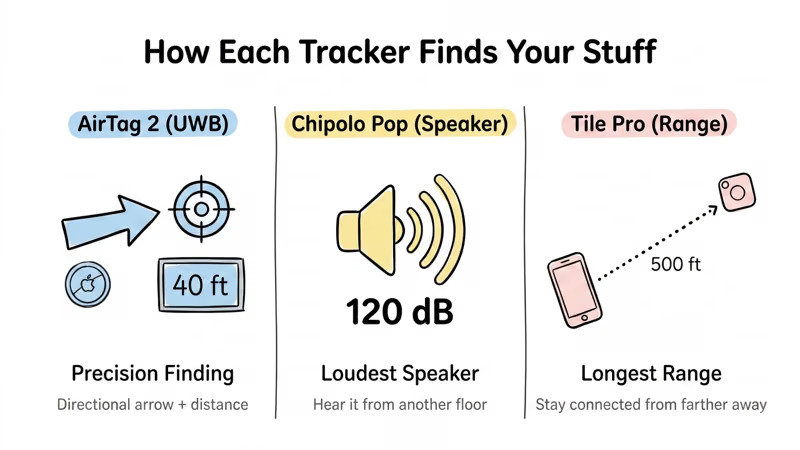
UWB (Ultra-Wideband) turns a vague “somewhere nearby” into a directional arrow pointing straight at your item. Only AirTag 2 has it here. Chipolo Pop and Tile Pro both rely on Bluetooth signal strength and speaker volume.
AirTag 2’s U2 chip extends Precision Finding up to 50% farther than the original. On iPhone 11 and later, you get a directional arrow, a distance readout, and haptic feedback that intensifies as you close in — Apple Watch Series 9 and later can also trigger it from your wrist.
With Precision Finding, the on-screen arrow narrows the search area in a way a simple beep can’t.
Chipolo Pop fights back with raw volume. Its 120dB speaker is far louder than AirTag 2’s chime. If your main problem is “keys somewhere in this house,” that volume gap matters more than a directional arrow. Tom’s Guide’s Chipolo Pop review calls the speaker one of its strongest selling points.
Tile Pro skips UWB too, but its 500-foot rated Bluetooth range changes the equation. Your phone stays connected to the Tile Pro from much farther away, so you get the “ring” option more often.
So when does UWB actually earn its keep? Cluttered spaces — parking garages, conference venues, open-plan offices, airport baggage claim. You know your bag is somewhere nearby but you can’t tell which shelf or carousel it’s on, and the directional arrow saves real time there.
In open spaces where you already know the general area, a loud speaker does the job. For more on Bluetooth vs GPS trackers and the technology differences, see our explainer.
Battery Life and Replacement
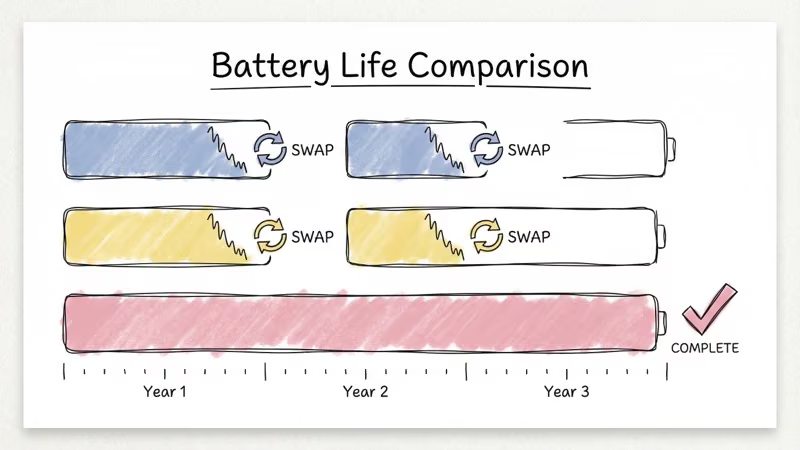
All three trackers use the same CR2032 coin cell battery. A replaceable coin cell is a win over sealed-battery trackers that become e-waste when power runs out, as our tracker battery life comparison details. But how long each CR2032 lasts varies more than you might expect.
Tile Pro leads with a 3-year battery life. Not a typo — AirTag 2 and Chipolo Pop both need swaps roughly every 12 months.
Over three years, here is the math: Tile Pro costs $35 plus $0 in batteries, AirTag 2 costs $29 plus about $6 (two CR2032 swaps at $3 each), and Chipolo Pop is the same. The long-term price difference is negligible, but not having to think about battery changes for three years is a quality-of-life win that is easy to underestimate.
AirTag 2 adds percentage-based battery monitoring through Apple’s U2 chip. The original AirTag only showed a vague “battery low” warning when it was nearly dead, but AirTag 2 gives you an actual percentage in the Find My app. To swap the battery, press down on the back cover, twist counterclockwise, drop in a fresh CR2032, and twist back. See Apple’s AirTag 2 specifications for full battery details.
Chipolo Pop uses a twist-open design that is just as quick. Pull the cover off, swap, snap back. Our Chipolo tracker review walks through the process step by step.
Water Resistance and Durability
Tile Pro earns IP68, the highest water resistance rating of the three. It can survive submersion beyond 1 meter and still has a user-replaceable battery, so rain and wet gear aren’t a concern.
AirTag 2 carries IP67, rated for submersion up to 1 meter for 30 minutes. Rain, splashes, a puddle drop — all fine. It’s the deep-water scenarios where IP67 falls short of the Tile Pro’s IP68.
Chipolo Pop is rated IP55, which handles splashes and light rain but not submersion. If you clip it to a dog collar and the dog jumps in a lake, you have a problem. For anything involving water exposure beyond a drizzle, Tile Pro or AirTag 2 are safer bets. Our Tile tracker review includes more durability details.
Is Cross-Platform Compatibility the Deciding Factor?
For many buyers, this section is the entire article. If everyone in your household uses iPhones, buy AirTag 2 and stop reading. If you have a mix of iPhone and Android users, the choice gets trickier.
AirTag 2 is iPhone-only. No Android app exists, so you need an iPhone running iOS 16 or later to set up and track an AirTag 2. Android users can detect and disable an unknown AirTag traveling with them (thanks to the DULT standard), but they can’t use one as their own tracker — Apple has shown no signs of changing this.
Chipolo Pop lets you choose your network at setup. Find My mode makes it behave like an AirTag on Apple’s network; Find Hub mode puts it on Google’s Android network. You can’t run both at once, and switching means a factory reset — but that flexibility is exactly why it works for mixed households.
Buy four, set two to Find My for the iPhone users and two to Find Hub for the Android users. If someone switches phones later, reset the tracker and re-pair. For a detailed look at other options in this space, see our best AirTag alternatives roundup. If neither option fits your phone or budget, weigh the broader tracker market before buying.
Tile Pro works on both iOS and Android through the Tile/Life360 app with no network-switching required. Both platforms get the same features: ring, location history, smart alerts, community find. If your roommate has an iPhone and you have a Pixel, you can both track the same Tile Pro from the shared Tile app — that simplicity is worth something. For a deeper head-to-head between these two brands, see our AirTag vs Tile comparison.
⇄ Head-to-head
Apple AirTag 2 vs Chipolo Pop vs Tile Pro 2024
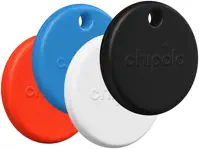
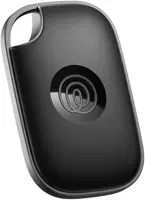
- +Find My network: 1B+ Apple devices worldwide, the densest tracker network
- +U2 chip enables longer-range UWB Precision Finding, only one of three with it
- +Apple Watch Series 9 / Ultra 2+ Precision Finding from the wrist
- +Battery percentage shown in Find My app (vs vague low-battery warning on competitors)
- +Apple's own ecosystem maturity: the longest track record of the three
- +Dual-network: pair with Apple Find My OR Google Find Hub at setup
- +120 dB speaker, the loudest of the three by a wide margin
- +Same $29 as AirTag, with cross-platform flexibility built in
- +Lightest at 8g, easiest to slip into a wallet or attach to small items
- +Reset and re-pair to switch networks if you change phones
- +500 ft rated Bluetooth range, the longest of the three by far
- +3-year CR2032 battery, no swaps for the device's useful lifetime
- +IP68 water resistance, safe beyond 1m submersion
- +Single Tile app works identically on iOS and Android, no network choice
- +SOS triple-press button shares your location with Life360 emergency contacts
- −iPhone-only (iOS 16+), no Android support
- −Standard Bluetooth range, far shorter than Tile Pro's rated 500 ft
- −IP67 only, falls behind Tile Pro's IP68 for full submersion
- −Speaker is much quieter than Chipolo Pop's 120 dB
- −No keyring hole, needs $10-$35 accessory holder
- −One network at a time, no simultaneous Find My + Find Hub
- −IP55 only, splash-proof not submersible (worst water resistance of three)
- −No UWB Precision Finding, only signal-strength hunting
- −Standard Bluetooth range, the shortest reach of the three
- −Battery about 1 year, no advantage over AirTag 2 here
- −Life360 + Amazon Sidewalk network roughly 70M users, far smaller than Apple Find My
- −Network gaps in rural areas, far from Apple Find My's density
- −No UWB Precision Finding
- −34g, the heaviest of the three
- −Higher device price ($35) than the other two
Everyone in your household uses iPhones, UWB Precision Finding matters in cluttered spaces, and you travel internationally where Find My density wins.
You might switch between iPhone and Android in the future, want dual-network flexibility at the lowest price, or need the loudest speaker for finding items by sound.
Mixed household with both iPhone and Android users sharing items, you need long Bluetooth range in a large home or office, or durability + 3-year battery matter most.
Privacy and Anti-Stalking Protection
All three trackers support the DULT (Detecting Unwanted Location Trackers) cross-platform standard, which means your phone will alert you if an unknown tracker is traveling with you, regardless of which phone brand you carry.
On iPhone, the alert reads “Item Found Moving With You” and identifies the tracker type. On Android, you see “Tracker traveling with you” with options to play a sound and disable it.
DULT alerts are not instant by design; response time varies based on movement patterns and tracker behavior. For detailed guidance on what to do when you get one of these alerts, see our AirTag found moving with you guide.
Tile Pro adds a safety feature the others lack: SOS. Triple-press the Tile Pro button and it sends an emergency alert through the Life360 app to your designated contacts, sharing your location. Neither AirTag 2 nor Chipolo Pop has anything like it — if personal safety matters to you beyond just finding keys, that SOS button is a meaningful differentiator. The Tom’s Guide AirTag 2 review also notes this as one area where Tile stands apart from Apple.
All three trackers use end-to-end encryption for location data: Apple encrypts AirTag positions so only the owner’s iCloud account can decrypt them, Tile encrypts through its own servers, and Chipolo follows whichever network’s encryption standards apply. None of the three companies can view your tracker’s location history.
If you find an unknown tracker on your person, the fix is the same across all three: pop out the CR2032 battery. Press down and twist counterclockwise for AirTag 2. For Tile Pro and Chipolo Pop, look for the battery cover release. No power, no broadcast.
Bottom Line
For an all-iPhone household, AirTag 2 is the clear winner. UWB Precision Finding and a billion-plus-device network give it tracking accuracy and coverage that neither Chipolo Pop nor Tile Pro can match. The $29 price is identical to Chipolo Pop, so there is no cost penalty for choosing the tracker with more features.
For Android users or mixed households, it depends on what you value most. Tile Pro gives you the longest Bluetooth range (500 feet), the longest battery (3 years), and the best water resistance (IP68), plus a native app that works identically on both platforms.
Chipolo Pop gives you dual-network flexibility and the loudest speaker at the lowest price, which makes it the right call if anyone in your home might switch between iPhone and Android. We compared Tile vs Chipolo in more detail if you’re deciding between just those two.
The honest answer: your phone picks your tracker — iPhone means AirTag 2, Android means Tile Pro or Chipolo Pop will both do the job. Mixed household is where it gets interesting, and the best Bluetooth trackers article covers even more options beyond these three.
FAQ
Does Chipolo Pop have UWB Precision Finding like AirTag 2?
No. Chipolo Pop uses Bluetooth only and doesn’t have a UWB chip. When you ring a Chipolo Pop, you hear its 120dB speaker, but you don’t get the directional arrow or distance readout that AirTag 2 provides through its U2 Ultra-Wideband chip. UWB Precision Finding is currently exclusive to AirTag 2 among these three trackers.
Can Tile Pro work with Apple Find My?
No. Tile Pro runs on the Life360 network and Amazon Sidewalk. It doesn’t connect to Apple Find My or Google Find Hub. The Tile app works on both iOS and Android, so iPhone users can use Tile Pro, but location updates come from Tile’s own 70 million-user network rather than Apple’s billion-plus-device Find My network.
Which Bluetooth tracker has the longest range?
Tile Pro 2024 has the longest Bluetooth range, rated up to approximately 500 feet in open air. AirTag 2 and Chipolo Pop use standard Bluetooth without a long-range radio, so their effective range is much shorter. Longer Bluetooth range means your phone stays connected to the tracker from farther away, which lets you ring it more often without relying on the crowd-sourced network.
Is Chipolo Pop waterproof?
Chipolo Pop is rated IP55, which means it handles splashes and light rain but isn’t waterproof or submersible. For comparison, AirTag 2 is IP67 (submersible up to 1 meter for 30 minutes) and Tile Pro is IP68 (submersible beyond 1 meter). If water exposure is a concern, Tile Pro or AirTag 2 are safer choices.
Can you use AirTag 2 with an Android phone?
No. AirTag 2 requires an iPhone running iOS 16 or later for setup and tracking. Android phones can detect an unknown AirTag traveling with them through the DULT cross-platform standard, but they can’t use AirTag 2 as their own tracker. Android users should consider Chipolo Pop (on Google Find Hub mode) or Tile Pro instead.
How long does the Tile Pro battery last compared to AirTag 2?
Tile Pro’s CR2032 battery lasts up to 3 years, while AirTag 2’s CR2032 battery lasts about 1 year. Both use the same standard coin cell battery that costs around $3 to replace. Over 3 years, Tile Pro needs zero battery swaps while AirTag 2 needs about two, adding roughly $6 to the total cost of ownership.
Do all three trackers alert you about unwanted tracking?
Yes. AirTag 2, Chipolo Pop, and Tile Pro all comply with the DULT (Detecting Unwanted Location Trackers) industry standard. iPhones show an “Item Found Moving With You” alert for unknown trackers. Android phones show a “Tracker traveling with you” notification. Both alerts include options to play a sound on the tracker and instructions for disabling it by removing the battery.