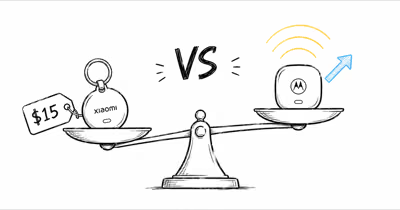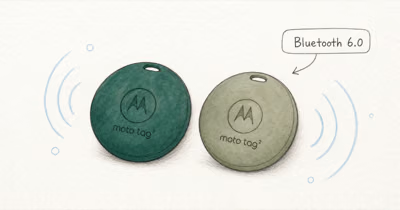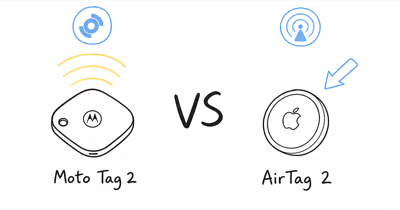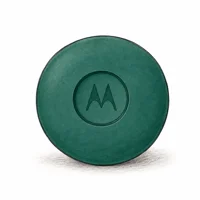
Buy the Moto Tag 2 ($29.99 since its June 2026 U.S. launch) for Bluetooth 6.0 Channel Sounding, a 500-day battery, and IP68 sealing on a 2025-or-newer Android flagship. Keep the $30 original on older phones that can’t use Channel Sounding anyway, since both share Google Find Hub and UWB Precision Finding.
The Moto Tag 2 keeps the same 32mm coin shape as the 2024 original but swaps in a Bluetooth 6.0 radio, IP68 sealing, and a longer battery cycle. Motorola’s Moto Tag 2 product page states the tracker is the first to ship with Bluetooth 6.0 plus Channel Sounding alongside UWB, with a rated 500-day CR2032 cycle versus the first-gen tag’s 365 days.
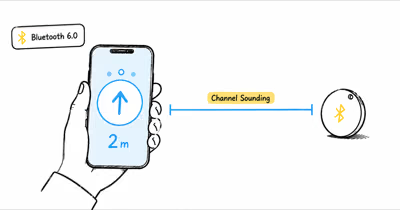
- Moto Tag 2 adds Bluetooth 6.0 Channel Sounding: sub-meter precision, but it only activates on Android 16 plus a Snapdragon 8 Elite or newer phone
- Battery jumps from 365 to about 500 days: a 37% longer CR2032 cycle on the same $1 coin cell
- Water resistance steps up from IP67 to IP68: 1.5 meters submerged for 30 minutes instead of 1 meter
- Both pucks run on Google Find Hub only: no Apple Find My pairing on either generation
- The price gap closed in June 2026: the U.S. launch reset the Moto Tag 2 to $29.99, level with the original Moto Tag at $30
Moto Tag 2 vs Moto Tag: Spec Comparison
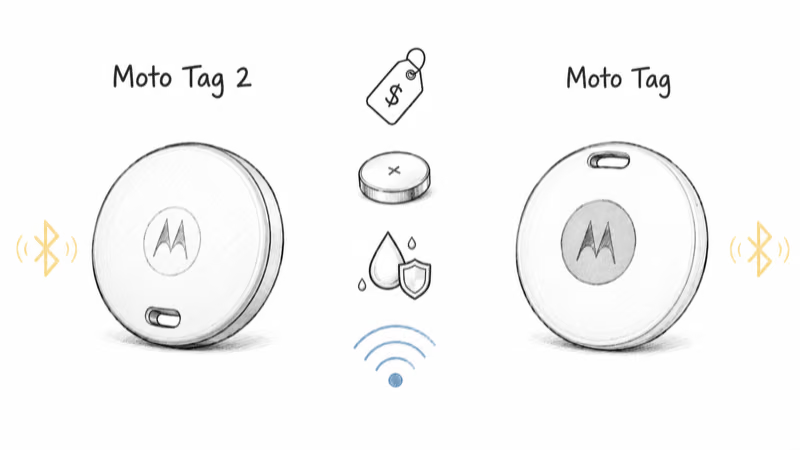
The two pucks look identical in the hand, but the radio and the seal are the real differences. Tom’s Guide coverage of the Moto Tag 2 launch confirms that Channel Sounding is the IEEE 802.15.4z mechanism that promises sub-meter accuracy, a ranging method the first-gen Moto Tag’s UWB radio could not offer.
| Spec | Moto Tag 2 | Moto Tag (gen 1) |
|---|---|---|
| Price (single) | $29.99 (U.S. launch) | $30 |
| Price (4-pack) | $69.99 | $60 |
| Network | Google Find Hub only | Google Find Hub only |
| Precision radio | UWB plus Bluetooth 6.0 Channel Sounding | UWB Precision Finding |
| Bluetooth version | 6.0 (first tracker) | 5.x |
| Battery | CR2032, about 500 days | CR2032, about 365 days |
| Water resistance | IP68 (1.5m, 30 min) | IP67 (1m, 30 min) |
| Weight | 7.5g | 10g |
| Subscription | None | None |
The Channel Sounding row hides the catch: Bluetooth 6.0 Channel Sounding only switches on when both the tracker and the phone speak the spec, which today means Android 16 plus a Snapdragon 8 Elite or newer SoC. On an older Pixel or Galaxy, the Moto Tag 2 falls back to the same standard UWB ranging the original Moto Tag already offers, which means the headline feature sits unused.
Moto Tag 2 vs Moto Tag: Head-to-Head
⇄ Head-to-head
Motorola Moto Tag 2 vs Motorola Moto Tag (Gen 1)
- +First tracker to ship Bluetooth 6.0 plus Channel Sounding for sub-meter precision
- +500-day CR2032 cycle, 37% longer than the original Moto Tag
- +IP68 water resistance survives 1.5 meters submerged for 30 minutes
- +Lighter at 7.5g versus the gen-1 puck's 10g
- +Same Google Find Hub integration with no subscription
- +Lowest entry price in the Find Hub lineup at $30 single
- +Same Google Find Hub network and UWB Precision Finding as the gen-2 puck
- +365-day CR2032 cycle on a swappable $1 coin cell
- +IP67 water resistance handles rain commutes and pool drops
- +4-pack drops the per-tag cost to $15
- −Channel Sounding only activates on Android 16 plus Snapdragon 8 Elite or newer
- −No built-in keychain hole, unchanged from gen 1
- −No Apple Find My pairing, same single-network lock-in as gen 1
- −Speaker peak SPL not published, so loudness is anecdotal
- −Older Android owners gain nothing over the cheaper original
- −No Bluetooth 6.0 Channel Sounding, so it caps at standard UWB precision
- −IP67 is one tier below the Moto Tag 2's IP68
- −Shorter 365-day battery cycle versus 500 days on gen 2
- −Heavier at 10g than the gen-2 puck's 7.5g
- −Now superseded by the Moto Tag 2 for flagship buyers
- ·You own a 2025-or-newer Android flagship that supports Channel Sounding
- ·You want the longest CR2032 cycle in the category at 500 days
- ·You prefer the IP68 water resistance tier for outdoor carry
- ·You are buying new -- since the June 2026 U.S. launch it costs the same as gen-1
- ·You carry an older Android phone that can't use Channel Sounding
- ·You want the cheapest Find Hub tracker per tag
- ·You only need standard Precision Finding, not sub-meter ranging
- ·You are buying in bulk and price per tag matters most
Moto Tag 2: The Bluetooth 6.0 Flagship
The pitch for the Moto Tag 2 is precision-first Android. Motorola took the original 2024 chassis and dropped in a Bluetooth 6.0 radio with Channel Sounding, the IEEE-standard distance-measurement protocol Bluetooth SIG ratified in late 2024. 9to5Google’s launch coverage found that Motorola claims sub-meter accuracy through Channel Sounding on supported Android 16 hardware.
The 500-day CR2032 cycle is the second standout. The first Moto Tag was rated 365 days, and the new tag adds 37% to that figure on the same coin cell. Android Authority’s hands-on at CES 2026 notes the chassis carries IP68 water resistance, a step up from IP67 on the original. For the full daily-carry breakdown on the new puck, see our Moto Tag 2 review.
Both generations stay locked to Google’s Find Hub and never pair to Apple’s Find My, so the gen-2 upgrade does not change ecosystem reach. For where the Moto Tag 2 lands against rival Android pucks, our best Find Hub trackers guide ranks it alongside the Galaxy SmartTag 2, Chipolo Pop, and Pebblebee Clip 5.
The Original Moto Tag: Still the Budget Pick
The first-generation Moto Tag launched in 2024 as Motorola’s answer to the Galaxy SmartTag, and it still does the core job well. It runs on the same Google Find Hub network, supports UWB Precision Finding, and carries IP67 water resistance on a 365-day CR2032 cell.
At $30 single or $60 for a 4-pack, it’s the cheapest entry into Find Hub tracking. For long-term carry notes on the gen-1 puck, our original Moto Tag review covers the speaker volume, the attachment ecosystem, and how reliably it relays location in low-density areas. The gen-1 puck carries a loud-enough speaker for short-range room searches, but it relies on standard UWB ranging that trails the new Channel Sounding radio for direction at distance.
The catch is that the gen-1 tag is now a predecessor product. Motorola positions the Moto Tag 2 as its successor, so the original is best viewed as a clearance-priced option rather than a flagship pick. If you are weighing it against Apple’s puck for a mixed household, the Find Hub vs Find My breakdown covers the network density math on both sides.
Does Channel Sounding Actually Matter for You?
This is the question that decides the whole comparison. Channel Sounding has a higher precision ceiling than the gen-1 UWB radio, with the Bluetooth SIG specification quoting sub-meter accuracy versus first-gen UWB’s typical 1 to 3 meter resolution. But the ceiling only matters if your phone can reach it.
Channel Sounding needs Android 16 plus a Snapdragon 8 Elite or newer SoC, which is roughly a 2025-and-newer flagship subset of the Android market. On any phone outside that subset, the Moto Tag 2 falls back to the same standard UWB ranging the original Moto Tag already provides, so you would be getting only the battery and water-resistance bump — though at the $29.99 launch price that no longer costs extra.
If you do own a current flagship, the difference shows up most in dense indoor spaces with many Bluetooth devices, where phase-based ranging shrugs off interference better than the gen-1 radio. Because the gen-1 tag falls back to standard UWB, the new radio’s directional advantage indoors is what typically separates the two. Our best Bluetooth tracker for Android guide lines them up by phone compatibility.
How Much Better Are the Battery and Seal?
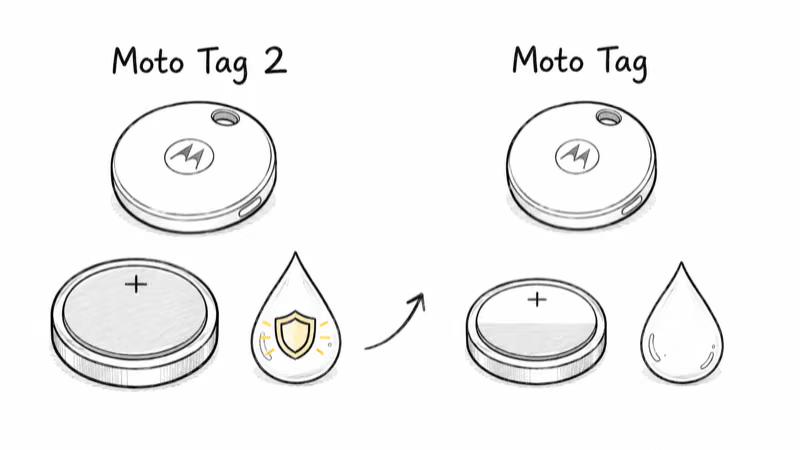
The battery story is a clean win for the Moto Tag 2 on paper. About 500 days versus the original’s 365 is roughly a 37% advantage, and both run on the same $1 CR2032 coin cell you can swap in under 30 seconds.
Motorola attributes the gain to the more efficient Bluetooth 6.0 radio and tighter sleep schedules. Google’s Find Hub announcement states that the network now spans more than a billion Android devices, and Google’s Find Hub help page documents accessory lookup.
That makes relay coverage identical for both generations. Motorola’s ratings put both pucks above a year on a CR2032, so the practical gap is a few extra months between battery swaps rather than a meaningful day-to-day difference.
Water resistance also favors the gen-2 puck: IP68 (1.5 meters submerged for 30 minutes) versus IP67 (1 meter for 30 minutes). Either rating covers rain and accidental fresh-water exposure better than saltwater, so rinse and air-dry after ocean exposure. For how these cycles stack up against rechargeable rivals, see our tracker battery life comparison.
Who Should Upgrade and Who Should Not
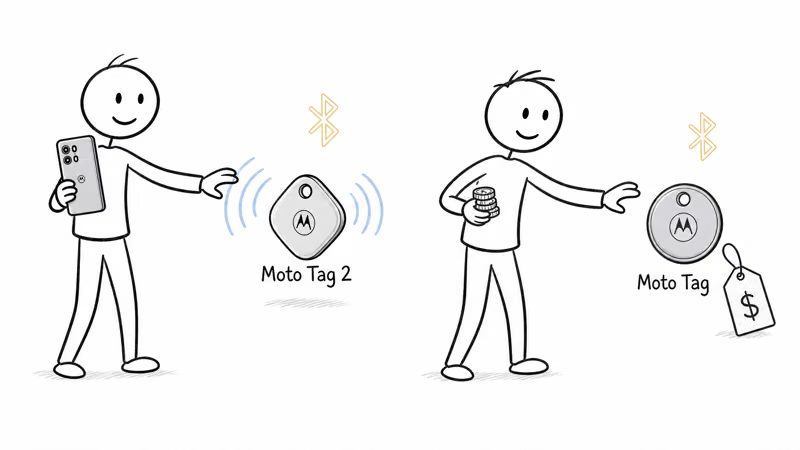
Buy the Moto Tag 2 if you own a 2025-or-newer Android flagship that supports Channel Sounding, you want the longest CR2032 cycle in the category, or you value the IP68 water-resistance tier for outdoor carry. For new buyers on current hardware, the gen-2 puck is the clear pick — and since the June 2026 U.S. launch it costs the same as the original.
Stick with or buy the original Moto Tag if you carry an older Android phone that can’t use Channel Sounding, you want the cheapest Find Hub tracker per tag, or you are buying in bulk where price per puck matters most. On non-flagship hardware the two tags deliver the same standard UWB experience, so the cheaper original is the smarter spend.
For mixed iPhone and Android households, neither single-network Moto Tag is ideal since both pair only to Find Hub. A dual-network tracker like the Chipolo LOOP or Pebblebee Clip 5 pairs to either Apple Find My or Google Find Hub, and our best dual-network trackers roundup covers those alternatives in depth.
Bottom Line
The Moto Tag 2 is a genuine upgrade over the original on every spec that matters: Bluetooth 6.0 Channel Sounding, a 500-day battery, IP68 sealing, and a lighter body. For owners of current Android flagships, it’s the obvious buy now that the June 2026 U.S. launch price matches the original.
For everyone on older Android hardware, the upgrade is hard to justify. Channel Sounding stays dormant without a supporting phone, leaving you paying extra for a battery and water-resistance bump while getting the same Find Hub experience the $30 original already delivers. Match the puck to your phone first, and the price gap will answer itself.
FAQ
Is the Moto Tag 2 worth the upgrade over the original?
It’s worth it if you own a 2025-or-newer Android flagship that supports Bluetooth 6.0 Channel Sounding, since that is the headline feature the original can’t match. You also gain a 500-day battery versus 365 and IP68 versus IP67 water resistance. On an older Android phone that can’t use Channel Sounding, the upgrade only buys a battery and seal bump, and the cheaper $30 original is the better value.
Do both Moto Tag generations use the same network?
Yes. Both the original Moto Tag and the Moto Tag 2 run exclusively on Google’s Find Hub network and never pair to Apple’s Find My. The gen-2 upgrade changes the radio, battery, and seal but not the ecosystem, so your locating coverage depends on the density of Android devices around your lost item, which is identical for both pucks.
What phones support Channel Sounding on the Moto Tag 2?
Channel Sounding requires both the tracker and the phone to support Bluetooth 6.0, which today means Android 16 paired with a Snapdragon 8 Elite or newer system on a chip. That is roughly the 2025-and-newer flagship tier. On any phone outside that group, the Moto Tag 2 falls back to standard UWB ranging, the same precision the original Moto Tag already offers.
How much longer does the Moto Tag 2 battery last?
Motorola rates the Moto Tag 2 at about 500 days per CR2032 versus the original’s 365 days, a roughly 37% gain. Both use the same swappable $1 coin cell, so the practical difference is a few extra months between battery changes. Motorola attributes the gain to the more efficient Bluetooth 6.0 radio and tighter sleep cycles.
Is the Moto Tag 2 more waterproof than the original?
Yes, by one tier. The Moto Tag 2 carries IP68 (submersion up to 1.5 meters for 30 minutes) while the original Moto Tag carries IP67 (submersion up to 1 meter for 30 minutes). Both ratings cover rain and brief fresh-water accidents better than saltwater exposure, so rinse and air-dry after any ocean contact regardless of the rating.
Can either Moto Tag work with an iPhone?
No. Neither Moto Tag generation pairs to Apple’s Find My. iPhone owners can detect a nearby unknown Moto Tag through Apple’s cross-platform anti-stalking standard and disable it, but they can’t register, claim, or track one of their own. For cross-platform tracking, a dual-network design like the Chipolo LOOP or Pebblebee Clip 5 is the right fit.
Should I buy the original Moto Tag now that the gen 2 is out?
Only if price is your priority and your phone can’t use Channel Sounding. The original is now a predecessor product, clearance-priced at $30 single or $60 for a 4-pack, and it shares the same Find Hub network and standard UWB Precision Finding as the gen-2 puck. For new buyers on current flagships, the Moto Tag 2 is the better long-term pick.