Most GPS trackers lock you into a monthly subscription. Invoxia doesn’t. You pay once for the hardware, get 1-2 years of cellular data included, and the renewal rate is about $40/year after that. For anyone tracking a car, bike, or piece of equipment, that pricing model alone makes it worth considering.
I’ve been testing the Invoxia Cellular GPS Tracker for three months — attached to a car, tossed into luggage, and left on a bike rack. Here’s what actually held up and what didn’t.
Key Takeaways
- No monthly subscription -- 1-2 years of LTE-M data included with purchase, then about $40/year to renew.
- Battery lasts up to 4 months in low-frequency tracking mode, closer to 6 weeks with daily motion alerts active.
- Location accuracy ranges from 30-150 feet depending on environment -- enough to find a street address, not a parking spot.
- Works with both iOS and Android via the Invoxia GPS app, unlike Bluetooth-only trackers that need Apple or Samsung ecosystems.
- At 4 x 1 x 0.4 inches and 1.05 oz, it's small enough to hide inside a vehicle's glove compartment or slip into a bag pocket.
How the Invoxia GPS Tracker Works
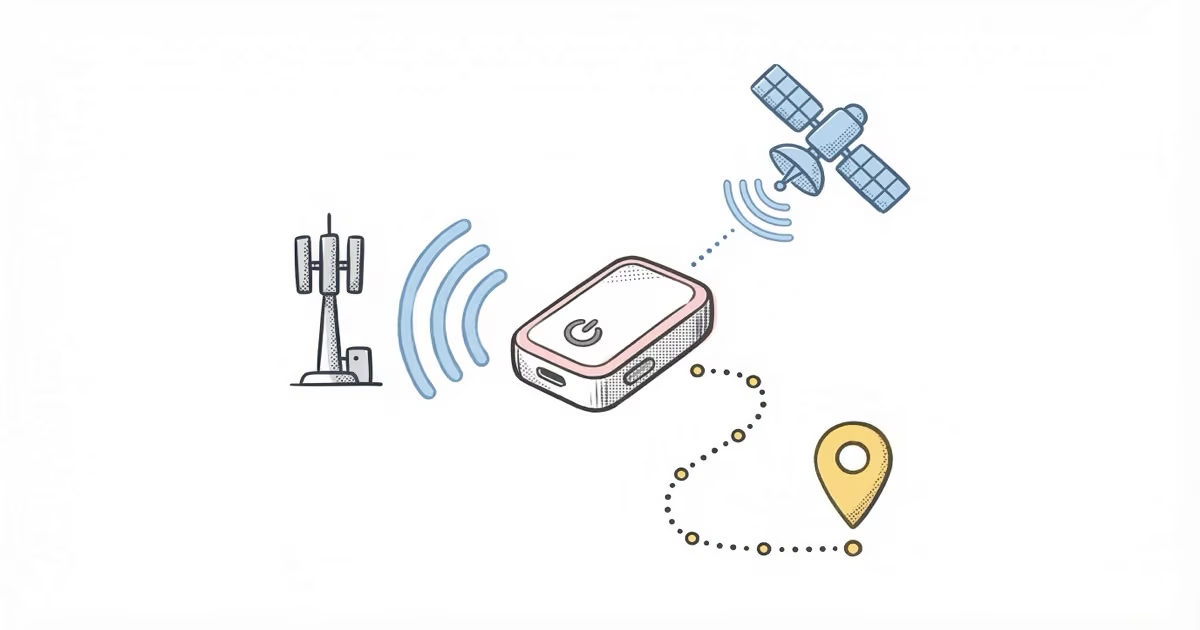
Invoxia’s cellular tracker connects to 4G LTE-M networks — a low-power cellular technology designed for IoT devices. Unlike Bluetooth trackers that only work within 30-250 feet of your phone, the Invoxia reports its location from anywhere with cell coverage.
The tracker combines three positioning methods:
- GPS for outdoor locations (most accurate)
- Wi-Fi positioning for indoor environments where GPS signals can’t reach
- Cell tower triangulation as a fallback when neither GPS nor Wi-Fi is available
When the tracker detects motion, it wakes up, grabs a GPS fix, and sends the coordinates to Invoxia’s servers over LTE-M. You see the location update in the app within seconds. When stationary, it conserves battery by checking in at longer intervals — this is how Invoxia achieves that 4-month battery claim.
One important distinction: this is not continuous real-time tracking like a Bouncie OBD-II tracker that updates every 15 seconds. In normal mode, Invoxia updates every few minutes. You can activate “Real Time Boost” for 30-second updates, but it drains the battery fast.
The Invoxia GPS App
The Invoxia GPS app (iOS and Android) handles everything from initial setup to daily monitoring.
Setup
Pairing takes about five minutes:
- Charge the tracker via micro USB
- Download the Invoxia GPS app
- Tap “Add New Tracker” and connect via Bluetooth
- Name your tracker and select tracking frequency
The app walks you through each step. Nothing complicated here.
Location Tracking
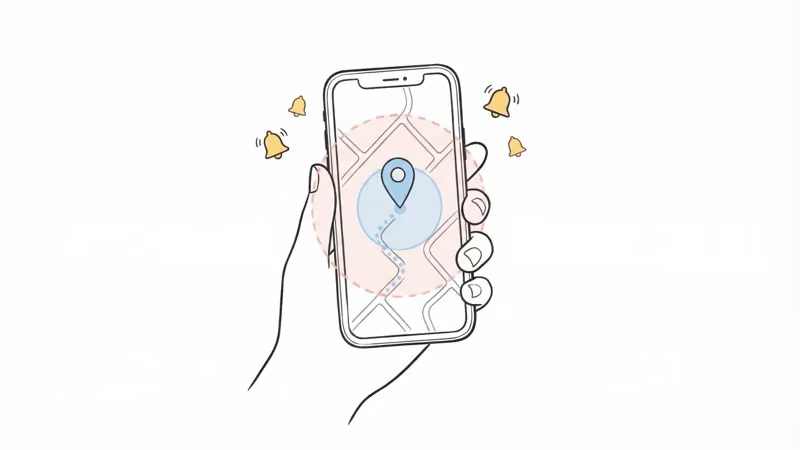
The map view shows your tracker’s current position, a motion trail of recent movement, and an accuracy circle. You can zoom from region-level down to street-level.
In my testing, the map accuracy was solid in urban areas — typically within 50 feet of actual position. Suburban accuracy dropped to around 100 feet, and indoor accuracy varied widely depending on Wi-Fi density.
Alerts and Geofencing
This is where Invoxia separates itself from Bluetooth trackers. You can set up:
- Geofence alerts — notification when the tracker enters or leaves a defined zone
- Motion alerts — instant alert if the tracker moves after being stationary
- Tilt detection — senses if equipment falls over or a vehicle is being towed
- Journey alerts — notification when the tracker leaves after an extended stop
The motion alerts worked reliably in testing. I set one on my parked car and received a push notification within 90 seconds of the car being moved. The geofence alerts had a slight delay but still triggered within a few minutes.
Invoxia also supports IFTTT integration, so you can route alerts to email, text, or other channels.
Proximity Radar
When your tracker is nearby but you can’t see it, the app switches to Bluetooth-based proximity radar. It shows directional arrows and distance, and can trigger the tracker’s built-in buzzer. Useful for finding it inside a bag or under a car seat.
Real-World Use Cases
Vehicle Tracking
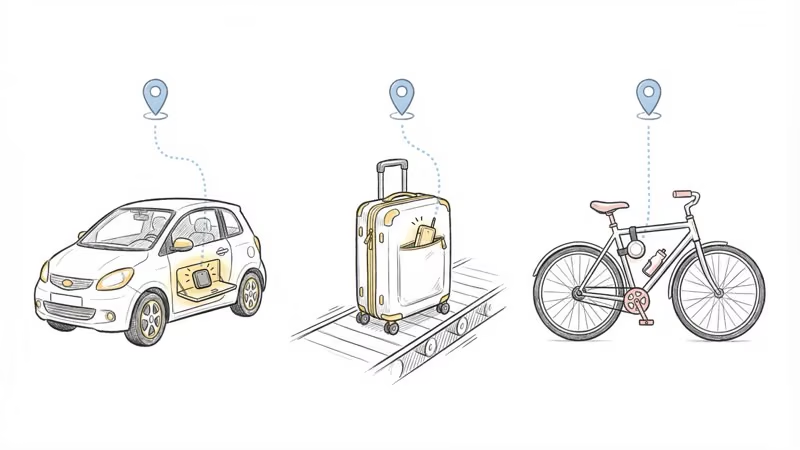
I kept the Invoxia in my car’s glove compartment for eight weeks. The motion alerts were the standout feature — any time someone moved the car, I got a notification. The small size (4 x 1 x 0.4 inches) makes it easy to hide.
The limitation: accuracy wasn’t precise enough to tell me which parking spot my car was in. It could narrow down to the right block, sometimes the right side of a parking lot, but not the exact space. For theft recovery, that’s usually enough to guide police. For daily “where did I park” use, a hidden AirTag with Precision Finding is more practical.
Luggage and Travel
I tracked a checked bag on two flights. The tracker reported its location at both departure and arrival airports, and I could see it sitting on the tarmac during a layover. For international travelers worried about lost luggage, this provides real peace of mind.
One caveat: airlines and aviation authorities generally permit GPS trackers in checked luggage, but check your specific airline’s policy before flying.
Pet Monitoring
Invoxia makes a dedicated Pet Tracker with activity and health monitoring. The cellular GPS tracker itself isn’t designed for pets — it lacks a collar mount and the battery drains faster with frequent movement updates. If pet tracking is your goal, the Invoxia Pet Tracker vs Tractive comparison covers better options.
Specs and Build Quality
| Spec | Invoxia Cellular GPS Tracker |
|---|---|
| Dimensions | 4 x 1 x 0.4 inches |
| Weight | 1.05 oz (29.7g) |
| Connectivity | 4G LTE-M + Bluetooth + Wi-Fi |
| Battery life | Up to 4 months |
| Charging | Micro USB, ~1.5 hours |
| Water resistance | Splash-resistant (no IP rating published) |
| Data encryption | AES 128-bit |
| Data plan | 1-2 years included, ~$40/year renewal |
| Compatibility | iOS and Android |
The build is understated — a small black plastic rectangle that doesn’t draw attention. The recessed power button prevents accidental activation, which matters when you’re hiding it inside a vehicle.
One concern: Invoxia doesn’t publish an official IP rating for water resistance. They say “splash-resistant” but recommend using a plastic bag for outdoor mounting. If your use case involves rain or outdoor exposure, this is a real limitation compared to IP67-rated alternatives like the LandAirSea 54.
Invoxia vs the Competition
How does Invoxia stack up against other tracking options?
- vs Bluetooth trackers (AirTag, Tile): Invoxia wins on range — it tracks anywhere with cell coverage, not just within Bluetooth range. But it costs more and requires charging. For everyday items like keys, an AirTag is simpler and cheaper.
- vs LandAirSea 54: Both are cellular GPS trackers, but LandAirSea has IP67 water resistance and magnetic mounting. Invoxia counters with no mandatory subscription and longer battery life. See our LandAirSea 54 review for details.
- vs Monimoto: The Invoxia vs Monimoto comparison covers this in depth. Monimoto targets motorcycles specifically with crash detection; Invoxia is more general-purpose.
Bottom Line
The Invoxia GPS tracker fills a specific gap: cellular GPS tracking without a monthly subscription. If you need to monitor a vehicle, secure luggage, or track equipment across town, it delivers reliable location data with up to 4 months of battery life. The accuracy won’t replace a dedicated fleet tracker, but for personal use, knowing your car is on the right block is usually enough. The biggest drawback is the lack of a proper waterproof rating — if your tracker will be exposed to weather, consider the LandAirSea 54 or a car GPS tracker with no monthly fees instead.
FAQ
Does the Invoxia GPS tracker require a monthly subscription?
No. The purchase includes 1-2 years of LTE-M cellular data depending on the plan you choose. After that period, you renew for about $40/year. There's no mandatory monthly payment at any point.
How accurate is the Invoxia tracker's location?
Accuracy ranges from 30 to 150 feet depending on environment. Urban areas with clear sky view get the best results (around 30-50 feet). Indoor and suburban locations are typically 100-150 feet. That's enough to identify a street address but not a specific parking spot.
What happens if the tracker loses cell service?
It stores location data locally until it reconnects to the LTE-M network. You won't get real-time alerts during the gap, but the full travel history fills in once connectivity returns.
Can I use the Invoxia tracker internationally?
Invoxia claims coverage in over 100 countries where LTE-M networks operate. Coverage is strong in the US, most of Europe, and parts of Asia. Rural areas with limited cellular infrastructure may have spotty performance regardless of country.
Does the tracker use a SIM card?
No. It has an integrated cellular modem that connects directly to LTE-M networks without a physical SIM card. You don't need to buy or manage a separate data plan from a carrier.
How long does the battery actually last?
Invoxia claims up to 4 months, and that's realistic in low-frequency mode where the tracker checks in a few times per day. With daily motion alerts active and occasional Real Time Boost use, expect closer to 6 weeks. Charging takes about 1.5 hours via micro USB.
Is the Invoxia tracker waterproof?
Invoxia describes it as splash-resistant but hasn't published an official IP rating. It can handle light rain, but submersion or prolonged outdoor exposure without protection isn't recommended. For weather-exposed mounting, use a waterproof case or zip-lock bag.